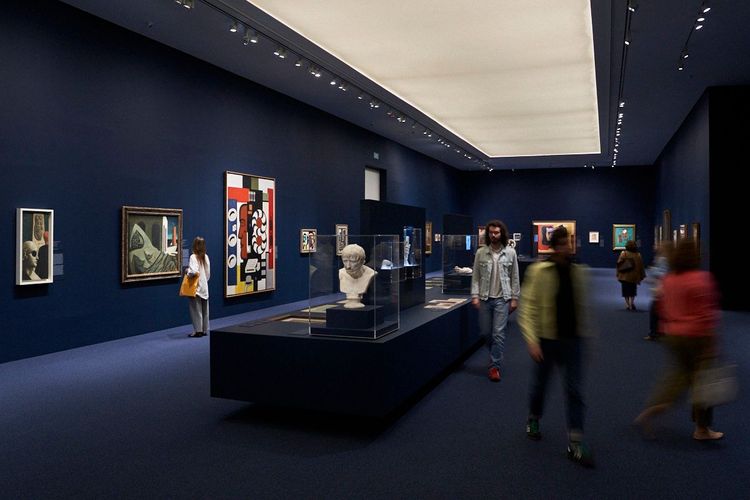
Next July 25 will mark three years since the Kings officially inaugurated the Gallery of the Royal Collections, which had been opened to the public about a month before and which has since exhibited, in rooms designed by Tuñón and Mansilla, nearly 650 works and objects that span five centuries of history of the Spanish Monarchy and belong to the National Heritage funds. Among them are pieces by El Greco, Caravaggio, Velázquez, Tiépolo and Goya, along with tapestries, carriages, royal armor and other belongings linked to the life of the Court, in addition to the archaeological remains of the Arab wall of the capital, from the 9th century.
On the 25th, all visitors will be able to benefit from an open day in which they can visit the five exhibitions that this space hosts during the summer, dedicated to the fabrics and embroidery of the Royal Collections, its nineteenth-century clocks, the landscape painter Fernando Brambila, the photographer Isabel Muñoz and the images of Bleda y Rosa, José Manuel Ballester, Teo Barba and Andrés Pachón that can establish relationships with the funds of this institution.
“Weaving Courtly Life”, the first exhibition on woven pieces of National Heritage, whose collections in this sense are among the richest in the world, gives us the opportunity to discover the delicacy and virtuosity with which the artists and craftsmen linked to the Royal House handled themselves. The vast majority of the works are shown to the public for the first time after being restored, in a high percentage, in the Heritage workshops and the assembly emphasizes their symbolic value in relation to power, refinement and representation, as explained by Víctor Cageao, current director of the Gallery.
Among the thousands of textiles that National Heritage keeps, curators Pilar Benito, Lourdes de Luis and María Barrigón have selected nearly two hundred works based on their technical quality; We will be able to admire them in an excellent state of conservation and together with loans from institutions such as the Prado Museum, the Pitti Palace in Florence or the Museum of Textiles and Decorative Arts in Lyon and paintings, photographs, furniture and objects that demonstrate the versatility of these works in the daily life of the palaces.
The non-chronological montage is structured in five sections: Extraordinary wonderswhich confronts medieval trousseau with nineteenth-century pieces associated with leisure; Spaces of majestywhich exhibits the canopies of Charles IV and Maria Luisa of Parma; silk dreamswhich analyzes real rest; Royal Upholstery Craftwhich delves behind the scenes of the care of the collection; and Wardrobe and dressing tableabout the most intimate facet of monarchs. Among the most sought-after pieces we can mention the pillow of Queen Berenguela, which is known to date before 1246; a “sultan” bathtub, which hid its primary function by becoming a daybed; or an original nineteenth-century cotton-covered float.
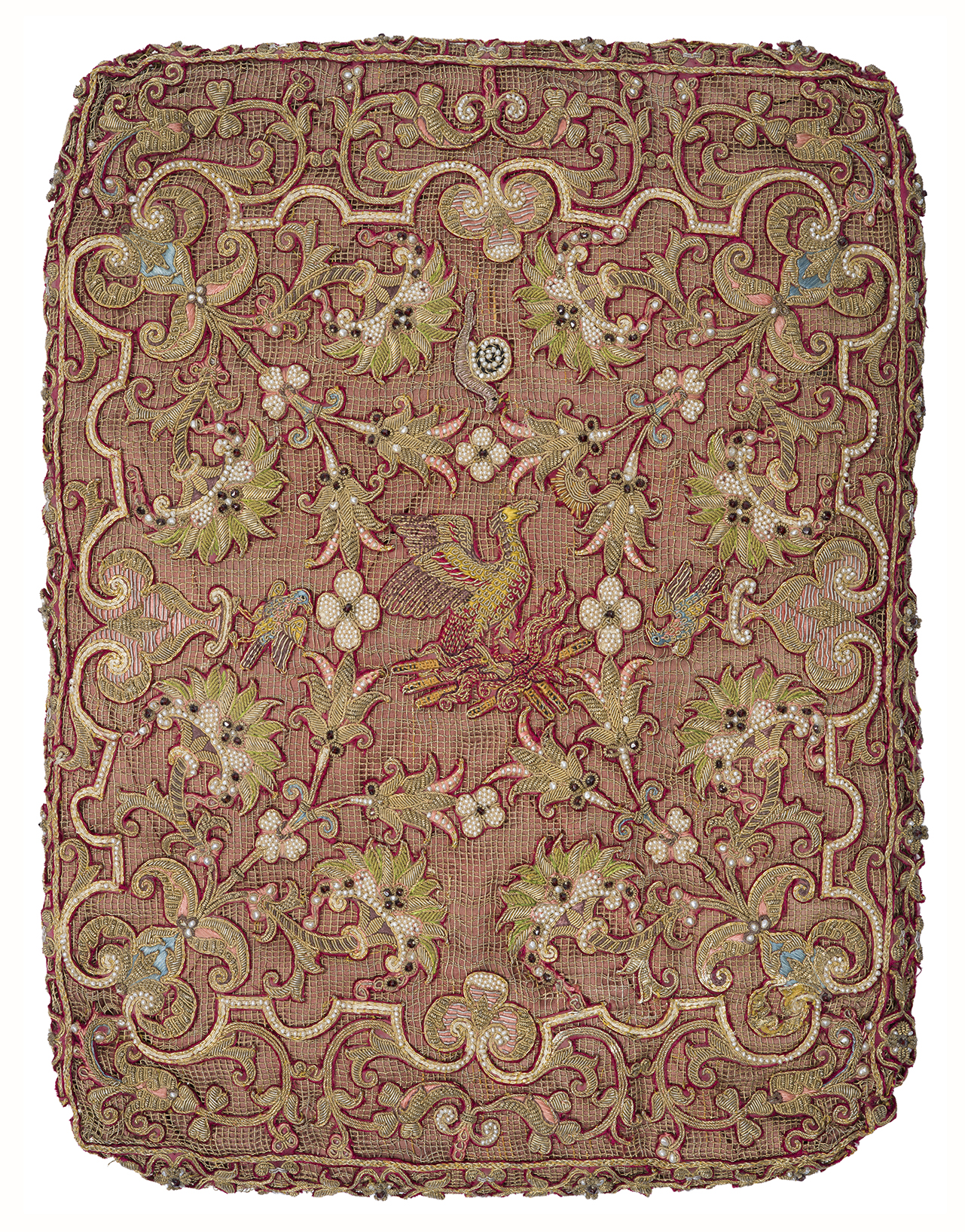
Scent pillow, second half of the 16th century. National Heritage. Photography: Cuauhtli Gutiérrez
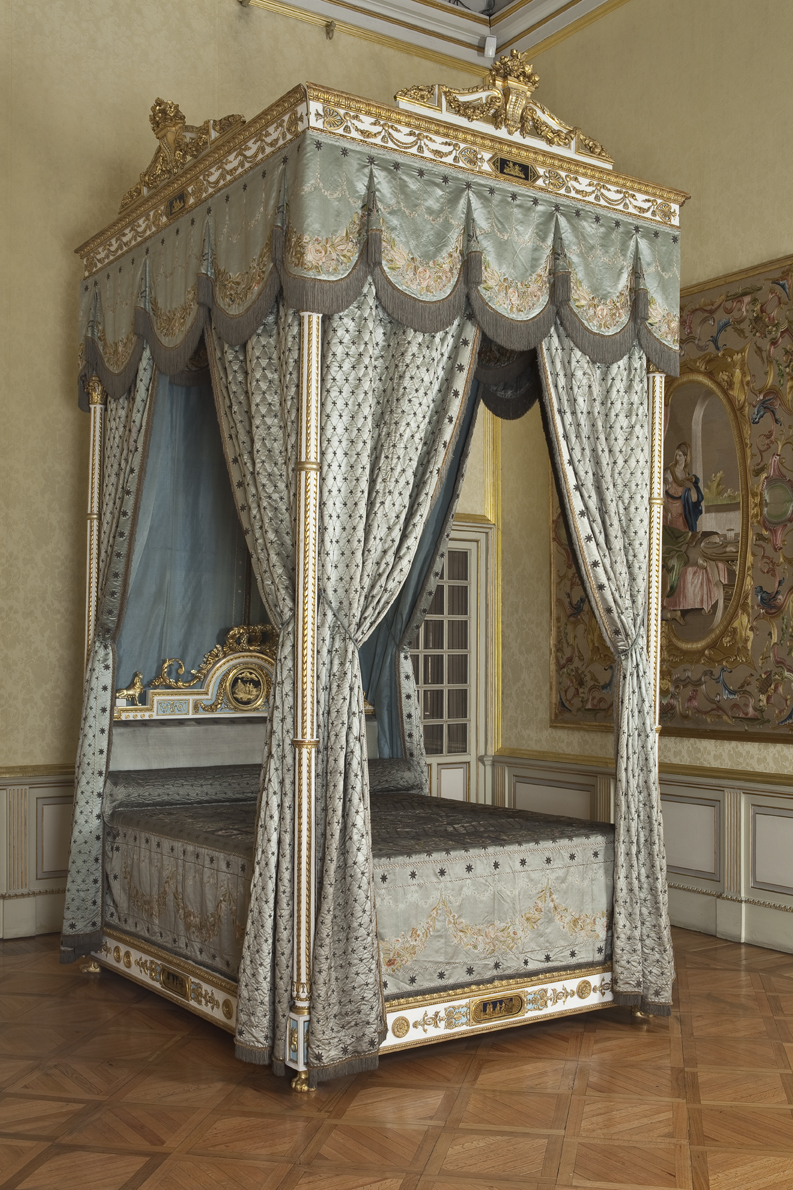
Antonio Pomareda, Pablo Palencia, Jorge Balze, Andrés del Peral and Julián García Martín López. Bed of the Princes of Naples Isabel de Borbón and Genaro de Borbón, 1802. National Heritage
Regarding «Alterations III. Stories, stories and new narratives”, new edition of that program, consists of photographs by Bleda y Rosa, José Manuel Ballester, Teo Barba and Andrés Pachón, who display in their works particular views on the historical heritage and its relationship with contemporary creation that we can see in the Austrias and Borbones rooms in the permanent collection.
In this initiative, the Royal Collections become a starting point for current artists to ask new questions about our history. The purpose of the works on display, as curator Antonio J. Sánchez Luengo has pointed out, is not to illustrate the past, but to interrogate it; in his words, photographs force us to look twice to question what we thought was fixed in our memory.
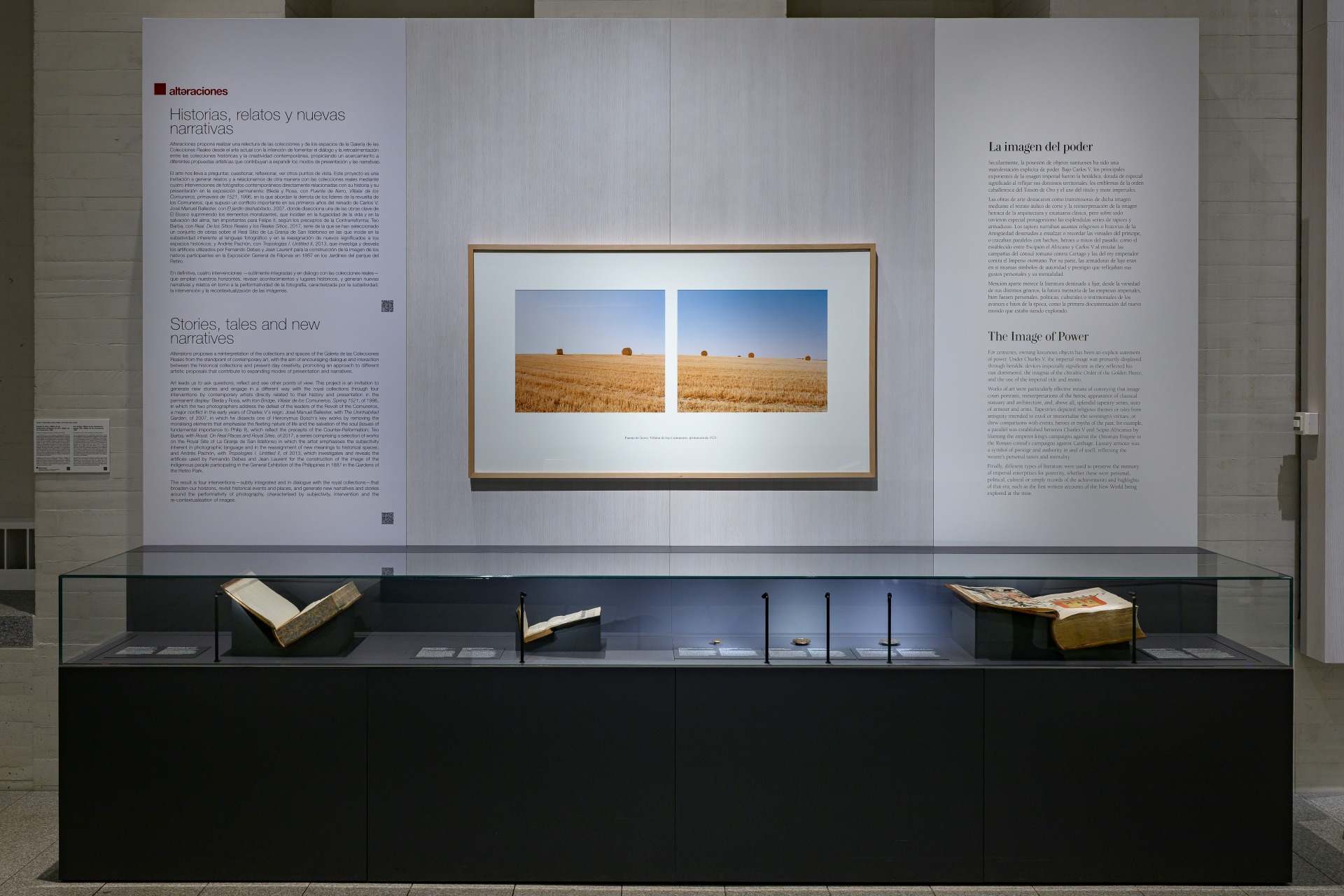
Bleda and Rosa. Iron bridge, Villalar de los Comuneros, spring of 1521. Villalar de los Comuneros, 1996. Photography: Javier Díez de Prado
José Manuel Ballester. The uninhabited garden2007. Photography: Javier Díez de Prado
Thus, in the Hall of the Austrias it is exhibited Iron bridge, Villalar de los Comuneros, spring of 1521from the series Battlefields (1994-2016)by Bleda y Rosa: places the viewer before one of the fundamental episodes of the beginning of the reign of Charles V, the Comuneros revolt. The duo composed of María Bleda and José María Rosa, National Photography Prize winner in 2008, have structured a good part of their production around the landscape and the territory as witnesses of history and guardians of memory and, in this case, through the image of a mown cereal field, fragmented into two windows, they outline the wound of the communal defeat in Castile in the 16th century, surrounding their work with pieces related to the royal power that they were unable to defeat.
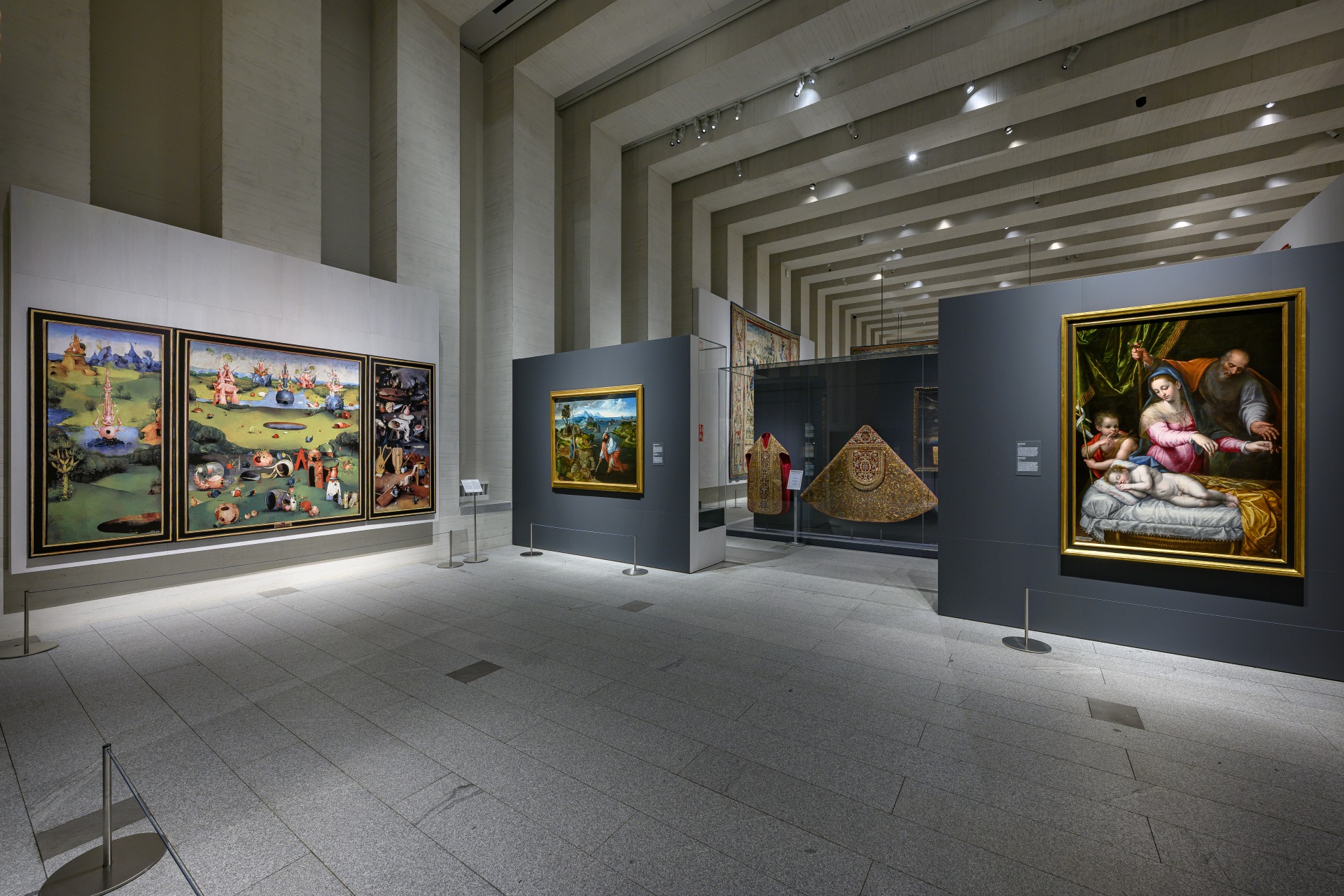
Also in the Austrias Room, José Manuel Ballester, National Photography Prize in 2010, nude by digital methods The garden of delightsby Hieronymus Bosch, next to the flamenco tapestry exhibited in the Gallery. The artist reproduces in fabric the famous triptych acquired by Philip II, also belonging to the National Heritage collections, although deposited decades ago in the Prado.: in The uninhabited gardenstrips away figures from that world imagined by Bolduque and reveals a suspended and silent garden, where the geometry and visual paths of the original composition emerge.
In the Borbones Room, for its part, seventeen photographs of the Royal Site of La Granja de San Ildefonso await us taken by Teo Barba in 2017 for his series Real. Of the Royal Sites and The Royal Sites. In it, this artist plays with the double meaning of the term “royal”, linked both to the monarchy and to the apparent objectivity of the photo; Barba vindicates, in this way, the subjectivity of the gaze and his own discipline by showing us the summer residence of Philip V under the winter rigor of the Guadarrama mountain range, distancing himself from the idealized images of this Segovian palace and its gardens.
Finally, we will see Tropologies I. Untitled IIby Andrés Pachón, a 2013 composition in which this author questions the supposed neutrality of anthropological and ethnographic representation in images from the 19th century. It is a reworking of a photograph taken by Fernando Debas in 1887, in which he recreated a jungle scenery in his Madrid studio to portray indigenous Filipinos in the Spanish colonial period. Pachón thus influences the artificial construction of representation and the false illusion of authenticity in historical visual documentation.
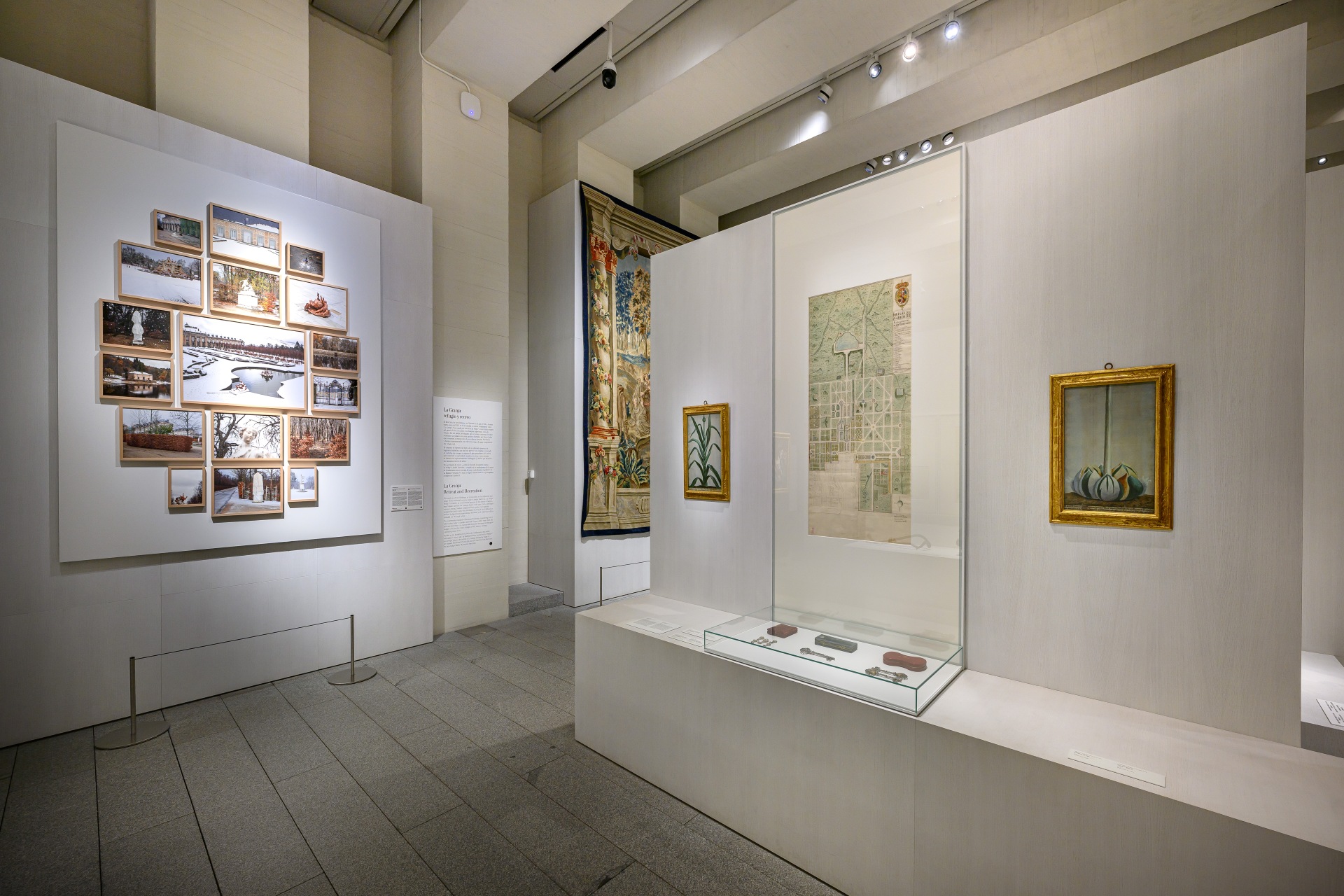
Teo Barba. Real. Of the Royal Sites and The Royal Sites2017. Photography: Javier Díez de Prado
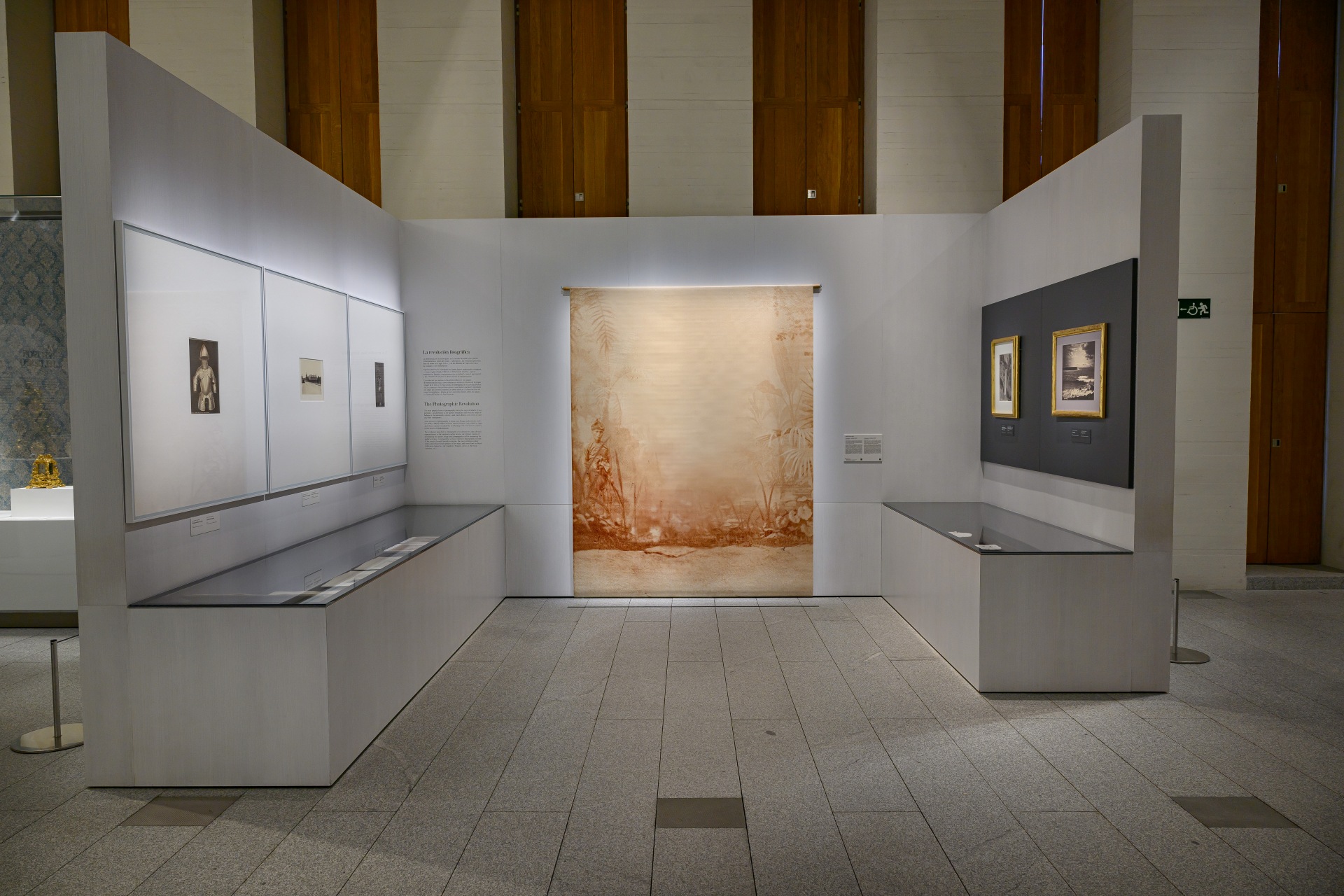
Andrés Pachón. Tropologies I. Untitled II2013. Photography: Javier Díez de Prado
Fernando Brambilia’s exhibition is the first to bring together a large set of paintings by this Italian author (Cassano d’Adda, 1763-Madrid, 1834), specialized in perspectives, landscapes and urban views.
His work focused on the representation of topographic views and, throughout his career, he made drawings and paintings that would later become prints. His most important creation is a set of projections of the Royal Sites, painted in oil on canvas between 1821 and 1833 by order of King Ferdinand VII, and planned to be arranged in cabinets in the different royal palaces. With this work he contributed to forging an image of these possessions that has remained in the collective unconscious thanks to its dissemination through lithographs.
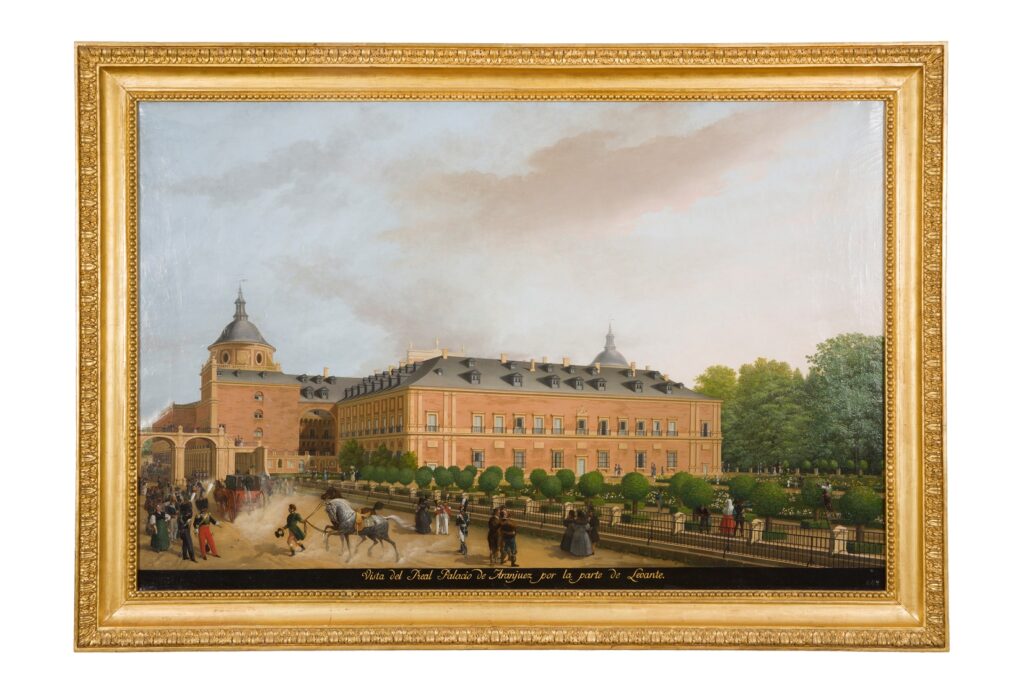
Fernando Brambilia. View of the Royal Palace of Aranjuez, from the Levante side1826-1831. National Heritage. Photography: Mario Sedeno
Isabel Muñoz’s exhibition is part of PHotoESPAÑA and the proposal Field notebookswhich has already reached three editions, like Alterations. The Barcelona photographer has set out from the Monastery of El Escorial and the surrounding forest of La Herrería to structure her project. The stones of the skywhose absolute protagonist is Philip II as the promoter of this complex as architecture connected with the Temple of Jerusalem and with the idea of cosmic harmony.
Through photographs, objects, videos and installations, Muñoz builds an experience that transcends the fixed image and opens to a telluric and sensory experience: the stone becomes a threshold between the time of the earth, the human will for spirituality and our ability to imagine, create and construct meaning from the elemental materials that nature gives.
Finally, in “The Precision of Time” we will see an outstanding set of clocks that the Spanish kings acquired to beautify the palace halls and regulate the passing of the hours in their daily lives. Ferdinand VII and Isabel II nourished these collections with pieces that attest to the technical advances and the variety of aesthetic styles that occurred throughout their respective reigns.
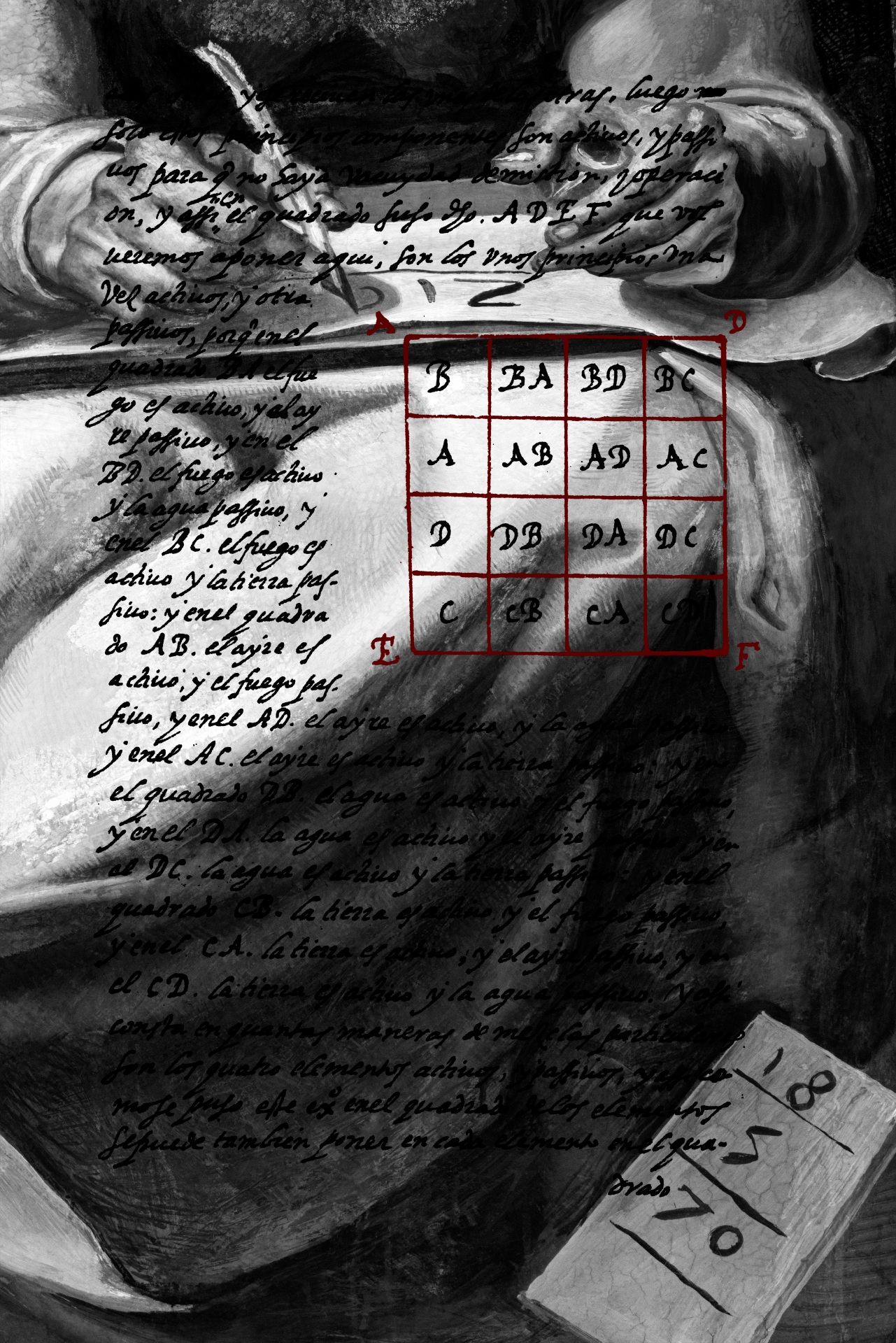
Isabel Muñoz. The stones of the sky. Gallery of Royal Collections
«Weaving courtly life. Fabrics and embroidery from the Royal Collections»
From June 11 to October 12, 2026
«Alterations III. Stories, stories and new narratives»
From June 16 to September 13, 2026
«Fernando Brambila, painter of the Royal Sites»
From May 29 to October 12, 2026
«Isabel Muñoz. “The stones of the sky”
From June 4 to September 6, 2026
«The precision of time. 19th century clocks in the Royal Collections»
From March 26 to September 20, 2026
GALLERY OF ROYAL COLLECTIONS
C/ Bailén, s/n
Madrid