
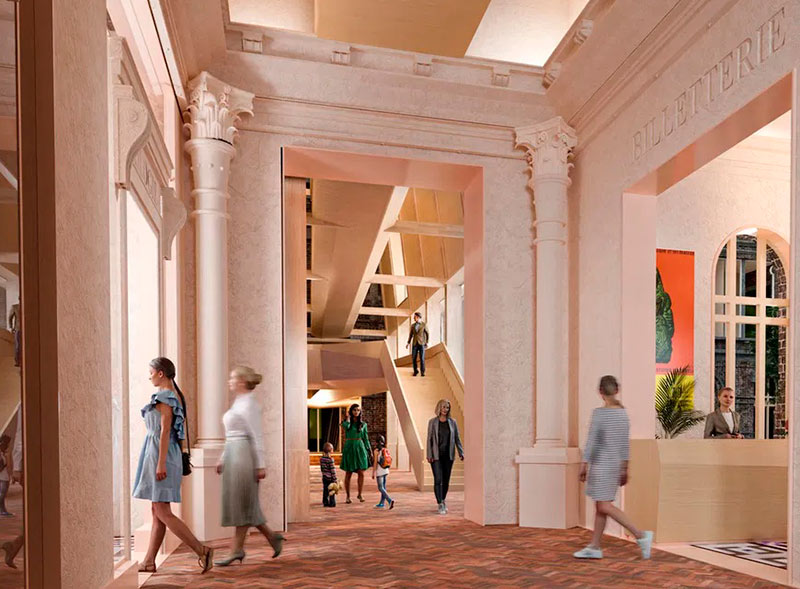
Lille (North). Located in an 1887 building initially dedicated to the University of Lille, the Natural History Museum began work in several phases in 2020, the first of which was completed in 2021 and allowed the restoration of the Gosselet wing. The second phase, which includes the construction of an extension, the modernization of the route and a series of upgrades (electricity, frames, accessibility), was to begin in 2024 and end in 2026. But the municipality announced in the summer of 2025 that, faced with the delay accumulated by the construction site, the museum would not reopen until 2028. As a result, the budget was revised upwards, from 22 million to 34 million euros (voted by the municipal council in October 2025), report Judith Pargamin, director of the museum, and Marie-Pierre Bresson, assistant in charge of culture. This amount includes the first phase of work.
Regarding the delays, the culture assistant specifies that “work has already started internally, including preparatory work as well as the moving of the collections”, i.e. more than 14,000 pieces. The museum regularly communicates on the progress of the work on its website, with video content and focuses on certain sets of collections (stuffed birds), a way of “maintain the link with the people of Lille”, underlines Judith Pargamin.
Extension which will connect the three wings of the Lille Natural History Museum, thus making it possible to rethink traffic flows in the building.
© Sora and Snøhetta
This collections project requires specific logistics and the use of external reserves – a cost included in the budget. And the ongoing preparatory work leads to unexpected discoveries in the building, which slows down the progress of the site. Part of the delay is also attributed to a second call for tenders launched in 2025 after that of 2024, with more precise criteria, particularly in terms of carbon footprint.
A doubled surface
In the spring, structural work will begin, accompanied by the removal of asbestos from certain parts of the building and the destruction of two extensions dating from the mid-20th century. Despite these delays, “the project remains the same, as set out in the scientific and cultural project of the museum”, explains Marie-Pierre Bresson: the new museum will therefore benefit from a doubling of its surface area, temporary exhibition rooms, a toddler museum, a garden and better accessibility. The culture assistant concedes that some modifications were necessary, such as “a black exterior covering which will ultimately be white for environmental reasons”. The new building will have “improved insulation and better conservation conditions for collections”adds Judith Pargamin, a point budgeted from the design of the project. During the closure, the museum continues its research activities as well as educational activities outside the walls, “to work with audiences other than the museum’s usual audiences, within the framework of the main axes defined for the future establishment”.


