
Compiègne (Oise). If for most French people, the figurine evokes a toy soldier, the Compiègne Figurine Museum shows that the term designates more than an object for collectors. The name of the museum changed before its reopening. “It was previously called the Museum of Historical Figurines,” specifies deputy director Christine Amiard. Now, the municipal museum, created in 1948, brings together old figurines as well as Playmobils and plastic dinosaurs. The 500 square meter course, with a surface area equivalent to that of the old museum, takes place in a wing of the Compiègne staff school, renovated and redeveloped as part of an ambitious town planning project. “The City wanted to put the museum at the heart of the new district”explains Christine Amiard, who adds that the renovation work on the military building where the museum is based cost around four million euros (half comes from European funds).
From figurine to diorama
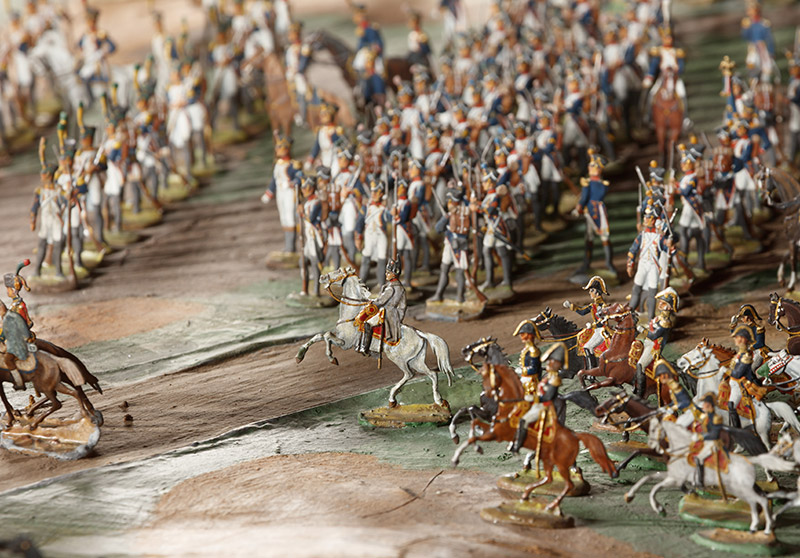
The visit retraces the history of the collectible figurine, the manufacturing techniques, the most famous French models and several dioramas, including that of the Battle of Waterloo (see ill.). A first room reminds us that societies of the past were already doing this, but “for uses difficult to identify beyond religion”, according to Christine Amiard, then the exhibition reveals the large dioramas sometimes accompanied by mediation devices (binoculars, virtual reality headset). “We did not emphasize immersion in the course, because dioramas are immersive by nature,” specifies the deputy director, emphasizing that mediation as a whole encourages visitors to be active. They can thus open drawers where the “figurinists” instruments are displayed., molds, small pots of paint, drawing books. Each creation technique is quickly presented, from ceramic to plastic, including tin, lead and lithography (card figure, specialty of Epinal imagery). A large piece of furniture allows you to see behind shutters small dioramas produced in the 20th century, street scenes, tourist views (sea bathing) or fantastic landscapes.
Overview of a diorama.
© Gautier Deblonde / Light Motiv
A fun object for the general public
The second part of the course addresses the contemporary era, with the arrival of figurines produced on an industrial scale and a diversification of themes: Warhammer-type strategy games are the subject of a focus, as well as figurine packaging boxes “which were transformed into a small theater with a printed decor”notes Christine Amiard. Some of these box sets are highlighted here by a sound system which offers three stories for each of them, “an imaginary world”to listen to on headphones. From the 1970s-1980s, the figurine became a mainstream toy, found in cereal packets or at the Esso gas station, with characters from popular culture: Asterix, the Smurfs, Luke Skywalker incarnated in industrial plastic. The museum therefore chooses to open up to French society and present the figurine as “a popular art and not just a collector’s item”concludes Christine Amiard.
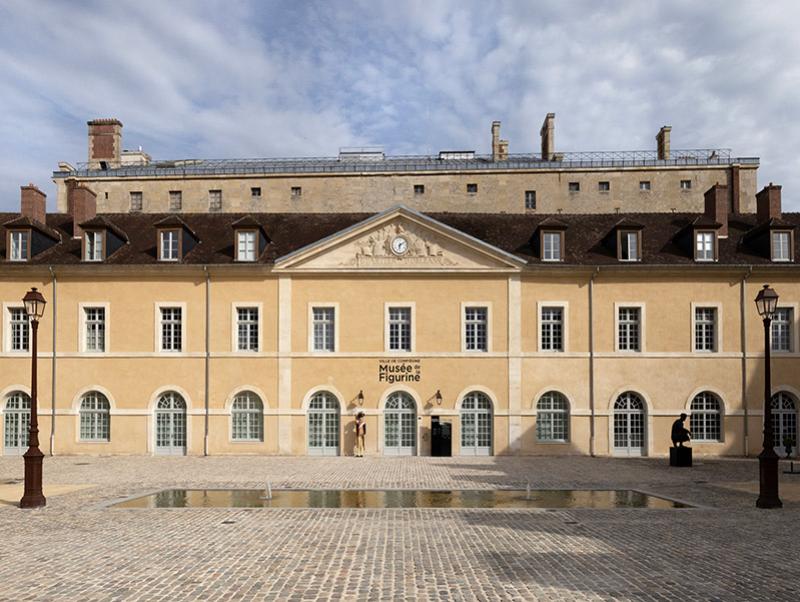
Facade of the Figurine Museum in Compiègne.
©DR


