What form does the end of personal ties take? What happens before and after them? How can we go through these ruptures or, on the contrary, hold on to what has been lost?
These are some of the doubts that Sophie Calle raises in what is her largest exhibition so far in Italy: “Matrimoni, Rotture and Funerali”, which the Roman MAXXI displays until next February and which has been curated by Simona Antonacci. It is known that many of her projects were born from unpremeditated encounters, those of this author in her wandering through the streets of Paris, following strangers (who had no reason to interest her personally) to alleviate her loneliness and boredom. He copied their paths for the mere pleasure of chasing them, photographing them without their awareness and recording their movements, until he preferred to stop for reasons as random as those that had led him to chase them. The procedure may evoke surreal or dadaist creative modes, but the Frenchwoman did not abandon herself completely to the unexpected, but rather assumed certain rules that allowed her to maintain some control.
On one occasion he met, unintentionally, one of those strangers at a reception, knew that he was about to travel to Venice and, taking his wanderings a step further in daring, he continued on his course; That would be the origin of his first important work, Venetian suite (1979), which would be followed by others of the same nature accompanied by short texts written for reasons as practical as aesthetic. His involvement with those portrayed would advance gradually (in L’Hotelto observe other people’s lives, she got hired as a chambermaid); as he also turned towards increasingly reflective approaches, linked to affection and desire or the construction of his work, and his formats were enriched.
Calle’s personal life ended up, irremediably, forming part of his creations, as their framework and circumstances, and at that point are also the ruptures that center this exhibition.
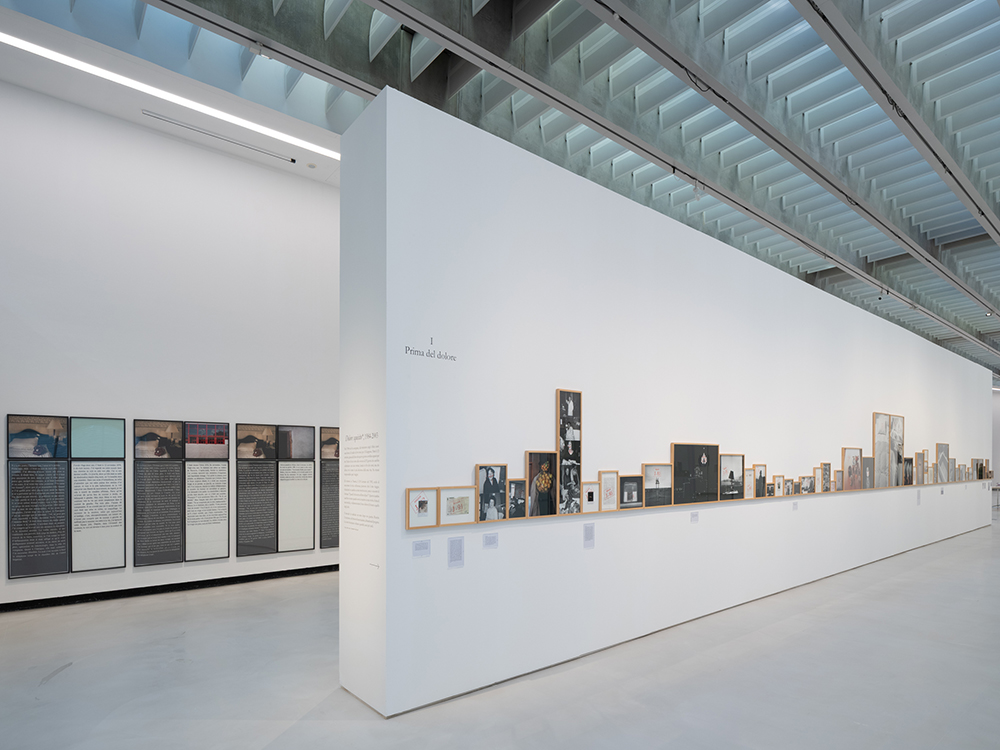
Sophie Calle. «Matrimony, Rotture and Funerali inclusi». MAXXI, Rome, 2026
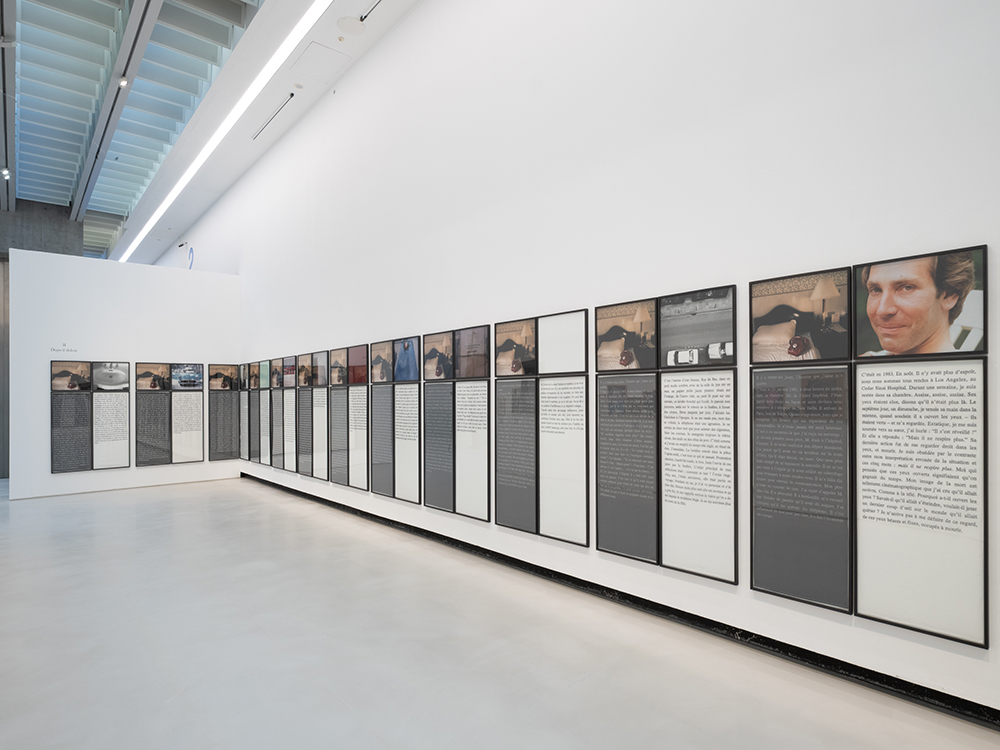
Sophie Calle. «Matrimony, Rotture and Funerali inclusi». MAXXI, Rome, 2026
In Rome, eight proposals dated between 1978 and 2026 have been brought together, which are completed with a permanent installation that has been located in the non-Catholic cemetery for foreigners. Photographs, texts, videos, installations and autobiographical stories give shape to a circular route in which the public and the private and reality and fiction blur until the public and the private are indistinguishable; In them Calle fundamentally addresses love and separation, and with them grief and memory, desire and absence, failure and the possibility of starting over.
Using codes as particular as they are rigorous, he makes his experiences the starting point for his projects, resorting to precise rules, gestures and rituals. As an example, we can mention a countdown to the end of a relationship, the attempt to capture his mother’s last breath, an inventory of unfinished work and some encounters with people who see the sea for the first time. She turns each of these issues into a way of considering what ends (after a breakup, a death, a return trip), what remains, and what could still begin.
The exhibition comes to reveal the coherence of this artist’s practice precisely around themes such as loss, emptiness or disasters, almost continuous raw material in her journey to which she confers other forms, meanings and places. In this line we can also understand The secrets of the passerbythat installation in the cemetery of artists and poets: it was conceived to protect the secrets of the dead and was inaugurated fifteen days ago through a participatory performance in which attendees were invited to entrust their mysteries and symbolically bury them.
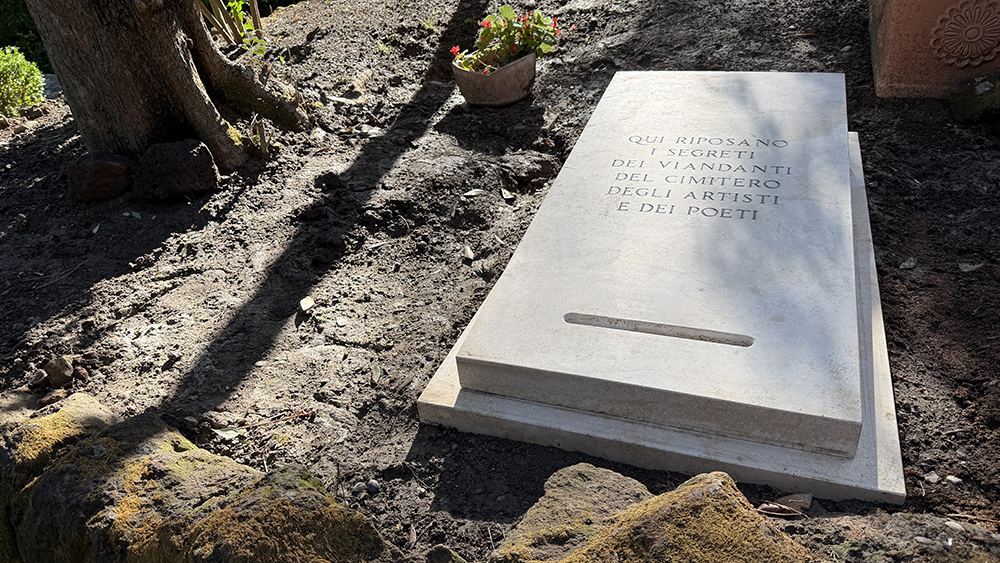
Sophie Calle. The secrets of the passerby2026. Non-Catholic Cemetery, Rome
Two years ago MAXXI acquired precisely L’Hôtela piece belonging to the Catalog raisonné of the unfinished and five works from the series Becausesignificant compositions of his diversity of approaches to contemporary photography: from landscape documentation to conceptual practice, from photojournalism to the most intimate and autobiographical forms in which memory, invention and narration become the very basis of the works. But the history of this exhibition is, however, earlier: it begins in 1978.
It was then that Sophie Calle, still far from the art world in a professional sense, photographed several tombstones in the Bolinas cemetery, in California. The inscriptions on them were simple, reduced to familiar roles such as “brother” or “sister.” These were his first images and they already pointed to drifts that would be present in all his subsequent production: identity, goodbye and the effort to preserve that which disappears. Now that series, The Gravesconstitutes one of the nuclei of the sample.
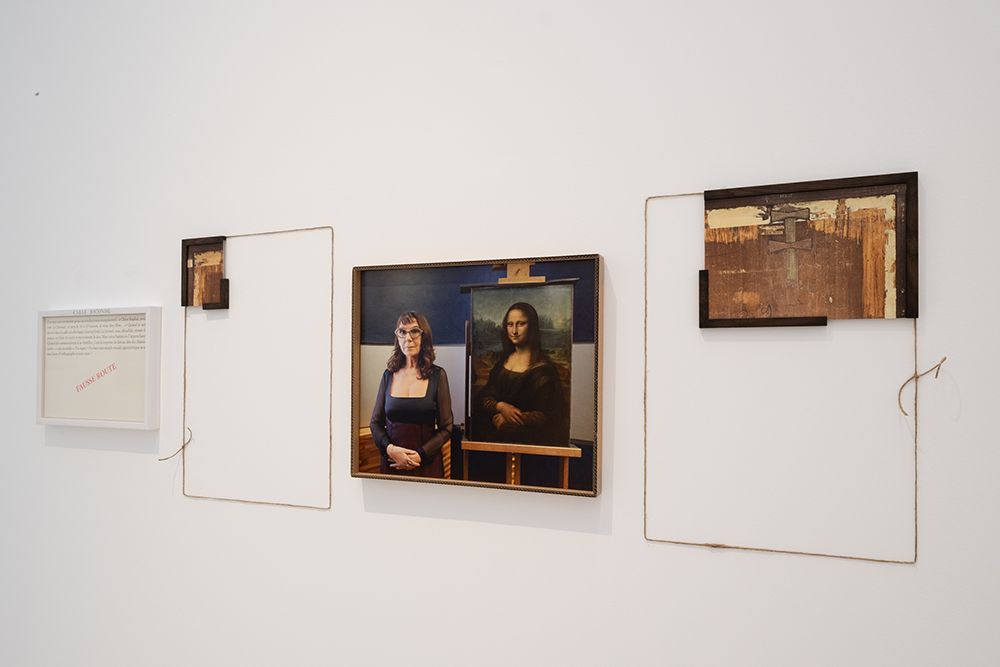
Sophie Calle. «Matrimony, Rotture and Funerali inclusi». MAXXI, Rome, 2026
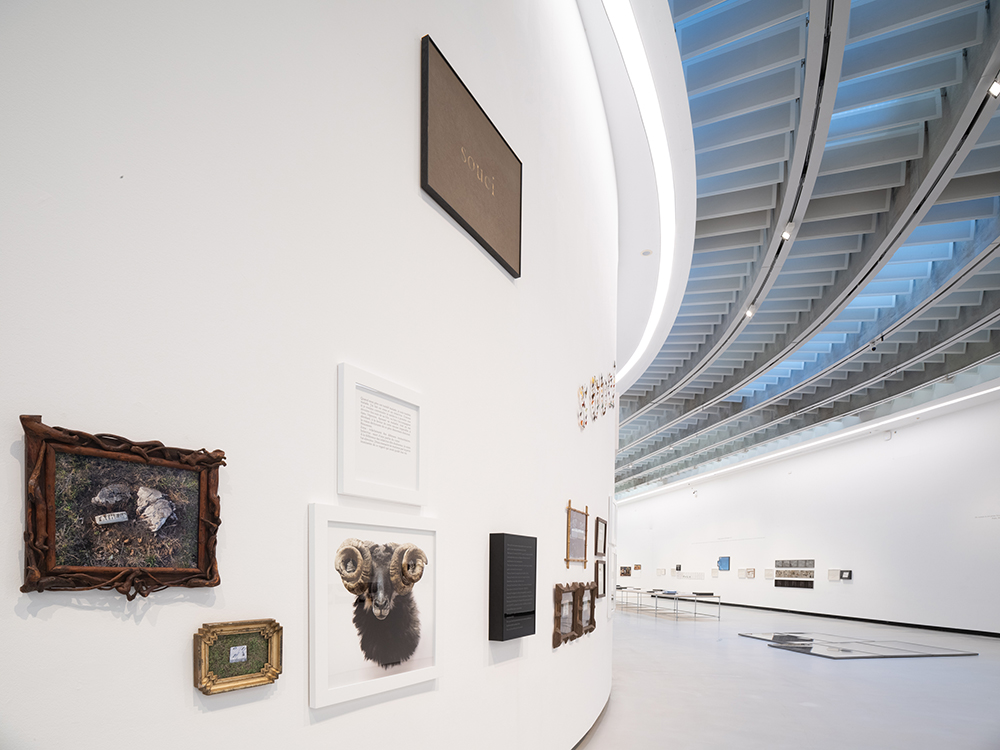
Sophie Calle. «Matrimony, Rotture and Funerali inclusi». MAXXI, Rome, 2026
Upon entering the first part of it, visitors discover Exquisite Painone of his best-known works. It takes us to 1984, when Calle left for Japan, leaving the man she loved in Paris. At the end of her trip, a message waiting for her at a hotel in New Delhi ended the relationship. From this experience, he created a work composed of more than two hundred elements that integrate photographs and texts, organized around a countdown until the day of the breakup, followed by a second sequence: the one after that episode. In this second part, Calle tells her own story over and over again, presenting alongside her the testimonies of other people, whom she asked to remember, in turn, the most painful moment of their lives, partly wanting to avoid her own depression in this way. Exquisite Pain In fact, he remained in the bedroom for fifteen years, for fear of arousing sorrow.
For its part, in Catalog raisonné of the unfinishedcompiled everything that he never completed: abandoned projects, interrupted ideas, failed attempts and works that did not go beyond mere intention are grouped and ordered in a systematic inventory of the possible. Each of these essays comes to us as a set of photographs or framed documents, accompanied by a brief text that explains why it was left unfinished. And in the center of the route is Funerali inclusiveibelonging to the series Autobiographieswhich includes short stories that combine snapshots and words: personal episodes, family memories and small rituals make up a fragmented biography, where the line that separates the truth from the narrative remains deliberately unclear.
Another of the most impressive works in the exhibition is Couldn’t Capture Deatha video recorded next to the bedside of the artist’s mother during her last moments of life. The author tried to record the exact moment of death, but the last breath escaped her. At your side, North Pole describes a later farewell act: during a trip to the Arctic, Calle buried a photograph of her mother and some of her jewelry in a glacier, thus symbolically fulfilling her wish to visit that place.
After exploring these endings, the exhibition gradually opens up to the possibility of a new beginning. In Becausethe photographs remain hidden behind embroidered curtains and visitors discover them through a simple gesture: lifting the fabric to reveal the image. The words do not describe what is shown, but rather explain why the artist felt the need to photograph it, thus raising questions about the relationship between photo, language and imagination.
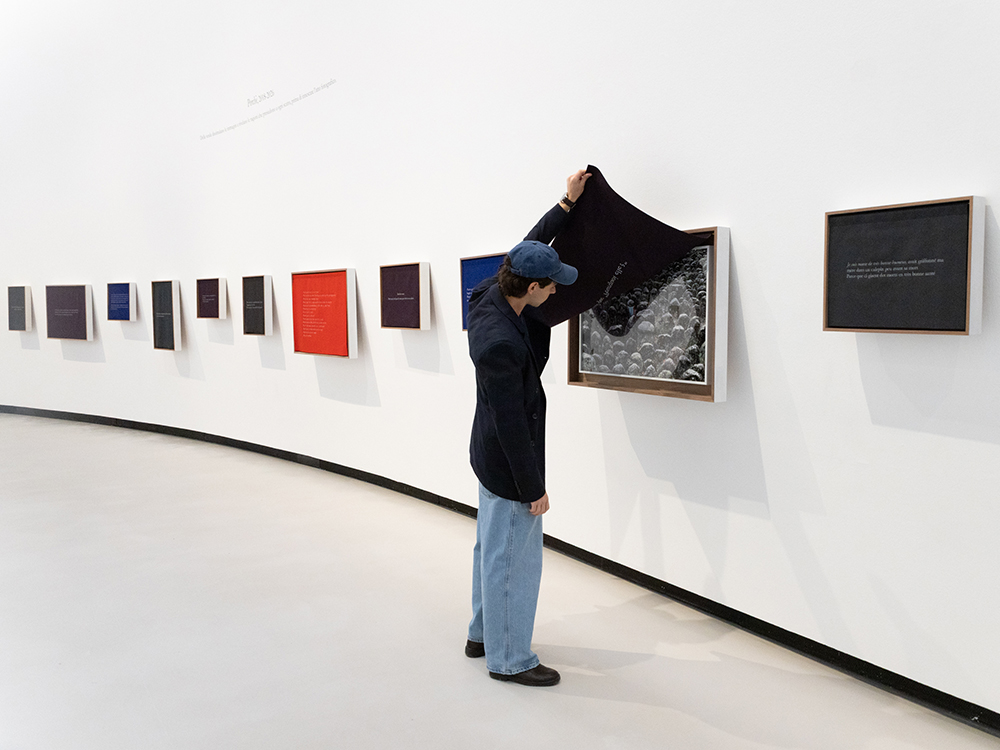
Sophie Calle. «Matrimony, Rotture and Funerali inclusi». MAXXI, Rome, 2026
And it will put the finishing touch See the seaa video installation made in Istanbul in 2011, for which Calle took people who had never seen it before to see the sea, despite living a short distance from the coast. The camera records your experience without invading the privacy of the moment; Thus, the focus shifts from the artist’s gaze to that of others, opening the work to participation and exchange.
The French woman says that she experiences happy events and exploits unhappy ones, sometimes collectively: When I am happy, I don’t feel the need to photograph my happiness. Photography is a way to distance myself from pain, so as not to suffer. It also understands that our relationships with others should cause as little collateral damage as possible and that work can serve to control this.
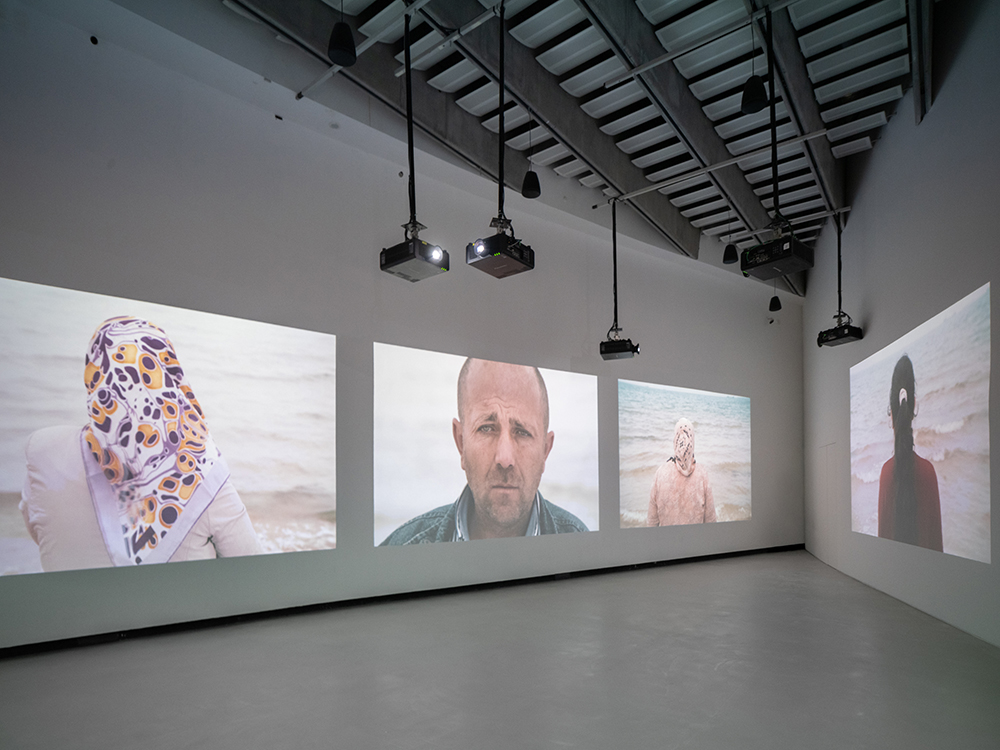
Sophie Calle. «Matrimony, Rotture and Funerali inclusi». MAXXI, Rome, 2026
Sophie Calle. «Marriage, Rotture and Funerali inclusi»
MAXXI. MUSEO NAZIONALE DELLE ARTI DEL XXI SECOLO
Via Guido Reni, 4A
Rome
From October 16, 2026 to February 7, 2027