Venice. Is art a vector of dialogue or a factor of discord? The answer is obvious when it comes to the prospect of a reopening of the Russian pavilion during the next Venice Biennale. This triggered a crisis that goes far beyond the shores of the lagoon, causing tensions right up to the top of the Italian state and European authorities.
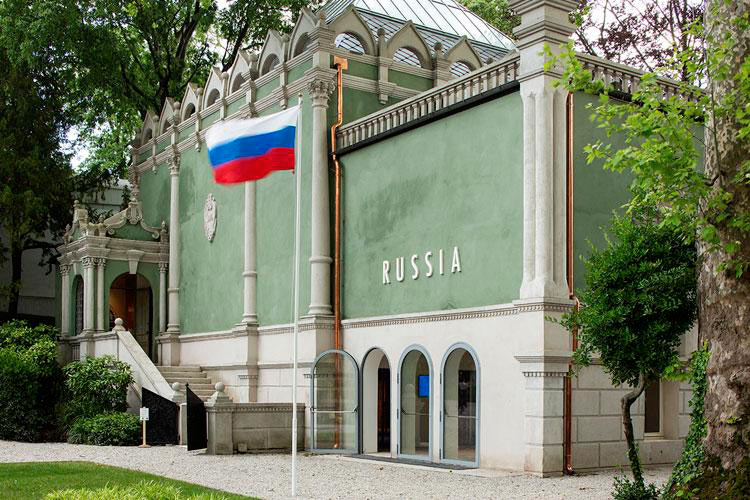
The controversy exploded in early March when the president of the Biennale, Pietrangelo Buttafuoco, announced Russia’s participation in the 61st edition of the most important cultural event organized in Italy, which will take place from May 9 to November 22 under the title “In Minor Keys”. Since its invasion of Ukraine in February 2022, the Russian pavilion, installed in the gardens of the Biennale, had remained closed or had been rented to Bolivia.
Threat to freeze subsidies by Brussels
The head of the Biennale says he is opposed to “any form of exclusion or censorship of culture and art”, and recalls that Russia has had its own historic pavilion since 1914. Its participation is, in theory, a right. Arguments which struggle to convince and have not calmed the controversy. The Italian government itself disavows this decision, which has triggered an unprecedented diplomatic outcry. No less than 22 European culture ministers, supported by a group of deputies, denounce Russian participation as “morally unacceptable”. Faced with the risk of legitimizing Vladimir Putin’s regime, the European Commission, through the voice of its vice-president, Henna Virkkunen, is now threatening, if the Biennale does not reverse course, to suspend the subsidies amounting to 2 million euros (over three years) from which it benefits. Brussels cites non-respect for democratic values and refuses to allow public money to be used to promote, even indirectly, an aggressor state through a cultural institution.
In Italy, the controversy continues to grow. The Minister of Culture, Alessandro Giuli, calls for the resignation of Tamara Gregoretti, representative of the ministry on the board of directors of the Biennale. He argues a breakdown in trust linked to the management of this file and criticizes it in particular for having ignored the possibility of Russian participation, as well as its own support for this presence, presenting the Italian authorities with a fait accompli. Alessandro Giuli also officially enjoins the Biennale to provide “urgently” the complete documentation on this case. It is not only the minutes of the board of directors, but also the “full copy” of the correspondence between the institution headed by Pietrangelo Buttafuoco and the Russians.
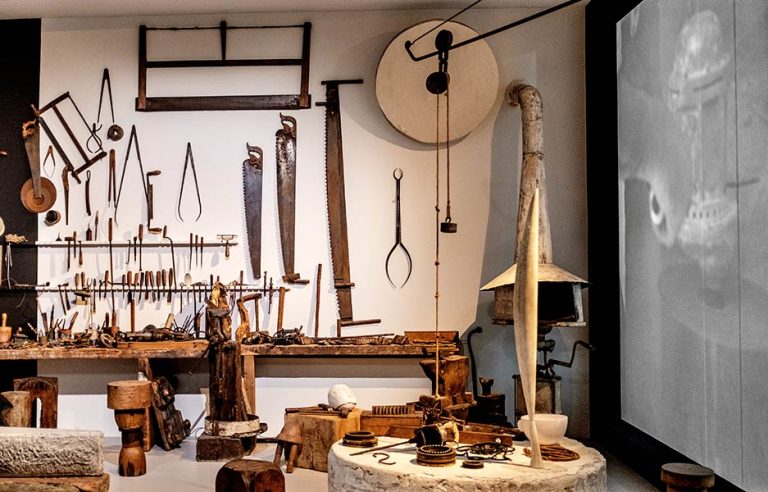
The Italian government is seeking proof of its suspicions about an agreement hatched in secret to circumvent the sanctions which have discouraged Russia’s participation since 2022. The stratagem developed would thus be a restricted exhibition (audio/video) visible from the outside of a pavilion which would remain officially closed. The presence of artists would only be planned from May 4 to 8, during professional days (the “vernice”), just before the official inauguration on May 9.
In an attempt to restore calm, Pietrangelo Buttafuoco announced the creation of spaces allocated to dissident artists, not only Russian but also from various countries by inviting personalities criticized by the United States, Israel, China and even the European Union. The president of the Biennale invokes the precedent of 1977, when the Biennale, under the direction of Carlo Ripa di Meana, organized the still famous “Biennial of Dissidence” in support of Eastern European intellectuals oppressed by the Soviet bloc. The initiative seems to want to offer a symbolic way out: to transform the controversy over the Russian presence into a broader discourse on the freedom of artists and on the tradition of the Biennale as a place of confrontation between dissidence and power. As the standoff intensifies, Pietrangelo Buttafuoco finds himself up against the wall: maintain his line of autonomy at the risk of losing his subsidies and his European credibility, or give in to political pressure.