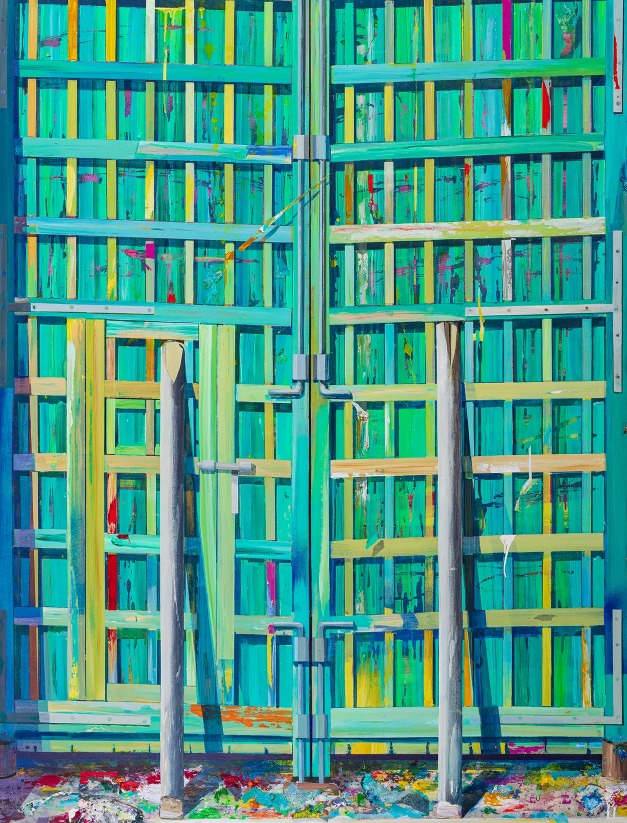
Paris. From prisons to concentration camps, Nicolas Daubanes (born in 1983) evokes in his sculptures, drawings and photographs the temporal layers of traumatic events of the past. At the Panthéon are exhibited large-format works relating to the Struthof camp (Bas-Rhin), Mont-Valérien (Hauts-de-Seine) and the Montluc prison (Rhône), “places of confinement” which interest the artist. Along the columns, the large drawings in iron powder invite questions of memory in “a theatrical space with a setting and a story”. Developed from artistic residencies carried out in important places of memory in France, the drawings approach the story through an ellipse, showing only a viewpoint in the Struthof forest for example, without representing the prisoners. In addition to the magnetic iron powder that he pours onto the supports to create relief, Daubanes uses laser cuts to give the illusion of depth, like a trompe l’oeil theater set. The scaffolding which supports the works reinforces this aspect, particularly in the four-part work which presents the central passageway of the Montluc prison on a full scale: this prison where Jean Moulin and then Klaus Barbie were locked up reveals all its brutality.
For several years, the Pantheon has hosted works of contemporary art, as well as the commission placed on Anselm Kiefer, but more rarely temporary exhibitions. Here the works of Nicolas Daubanes make you feel “a living memory in a place where the weight of memory weighs” as Marie Lavandier, president of the Center des monuments nationaux, points out. In contrast with the warm colors of the frescoes and paintings that adorn the monument, the works in black, white and gray take on a slightly anachronistic archive value.
In the permanent tour of the Army Museum
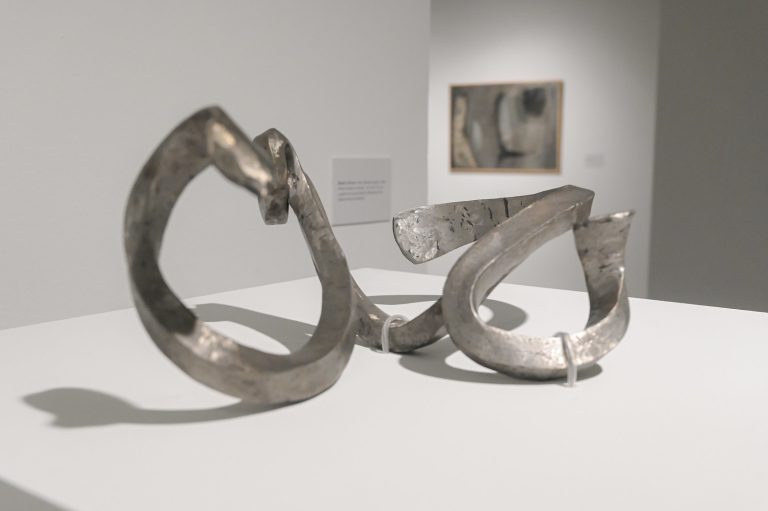
Also invited to the Army Museum, Nicolas Daubanes also refers to history, through around twenty works scattered throughout the exhibition dedicated to the Third Republic (1871-1940) and the Second World War. Paintings on rusted glass evoking the penal colony of Guyana, iron powder drawings representing the Milles camp in Aix-en-Provence (internment camp used by the Pétain regime), enameled porcelain plaques reproducing extracts from the interrogation of Jean Moulin: so many works which complete the documents of the permanent exhibition and are the result of a long artist’s residency at the museum itself.
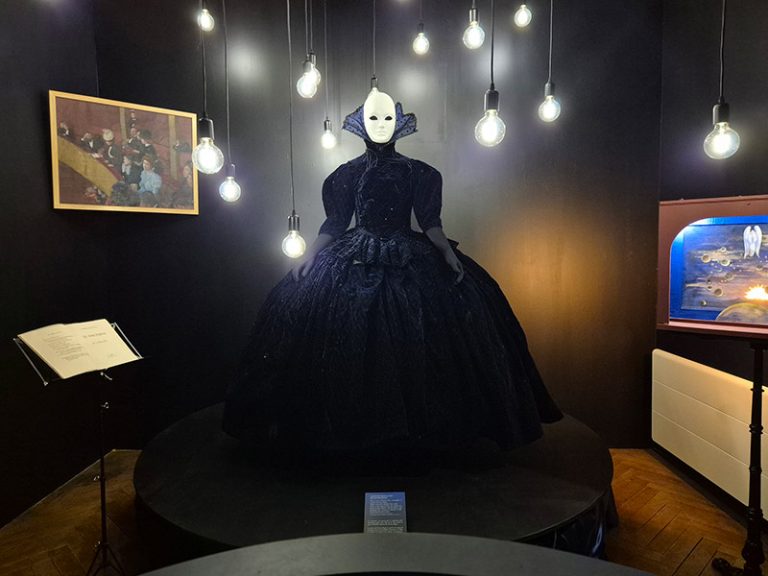
View of the Nicolas Daubanes exhibition at the Army Museum.
© Anne-Sylvaine Marre-Noël
© Adagp Paris 2026
If the gaze becomes more sensitive in these less impressive formats than at the Pantheon, the themes remain those of deprivation of liberty, war and collective memory. The works evoke more than they illustrate, in contrast with the archive photos and film extracts presented along the route, some of which show the violence of the fighting. However, it is not always easy to find Daubanes’ works in the permanent exhibition, currently under renovation, especially since the lighting there is hazardous. The silver-colored labels indicate them and give elements of context, but will visitors linger there when the permanent route itself is very dense?