Pamplona,
The production of Nicolás Combarro, a Galician artist who has been around for nearly two decades, draws on architecture and its elements to propose personal reflections: he has documented buildings and materials that have lost their function, or that never fulfilled it, and that can evoke other cities, perhaps lost and closer to the rural, but that have not ceased to be part of the current ones. Trained in biology and audiovisual communication, he has also curated various exhibitions by photographer Alberto García-Alix, with whom he created the production company in 2004. There are no sorrows.
This author is the last to join the program build bridges from the University of Navarra Museum: working in the archives of this center, he found a photograph that Agustí Centelles took while he was held in a French concentration camp, titled France 1939. Bram concentration camp. Bedroom, 1939-39and dated, therefore, to an initial stage of the exile of the Valencian photojournalist, who would remain in France until the mid-forties, forming part of its resistance.
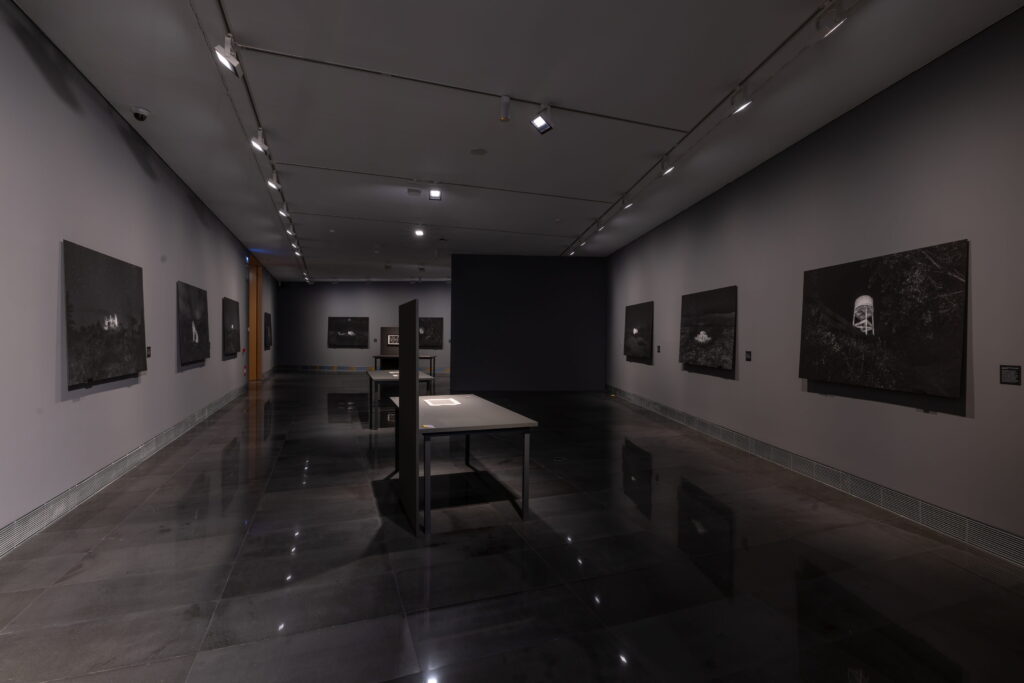
Following this image, Combarro wanted to know more about what happened in the French concentration camps and also in the Spanish camps where repression was carried out: what happened in the three hundred spaces of this type that existed in our country, which housed between seven hundred thousand and one million people, has been known especially since the declassification of the military archives of that time eight years ago. These have been the enclaves that the Galician has sought to return to memory in his latest proposal, which is now exhibited in Pamplona and is titled Matter of silence.
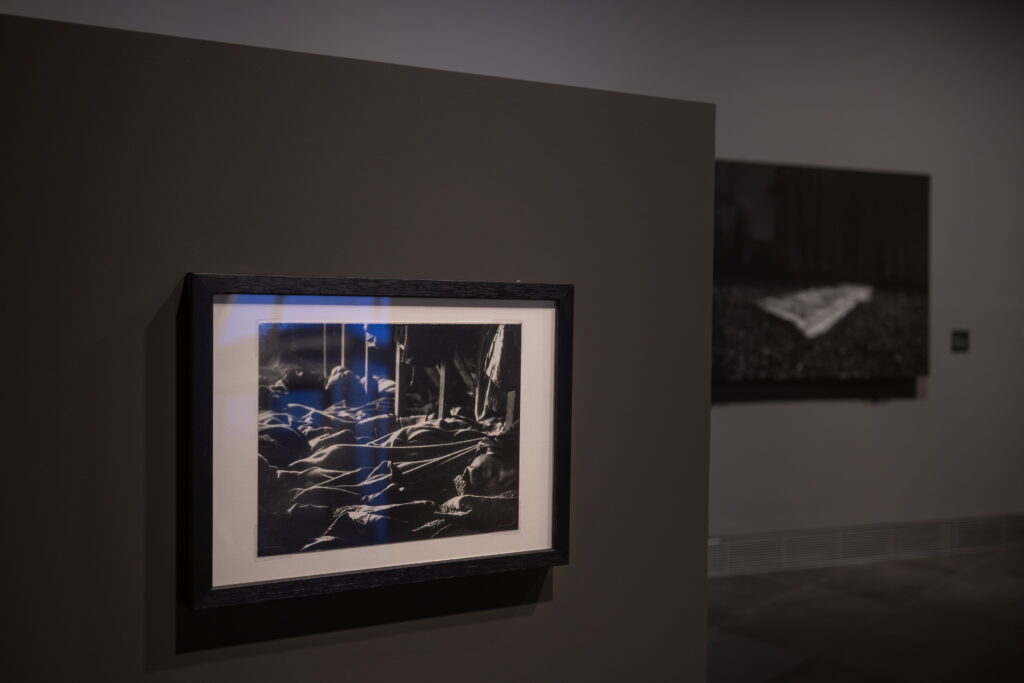
He visited them at night, searched for their foundations and remains, and provided them for a short time with the light necessary to take his images, a light that he gave symbolic content as revealing the invisible. The result is disturbing compositions, as these locations have been almost swallowed up by bare landscapes where no one other than a researcher could surely locate them. The night, that moment in which he chose to carry out this series, seems to distance them even more from the present and accentuates the effects of artificial lighting: I illuminate only the architectural element that I am going to talk about, which makes it have great symbology, a kind of monument to the memory of those places.
Combarro was moved to the remains of the newly built Miranda de Ebro camp (Burgos), which would be used as a base scheme for the ideation of similar centers; to the foundations of the space of repression of San Cristóbal (Navarra); or to the Carabanchel prison (Madrid), which was built by the prisoners.
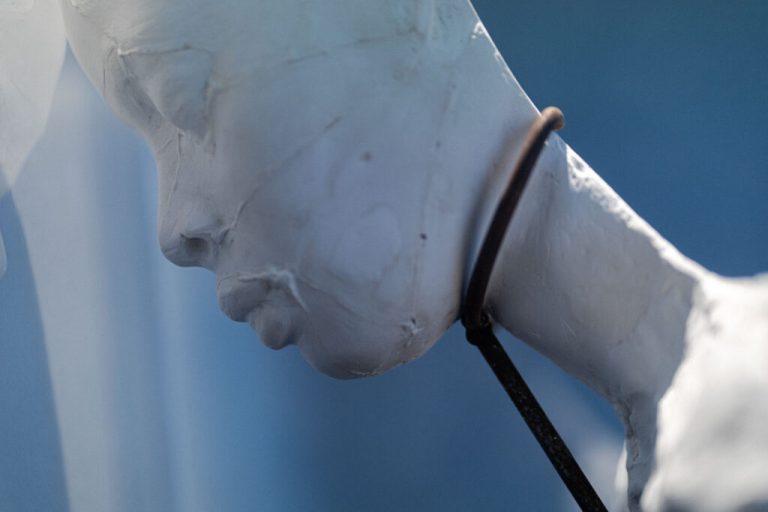
Taking those photos that we can now see in the University of Navarra Museum constituted only the first step to begin a process of analysis, documentation and study of those fields, which has also been included in the exhibition. The public can examine plans, period photographs, postcards and official protocols relating to the fields, a material that is not too extensive, which is why Combarro wanted to complete it with the remains around those buildings to which the small translucent sculptures and the photos that make up the set allude. Archaeologies and with the screening of a documentary about the newly built fields.
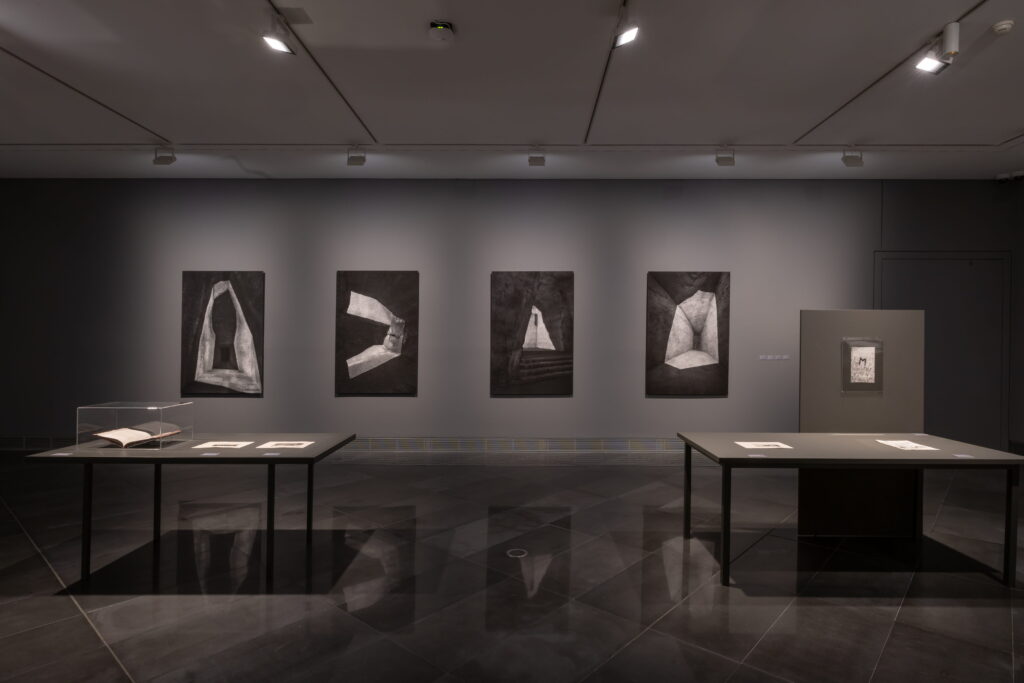
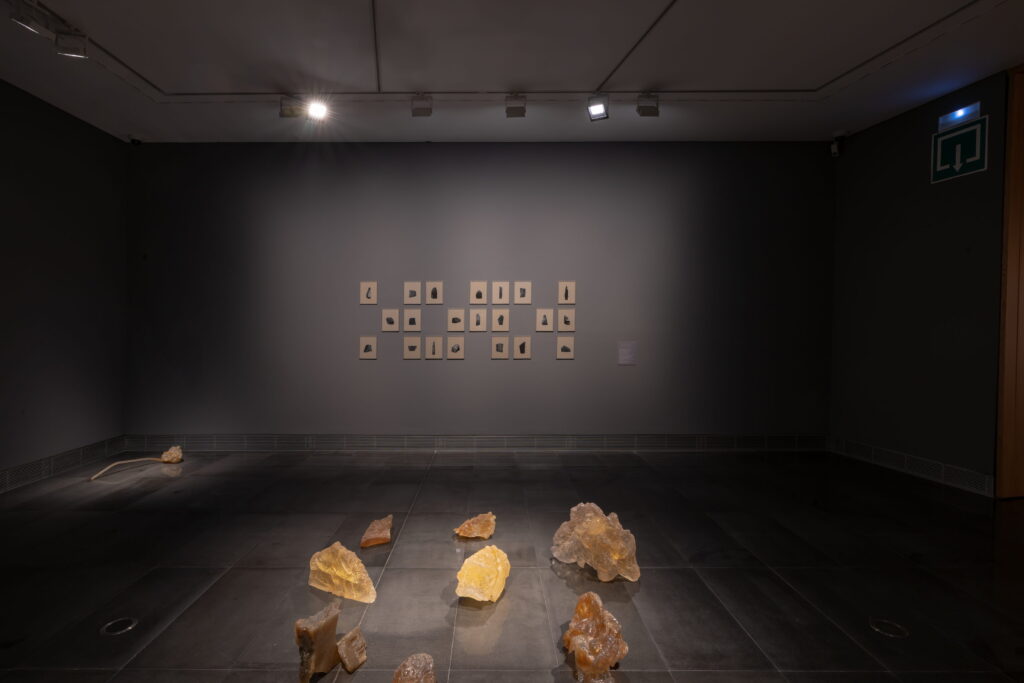
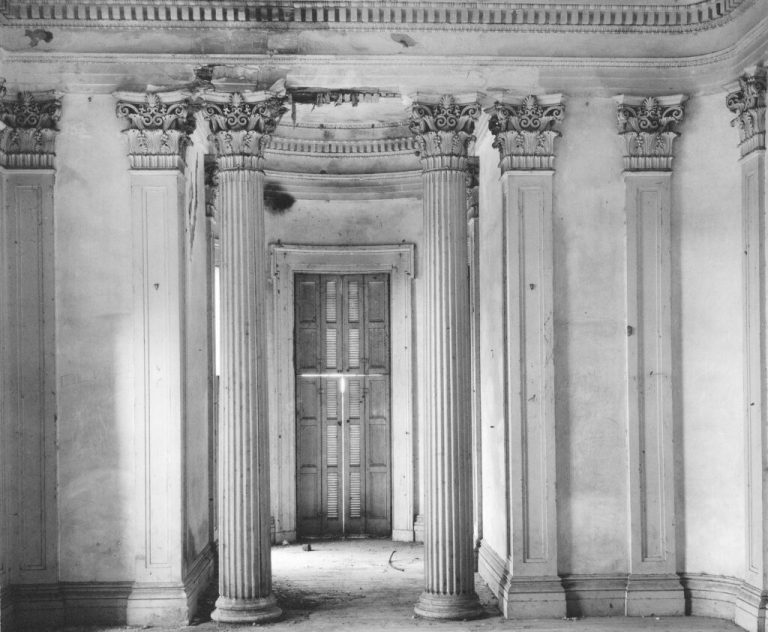
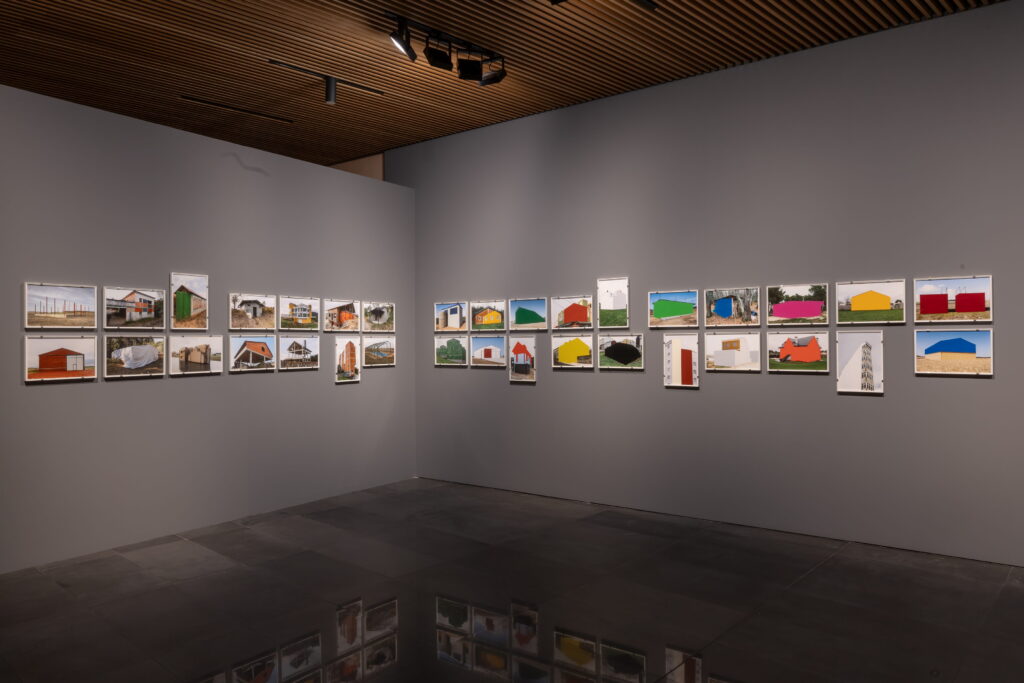
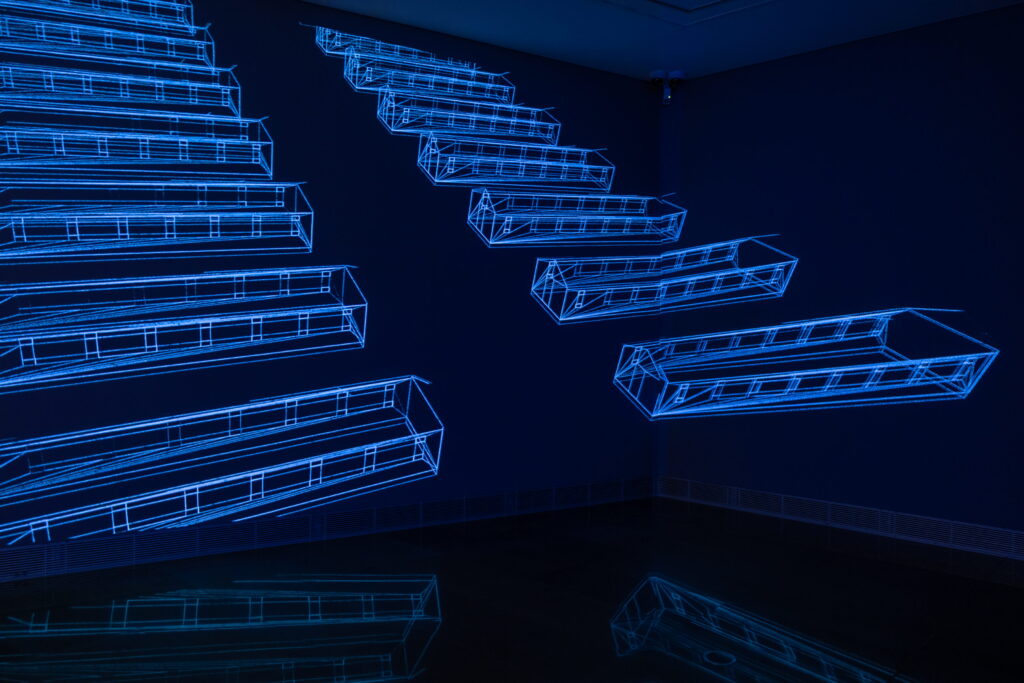
To contextualize Matter of silence In the context of Combarro’s career, this exhibition, curated by Marta Ramos-Yzquierdo, also includes a selection of his past works linked to architectural typologies from other times: the series has arrived in Pamplona Sotterraneidedicated to the very rich underground of Rome and Naples, or reveal, movewhich evokes the yesterday of the old Madrid Tobacco Factory, the current Lavapiés Tabacalera. Also works of spontaneous architectureabout constructions that do not obey rules; of hidden architecturea series in which Combarro himself devised interventions based on games of colors and scales based on found elements; or of black seriesits study and interventions in the mining and industrial heritage.
Underlying all these proposals is an attempt to bring the forgotten to the present, creatively and critically: There is an attempt to use artistic language to talk about very complex contexts that are outside the usual communication circuit. I believe that, as artists and being aware of our historical, political and social context, we can activate it with the tools we have. In my case I have worked on memory; The distance from the event allows me to have a perspective that makes these interventions re-emerge in the architectures of those forgetfulness.
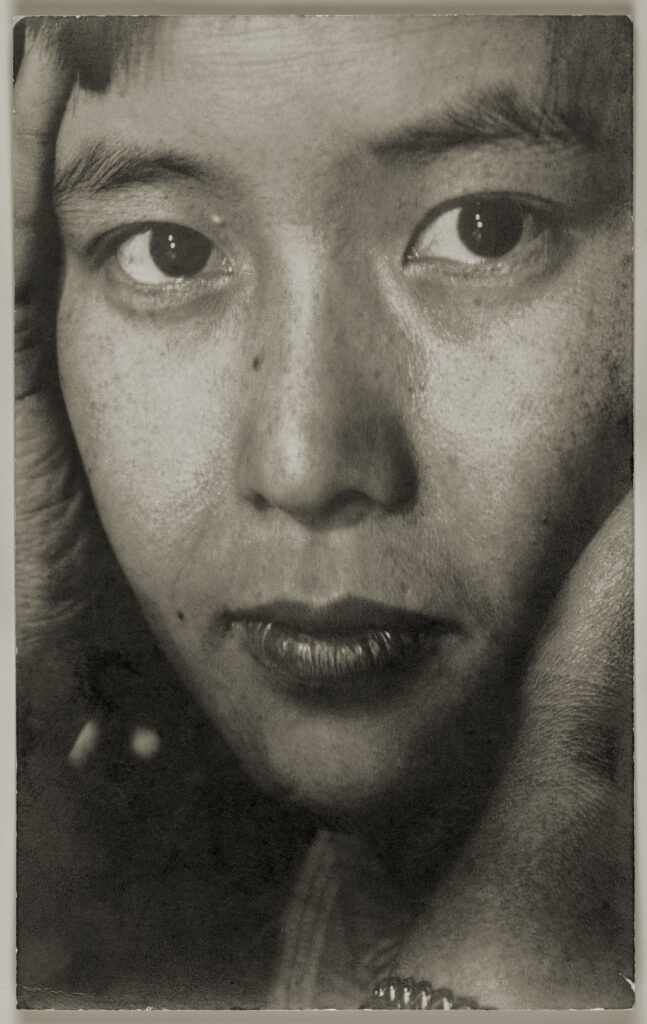
Five years ago, and precisely at this time, the Mapfre Foundation presented in Madrid the images of the Japanese Tomoko Yoneda, quite focused on spaces, exteriors and interiors, where decisive and turbulent historical episodes had taken place. Ignoring their titles, they could be neutral; Knowing its context, its memory, the viewer’s gaze changes almost completely. The collected works of Combarro could suggest a similar energy, but the artist’s intervention accentuates the options of his perception, critical and non-neutral, from the present.
Nicolás Combarro. “Look elsewhere”
UNIVERSITY OF NAVARRA MUSEUM
University Campus, s/n
Pamplona
From February 25 to August 9, 2026