Museum visitors experience relatively little boredom, but this boredom, when it occurs, harms their appreciation of museums and the acquisition of knowledge, according to a study published October 27 in the journal Scientific Reports. As sociologist Hartmut Rosa already showed in the 2010s, museums offer experiences that go against the overstimulation that characterizes contemporary society, imposing a slow temporality on the visitor. In this way, they may appear to some as “oasis of deceleration” and to others places of no interest.
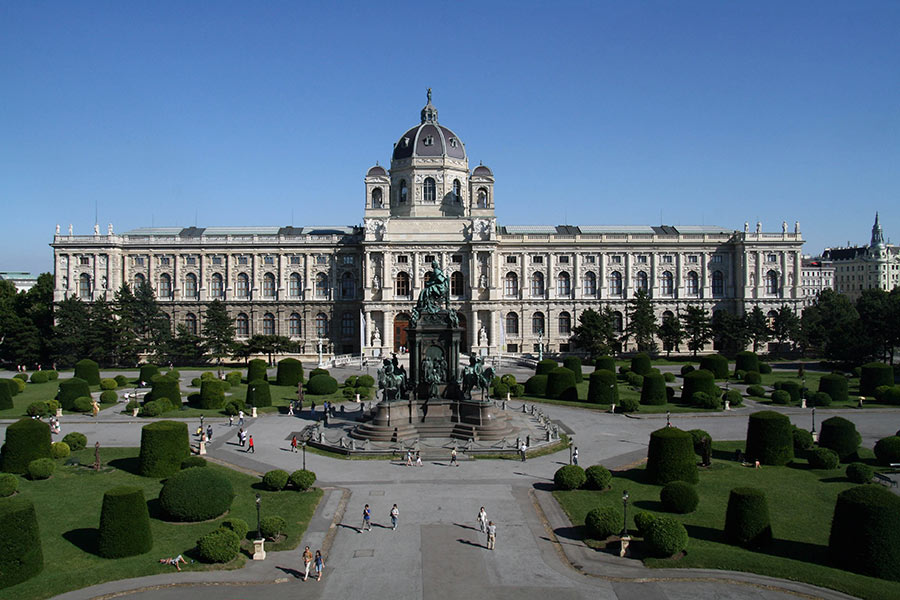
The survey was carried out by an international team of psychologists led by Thomas Goetz, from the University of Vienna between May 2023 and December 2024 in Vienna, Austria, among 1,269 visitors to the Sigmund Freud Museum and the Kunsthistorisches Museum, aged 18 to 91. It is based on the control-value theory, according to which boredom is linked to information overload or the complexity of content, to the lack of stimulation or personal interest in what is presented.
The researchers based themselves on questionnaires distributed at the exit of the museums, individual 10-minute interviews, as well as knowledge tests administered to visitors, aimed at measuring what they had retained at the end of their visit. The results of the survey, which only have the scope of the sample surveyed, indicate a relatively low level of boredom of 1.74 out of 5. The survey also highlights a negative correlation between the level of boredom felt and the knowledge acquired during the visit: the more visitors report being bored, the lower their knowledge test results are.
The authors of the survey nevertheless propose different solutions to remedy boredom. It is a question of associating the exhibitions with explanatory texts of different lengths and available in several levels of difficulty, of setting up various visit itineraries corresponding to gradual levels of in-depthness, but also of using digital tools, such as QR codes, to personalize the information given. In short, moving away from the founding idea of the universal museum, to prefer a museum model adaptable to everyone, following a proactive approach.
These proposals are nothing new. Several French museums are already developing similar systems, such as the Bourdelle Museum in Paris, which offers two tours, 30 minutes or 1.5 hours long, or the Carnavalet Museum, which offers itineraries allowing visitors to discover different selections of works.
As if to anticipate the reproaches of skeptics, who will perhaps recognize in these solutions the features of a leveling down, the researchers explicitly distance themselves from a transformation of museums into places of “edutainment” – English neologism designating a mixture of education and entertainment (entertainment) – by suggesting that cultural establishments create spaces for reflection and silent contemplation, without stimulation.