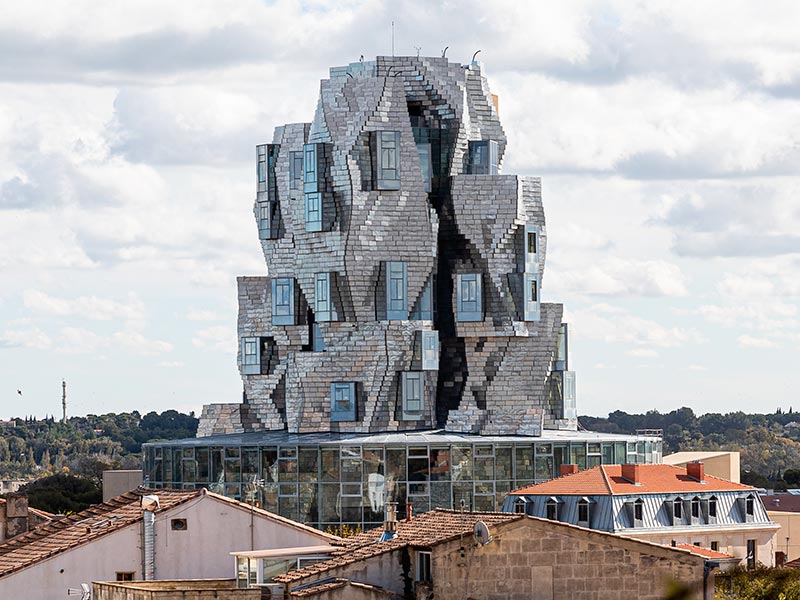
Arles (Bouches-du-Rhône). Between the steel reflections of the Gehry Tower and the dust of the roads of Salin-de-Giraud, Arles is torn apart. On one side, a globalized city center, showcase of a prestigious culture irrigated by millions of private euros. On the other, an archipelago outskirts. Here, working-class neighborhoods and Camargue hamlets feel like forgotten spectators of a radiance that barely crosses the ancient ramparts.
And that’s where the problem lies. Beautiful Arles has succeeded in its challenge to shine internationally by attracting 1.5 million tourists each year. And the reasons for this attractiveness are numerous. The “Meetings of Photography”, “The South”, “The Cargo Stopovers”. Or the new drawing festival. With the apotheosis, the theatricalization of its eight monuments listed as UNESCO heritage. “ Art is emancipatory, it liberates minds and educates, and must therefore not remain inert”says Mayor Patrick de Carolis. Moreover, the city councilor’s ambition is “to make Arles the city of images”. If the City’s 10 million euros cultural budget may seem modest compared to the 24 million euros of Avignon and the 35 million euros of Nîmes, the “little Rome of the Gauls” surpasses them thanks to a unique hybrid model in France where private financing bridges the gap with its neighbors.
This is the attraction of this city with seven foundations that have become the main architects of the City’s attractiveness. Leading by Luma, worn by Maja Hoffman. The construction of the Gehry Tower alone, imagined by the patron, represented an initial investment of 150 million euros. For its part, the Van Gogh foundation invested 11 million euros to transform the Léautaud hotel in Donines. And the domino effect begins. For one euro invested by the City, Arles often receives three to four euros in external subsidies, State, Region, or Department. Cyril Juglaret, Provence-Alpes-Côte d’Azur regional advisor, discusses a regional support plan of 19 million euros for the territory. In short, a globalized culture that generates revenue for businesses and jobs from which the population benefits.
The Gallo-Roman theater of Arles.
However, Nicolas Koukas, candidate of the New Popular Front, deplores a “culture shock between large foundations and small associations that have been working in the area for years”. Voices are being raised today against this influential patronage which attracts an international elite. In question? A showcase culture that would make Arles the puppet of patrons causing gentrification which chases out local creators and empties the historic center of its inhabitants.
LFI wants to increase the budget paid to associations
The candidates are pleading for more equitable access to culture with the aim of better distribution of public aid. If Patrick de Carolis defends his choice to have “increased subsidies to cultural associations from €586,000 in 2020 to €670,000 in 2026”its opponents denounce an imbalance. “Large players capture the majority of this funding while small players have seen theirs disappear”warns Nicolas Koukas. This is how the Ambre company working in the working-class neighborhoods of Griffeuille, Barriol and Trébon saw its subsidies cut by 12,000 euros for 2025. The head of the LFI list, Jecilla Regad, estimates that “in Arles, ten associations receive 82% of the amount of this budget” and proposes “ increase by at least 200,000 euros to finance all local artistic and cultural associations”.
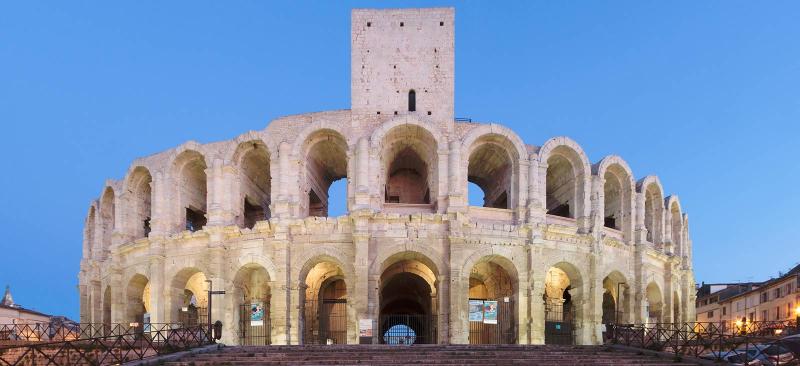
The Arles Arena, a Roman amphitheater built around 80 AD. AD
While financial fairness remains an essential issue, it is not sufficient. Opponents raise the question of sharing heritage. The cure? Break down its ramparts to facilitate access to monuments for shadowy cultural actors and working-class neighborhoods. Because these prestigious places are often perceived as reserved for large national or private structures. “In addition to creating a heritage service, we want to facilitate access to these sites in working-class neighborhoods by regaining flexibility, suggests Jecilla Regad. A policy which can involve, for example, the opening of the Terms of Constantine for public readings or that of the Saint-Trophime cloister to exhibitions other than those of the “Rencontres de la photo”. »
Same demand for openness for the ancient theater which could host shows by neighborhood associations. The candidate without label Jean-Michel Jalabert, former first deputy of the current mayor, intends to increase the heritage budget from 3 to 10 million euros and “promote access to the municipal theater for Arlesian troupes who are today overshadowed by outside productions”. Patrick de Carolis, undoubtedly aware of this gap, projects “ to open the arenas to host concerts for the general public and shows which retrace the history of the city”.
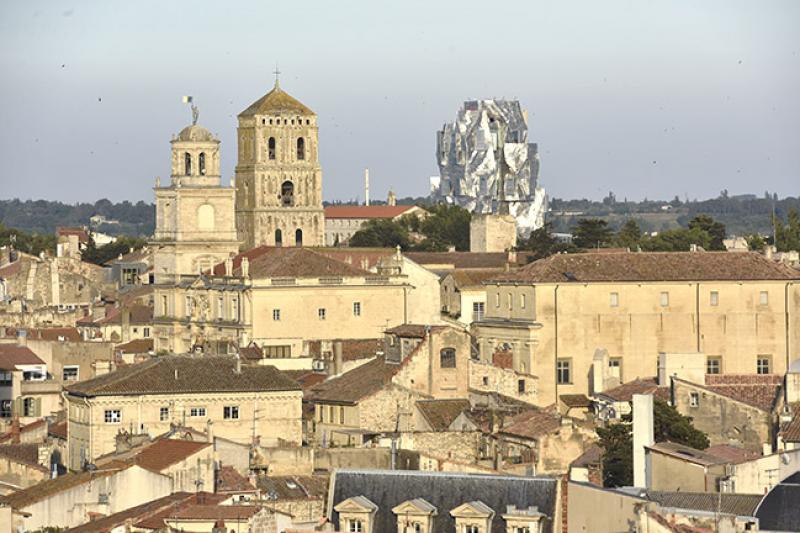
The city of Arles with the Luma Foundation Tower by architect Frank Gehry in the background.
© Photo Hervé Hôte
Involve Arlesians in archaeological excavations
These heritage exploitation projects, however, appear insufficient to reestablish a real link between culture and the people of Arles. If Nicolas Koukas opts for the reinstatement of the “Funny Christmases” deleted by the current municipality, Jean-Michel Jalabert wants to create“a street art festival featuring monuments and the Rhône”. More innovative and unifying, the proposal of the candidate without label, Stéphan Charmasson, is to once again interest Arlesians in archaeological excavations in the Rhône. “Today kept away from these excavations, the Arlesians must be reintegrated via an ephemeral space on the quayshe observes. In August, the treasures brought up from the Rhône would be exhibited there to tell the history of our city. » A system that would be self-financing through paid entry. But reasonable. Patrick de Carolis is considering a more institutional project with the creation “an art and heritage interpretation center for the Roman town, installed on the site of the former Trinquetaille glassworks”.
If these ambitions demonstrate a local effort, they do not resolve the isolation of neighborhoods and hamlets scattered over 759 km2 which too often feel like the forgotten ones of the cultural feast. Where the outgoing majority defends mobile devices like Médiabus, the opposition pleads for a sustainable decentralization of places of creation. For Nicolas Koukas, opening up requires “the creation of artist residencies in each hamlet and village, thanks to the provision of buildings for sale financed by the City in partnership with private actors”. To irrigate the territory, LFI wishes to deploy the activity of the Camargue Museum located 12 km from the city center rather than the launch of a bullfighting museum defended by the mayor and his left-wing opponent. Decentralizing culture also means “recreate the network of media libraries that disappeared in 2009 via the opening of three annexes attached to the city center”underlines Jecilla Regad. The message is clear. Expectations too. Arles must ensure that its influence is not limited to its city center. As Frédéric Mistral recalled,“Trees with deep roots are those that grow high”. And to continue to shine, the City must circulate its cultural lifeblood throughout its territory. From the city center to the borders of the Camargue.