More than twenty-five years have passed since we were able to see the last major exhibition in Spain dedicated to Pistoletto; The MACBA in Barcelona welcomed her and, given that the man who was one of the promoters of Arte Povera has not stopped working since then – he continues to do so, with prodigious energy, at the age of ninety-three -, it is very pertinent to return to his milestones and learn about his current concerns, which pass, as always, through political and social drifts and Artificial Intelligence. Now the Leonese MUSAC is doing it, and the journey of this retrospective, fundamentally thematic, begins precisely because of the very recent project mirror of eternityin which this tool merges faces of randomly crossed individuals, as it did decades ago through superimposition. There are many implications, in contemporary art, of this dissolution of individual traits to generate new ones: closed identities are diluted in favor of human interconnection and opposites coexist.
Under the curatorship of Álvaro Rodríguez Fominaya, director of the museum, the anthology, titled “Spazio Libero”, continues to take us to the beginnings of the career of an artist who, at first, was influenced by his painter father (Ettore Olivero Pistoletto, also a restaurateur) and then trained in advertising until he was hired by Armando Testa, the Turin priest of typography and graphic design, founder of one of the main agencies in Italy. His first images on the itinerary correspond to self-portraits that oscillate between rich material and a highly refined brushstroke, between the evaporation or concealment of his own face and its representation as a powerful presence.
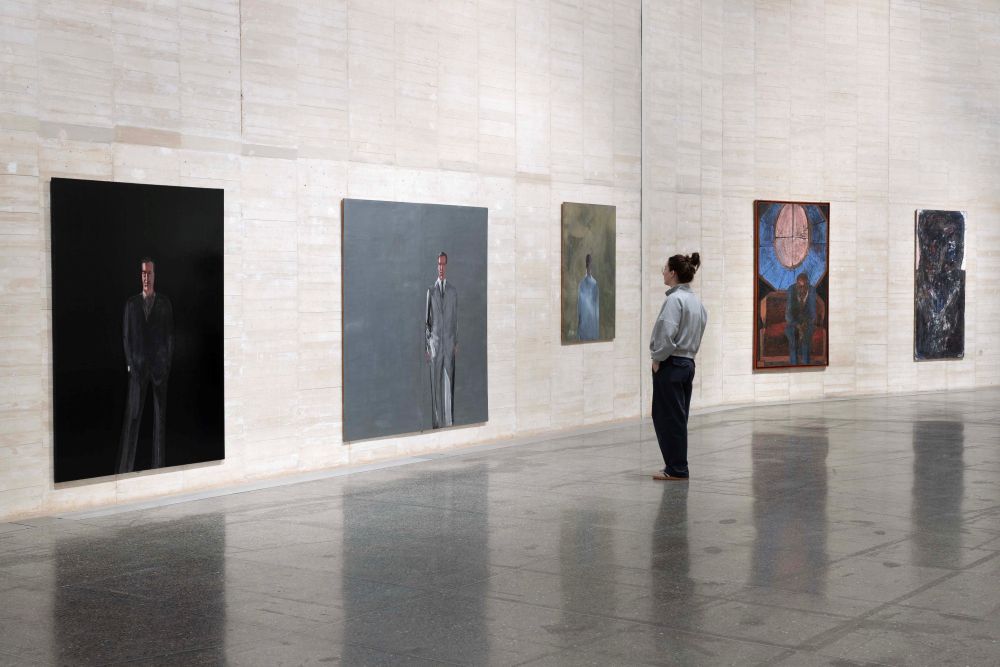
Michelangelo Pistoletto. «SPAZIO LIBERO». View of the exhibition at the MUSAC. Museum of Contemporary Art of Castilla y León, 2026. © Michelangelo Pistoletto
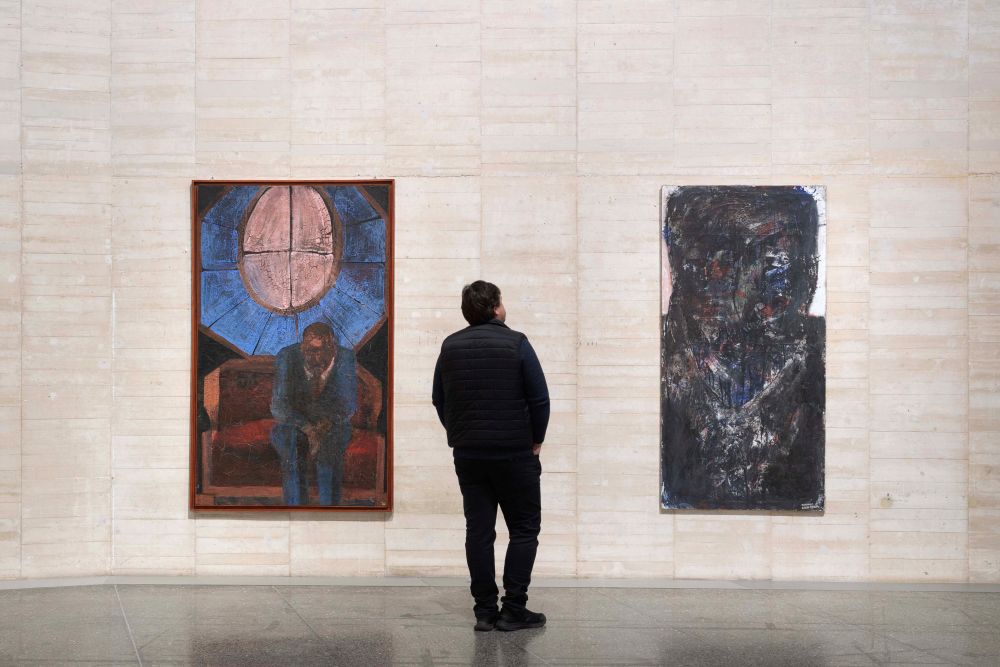
Michelangelo Pistoletto. «SPAZIO LIBERO». View of the exhibition at the MUSAC. Museum of Contemporary Art of Castilla y León, 2026. © Michelangelo Pistoletto
In his first depictions of the human figure he was inspired by Piero della Francesca and his use of perspective and, soon, by orthodox icons: precisely the nuanced black background of one of those portraits, in which we see him full-length and with a magnetic presence, was one of his greatest, or the greatest, turning point of his career. Focusing on the reflections that he had managed to capture, he broke with his past conventions of representation by deciding to incorporate the public into his proposals and, with this, add to them the factor of change and chance. Where there is human reverberation there is no static, the aforementioned perspective is inverted and someone other than the author gets to express himself.
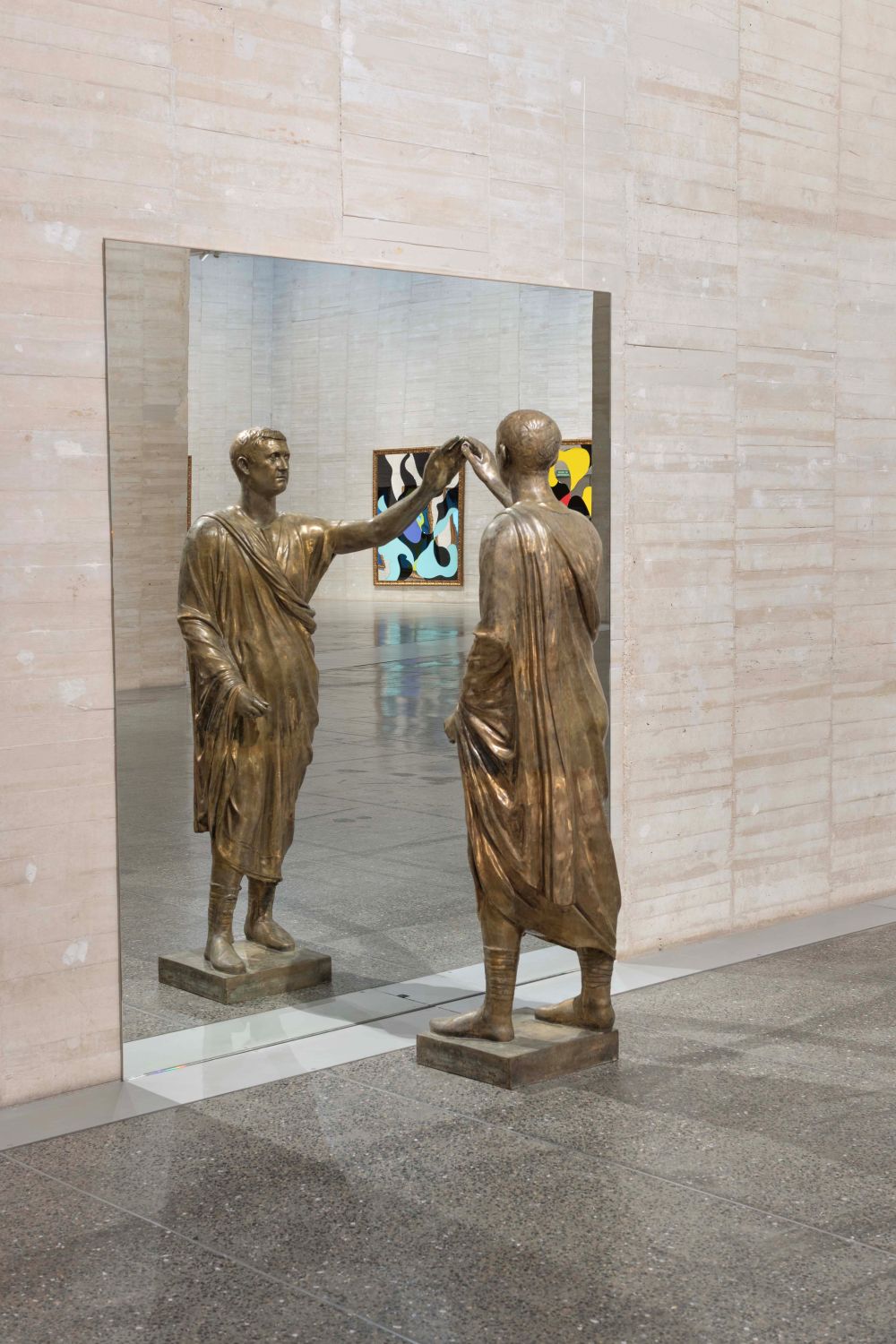
Michelangelo Pistoletto. «SPAZIO LIBERO». View of the exhibition at the MUSAC. Museum of Contemporary Art of Castilla y León, 2026. © Michelangelo Pistoletto
Pistoletto then started – it was the beginning of the sixties. a brilliant career on that path that would lead him to gather the support of Ileana Sonnabend and Leo Castelli, to begin exhibiting in the United States… and to be considered, without delay, a pop creator. Everything happened very quickly, but the artist from Biella did not want to be completely carried away by the current: he decided to stay working in Italy, show his pieces in his studio in Turin and delve into the realms of povera, which is the same as saying in investigations between creation and life. It is no coincidence that it was also at that time, the late sixties, when he launched the experimental theater group Lo Zoo; Deep down, everything had started in his mirror paintings. Entering the viewer was his Big Bang: The transition from mirror paintings to theater – everything is theater – simply seems natural to me… The public’s participation in the painting has thus evolved towards other forms of participation.
As visitors become part of their works, movement, time and space are added to them, and when the canvas gives way to polished stainless steel on which to incorporate first paintings and then silk-screened photographs. His paintings are no longer windows or illusion, but rather an environment that surrounds us and we know well, and recognizing ourselves in them is much more than entertainment, it is affirmation, vindication and even memory of our first radical experiences: Pictures are always hung on the walls, but mirrors are also placed on those same walls. I believe that the first truly figurative experience of the human being is to recognize oneself in one’s own image reflected in the mirror, which is the most faithful fiction to reality.
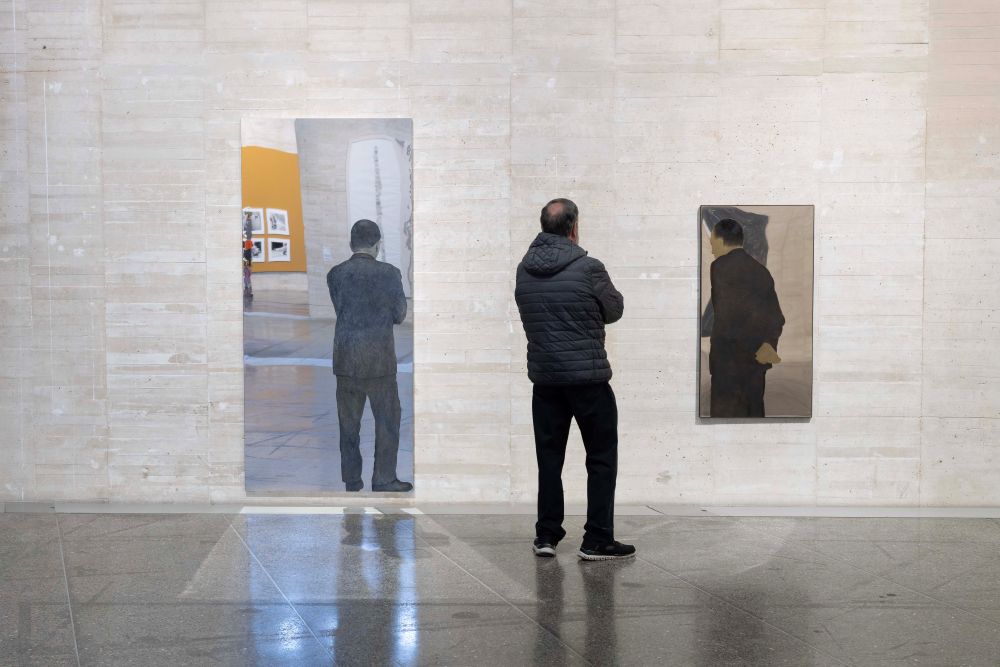
Michelangelo Pistoletto. «SPAZIO LIBERO». View of the exhibition at the MUSAC. Museum of Contemporary Art of Castilla y León, 2026. © Michelangelo Pistoletto
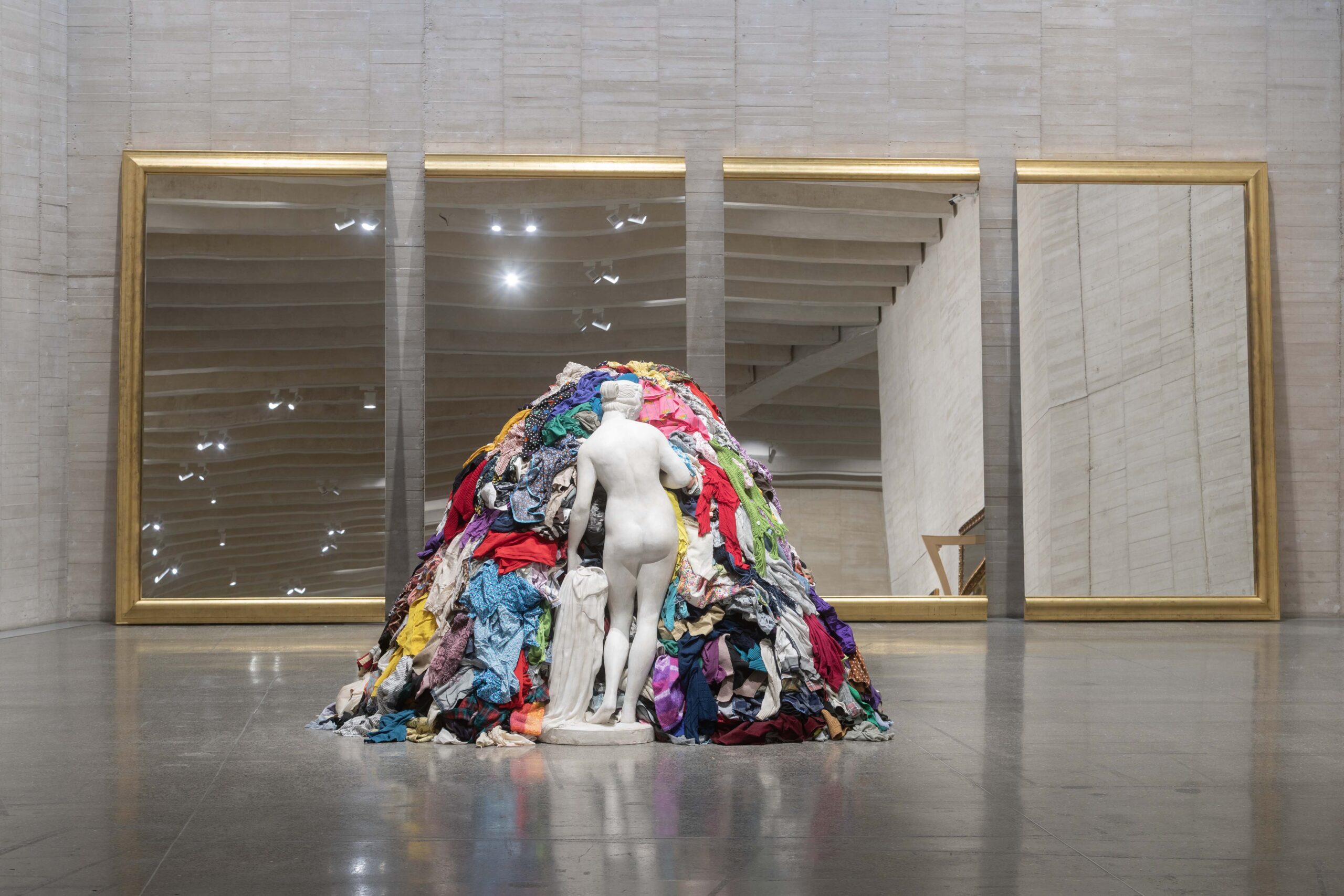
Michelangelo Pistoletto. «SPAZIO LIBERO». View of the exhibition at the MUSAC. Museum of Contemporary Art of Castilla y León, 2026. © Michelangelo Pistoletto
In large mirrors their Venus of the ragsinherited beauty and today’s life, in which a classically inspired sculpture is contrasted with a mountain of used clothing that alludes to our consumerist desire – the garments are renewed in the presentations of the piece, but they are always colorful and worn-; and also his less three-dimensional Objects, made with equally common materials and, in some cases, shot and celebrated at street level. Others want to break with the impossibility of reflecting themselves, through the path of deconstruction. The artist has been deeply involved in the design of an exhibition that meets us on the ground, hidden by its Maze of cardboard, which traces paths along which to walk, and in the heights, from which hangs its Terzo Paradisowhich completes the manifesto of the same title that he wrote more than twenty years ago and that has also traveled to different parts of the world. This sign, a redesign of the Italian infinity symbol, points to the imperative need of human beings today to invent another dimension of existence, between nature and technology.
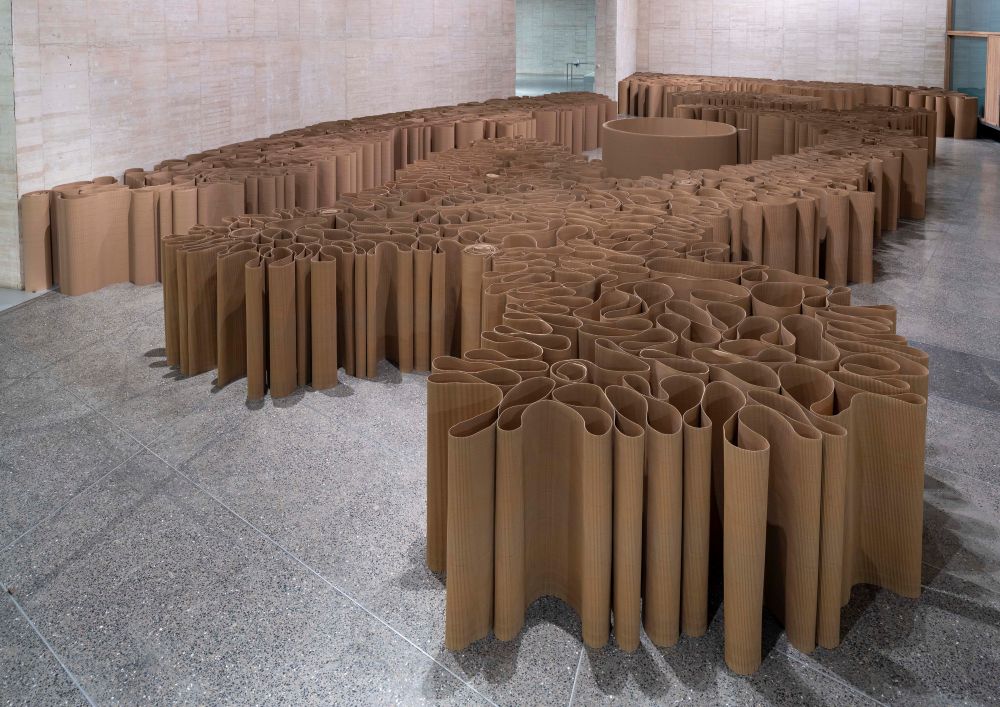
Michelangelo Pistoletto. «SPAZIO LIBERO». View of the exhibition at the MUSAC. Museum of Contemporary Art of Castilla y León, 2026. © Michelangelo Pistoletto
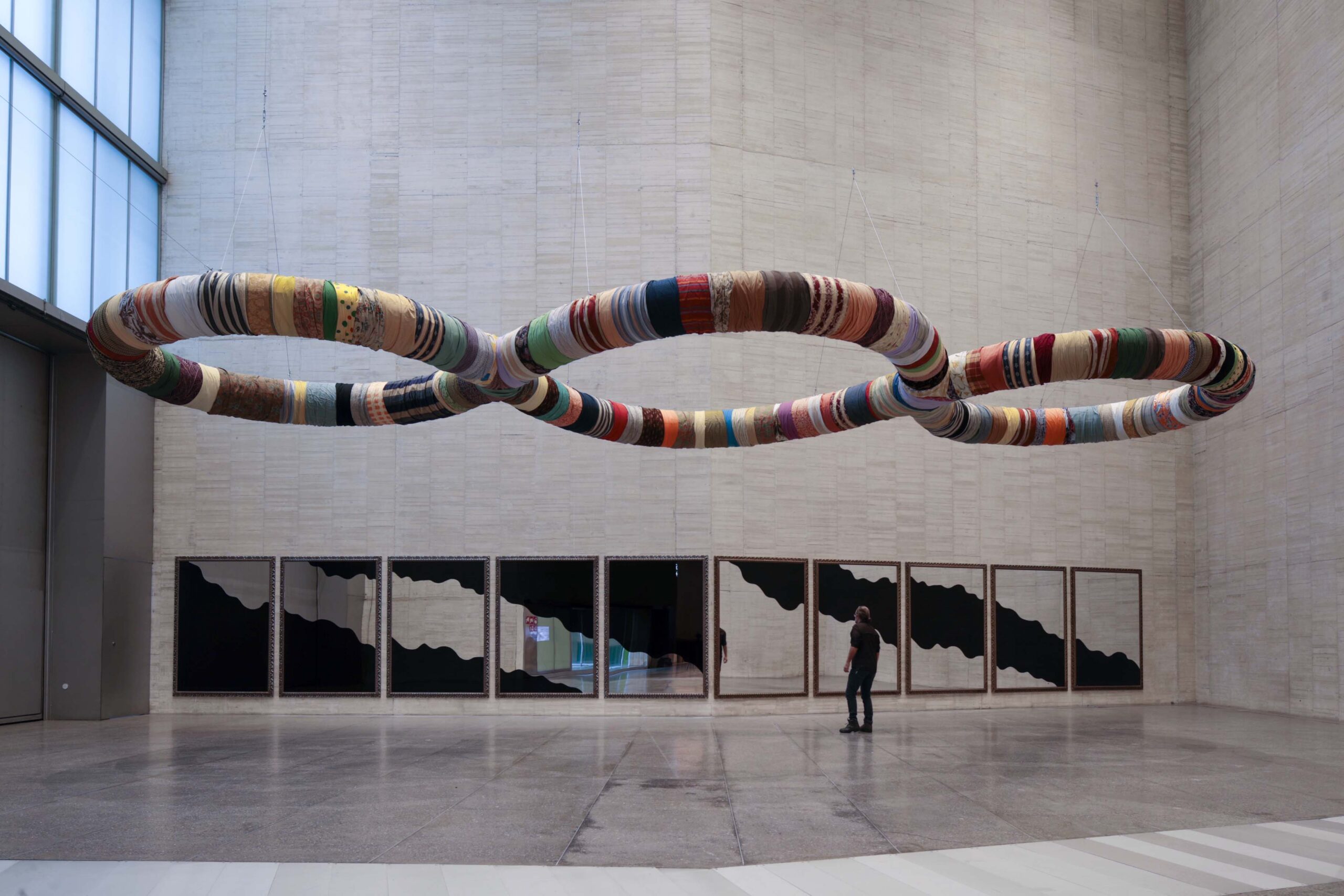
Michelangelo Pistoletto. «SPAZIO LIBERO». View of the exhibition at the MUSAC. Museum of Contemporary Art of Castilla y León, 2026. © Michelangelo Pistoletto
Furthermore, he himself will incorporate another dimension into his mirrors to open them, performatively breaking them, to color (Color and light) or to the word I respect in several languages, surrounding a map of the Mediterranean like a table of different chairs, and will try to introduce it to our gaze before a fragment of transparent plexiglass in which the art can be behind, in front or on the same sheet – Pistoletto has also been interested in phenomenology and the philosophy of experience.
In any case, in each of his works there is much that is essential and genuine; Each work is a root, born in the moment and gains validity over time: it is the artist’s will to work to change realities and generate emotions, in Fominaya’s expression, with the passion of a guerrilla. To this end, he created his foundation in 1998, in an old factory in his hometown, in Piedmont, where he develops projects linked to community and sustainability. Not a little prolific writer, above all he believes in art as an instrument of transformation.
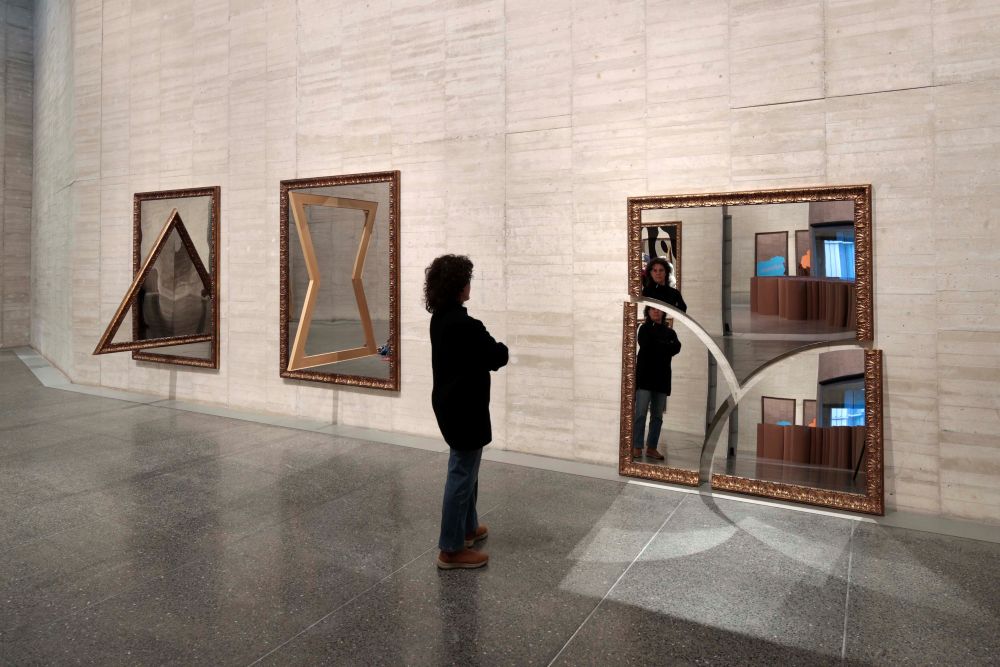
Michelangelo Pistoletto. «SPAZIO LIBERO». View of the exhibition at the MUSAC. Museum of Contemporary Art of Castilla y León, 2026. © Michelangelo Pistoletto
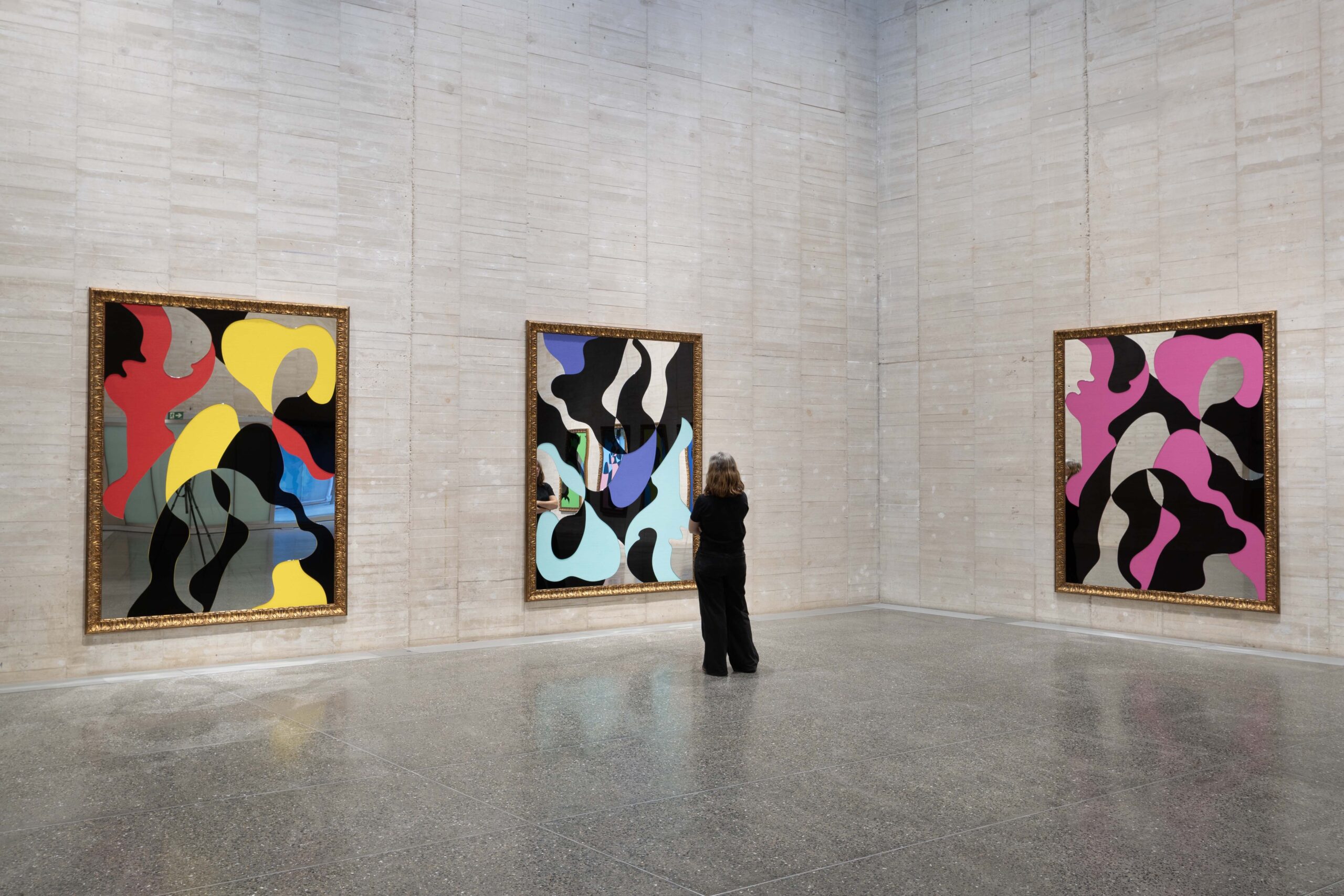
Michelangelo Pistoletto. «SPAZIO LIBERO». View of the exhibition at the MUSAC. Museum of Contemporary Art of Castilla y León, 2026. © Michelangelo Pistoletto
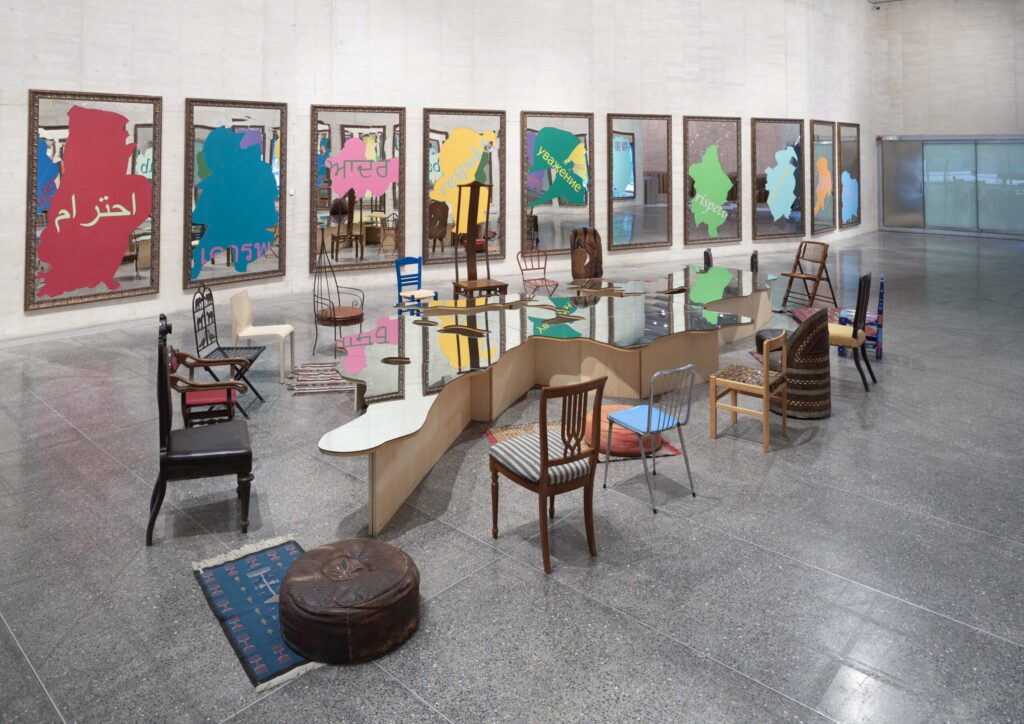
Michelangelo Pistoletto. «SPAZIO LIBERO». View of the exhibition at the MUSAC. Museum of Contemporary Art of Castilla y León, 2026. © Michelangelo Pistoletto
Michelangelo Pistoletto. «SPAZIO LIBERO»
MUSAC
Avenida de los Reyes Leoneses, 24
Lion
From November 7, 2026 to May 23, 2027