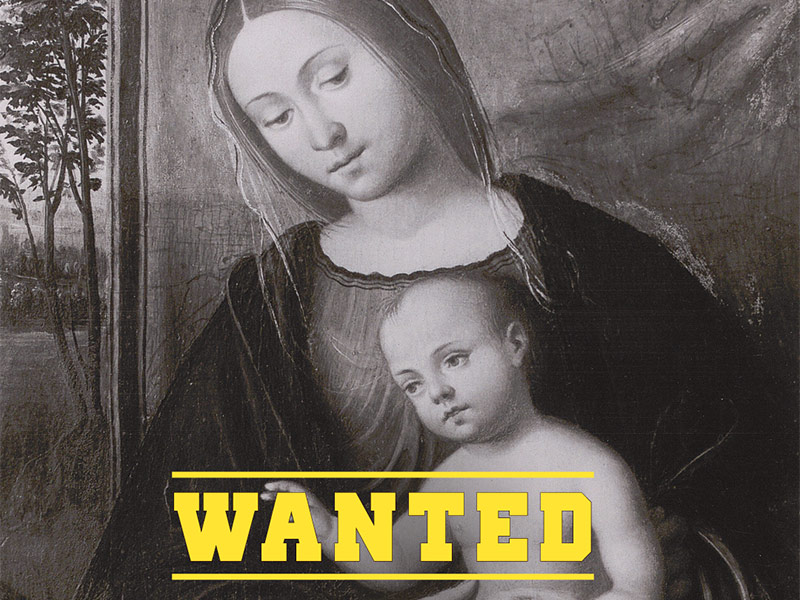
Orleans. A painting by the Dutch painter Willem Cornelisz Duyster, The Drinkerstolen in 1940 from the Paul Fourché Museum in Orléans, was found in Switzerland and should soon be returned to the city’s Museum of Fine Arts. This discovery constitutes a first result for the “Wanted” operation, launched at the beginning of July at the initiative of Olivia Voisin, director of the Orléans museums. “It’s an entire museum that has disappeared, it’s quite unique in France”notes the director. In the form of a downloadable list and posters inspired by the American Wild West, the operation aims to attract the attention of art market professionals and amateurs to the four hundred and twenty-four missing paintings.
In June 1940, the Paul Fourché Museum in Orléans (opened in 1908) was looted then burned, and its collections disappeared. This historic episode has long been obscured by residents and elected officials, according to Olivia Voisin who evokes “a form of omerta, particularly because the Germans were not the only ones to have looted the museum. It is likely that people from Orléan took part in it”. If the hunt for these works has never stopped since the end of the Second World War, it is only since the 1990s, and especially the 2000s, that the search for provenance has changed mentalities in auction houses and among auctioneers, explains Olivia Voisin.
The publicity surrounding looted or spoliated works also plays a significant role in the willingness of professionals to get involved in this subject. Olivia Voisin points out, however, that certain auction houses are showing “uncooperative” when it comes to potentially stolen works. Three recent restitutions of works have also encouraged the museum to be more proactive in research.
Willem Cornelisz Duyster (1599-1635), The Drinkerearly 17th century, 44 x 31 cm.
© Invaluable
Participatory research
The “Wanted” operation calls on people of good will to search for works on auction sites and in catalogs, first at the local level then at the national level, thanks to social networks. It happens that the looted work has distinctive signs which facilitate its identification: this is the case of a painting returned before the operation, which bore six labels on the back with the stamp of the Musée d’Orléans, including an inventory number. However, its owners waited several decades before considering returning it.
It was in the catalog of an auction scheduled for October 17 in Lucerne, Switzerland, that Jean-Bernard Rouilly, a former Orléans antiques dealer, spotted The Drinkerthe painting by Willem Cornelisz Duyster. “ What followed was a long exchange of photographs of the work with the auctioneer. He had to be convinced to stop the sale since the French police could not seize the painting in Switzerland »details Olivia Voisin. The canvas showed crude overpaintings which could cast doubt on its provenance: “We were told it was probably a second version of the stolen painting”explains the director of the Orléans museums. The doubts were resolved by analyzes and a comparison with the photographs in the inventory of the Fourché Museum (of the four hundred and twenty-four works sought, only fifty-two are documented by photographs). The owner, a Dutch painting specialist who acquired it in good faith in the 1990s, agreed to return the painting. This will be done within a few weeks, according to the museum.
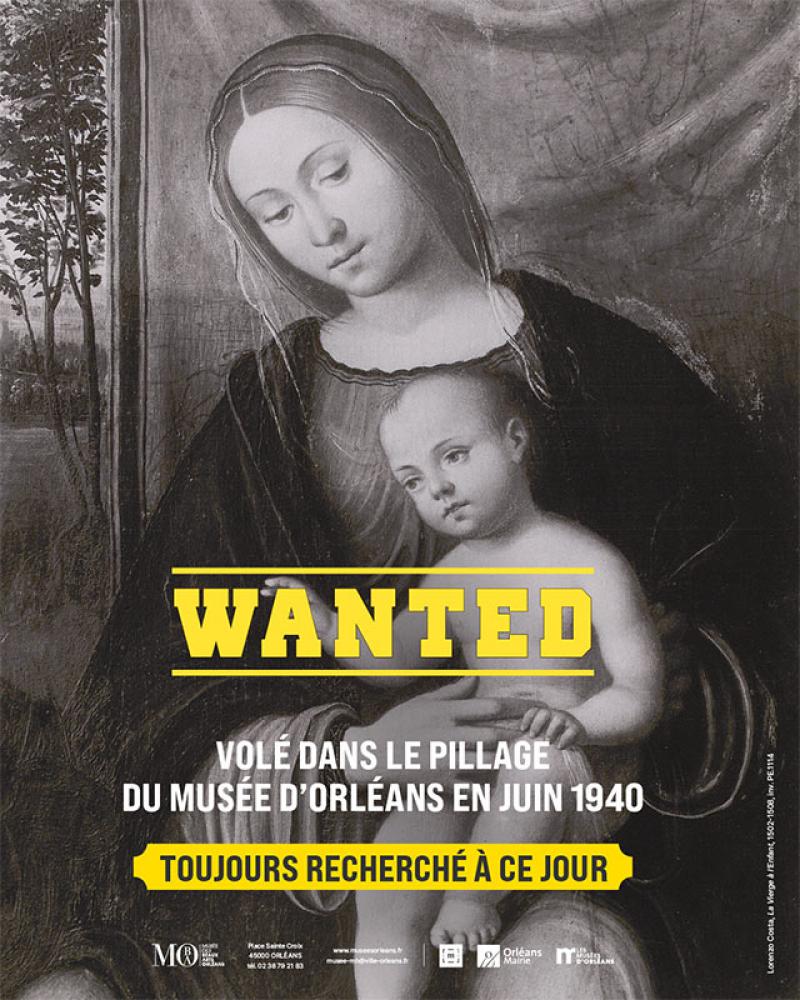
Communication visual for operation “Wanted”.
© MBA Orléans


