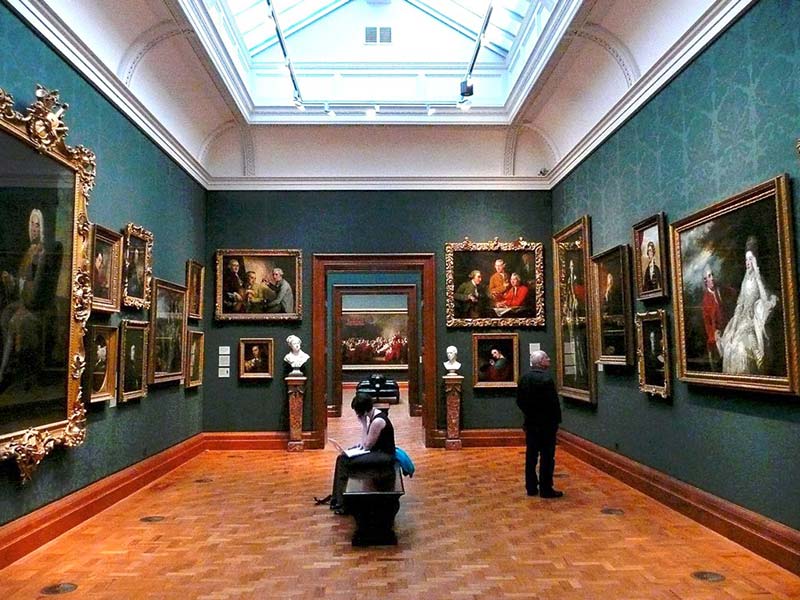
The National Gallery in London is going through a difficult time and has launched a voluntary departure plan to reduce its expenses. The explosion in operational costs (energy, salaries, maintenance) is weighing on the museum’s operating budget while it has not regained its pre-pandemic level of attendance, going from around 6 million annual visits before 2020 to 3.8 million over the twelve months preceding September 2025. Furthermore, the annual subsidy paid by the State (around 32 million pounds per year or 37 million euros) remains insufficient and no substantial increase is not in sight.
In the absence of rapid measures, the deficit of 2 million pounds (2.9 million euros) expected for the current financial year (2024-2025) could increase by an additional 6.2 million pounds (7 million euros) by 2026-2027, bringing the cumulative budget hole to 8.2 million pounds (9.4 million euros).
Faced with this situation, the museum announced an expenditure reduction plan focused on staff. In an official statement, a spokesperson indicates that the National Gallery will cancel or suspend several activities deemed too costly. The first concrete measure is the launch of a voluntary departure plan open to all employees of the gallery and its commercial subsidiary (boutiques, cafes, etc.), i.e. nearly 500 people in total. Each employee is thus encouraged to leave their position in exchange for compensation and financial incentives at departure. If this system does not achieve the expected savings, the National Gallery is already warning that it will have to consider redundancies.
This austerity plan will not be without impact on the cultural mission of the National Gallery. In addition to the reduction in staff, the gallery plans to revise downwards its programming of exhibitions and events. The museum also recognizes that it may have to reduce loans of international works and costly collaborations, due to a lack of means to cover the logistical costs that these projects involve. Until now, access to the museum’s permanent collections remains free, in line with British National Museums policy. The National Gallery underlines its desire to preserve this essential free service.
This austerity cure comes at a time when the museum has embarked on a vast architectural extension project for the next decade. In September 2025, the museum announced “Project Domani”, an investment plan of 375 million pounds (430 million euros). It aims to build a new wing at the rear of the existing building, in order to expand the exhibition spaces and accommodate post-1900 art collections. Enough to arouse the bitterness of employees pushed towards the exit.