
Pamplona,
Two centuries ago, in 1824, Friedrich painted high mountain regiona composition that, when later exhibited in Dresden, his beloved city, was titled High mountain region, based on a drawing by Professor Carus. The peaks that inspired the work were those surrounding the Mer de Glace in Chamonix, but we only have news of this work thanks to period photographs, because its history has not been placid: it was part of the collections of the Neue Nationalgalerie from the twenties to the forties, when it was moved to an anti-aircraft bunker that was abandoned, burned and looted at the end of World War II.
It is believed that the aforementioned Carus, a doctor who was a friend of Friedrich, copied that place on a canvas, somewhat larger than the original, which is now owned by the Folkwang Museum in Essen. It’s not entirely clear that we owe it to Carus in light of the rest of his output; What we do have certain information about is that Friedrich, not much of a traveler, never visited that area, but this doctor did, right in 1823, and there he drew that drawing that would have inspired the romantic painter.
The future of this piece and its copies has been an obsession for the Gipuzkoan artist Jesús María Lazkano, himself the author of landscapes in which he frequently introduces abandoned industrial buildings, but never the human figure, raising atmospheres of mystery derived from that absence.
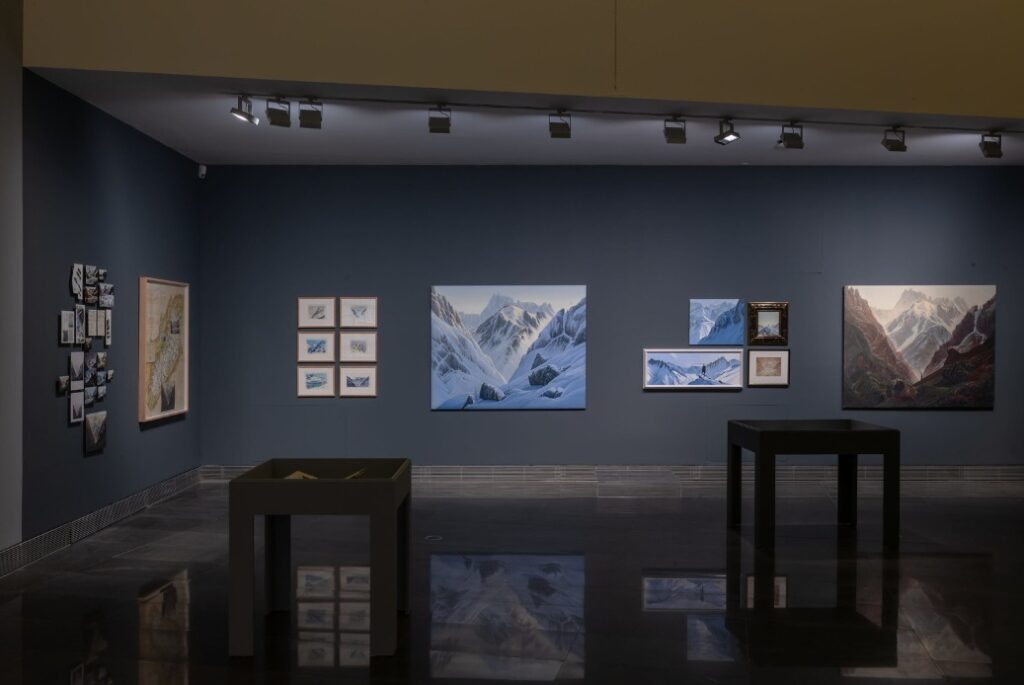
In recent years he has often approached that scene, proposing alternative variants until he decided to superimpose in one of them the Friedrich that we know through photos and the supposed Carus of Essen. Furthermore, to imagine the state in which the nineteenth-century traveler would contemplate the mountains of Chamonix, he looked at a woodbury type by S. Thompson and a stereoscopic photograph by Adolpe Braun, and he came to appreciate the latter through a wooden stereoscopic device made by the Underwood & Underwood brothers and kept by the University of Navarra Museum.
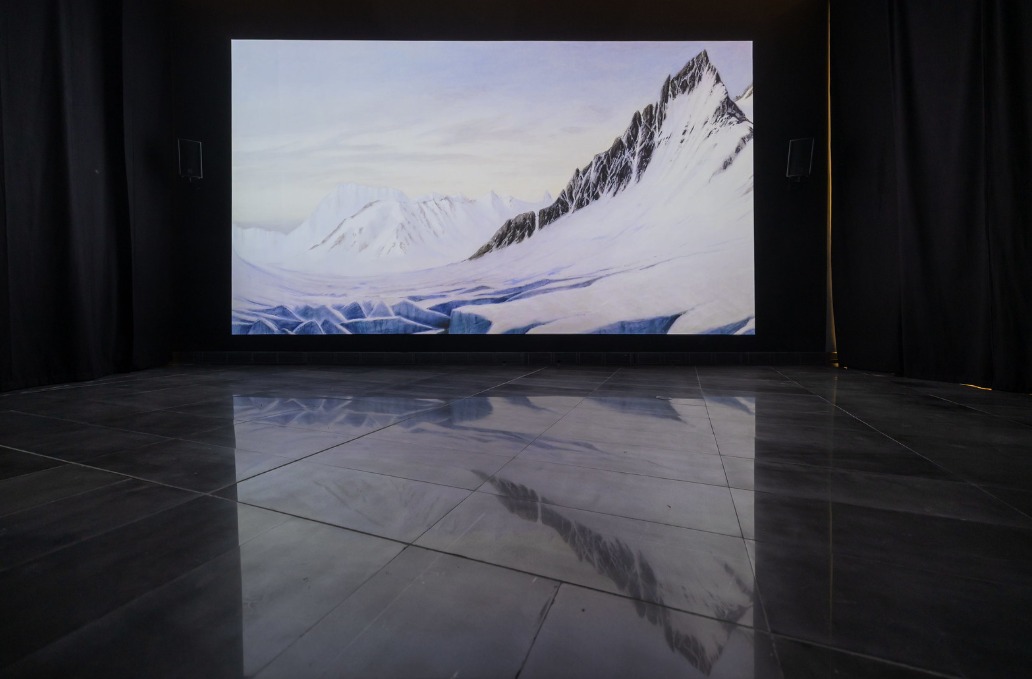
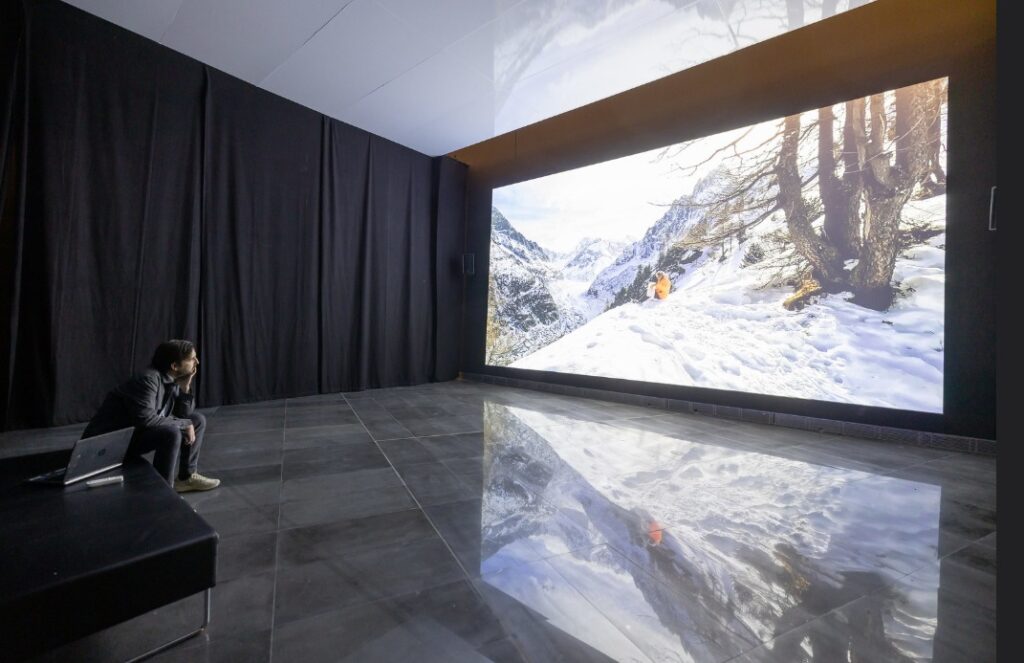
Approaching that landscape incorporating time and movement had an important impact for Lazkano and he ventured to propose his own cinematographic response to high mountain regionan audiovisual project that would end up being the seed of the exhibition that is now presented in that center of Pamplona: “Natura fugit”.
The title has to do with the attention of this artist from Vergara to the effects of the passage of centuries on the landscape, inevitably linked to changes in the climate, which may be more or less accentuated by human action. At this point, Lazkano assumes that both painting and cinema can become opportune means to transmit to the viewer messages in favor of sustainability that, due to the manipulated channel of the screens, are no longer addressed.
Lazkano visited the Mer de Glace in the eighties and comparing the views from then to the current ones, he admits, arouses sadness: the glaciers are obviously losing ground and, in just the four years that this project has involved, their height has dropped by four meters (there will be more than a hundred since Friedrich’s time).
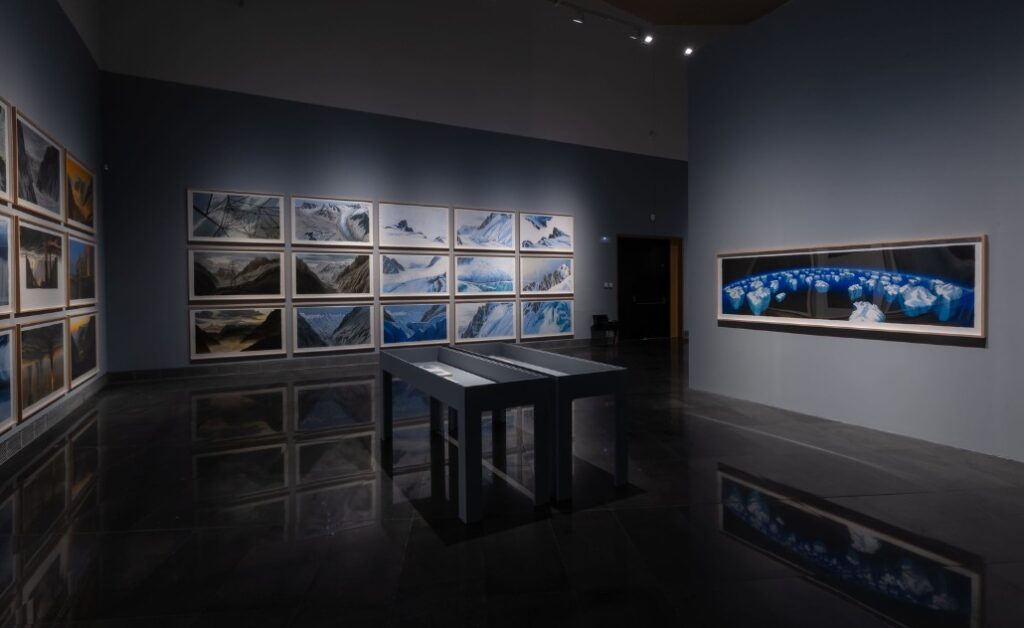
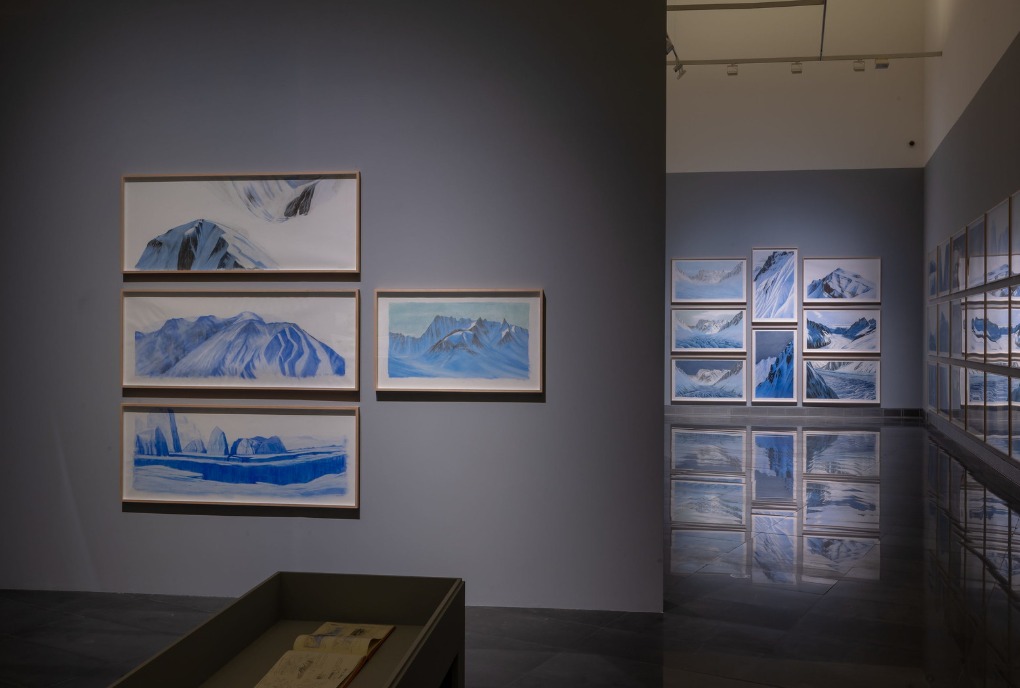
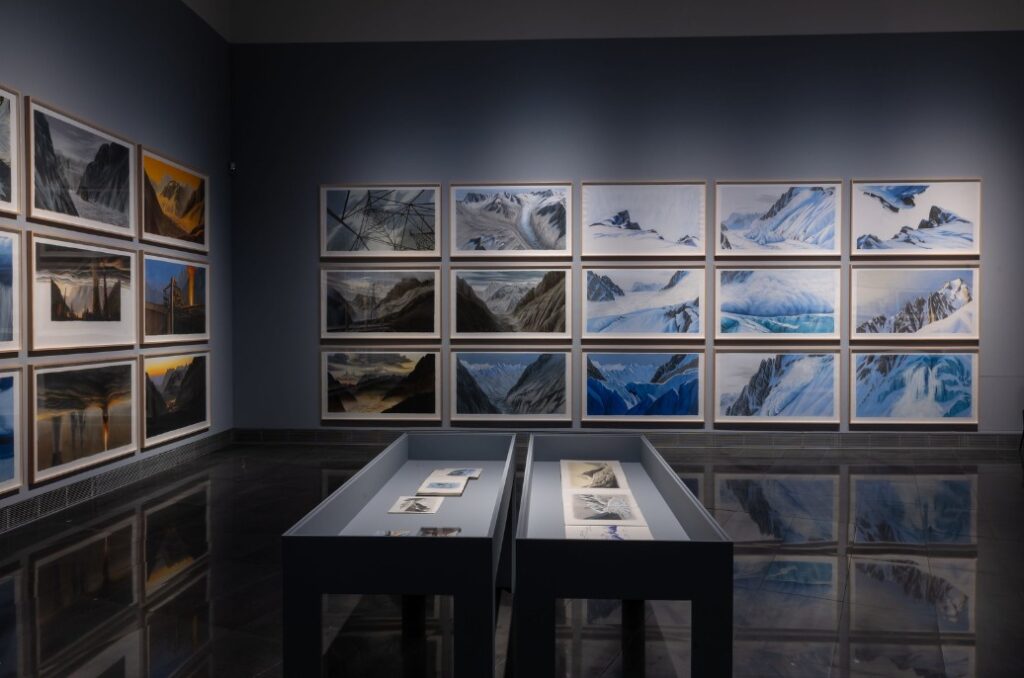
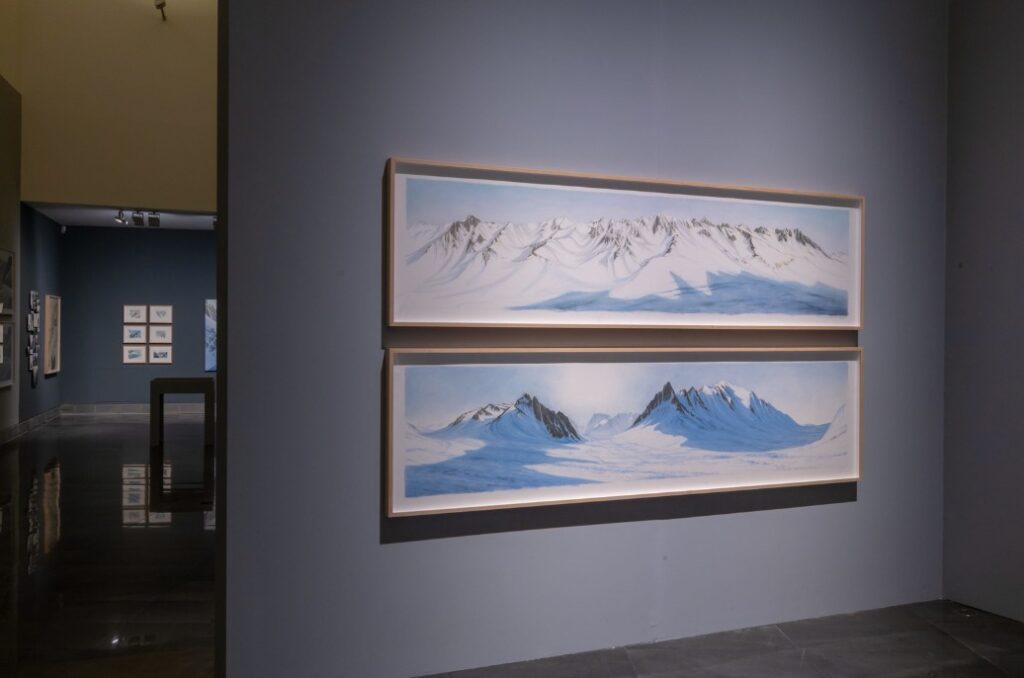
The exhibition now open at the MUN, curated by Valentín Vallhonrat and Ignacio Miguéliz, consists of this twenty-minute animated film, along with the graphic material that was used in the creative process and production of this work. The intermediate elements that articulated the piece and the result are offered to the public, in a single plane and face to face – that is, without hierarchies – so that we can see first-hand the progress and also the failures through diagrams, notes, notebooks, storyboards, reproductions, copies… In addition, we will delve into their investigations: this same place already claimed the attention of William Turner, Ruskin, Viollet le-Duc and the Lumière brothers and has been very studied by scientists -Eñaut Izagirre, an expert in glaciers, has provided new approaches to Lazkano-.
The Gipuzkoan’s purpose was not unambitious: Explore its topography, live time on the ground and start with drawings, watercolors, photographs, videos… to, based on that previous experience in situ and its derived graphic materials, be in a position to begin a process of “reconstruction” of a possible future reality.
The film, in turn, leaves obvious, unhidden signs about the way it was made: the pastel drawings follow one another, each corresponding to a frame, and sometimes the camera moves within them, giving rise to inexpensive tracking shots. Ultimately, Lazkano proposes a view that overlaps times: the present from which we look at that landscape today; the one that these glaciers accumulate on themselves as a cultural enclave, which has been widely studied, painted and photographed; and the geological, incomprehensible on a human scale. “Natura fugit” introduces us to a landscape that was romantic and that seems to be fading away.
“Natura fugit. Jesus Mari Lazkano”
UNIVERSITY OF NAVARRA MUSEUM
University Campus, s/n
Pamplona
From March 17 to August 16, 2026


