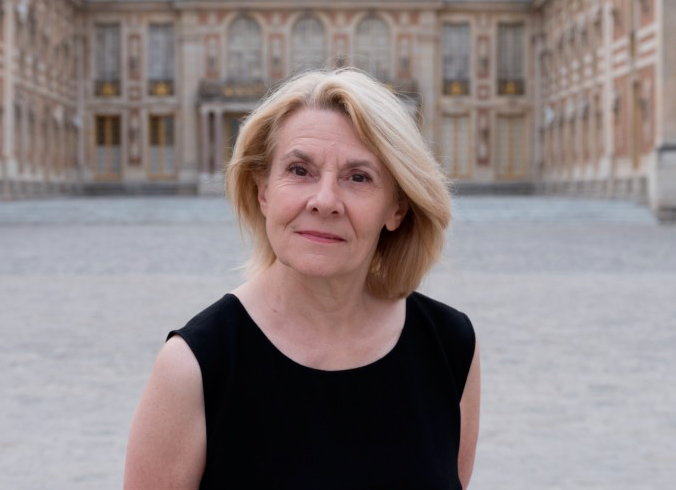
France. Catherine Pgard will be – barring an accident – Emmanuel Macron’s last Minister of Culture. It is therefore up to him to give meaning to the president’s two cultural five-year terms, if possible by creating or rehabilitating devices or programs likely to “grab” public opinion. She has assets for this: thirty years of political journalism, four years of advice to Nicolas Sarkozy, thirteen years of presidency of the Palace of Versailles. She knows how to keep the right distance from the media, activate the appropriate networks and deal pragmatically with the administrative machine.
Quite the opposite of a Rachida Dati who, in many ways, resembles Trump: an apparent simplicity, a combativeness and a magnetism which pleases deep France, a disconcerting bad faith and an action which favors the effects of announcement rather than the efficiency of what is announced. It is because of these qualities, very much in tune with the times, that she resisted three changes of Prime Minister. But the longest-serving minister under Emmanuel Macron is not the one with the strongest record. She has built her narrative around rurality, a concept more than a program, putting on the table plans which will very quickly dissipate (cabaret plan, artistic freedom, support for the French scene) while remaining discreet about the drop in her budget, the withering of the Culture Pass and the failure of her law for public broadcasting.
In the process, she freed herself from the (only) three cultural programs of the 2022 presidential candidate. “New public artistic commissions”? There was none after the disaster of “New Worlds”. An “investment to build European metaverses”: what is the metaverse? “An extension of the Culture Pass”: the opposite happened.
The presidential narrative can, however, boast significant achievements. Increased resources for heritage (Mission Bern) with the highlight being the restoration of Notre-Dame Cathedral and the Château de Villers-Cotterêts. The Culture Pass, especially in its collective aspect which finally gives substance to artistic and cultural education. The “Whatever it takes” which allowed the cultural sector, particularly in live entertainment, to hold on during and just after the Covid crisis. But in the regions, the drop in subsidies to certain cultural actors gives credence to the idea in public opinion that culture is in crisis and that it is the Government’s fault.
Catherine Pgard does not have the flamboyance of a Frédéric Mitterrand or more recently of a Roselyne Bachelot, capable of transcending discourse. But ultimately, the issue is more in the medium term than in the short term, which are the next presidential elections where Emmanuel Macron cannot be a candidate. His inventory will be measured against the action of his successors.