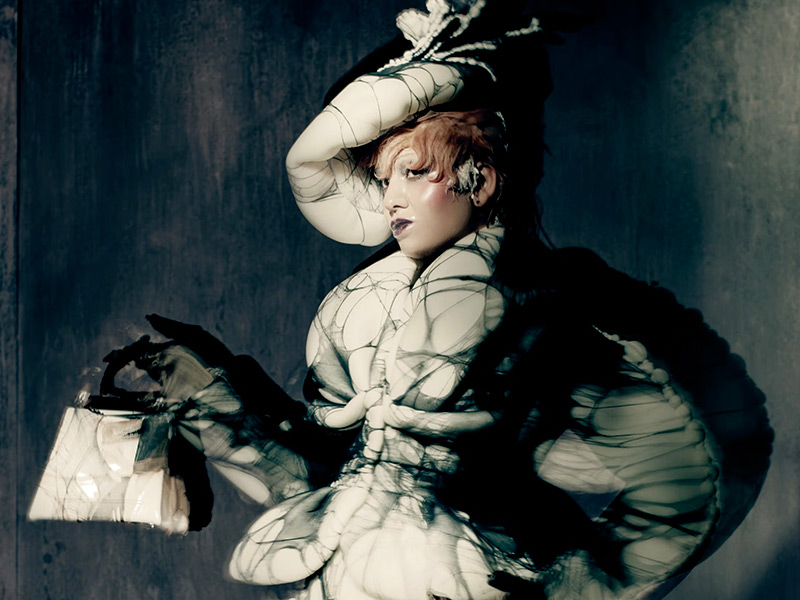
Since its announcement at the end of July, the “John Galliano: Horizons” exhibition, scheduled to accompany the very famous Met Gala in spring 2027, had sparked heated controversy. Faced with pressure, the Metropolitan Museum of Art (Met) announced that it was abandoning the project, in a decision presented as mutual.
“After discussion with John Galliano, we decided together that it was better not to continue with the exhibition”said Max Hollein, director of the Met. The British stylist relayed the information on Monday August 31 on his social networks, accompanying it with an apology to the “Asian and Jewish communities”towards whom he had made insulting remarks fifteen years ago. Anna Wintour, trustee of the Met, editorial director of the magazine Vogue and co-chair of the Met Gala, affirmed her unwavering support for Galliano, while approving the decision to cancel the exhibition.
In recent days, criticism of the exhibition has resounded among leaders of the New York Jewish community, especially since the Met Gala coincides with Yom HaShoah, the day of commemoration of the Holocaust. Philanthropists had made their disapproval known to museum officials, threatening to withdraw their donations if the exhibition continued, reported the New York Times. New York City Council President Julie Menin also wrote to Costume Institute curator Andrew Bolton, Max Hollein and Anna Wintour to express her strong opposition to the retrospective project, which she considered offensive to the Jewish community.
In 2011, John Galliano was sentenced to a suspended fine of 6,000 euros after making racist and anti-Semitic comments addressed to customers in a Parisian bar. The scandal led to his dismissal from the house of Dior, where he distinguished himself as artistic director. During the trial, the accused admitted his addictions to alcohol, sleeping pills and Valium.
A graduate of Central Saint Martins in London, a world-renowned fashion design school, John Galliano was appointed artistic director of the Givenchy house in 1995 by Bernard Arnault, boss of the LVMH group. Barely a year later, he joined Dior and began his rise. Gradually, he became one of the most emblematic figures of the brand and had a series of notable fashion shows: in 2000, “Clochards” celebrated an aesthetic of poverty interpreted by extravagant superpositions; in 2004, the spring-summer collection show featured silhouettes inspired by ancient Egyptian imagery. The designer is also at the origin of emblematic pieces, such as the famous “newspaper dresses”.
In 2014, 3 years after his conviction, Galliano made his comeback on the fashion scene by signing with Maison Margiela, after a first professional reappearance alongside Oscar de la Renta in 2013. In January 2024, his “Artisanal” fashion show was a great success: if the event had marked his artistic rehabilitation, it was clearly not enough to erase the hateful remarks of the past from people’s minds.