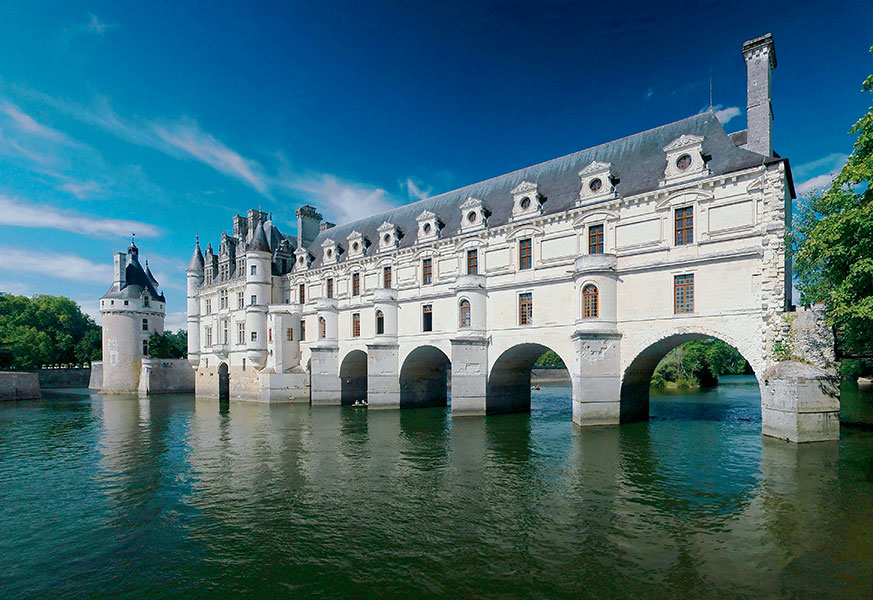
Using the symbols of French heritage to embody a vision of the nation is a classic of political communication. However, the Château de Chenonceau did not want to serve as a setting for the National Rally campaign. The private monument in Indre-et-Loire, owned by the Menier family since 1913, sent a formal notice to the party at the end of October, demanding the removal within 48 hours of a poster reproducing its image under the slogan “It’s beautiful, it’s French!” ”, as reported The New Republic. The RN finally removed the visual from its social networks.
But would the owners of the castle have won their case in court? Nothing is less certain. Because owning a monument, and a fortiori a historical monument, does not mean having an exclusive right over its image. Since a ruling by the Court of Cassation on May 7, 2004, the principle has been clear: the owner of private property does not have an exclusive right over its image. Anyone can photograph or film a building from a public space and exploit this shot, as long as this capture does not cause an abnormal disturbance of enjoyment or property. A solution which has also been approved for public goods since a ruling of April 13, 2018 by the Council of State.
Poster of the National Rally using a visual of the Château de Chenonceau.
© RN
However, a particularity exists for the 21 “national domains”, such as those of the Louvre, Chambord, or the Palais du Rhin, where the heritage code requires prior authorization for any commercial use. But does the political field constitute a commercial activity? A priori no: the Paris judicial court was able to recall on July 30, 2026, in the context of the use of the “Renaissance” brand, that the National Rally was not an economic operator.
For a judge to condemn the use of an image by a third party, whether an advertising company or a political party, it is therefore not enough to invoke disagreement or simple symbolic discontent. The owner of the monument must demonstrate the existence of a real abnormal disturbance which results in the disturbance of the tranquility and privacy of the owner. A fact which is not always easy to demonstrate: on March 31, 2015 the Court of Cassation affirmed that the reproduction by a third party of the facade of the Moulin-Rouge on derivative products did not constitute an abnormal disturbance due to the emblematic character of the Parisian place.
Did the disputed poster wrongly suggest that the “Château des Dames” or its managers officially supported the party? Did the visual degrade the cultural, tourist or heritage image of the monument to the point of disrupting its normal operation? Given the state of case law, it would be possible to doubt this. Also by favoring a preventive formal notice, Chenonceau’s managers have bypassed the complexity of the courtrooms, betting on the party’s readiness to comply in order to preserve its image.
The political use of a monument or a work of art nevertheless remains subject to another legal protection: that of copyright. In the event that the work is still protected by the latter, its exploitation is not free and any unauthorized use constitutes an offense of counterfeiting. This is how Jean-Luc Mélenchon, head of La France Insoumise, was ordered to pay 40,000 euros to the artist Combo for the unauthorized use of his “Marianne Asiatique” in a campaign clip by the Paris Court of Appeal on July 5, 2023.


