Ile-de-France. Visible the imprint of medieval imaging on contemporary art: this is a very exciting project on paper. Designed in diptych, “Berserk and Pyrrhia” presents works of around forty artists as well as objects from the medieval period from Ile -de -France collections. On the board, the FRAC explores the inheritance of medieval apocalyptic images and dark romantic visions on today’s art through Berserk, famous manga by Kentarô Miura. The reserves in Romainville, on the other hand, probe the taste of contemporary artists for the wonderful, the hybrid and the symbiosis between fauna and flora, central aspects of the saga of the Kingdoms of Tui T. Sutherland which stages the imaginary island of Pyrrhia.
Only here, “Berserk and Pyrrhia” looks more like an illustrated essay than an exhibition: if the speech is relevant, the exhibited parts are struggling to make the circulation of the reasons observable for visitors. The references to Berserk abound in the rooms of the Plateau: the works of Neïla Czermak Ichti, Lucia Hadjam and Léo Penven are directly inspired by the planks of Miura and the creations of Clémence Van Lunen, Pascal Convert and Gérard Trignac recall the graphic universe of the manga, according to the commissioners. However, the plateau has neither original drawings nor reproductions of Berserk, which would have made it possible to highlight the correspondence between manga and exhibited works. The absence of images of Berserk Also prevents comparing the prints of Gustave Golden (reproductions are visible in “grimoires”) to the world of Miura, that the journal of the exhibition called strongly inspired by the engraver. In addition to the heritage of the “dark” atmosphere of the apocalypse, the plateau explores the village dimension of representations of the Middle Ages, religious architecture and chivalry. This density brings more confusion than lighting to the general subject.
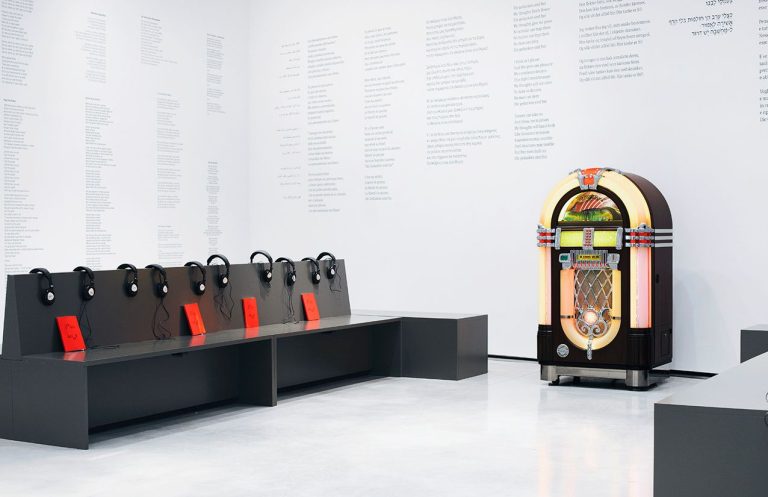
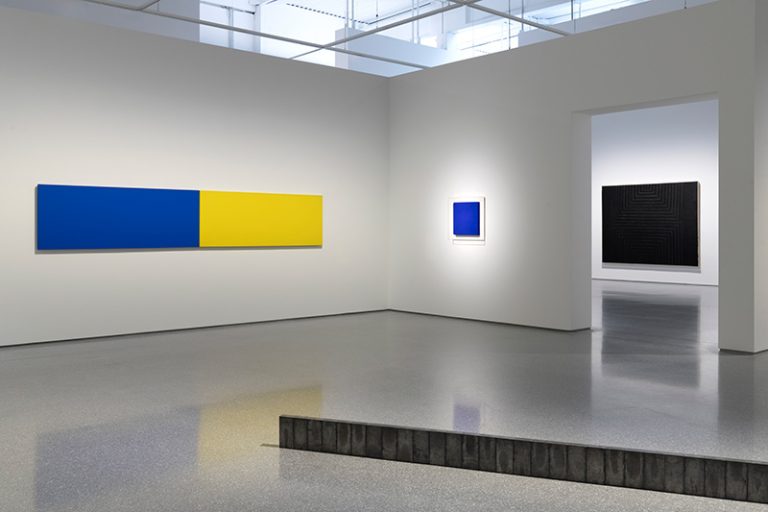
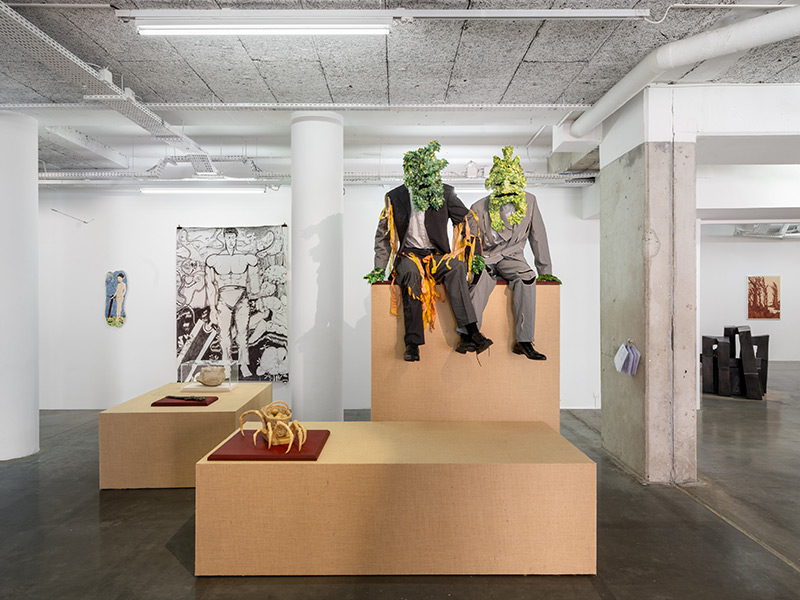
View of the exhibition “Berserk & Pyrrhia, Contemporary Art and Medieval Art” at Frac Île-de-France.
© Martin Argyroglo
© Adagp Paris 2025
If the manga of Kentarô Miura has an obvious relationship with the works of the Plateau, no creation exposed to reserves resonates particularly with the imaginary island of Fire kingdoms. The exhibition loses here in coherence: “Pyrrhia” says nothing about medieval pieces and on contemporary works on display, except that they share the same themes and reflections. The saga is also completely absent from the rooms, even in the form of wall quotes.
The choice of medieval parts is not always appropriate. For example, we do not very well understand the relationship between the clock stamp of the Barbeaux abbey and the works of François Stahly and Xolo cooked on the board. Too bad, because the exhibition has the merit of presenting very interesting works, of varied styles and mediums: while Jacopo Belloni, Mimosa Echard and Rose-Mahé Cabel deliver their poetic and animal poetic forms, Gérard Trignac and Philippe Mohlitz engrave their hallucinated landscapes with mastery. The intriguing OpenSource installation of L. Camus Govoroff, for its part inspired by fountains in the center of the monastic gardens, gives life to ancestral medicinal knowledge. It would have been desirable to further understand the influence of medieval images (and their appropriations) on their work.