Lyon. The largest tropical forest of the globe, the Amazon hosts very diverse populations whose general public is badly knowing the lifestyle, apart from a few stereotypes (Chef Raoni, deforestation). Prepared by several stays in Brazil by Marie-Paule Imberti, head of collections at the Museum of Confluences, in Lyon, this exhibition was designed as a “Partnership” With three villages in the Amazon, as explained by Commissioner Marianne Rigaud-Roy. Located in different regions, these villages are at the foundation of an exhibition which returns in detail in lifestyles and beliefs of indigenous populations.
The scenography plays an immersive score (sounds of birds, audio testimonies in indigenous languages, digital screens) while immersing visitors in an atmosphere of undergrowth with dim lights. “Green paper hangs imitate the gaps of light in the forest”, Specifies Marianne Rigaud-Roy, in agreement with the green walls of the different sections of the course: the visitor is therefore immersed in a living forest atmosphere.
Drone view of the Amazon forest.
© Musée des Confluences / S. Guiraud / Jabiru Prod
After a prologue on the living environment of the populations illustrated by an aerial video projection and samples of ancient ceramics, “Amazonies” successively presents the three villages studied: tribe chief, economic activities, crafts, rites and beliefs constitute the main content of each section. If these themes remain those of a traditional Western ethnological study, the care taken in Aboriginal points of view is distinguished. The scientific committee of the exhibition is made up of French and Brazilian academics, in order to avoid any overhanging look. Likewise, the villages were chosen by a Brazilian organization specializing in relations between Aboriginal and tourists or researchers. Finally, the names of the populations used in exposure are those that these populations use to designate themselves, and not those retained by Western ethnology.

Documentary recording of land, 2018 Brazil, State of Pará, village of Motukôre, Mebêngôkre people.
© Musée des Confluences / S. Guiraud / Jabiru Prod
In fact, the way of presenting the villages and their inhabitants appears respectful and systematically highlights nuances or differences, as in the use of body paintings. Among the Mebêngôkre, it is the whole body that is painted daily during long sessions, while in the Asháninka it is only the face: the materials used (Roucou crushed for red and genipa and coal for black) are however the same.
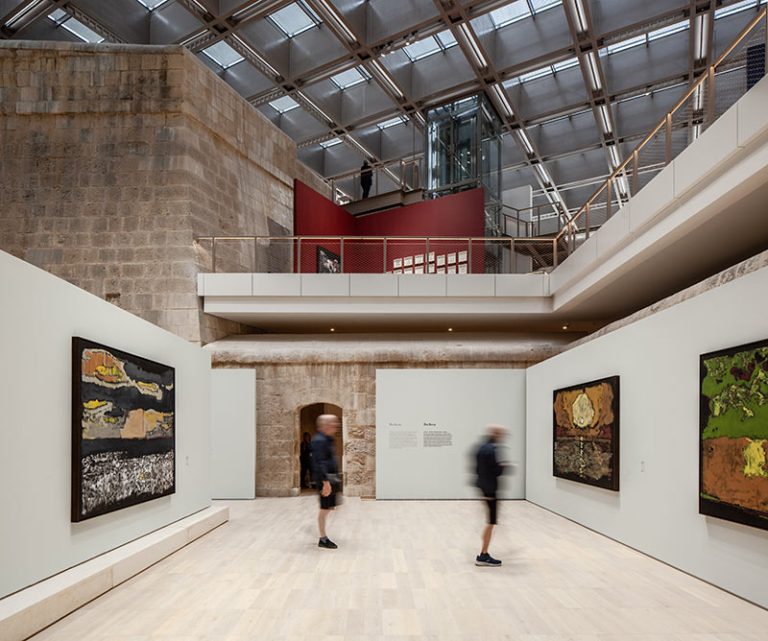
Long presented in the exhibition The raw materials which constitute the basis of the indigenous lifestyle, in particular the cassava and the plants used for basketry and dyeing. On this point, the scenography remains classic, with windows and videos, but we note the use of the tulle on the facade of the windows, a choice claimed by the commissioner for more close to the exposed objects. The entire route plays on proximity by organizing fluid circulation without too much separation or bifurcations walls, for “Show that all the themes covered are linked together”underlines the commissioner.

Krôkrôkti headdress, end of the 20th century, Brazil, State of Pará, Mebêngôkre (Kayapo), feathers of Aras, Aigrette and Jabiru, collection of the Museum of Confluence.
© Museum of Confluences / Olivier Garcin
A sensitive vision, close to humans
The mental universe of indigenous populations is revealed in the original myths of each village, illustrated by animations projected in side rooms. Unlike the entire route, the color code here is ocher red, indicating that “It is the word of the native populations that is presented”. Regarding rites and beliefs, “Amazonies” alternates traditional costumes, feathered headdresses (collected or acquired before the 2015 biodiversity law) and recently shot videos. If the youngest continue to participate in ceremonies, the documents show the delicate balance between modern lifestyle (smartphones, western clothes, plastic objects) and maintenance of traditions, including collaboration with museums. Several of the indigenous referents of the exhibition also combine these two aspects in their lives: Shatsi Piyako (Population Asháninka) is thus a university researcher and adviser to a local association, while chef Bepkamrek Kayapo (Mebêngôkre) is a nurse in training. Audio testimonies clearly show the importance for these populations to keep their culture and transmit it, despite the difficulties they have to undergo (racism, economic precariousness, deforestation, oil prospecting). It may lack details on indigenous languages, but the many audio documents allow visitors to get an idea of the sound universe of the Amazon, where the oral prevails on writing.
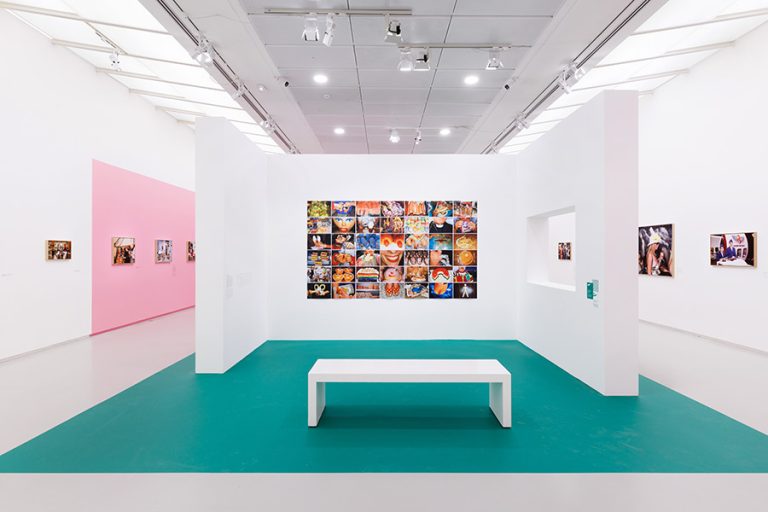
Finally, the exhibition succeeds in giving a vision of the Amazon close to humans, and more sensitive than the usual ethnological exhibitions. This is particularly illustrated in the photographs, signed Serge Guiraud, which show close proximity to the inhabitants of the villages, even a complicity with certain children and adolescents, as an inner look at this universe.