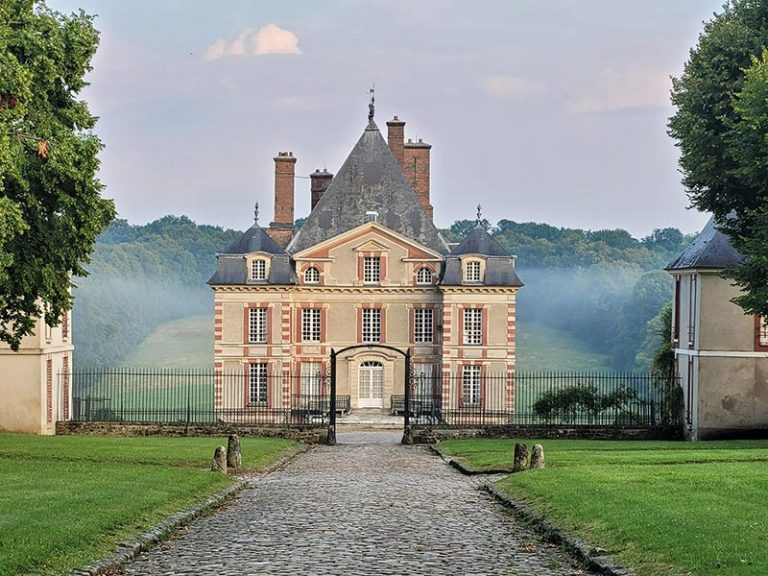
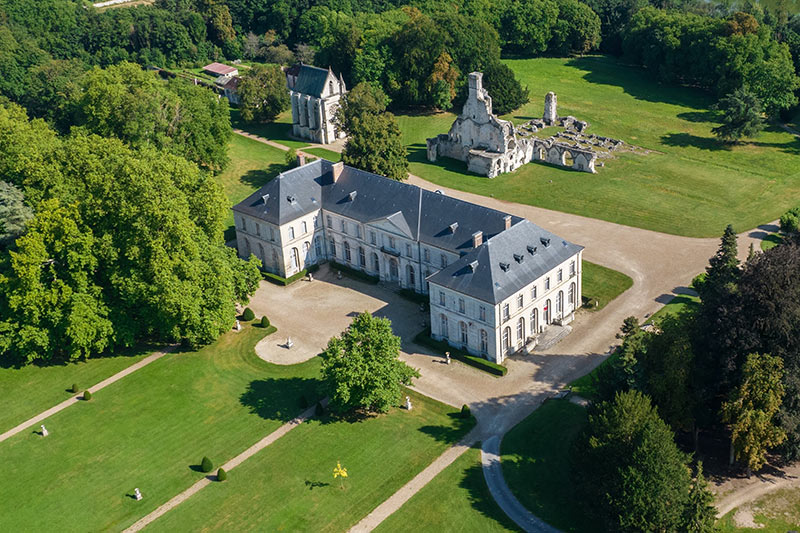
Chaalis (Oise). With nearly 58,000 visitors in 2025, the Chaalis estate has maintained its attendance despite the closure of the castle-museum in November. The work on the castle, intended to last until 2030, should make it possible to modernize the equipment, improve accessibility and bring the exhibition spaces of Nélie Jacquemart-André’s collection up to standard. They will continue in 2026 and 2027, with the repair of frames and the outdated electrical system.
The museography will also be reviewed, in parallel with a collection project (covering 6,000 works), these being housed in outsourced reserves, indicates Alexis de Kermel, the general administrator of the estate. The main interest of the castle is in fact the collection of Nélie Jacquemart-André, made up of works and furniture covering a period from Antiquity to the beginning of the 20th century (read the JdA no. 664, October 31, 2025).
Several other buildings and monuments on the Chaalis estate require restoration: the chapel with its beautiful frescoes by Primaticius (1503-1570), the orangery (a first phase of work was carried out in 2025), the large stable, several farm buildings, the remains of the abbey (stabilization and crystallization).
This is following the publication in 2018 of a “fairly harsh report from the Court of Auditors” that the estate has established a multi-year massive investment plan (current until 2030-2035) to finance the work, explains Alexis de Kermel. Investments thus reached the sum of 1.4 million euros in 2025.
The estate belongs to the Institut de France, which contributes the majority of the operating budget and investments through the Jacquemart-André Foundation; the complement comes from several local authorities and the Drac. The Hauts-de-France regional directorate of Cultural Affairs thus gave 100,000 euros for the work on the castle, specifies the administrator, who hopes to obtain a larger envelope for the following phases. Part of the financing of the work planned for 2028 and relating to the large stable and the orangery remains to be “consolidate”.
This work also concerns utility areas not open to visitors, such as the small stable, which houses the offices of administrative, technical and conservation services – a first phase was carried out in 2026.
The chapel farm and the dam on the pond
More original, the entire chapel farm is the subject of a partial renovation. This farm “formerly linked to the abbey” manages 250 hectares of agricultural land and hosts a riding school as well as guest houses. At the bottom of the estate is a hamlet made up of houses and the Faisanderie pavilion (hunting lodge). These buildings from the end of the 18th and beginning of the 19th century, in the typical style of forest houses, constitute “elements of heritage that must be restored and maintained in the same way as the castle or the chapel”believes Alexis de Kermel. Finally, the estate has begun the restoration of the dam on the Désert pond on the edge of the forest, a work of art with 18th century masonry which shows signs of fragility.