The Ibáñez Cosentino Foundation continues to display in Almería, now in the Museum of Contemporary Spanish Realism, the work of artists who, from the Mediterranean, contributed to the renewal of the codes of painting in Spain around the turn of the century. If the production of José Manaut awaits us at the Ibáñez Museum until the end of November, the MUREC presents from today that of a contemporary author whose own career, to a large extent, can help us better understand a time in which academic conventions and the emergence of novelties typical of the avant-garde coexisted: Pascual Capuz.
Born in 1882 in Valencia and died in Barcelona almost eighty years later, he adopted a good number of techniques – he was a painter, draftsman, illustrator and poster artist – and trained at the School of Fine Arts in his city before moving to Barcelona just when Picasso was multiplying perspectives on his canvases in Paris, in 1907. At first, he worked mainly in illustrations, drawings and posters before making the leap to painting: at this time, the borders between disciplines They began to become more malleable and paper and posters gained presence, both in daily life and in the field of advertising as well as in the field of experimentation and exhibitions in galleries.
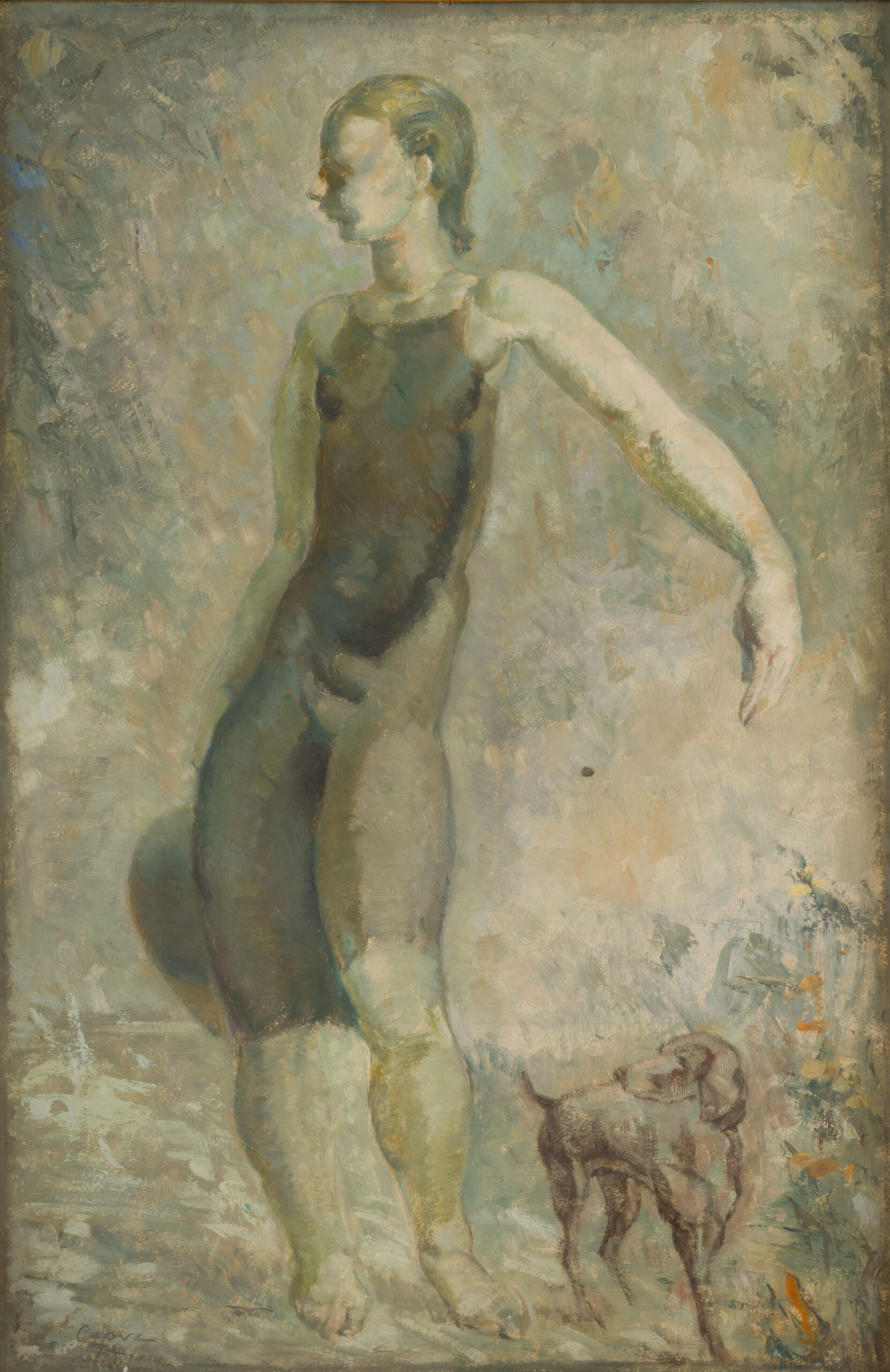
Pascual Capuz. Young man with dog1901. González Martí National Ceramic Museum
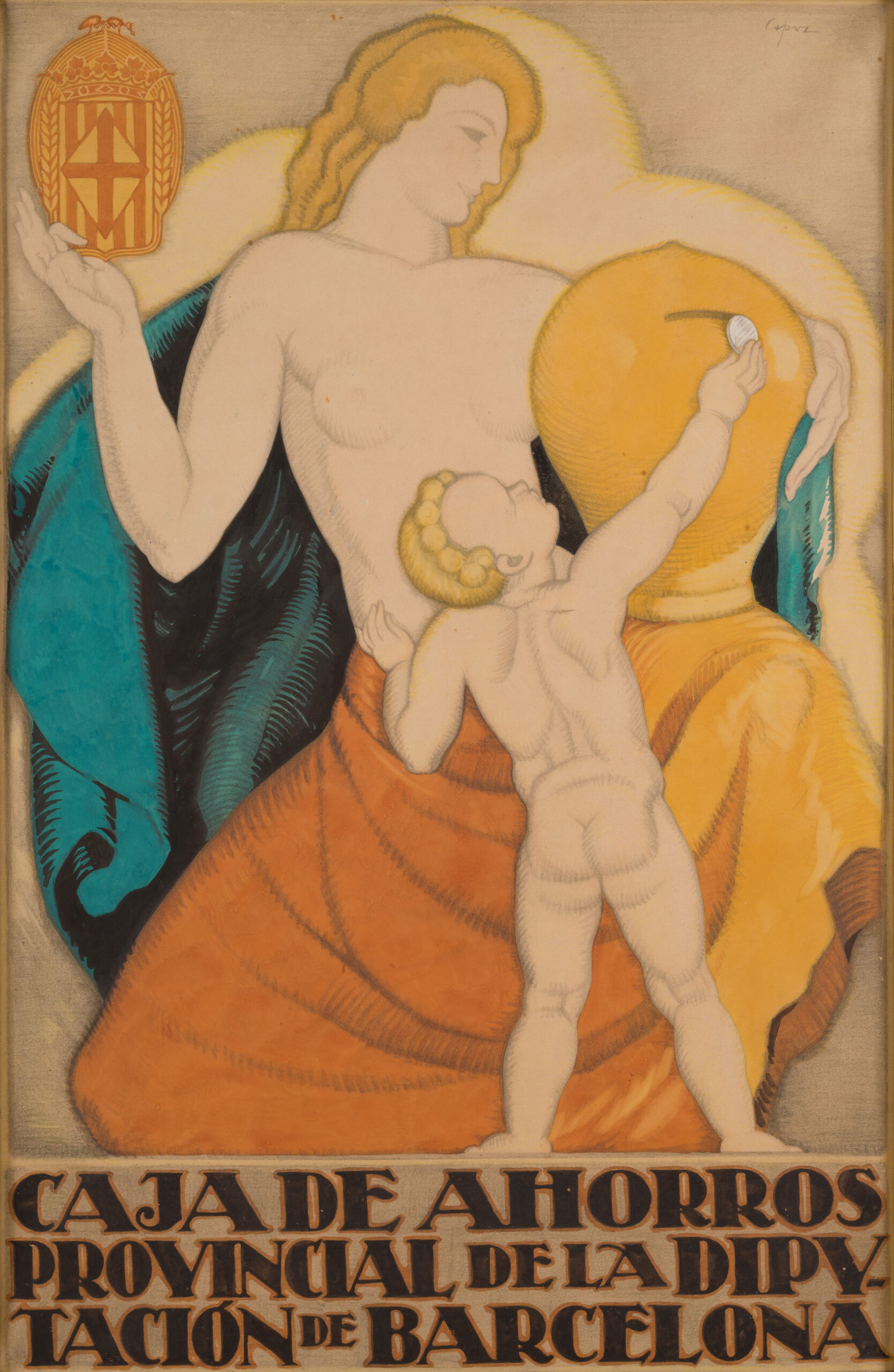
It is precisely in the orbit of graphics that the figure of Capuz is most interesting: he took advantage of the expansion of the field of action that magazines, illustrated publications, posters and other printed media provided to artists; He cultivated drawing when it was no longer necessarily an essay to become an autonomous piece, and also illustrations when they became one of the most effective ways for a broad public to learn about creative innovations. Thus, if we only delve into Capuz’s legacy looking at his paintings we will fall very short – because he was an important part of a phase of profound, and also rapid, transformations in visual culture – but we cannot lose sight of his roots in solid traditions: he belonged to a line of sculptors and carvers of Genoese origin in the 17th century, and his brother, José Capuz, was an important sculptor.
Given that poster artists, illustrators and engravers have received, and still receive, less attention, Capuz the cartoonist has not been the subject, until now, of extensive exhibitions, even despite having developed practically his entire career in Barcelona, interacting with a generation of restless artists who were not inclined to close doors. There he came into contact with international trends, with a more demanding environment and more advanced graphics: in his early days in Catalonia he carried out cartoons in which he introduced geometry and choppy shapes, a dynamism achieved thanks to fast lines.
He worked for Seix Barral, but achieved popularity thanks to his presence in satirical and cultural magazines such as L’Esquella de la Torratxa and Daddyamong the most important humorous publications in Barcelona before the Civil War; There, and in their commercial and festive posters, creations that steadily moved away from the past sinuous and ornamental lines of drawing saw the light around 1900. In this aspect, their consolidation was a medal in the Decorative Arts section of the National Exhibition of Fine Arts of 1924 and another gold at the International Exhibition in Paris the following year, a great showcase for the creators of Art Deco at that time.
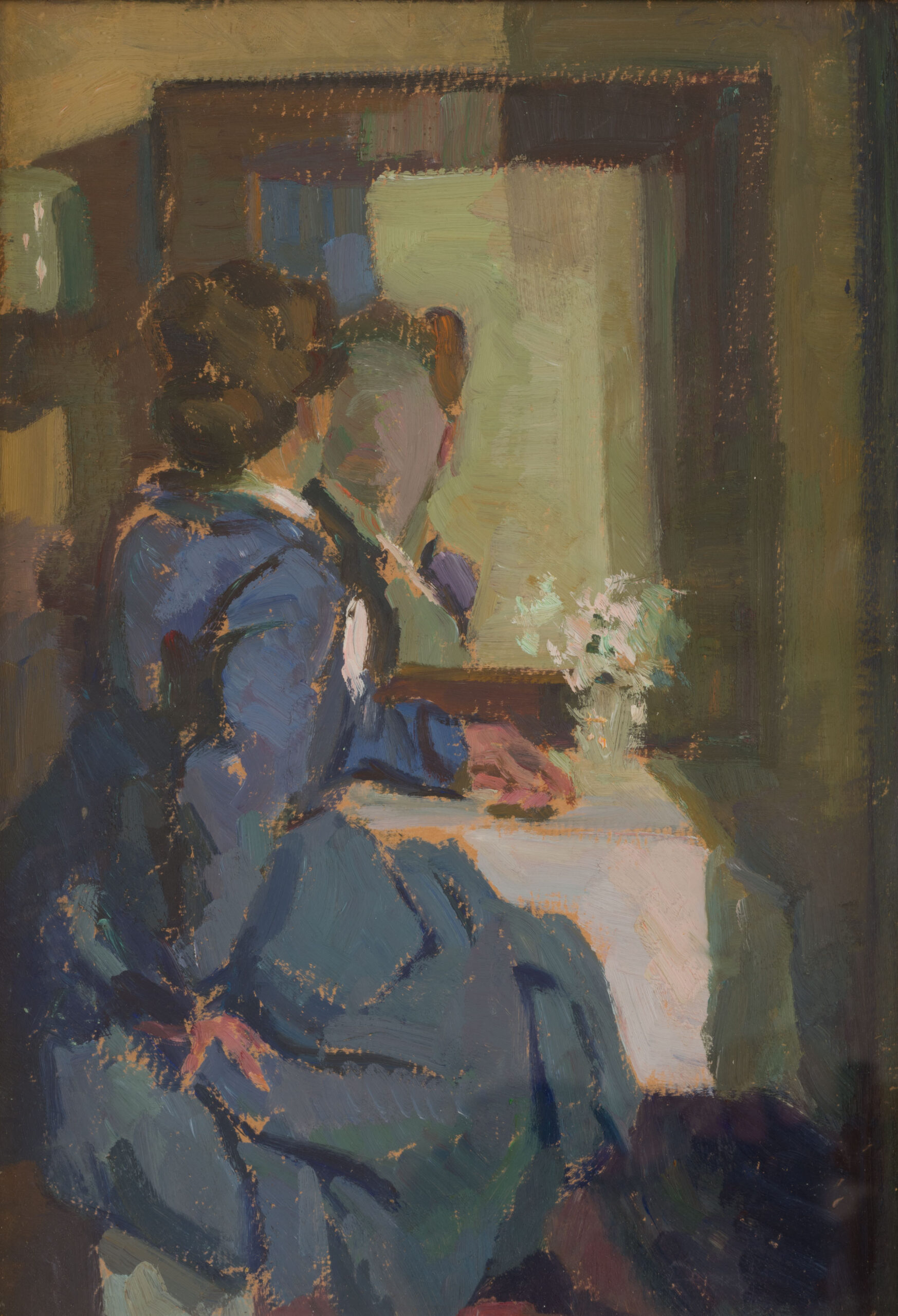
Pascual Capuz. Portrait of his wife Teresa García Falgás de Capuz1901. González Martí National Ceramic Museum
As a painter, we must highlight his portraits, conceived fundamentally for the private sphere and strikingly far from the interests he raised in his drawings. These are compositions with a rather intimate tone that usually had a woman, often his wife, as a model; He also worked in oil paintings of manners and in scenes of night and street life, so common among those tending towards expressionism in those same twenties.
This exhibition wants to open paths towards the rediscovery today of creators who favored the aesthetic and formal renewal of the plastic arts without making the canvas their main field of play and invite us to pay more attention to the findings contained in small and fragile formats: in them we glimpse the germ of the ties between art and society that we know today and that are difficult to understand without paying attention to design and the media; the new spaces.
Those who wish to delve deeper into the figure of Capuz will find it in the collections of the González Martí National Ceramic Museum, in Valencia.
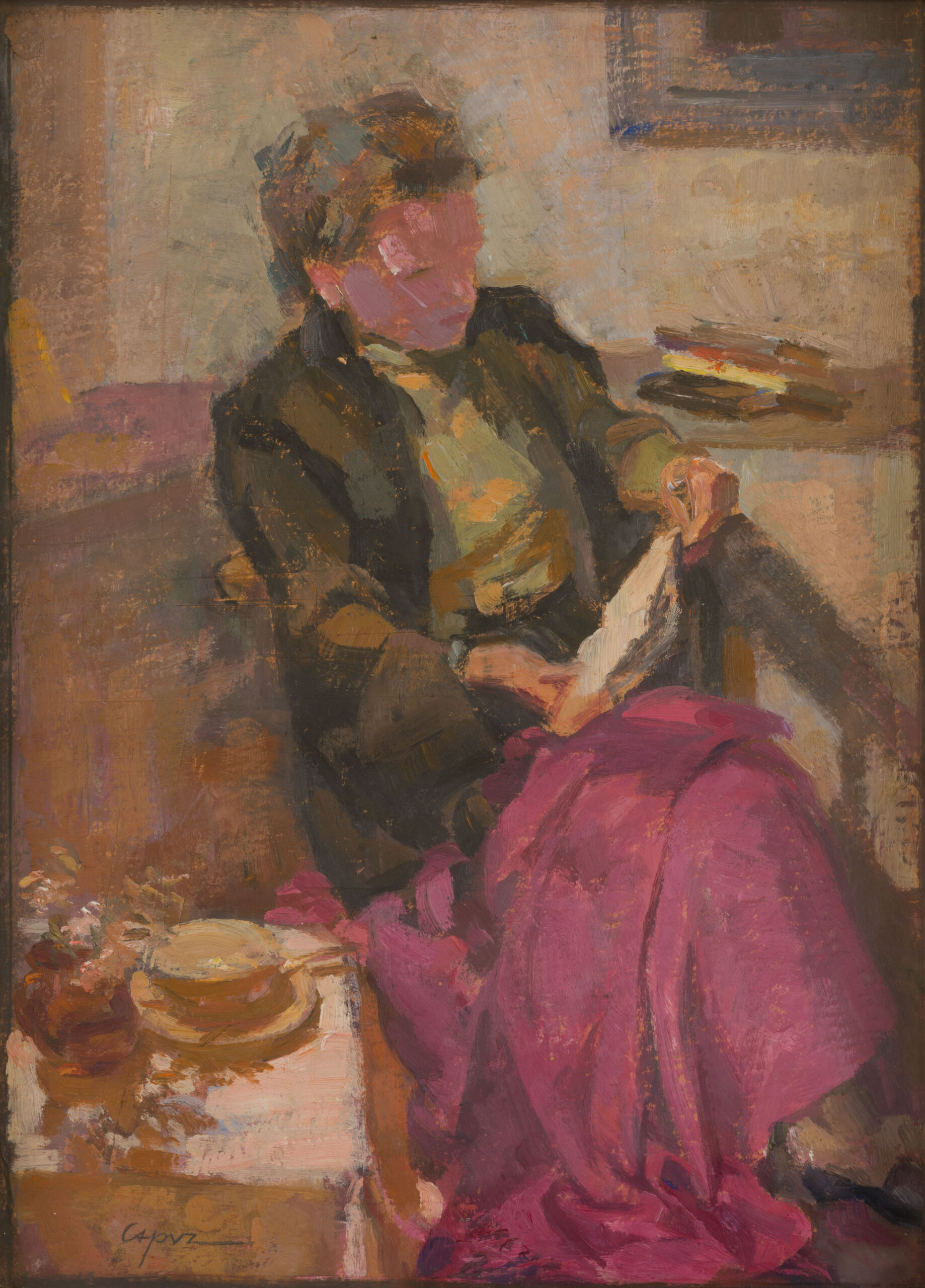
Pascual Capuz. Portrait of his wife1901. González Martí National Ceramic Museum
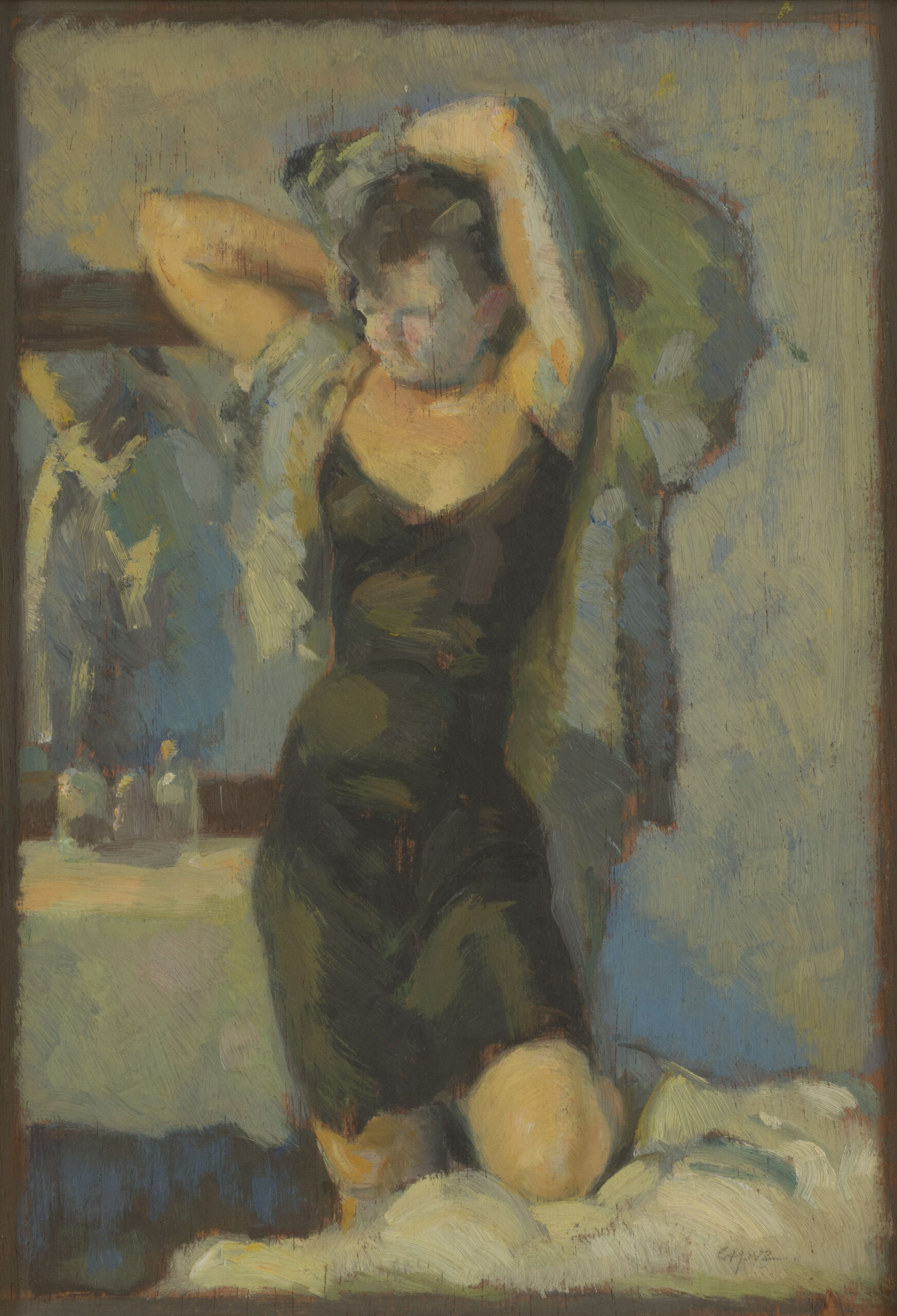
Pascual Capuz. painter’s wife1901. González Martí National Ceramic Museum
«Pascual Capuz: the artist who turned modernity into graphic language»
MUSEUM OF CONTEMPORARY SPANISH REALISM. MUREC
Paseo de San Luis, s/n
Almeria
From October 23, 2026 to January 17, 2027