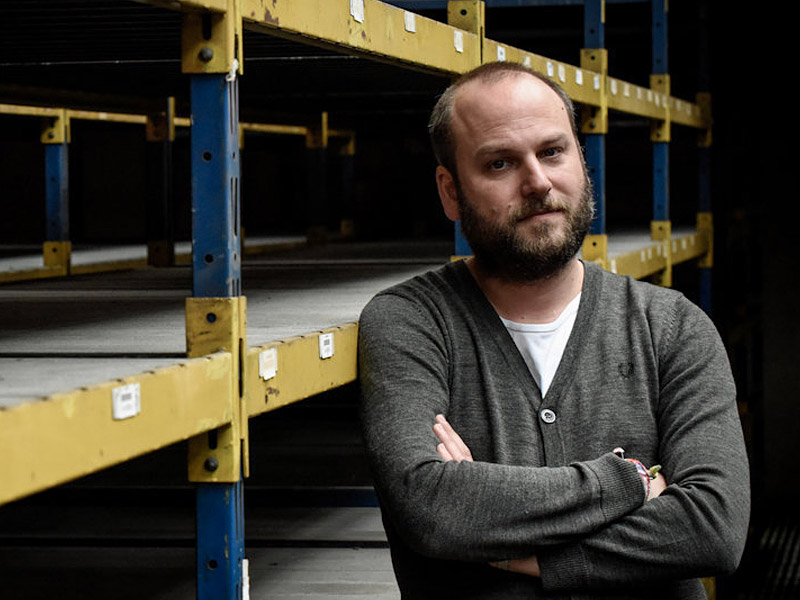
Yves Goldstein announced last May his intention to leave the management of Kanal at the beginning of 2027, after the opening of the museum and the arrival of his successor. But during the council of ministers on September 17, Boris Dilliès, Minister President of the Brussels Region, announced to his coalition colleagues that he was requesting the departure of the director of Kanal as soon as possible. After several discussions, the two men reached an agreement which allows Yves Goldstein to remain at the helm of the museum until two days after its opening, scheduled for November 28.
This confrontation comes in a context of change of political majority in Brussels. Launched at the initiative of the Region, under the presidency of the socialist Rudi Vervoort, Kanal has always kept the label of a “PS project”, even if it gradually developed sheltered from direct political pressure within a foundation with management and programming autonomy.
The new Brussels majority arriving in February 2026 wishes to evolve the museum’s economic model and gradually reduce its dependence on public funding. The Region’s budgetary difficulties and the drastic reduction in subsidies to Kanal, reduced from 28 million this year to 10 million annually in 2029, require, in fact, a new management and financing model with a significant contribution from the private sector. This will be the main challenge for the next general manager.
Some of the areas of friction raised in the discussions may seem anecdotal, such as the 30,000 free tickets planned for the opening or the brewery’s only vegan menu. Beyond these very visible subjects, the main issue seems to concern the appointment of the next general director and the future directions of Kanal. The press release published today by the Brussels government on the end of Yves Goldstein’s mission simply confirms that the outgoing director will not participate in the selection process of the person called to succeed him.
For the rest, the principle of the procedure specified in the call for tenders is not called into question. The jury examines the applications closed on September 20 and formulates its proposals, while the final decision rests with the board of directors of the Kanal Foundation. The procedure provides for a designation on November 3 and an entry into office as quickly as possible.
The Region’s press release also reports a “divergence of views regarding the future of Kanal”. Among these divergences, we note the composition of the board of directors. An agreement concluded on July 23 with a view to its renewal, under the presidency of Michèle Sioen (CEO of the family group Sioen Industrie), remains blocked to this day, according to several press sources. The Reform Movement (center right) notably contests that the outgoing team can influence the choice of the next general director.