Since he began his career in the early nineties, the Mexican Gabriel Orozco moves freely between disciplines such as drawing, photography, sculpture, installation and painting: his proposals defy classifications, but still maintain a clear coherence.
Born in 1962 in Jalapa, in the state of Veracruz, he was the son of Cristina Félix Romandía, a classical piano student, and Mario Orozco Rivera, a muralist and art professor at the Universidad Veracruzana. Graduated from the National School of Plastic Arts, dependent on the National Autonomous University of Mexico (UNAM), he moved to Madrid in the eighties to expand his knowledge and attended courses at the Círculo de Bellas Artes. Taking the capital as a base, he traveled throughout Europe, but after a year he returned to Mexico City to form a workshop with other artists—Damián Ortega, Gabriel Kuri, Abraham Cruzvillegas and Dr. Lakra (Jerónimo López Ramírez)—with whom he worked for the following five years.
Always a traveler, practically nomadic, many of his works are emblematic of the places where they were created, in the same way that his exhibitions are usually conceived for specific environments and contexts. His projects are, depending on the case, cerebral and spontaneous, sociable and silent, the result of both meticulous planning and lucky chance, and are executed with a wide diversity of materials and methods, put at the service of their formal power and intellectual rigor.
Gabriel Orozco. Chronotopic. White Cube
Gabriel Orozco. Chronotopic. White Cube
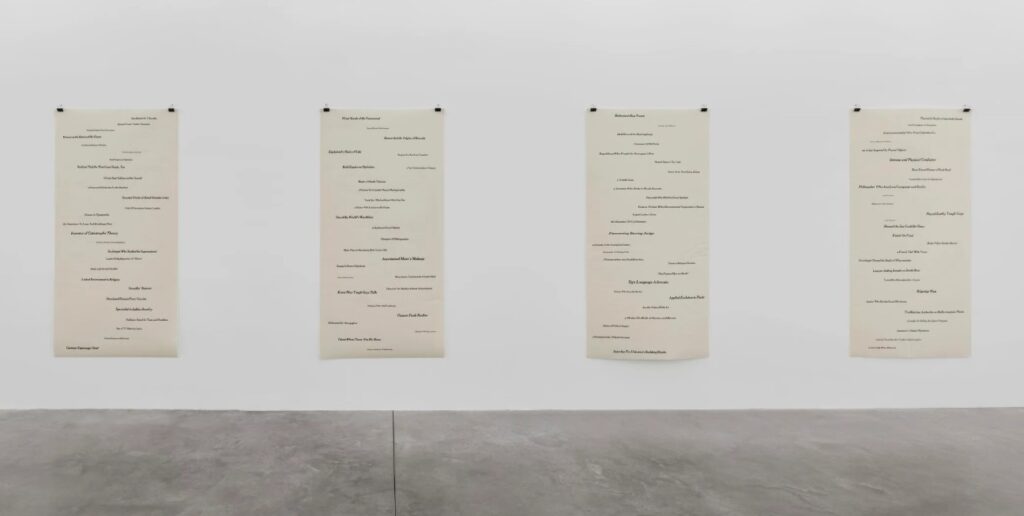
His most recent exhibition, which opens its doors today at White Cube’s headquarters in Bermondsey, London, takes the form of a travel diary through time and space. Based on the artist’s interest in games, as well as motifs from science fiction and archaeology, the exhibition, titled “Chronotopic” and curated by Briony Fer, focuses on the formal logic that articulates this astonishing multiplicity of his firmament of objects; In the assembly, small-scale pieces coexist, with elements from everyday uses, with others that point to the immensity of the cosmos; references to the materiality of life and geometric and universal concepts. In Orozco’s hands, these contrasts—which can be extreme or absurd—are aimed at demystifying the notion of art as a grandiose, epic, or transcendental activity. Although he has always been fascinated by outdoor space, he approaches it from a playful perspective, closer to entertainment than to divinity.
In London you can see a new set of works that continues his long-standing investigation into the links between science and fiction, chance and geometry, materiality and poetry. Through the use of components as ephemeral as paper tissues or toilet paper, and others with historical significance such as gold leaf and tempera, his recent production alludes to various geographies and cultural systems: following a path that crosses three continents, the exhibition emphasizes how part of the essence of his creations lies in their ability to transit through different contexts and circumstances. These are works that are always mobile and never static, like the ideas from which they are born, and that constantly generate new connections, altering over the years.
Gabriel Orozco. Chronotopic. White Cube
Gabriel Orozco. Chronotopic. White Cube
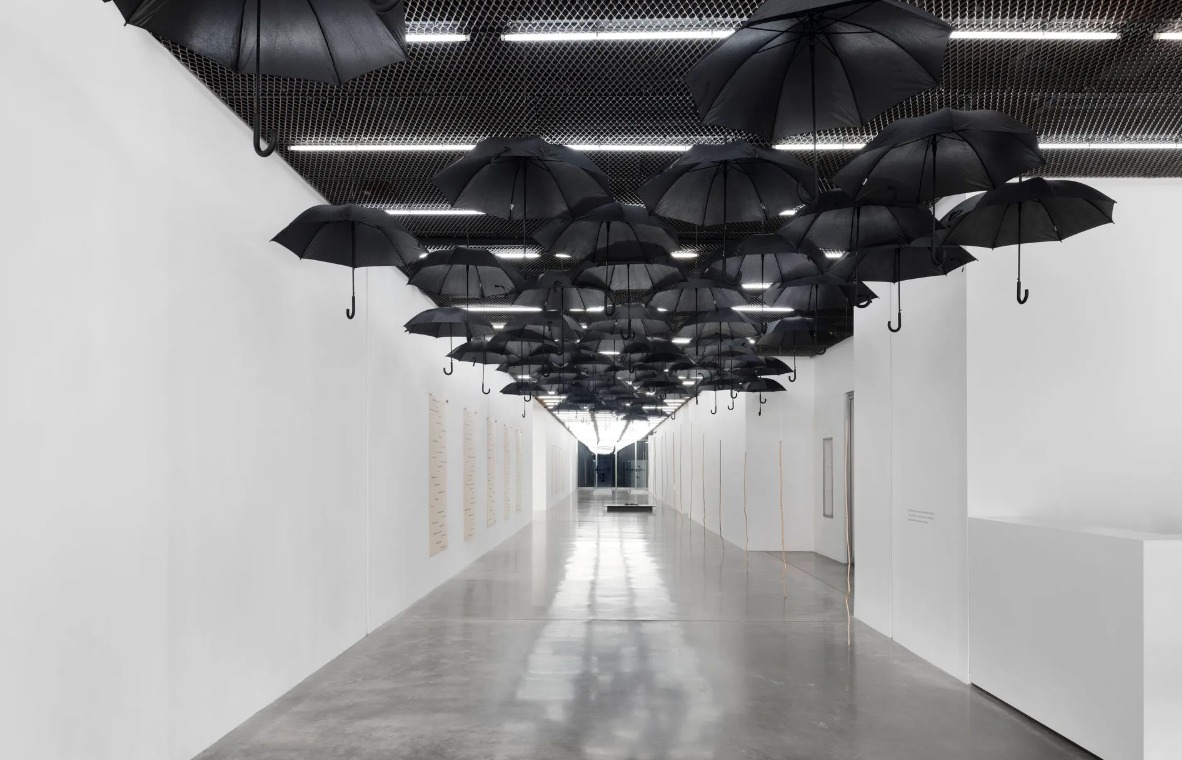
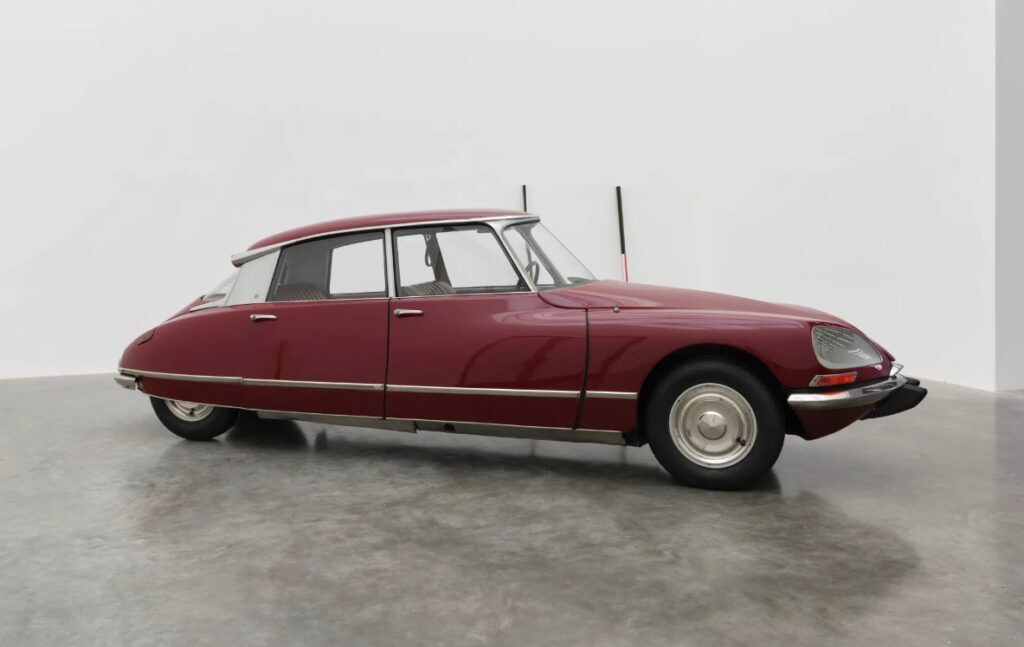
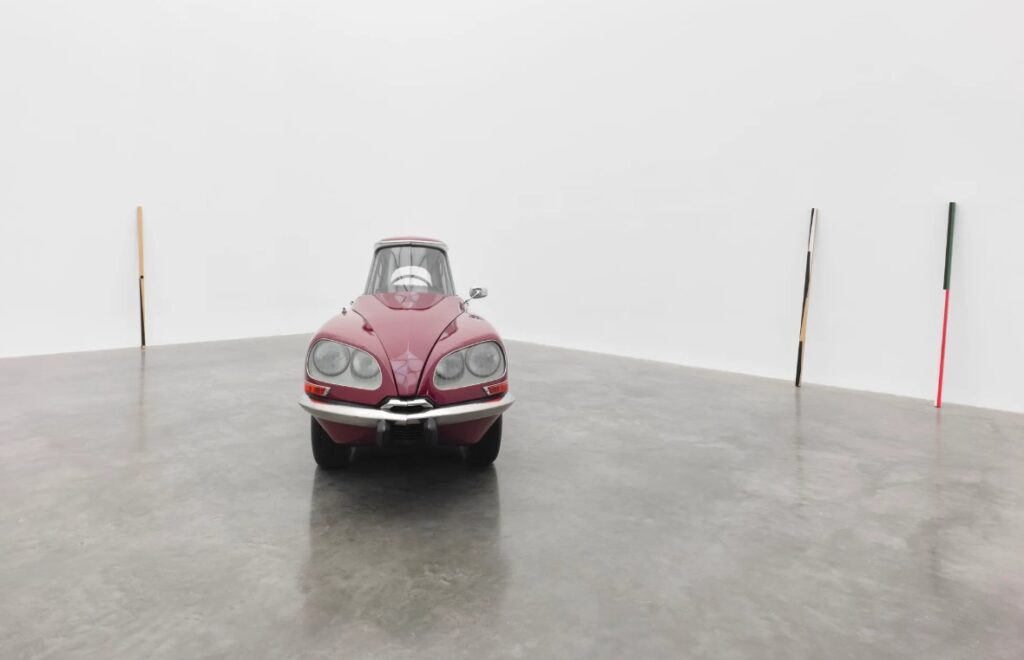
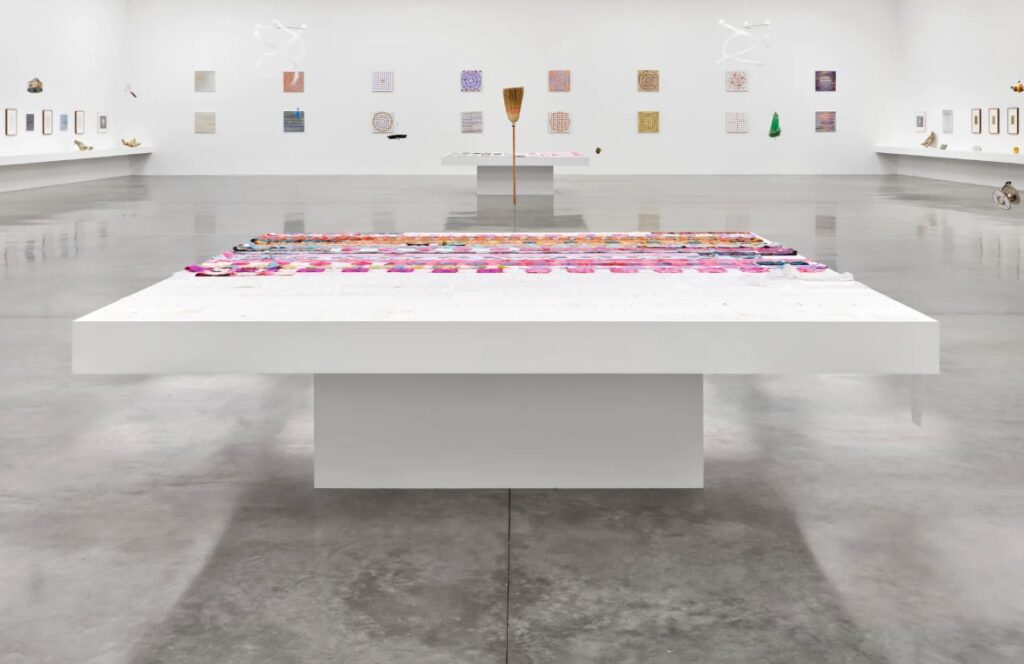
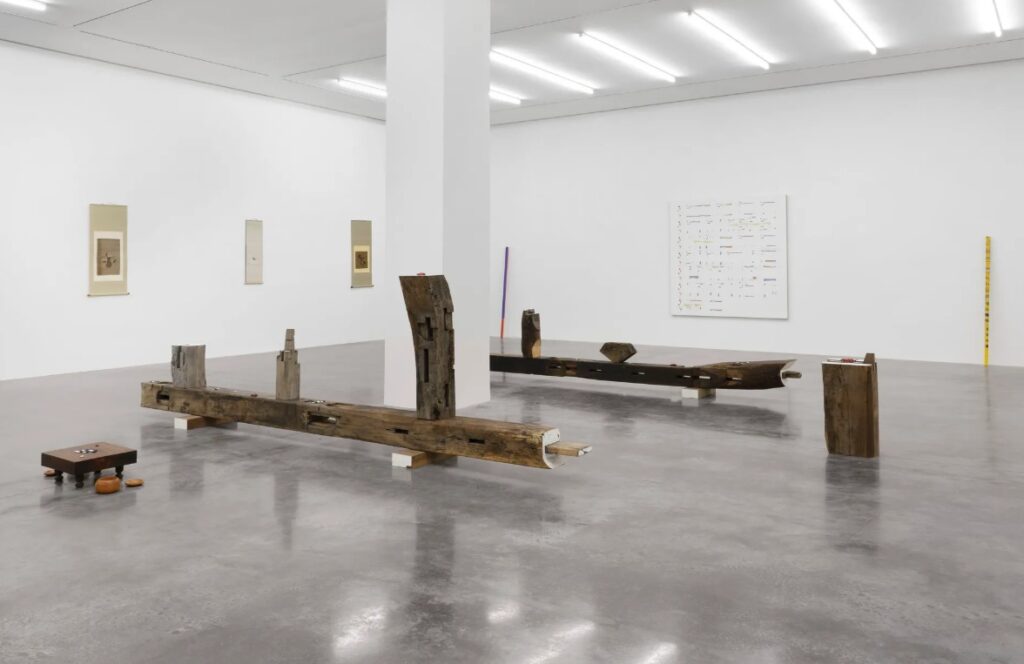
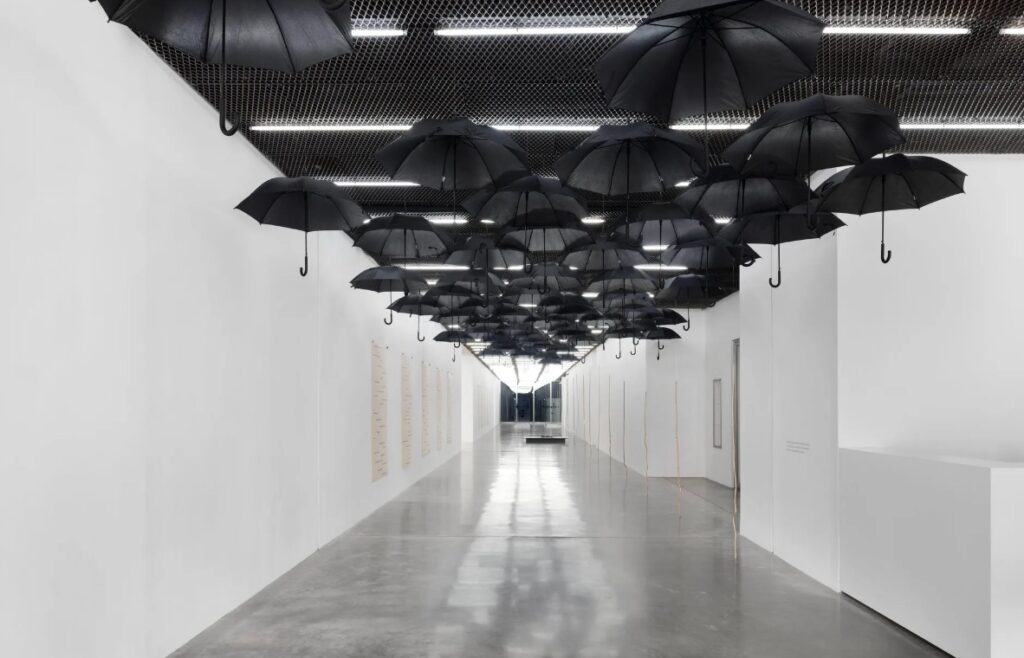
“Chronotopic” includes famous installations, such as The DS (Cornaline) (2013), a cutaway Citroën car that has often been interpreted as a kind of spaceship, as well as notable pieces that have never before been seen in the UK, such as The Weight of the Sun (2003), in which a broom becomes a symbol of human work, and dust, an allegory of nothingness; Visible Labor (2015), which consists of wood from beams and columns rescued from demolished Japanese houses and temples, and draws on his investigations into Zen philosophy; and Rain of applause (2025), an accumulation of umbrellas and sound tracks in which the boundaries between the sounds of a natural phenomenon – a storm – and a collective human reaction – massive applause – blur.
Gabriel Orozco. Chronotopic. White Cube
Gabriel Orozco. Chronotopic. White Cube
Gabriel Orozco. Chronotopic. White Cube
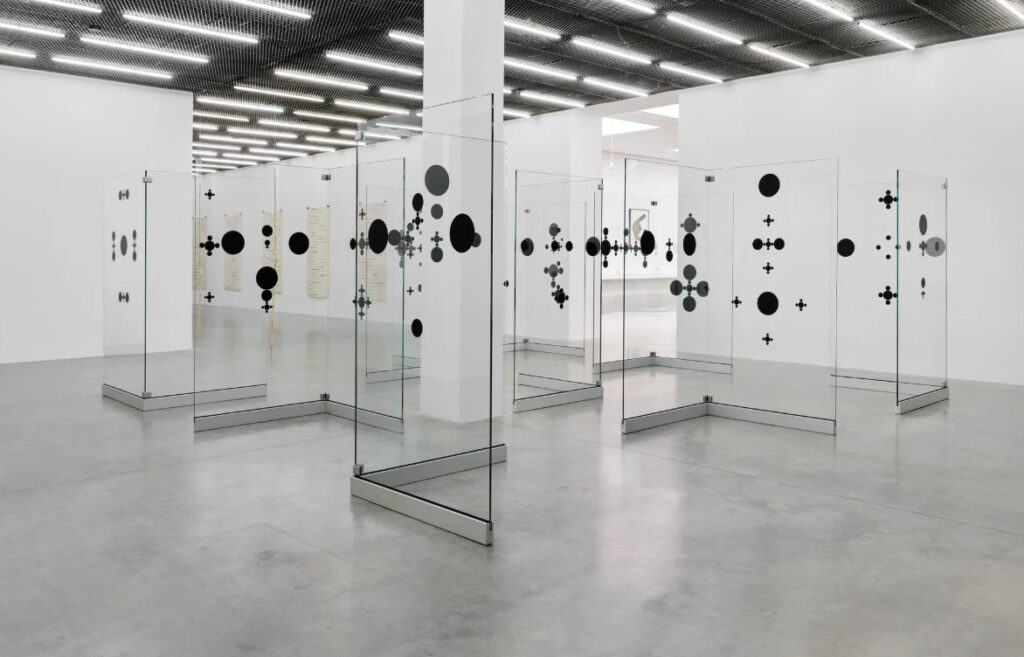
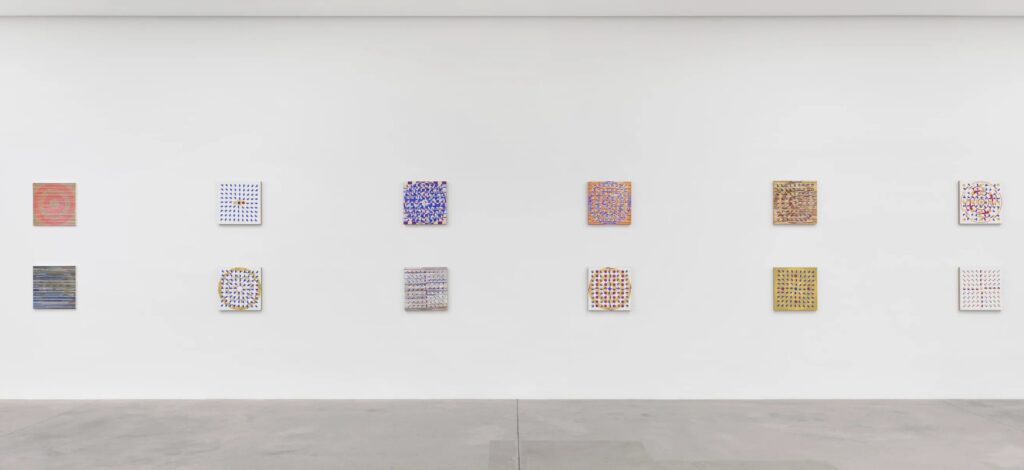
A recurring presence in White Cube will be the circles. Orozco has always considered them as an instrument or work tool, rather than as a static form within an artistic composition. Along the way, this element has evolved to become a temporal and spatial utensil—a kind of navigation tool used to open art to the reality of which it is ultimately made. For the Mexican, it has proven to be extraordinarily flexible and adaptable, also susceptible to becoming allegorical: far from considering time as a linear progression that advances inexorably, the cyclical – circular – models claimed by Orozco tend to oscillate between yesterday and tomorrow. Like memory or science fiction, this approach modifies our conventional perception of the passing of hours.
View through a lens chronotopicOrozco’s production raises questions instead of providing definitive answers or solutions: about the incorporation of the temporal dimension to the work of art, the conception of creation as a form of historical journey or the reasons why we cling so much to the idea that art goes beyond its time and is timeless, when perhaps the problem and our doubts lie precisely in the fact that it is saturated with that same time.
Gabriel Orozco. Chronotopic. White Cube
«Gabriel Orozco. Chronotopic»
WHITE CUBE BERMONDSEY
144–152 Bermondsey Street
London
From September 16 to November 8, 2026