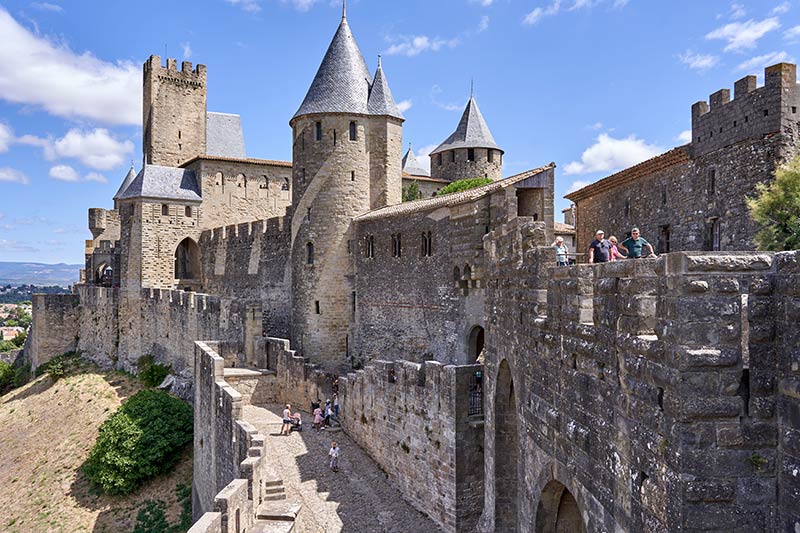
From North to South, France wants to promote its rich history to the UNESCO World Heritage Committee, whose 48th session is currently being held in Busan, South Korea. The Normandy beaches famous in particular for the landing of allied troops on June 6, 1944 and the Capetian fortifications of Aude and Ariège, including the castle of Carcassonne and its famous ramparts, are among the files currently being examined by the intergovernmental organization.
More precisely, the applications submitted at the end of January 2025 concern eight castles in Languedoc – Lastours, Termes, Aguilar, Peyrepertuse, Quéribus, Puilaurens, Montségur and Carcassonne – as well as the beaches of Utah, Omaha, Gold, Juno and Sword on the Normandy Coasts but also Pointe du Hoc. The property also includes remains of the Atlantic Wall and the artificial Mulberry B. port of Arromanches. The file was the subject of an evaluation by the International Council on Monuments and Sites (Icomos), competent in the matter, which transmitted its recommendation – favorable – to UNESCO. Until July 29, delegates of the World Heritage Committee evaluate the proposals and will have to adopt a final decision at the end of this ordinary session.
The main evaluation criterion followed by the 21 representatives of the Committee concerns the outstanding universal value of the site. If the argument for the “D-day” beaches was self-evident, the formerly called “Cathar castles” were renamed “royal fortresses of Languedoc”, to avoid any confusion: their current form was built in the 13th century by the kingdom of France, precisely following the crusade against heresy and the conquest of Languedoc. Cathar dissidents did indeed find refuge in these lordly castles before their conversion into royal fortresses, but “Cathar history is immaterial, it has left no traces except in the texts. But UNESCO wants a clear, defined, identifiable object”explained David Maso, architecture and archeology project manager at the World Heritage Mission Association (AMPM) which has supported the candidacy since 2019.
The registration procedure for the royal fortresses of Languedoc has been maturing for several years. In 2013, the project was launched by the Department of Aude, which tasked a scientific committee with studying the fortifications and composing the broad outlines of the application, adapting it to UNESCO criteria. Specialists are thus working to highlight the characteristics specific to the Capetian defensive system of the 13th and 14th centuries that we find in the castles. From 2023, work is moving towards the development of a management plan, because the State’s capacity to protect the candidate monuments in a sustainable manner is a decisive criterion for the selection committee.
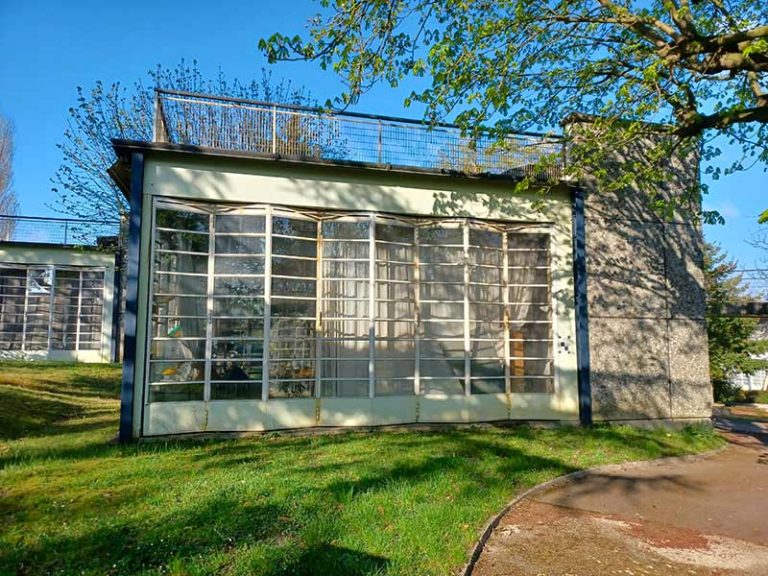
Blockhouse at Utah Beach, one of the landing beaches in Normandy.
As for the landing beaches, the Normandy region indicates that it has partnered with state and community services since 2008 for their recognition as World Heritage. In 2014, its candidacy was included on the French Tentative List, a mandatory step before its submission to UNESCO in 2018.
Created in 1978, the UNESCO World Heritage List follows only a few years after the adoption and official entry into force of the Convention concerning the protection of the world cultural and natural heritage. Originally, it aimed to protect threatened sites whose interest went beyond national borders. Today, more than 1,200 properties are listed as world heritage. In France, the first registrations arrived in 1979, with Mont-Saint-Michel or Chartres Cathedral. Last year, the 47th session of the World Heritage Committee was held in Paris, and resulted in the inscription of the Megaliths of Carnac and the banks of Morbihan. World heritage listing entails international recognition, but also commitments to protection, management and monitoring.