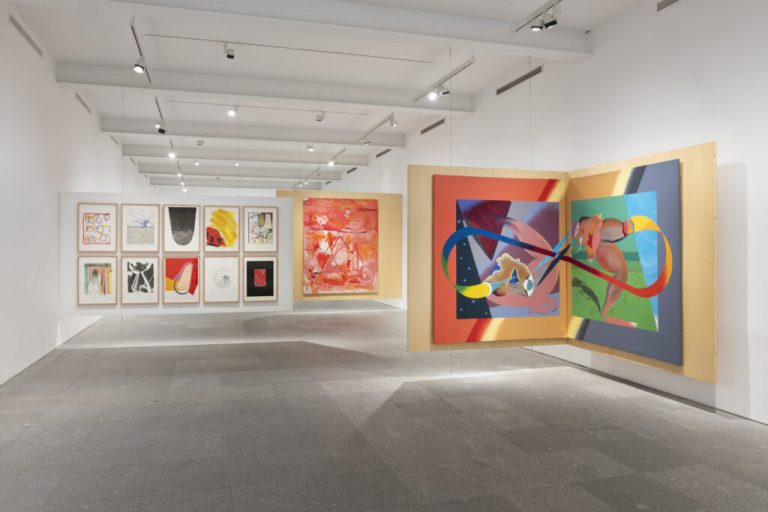
Around 1930 or 1931, a group of abstract artists met on the outskirts of Paris, in Théo van Doesburg’s studio in Meudon, to constitute an international collective based, precisely, on non-figuration. The official foundation of Abstraction-Creation, Art Non-figuratif, that was his name, It would take place on February 15, 1931 and, between 1932 and 1936, these authors also published five issues of a magazine called the same.
Although Van Doesburg died shortly after in Switzerland, creators related to his conception of geometric abstraction (among them, former members of Art Concrete and Cercle et Carré) formed the core of the new organization, along with other figures not so interested in the linear aspects of abstraction. that movement Art Concreteled by Van Doesburg himself until his death, and Cercle et Carrepromoted by Michel Seuphor and Joaquín Torres-García, were active in Paris just before, until 1930-1931 and 1929-1930, respectively, hence many artists who later allied themselves with Abstraction-Creation will participate in an exhibition of Cercle et Carrein April 1930 at Galerie 23, among them Jean Arp, Willi Baumeister, Carl Buchheister, László Moholy-Nagy, Antoine Pevsner, Kurt Schwitters and Sophie Taeuber-Arp.
Paris, then almost more than ever a mecca for foreign painters, had attracted Wassily Kandinsky from Russia and Piet Mondrian from the Netherlands; They would also temporarily be part of the group, while the Russian constructivists El Lissitzky, Malevich and Tatlin, although invited to join, did not accept the offer.
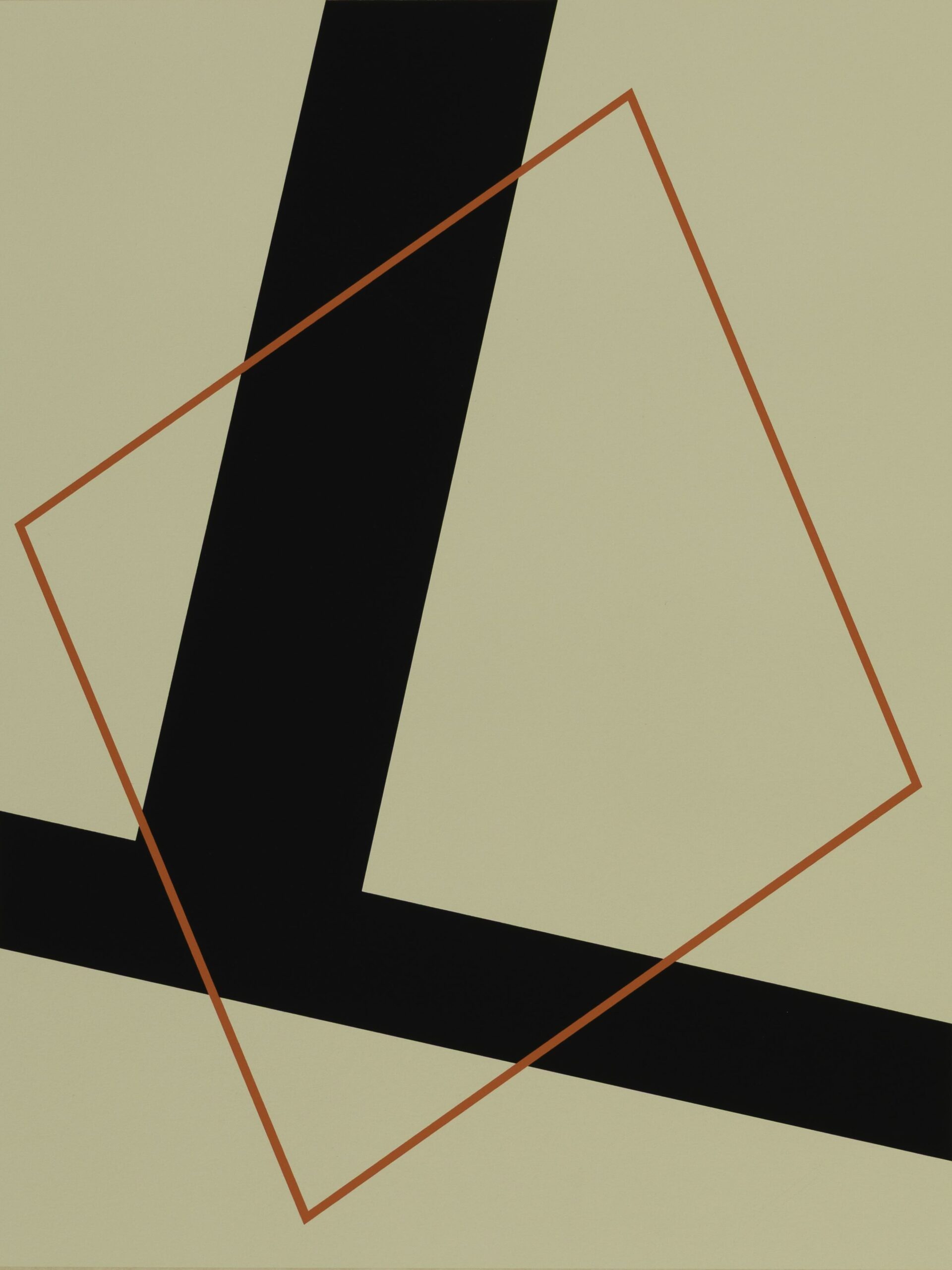
Friedrich Vordenberge. Composition1935. 1973 Edition
In the first number of Abstraction-Creationan editorial stated that authors whose works contained recognizable images were not invited to join this project; this excluded Giacometti, who was close to several of his followers and had been present at some of the early meetings, but did not wish to give up working directly from models. Also to Alexander Calder, who, however, performed one of his amusing circus performances with figurative images during an exhibition of abstracts at the Porte de Versailles, in 1931.
Members of the association living in or around Paris held informal talks at the Café Voltaire on the Seine and the Place de l’Odeon, at the Closerie des Lilas and in each other’s studios. Not all of them remained active during the years in which the group continued; Helion, for example, participated only in 1931, but the British Ben Nicholson seems to have joined them in 1933 and left the group in 1935, the year before they disbanded.
In addition to editing and publishing that annual magazine of the same name, Abstraction-Creation organized, as we said, a series of exhibitions that exhibited the work of its partners on a rotating basis on the ground floor of a building in the Wagram area, where Picasso also lived. According to Seuphor, the Spaniard visited the exhibitions and stayed there for many hours. As for publication, another means of “exhibiting” the members’ production, it was also used to attract new members: certain artists were invited to send photographs with their respective statements.
And abstraction aside, many also shared a close friendship, such as Van Doesburg, Arp and Taeuber-Arp, who collaborated together on the interior decoration of the Café l’Aubette, in Strasbourg. The years of the Great War and social readjustments perhaps explain that optimistic unification of the group under a common principle: that of establishing order from the chaos that existed in both the political and artistic spheres. Sonia Delaunay declared in the magazine, in 1932, that The great current revolutionary trends in art are tendencies towards order, an order of movement and action… After destruction (cubism), we have the joy of observing and participating in the reconstruction of a new world: orderly, clear, healthy, generous, optimistic and dynamic.
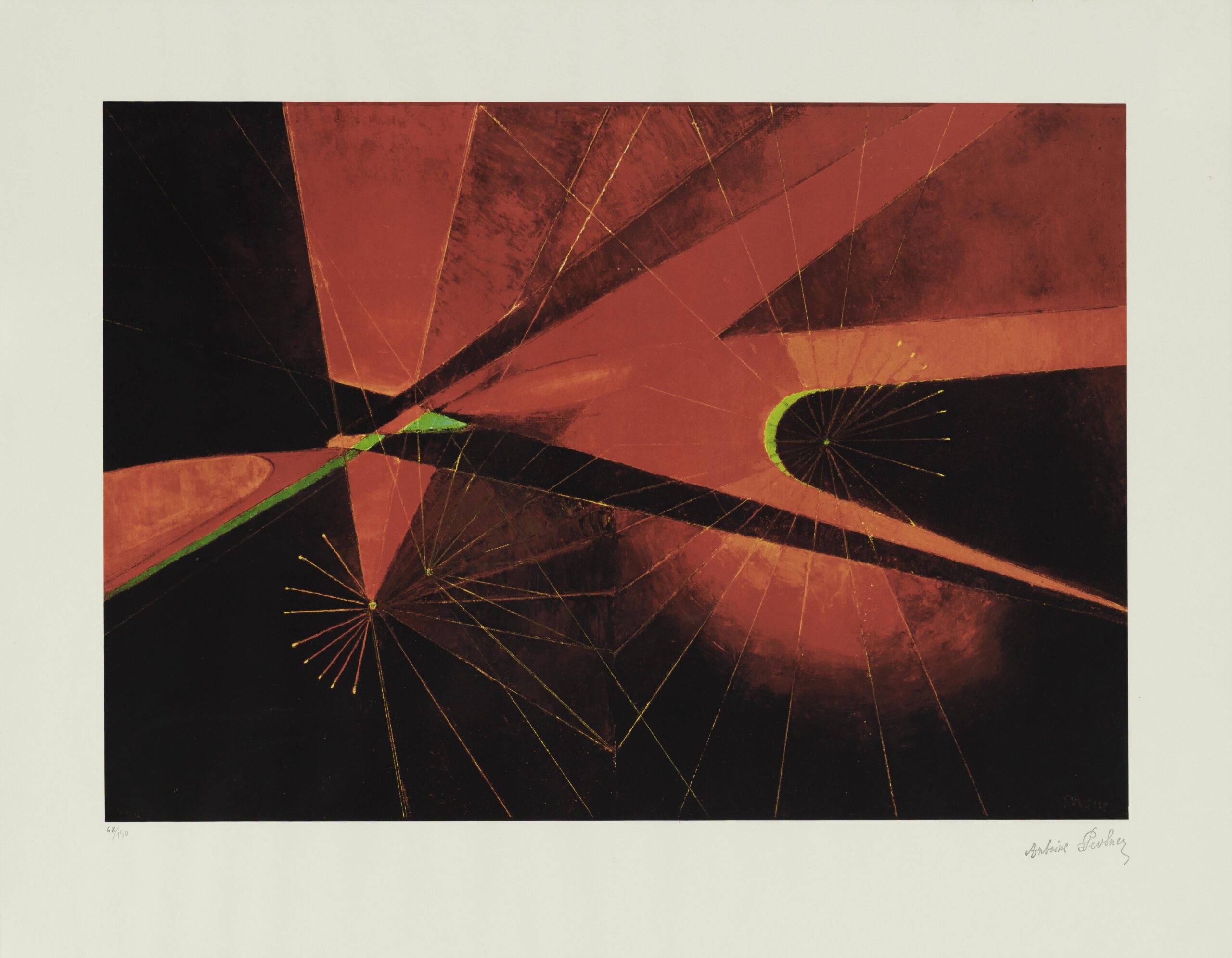
Anton Pevsner. Birth of the Universe1933. 1973 Edition
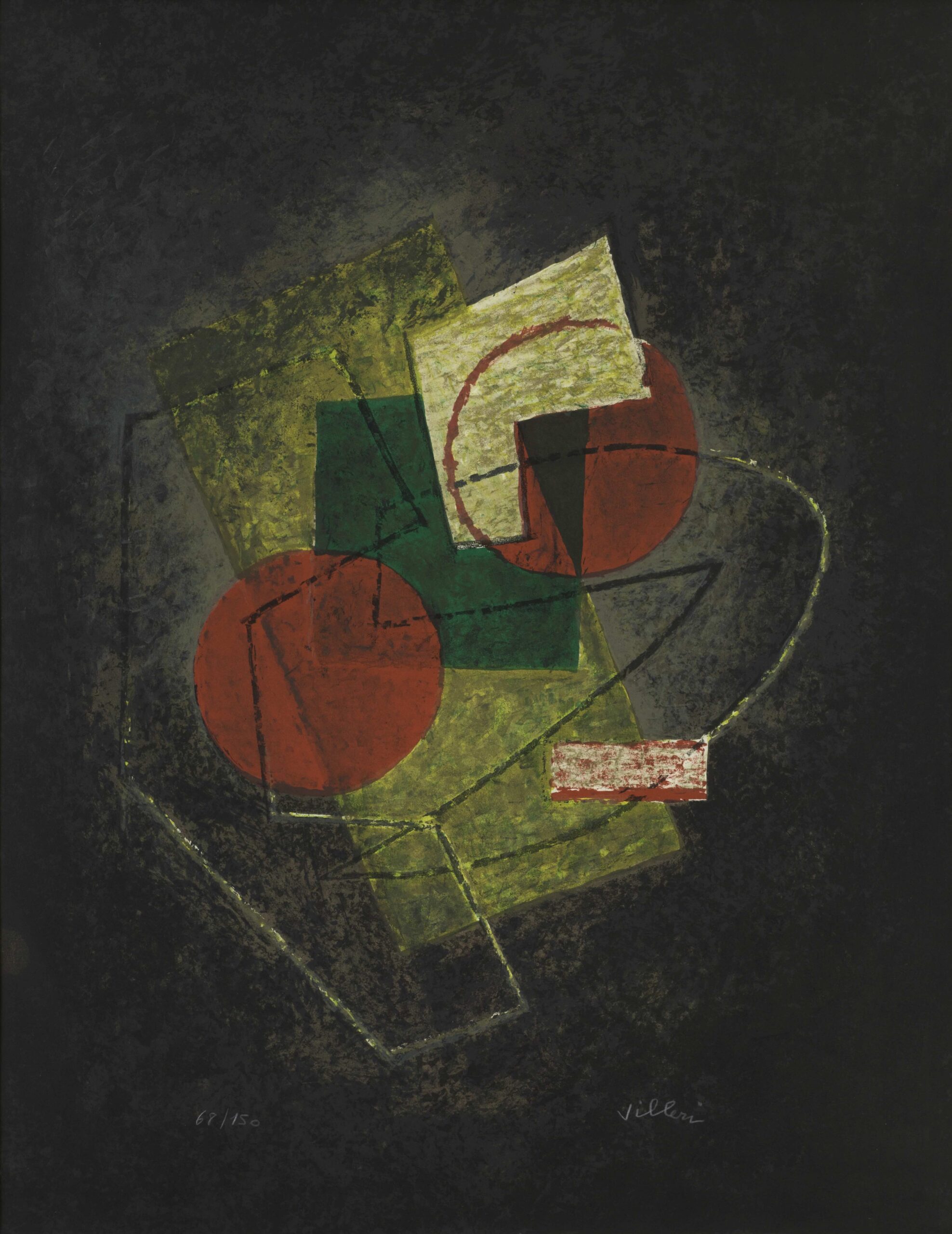
Jean Villeri. Composition1932. 1973 Edition
World War II, however, once again dispersed the European members of Abstraction-Creation in the late 1930s: Schwitters moved to Norway and from Norway to England, while his Merzbau in Hannover, illustrated in the publication, it was destroyed by five bombs; Freundlich died in a concentration camp; and, despite the commotion, Taeuber-Arp, Arp, César Domela and the American George LK Morris were able to set up another magazine, Plastic (1937), with letterhead of the New York-Paris axis.
The year 1936 was the last of Abstraction-Creationbut also the first of the formation of the American Abstract Artists, whose promoters included artists from the European collective, Harry Holtzman and Morris. According to Helion, he himself had spread the concepts of Abstraction-Creation during his first visit to the United States in 1932, and his return to that country in 1937, the inauguration of the New Bauhaus of Chicago by Moholy-Nagy, the arrival of Mondrian and Gabo as refugees and the immigration of Albers to teach at Black Mountain College, after the closure of the Bauhaus, ensured the transformation and rebirth in America of the principles of European abstraction, which would flourish with new vitality across the ocean.
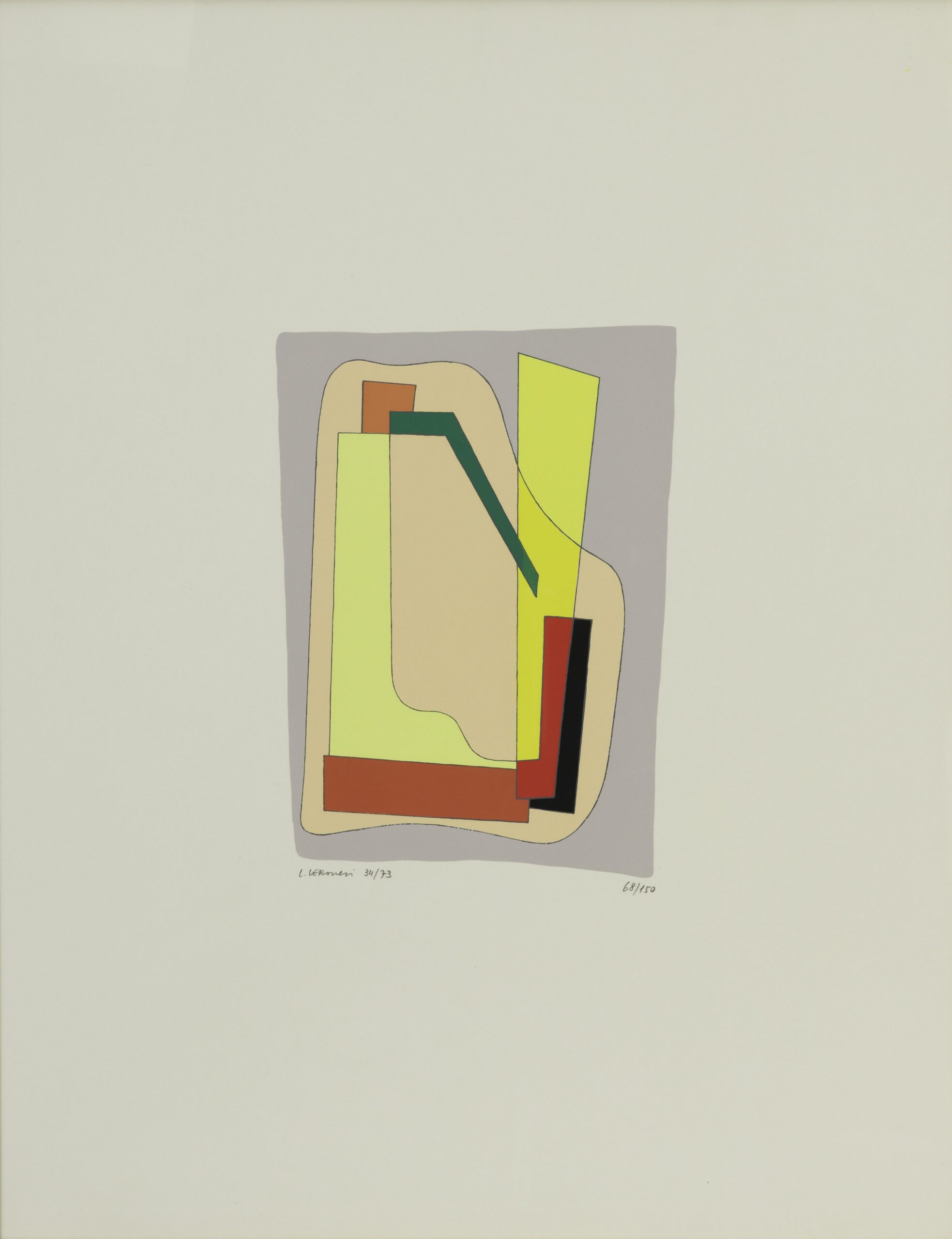
Luigi Veronesi. Composition1934. 1973 Edition
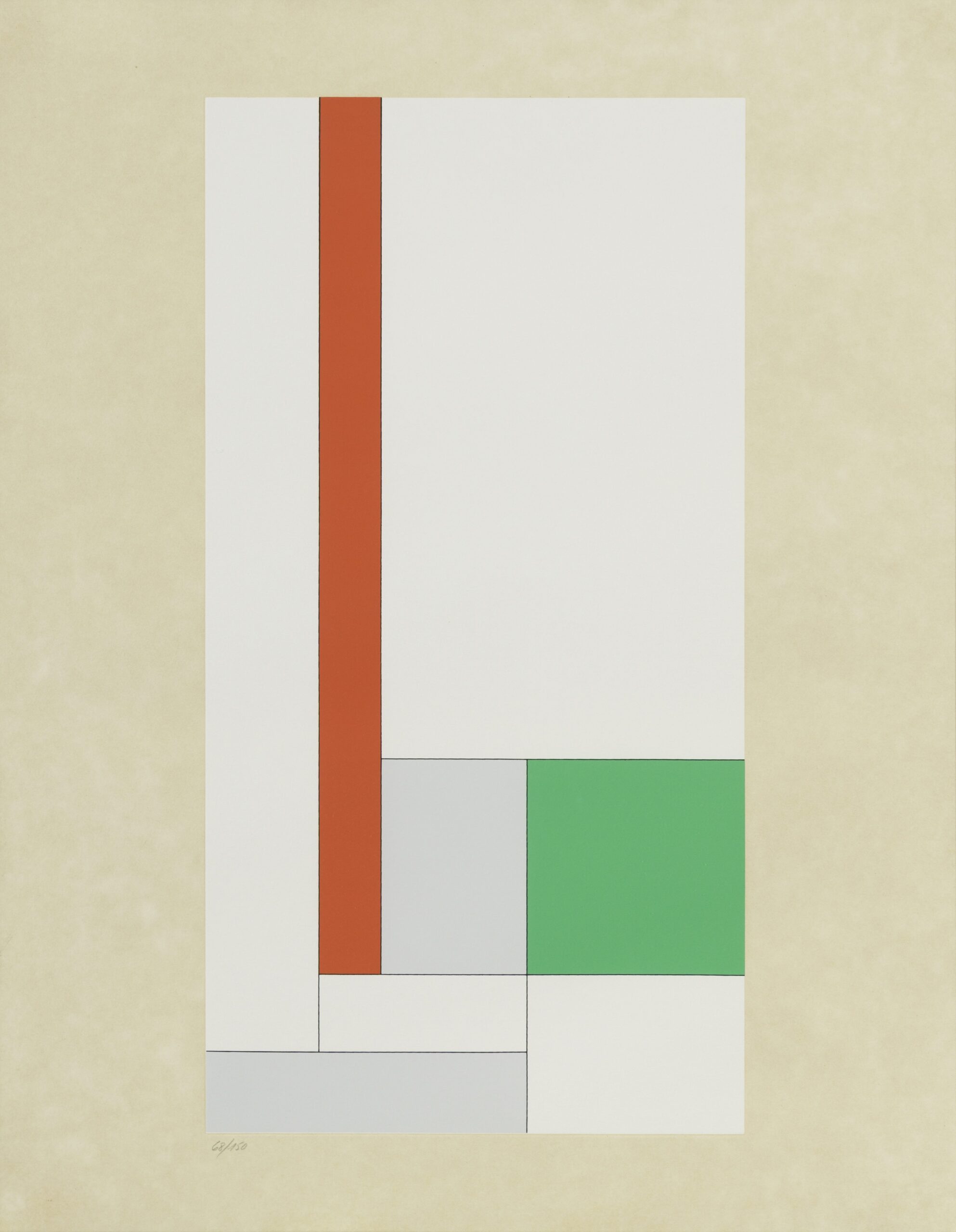
Georges Vantongerloo. Y =-X2+BX+C (Rouge-Vert)1933. 1973 Edition
On the 90th anniversary of that forced surrender, the Marc Domènech Gallery in Barcelona remembers in an exhibition the efforts of this group to counteract the growing influence of Breton’s surrealism and also its internationalist will: it came to have a constellation of four hundred artists orbiting around its postulates; In addition to those mentioned, we can mention Luigi Veronesi, Marlow Moss, Tarō Okamoto, Paule Vézelay, Jean Villeri, Bart van der Leck or the Spaniards Luis Fernández and Julio González (who, as we know, took their own paths before and after).
Without being a normative collective, and despite its short life, its compositions of geometric shapes and rhythmic structure did much to defend abstraction even after its dissolution.
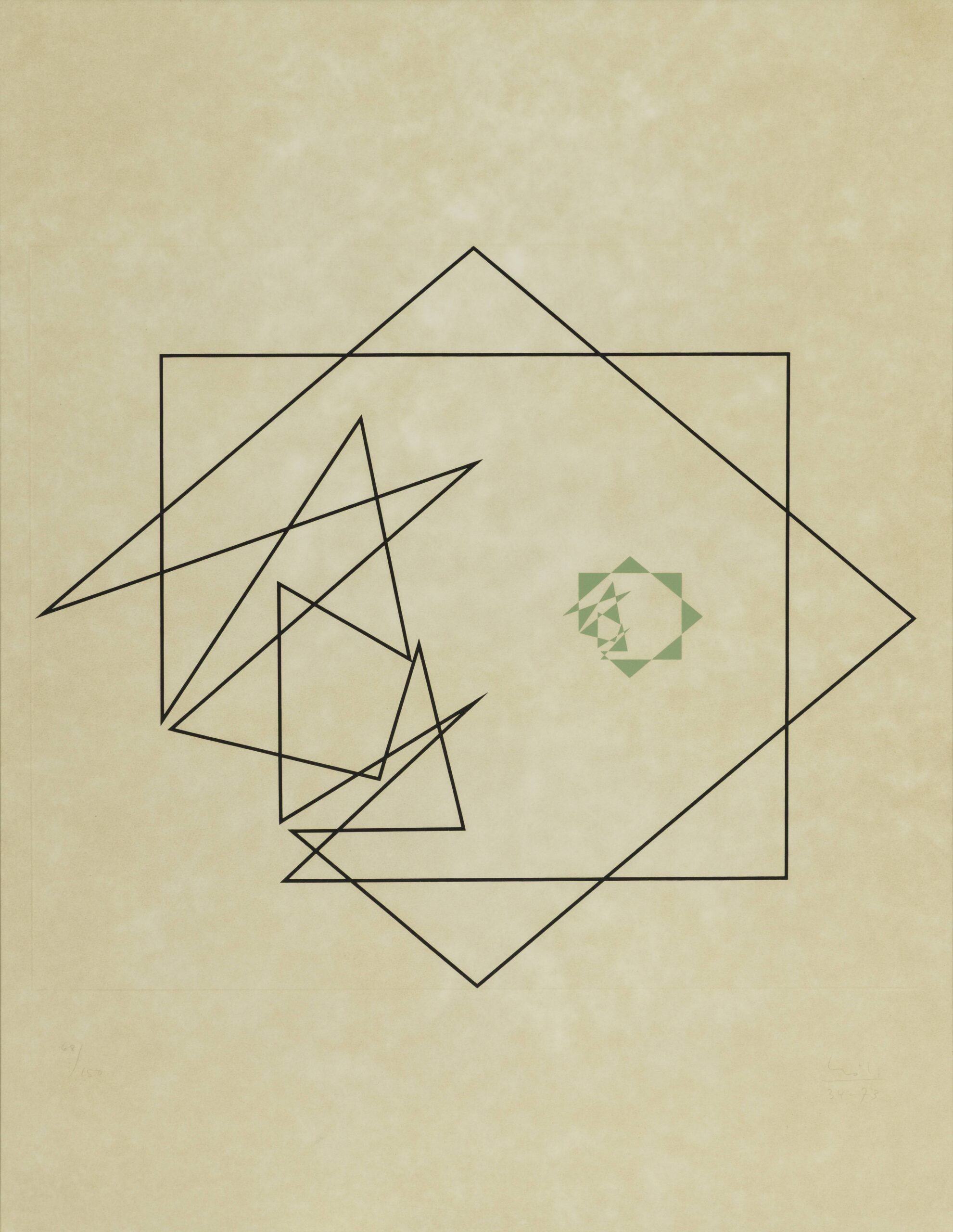
Max Bill. Construction in two parties1934. 1973 Edition
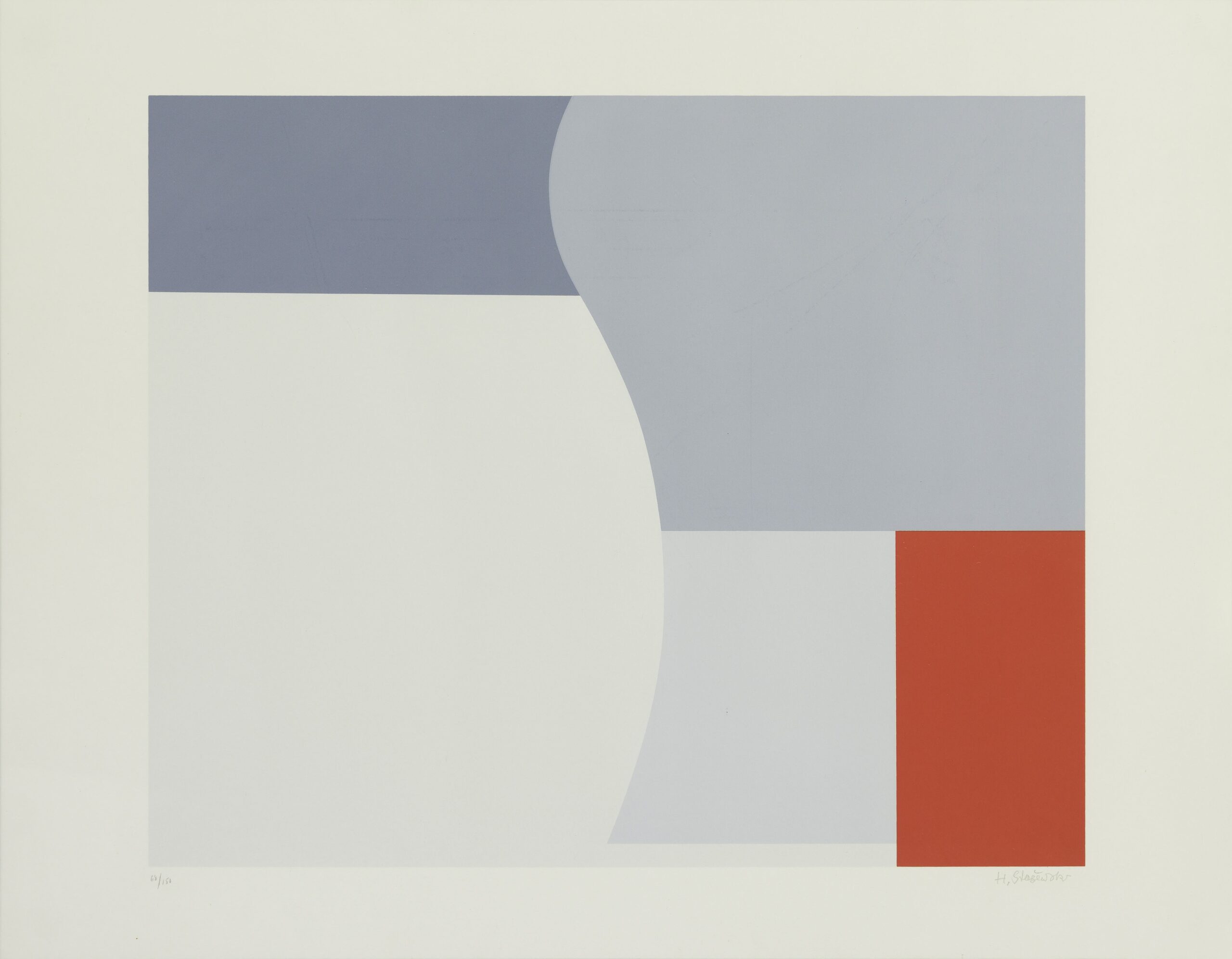
Henryk Stazewski. Composition1930. 1973 Edition
«Abstraction-Création. Non-figurative art (1932-1936)»
MARC DOMÈNECH GALLERY
Ptge Merchant 12, bxs
Barcelona
From June 18 to July 31, 2026