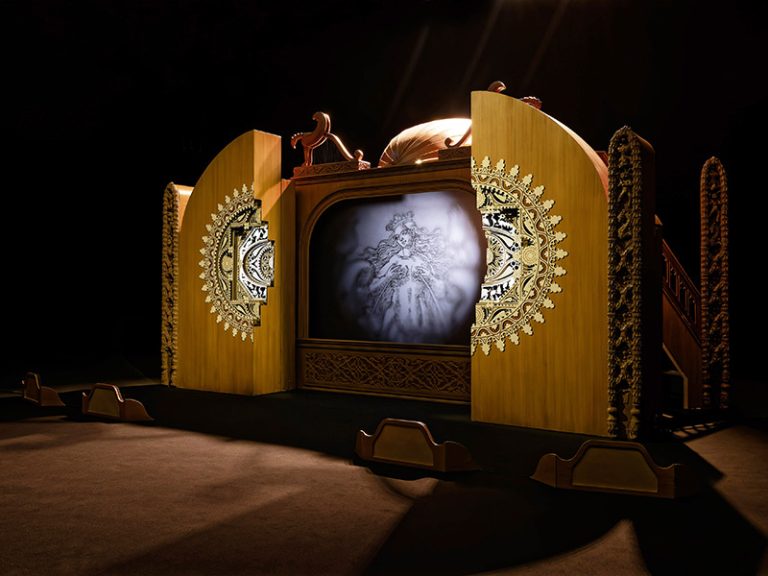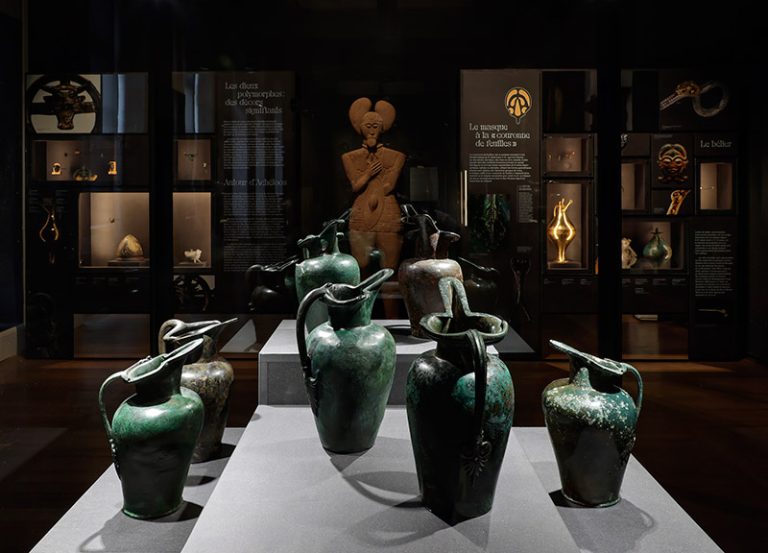
The visible and the invisible, the absent through the present: the exhibition with which the Casa de México Foundation in Madrid joins the official section of PHotoESPAÑA has brought together seven contemporary photographers from that country around the mystery, which houses photographs that show that cameras can capture much more than what we have in front of our eyes; also that which was and is no longer.
Under the curatorship of Laura González-Flores, it consists of works that communicate with the imagination more than with the given, a reality that these authors destabilize using very diverse techniques, some of very early origin: from cyanotype to piezography, passing through pinhole photography or silver printing on gelatin.
The tour opens and closes with the young Humberto Ríos Rodríguez, whose series we will see first Suspending Timededicated to disused photographic studios, not yet demolished, in which remains of their previous activity survive (hanging clothes, curtains), reminiscent of practices prior to the digital age.
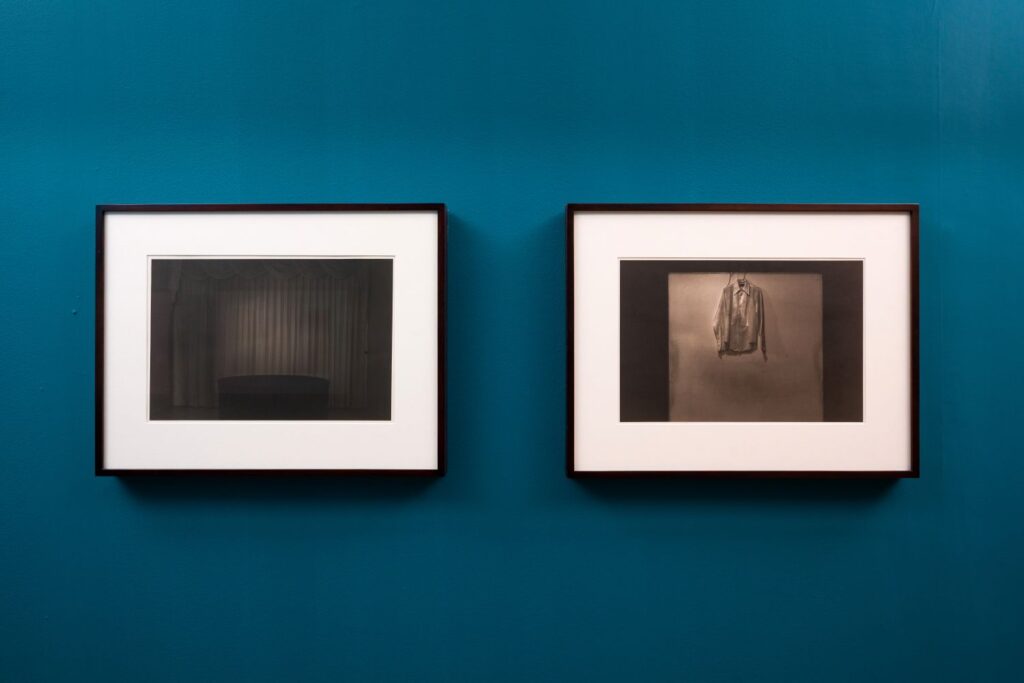
Humberto Ríos. Suspending Time. Casa de México Foundation, 2026
Cannon Bernáldez, for the curator one of the best photography printers in Mexico, presents his project Fearsin formats, although intimate, larger than their original negatives. Even so, the small dimensions of the images, very intentional on the part of the artist, make the viewer come closer, peering into a catalog of childhood fears, once again, only noted, but terrible and inevitable.
In this case, occasional vignetting (the progressive reduction of the brightness or saturation of a composition towards its edges, leaving them darker or lighter than the center) generates a certain tunneling effect and an immersive feeling.
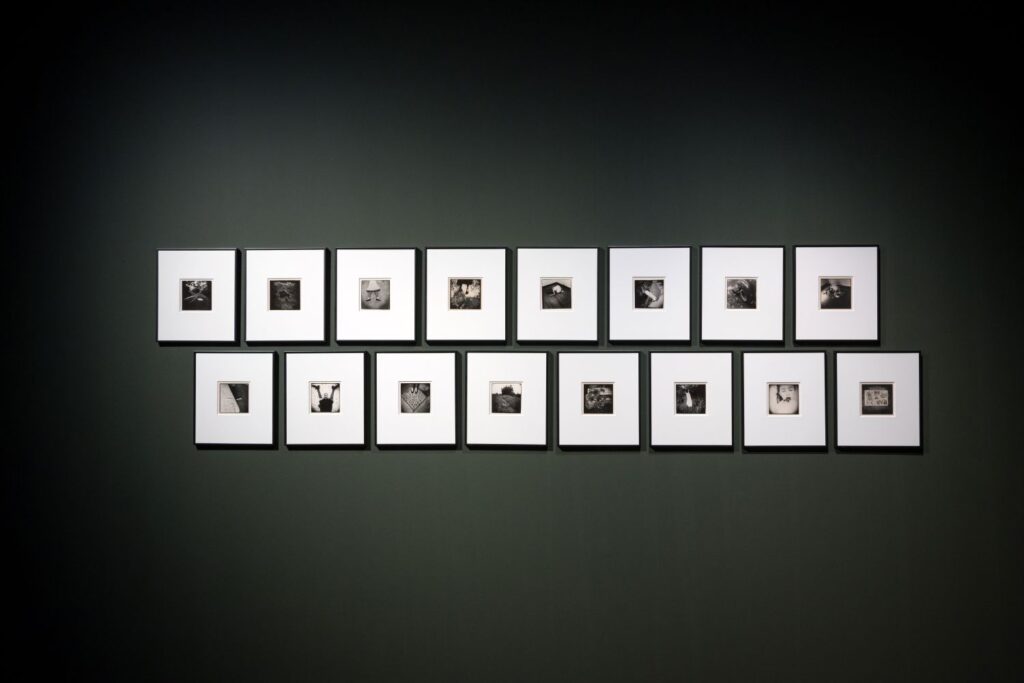
Cannon Bernaldez. Fears. Casa de México Foundation, 2026
In Alinka Echeverría, spectrality becomes political. This photographer covered Nelson Mandela’s funeral as a journalist and in the series Mtheory He wanted to remember that he was not alone either in prison due to apartheid or in activism against racism in South Africa: he searched for, and after much work found, nine of his fellow prisoners and from their biometric fingerprints he generated landscapes that speak of lives and destinies, using glass and oil to illuminate volume. One of them corresponds, paradoxically, to their jailer, whom these men agreed to include as another victim of that system.
At Casa de México we will also contemplate Apparent Femininity. Gracean animation made from an urban photograph by Berenice Abbott in which she incorporated Grace Hopper, a computer scientist. This time, Echevarría, invited by the Fondazione MAST of Bologna, claimed the female imprint on the fourth industrial revolution; In the original project, LED curtains were seen, here an animation will come our way.
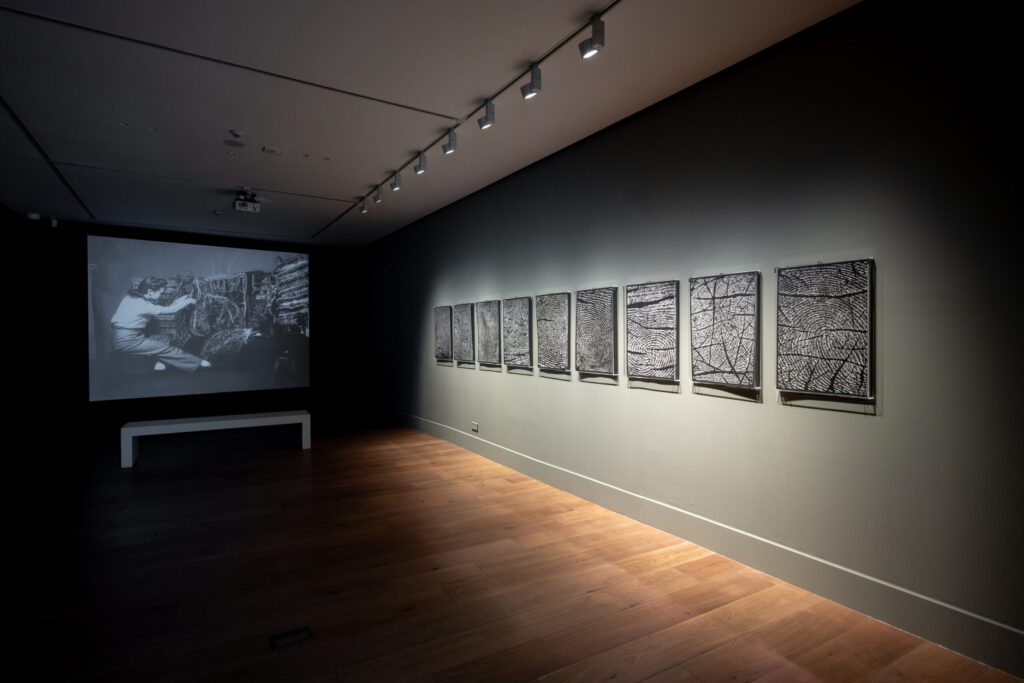
Alinka Echeverría. Mtheory and Apparent Femininity. Casa de México Foundation, 2026
Echevarría took over from Tomás Casademunt, who, using voluminous pinhole cameras, photographed the construction process of large Mexican buildings week by week, combining previous and subsequent snapshots in the same image. Their work involves months of elaboration and produces almost abstract fruits, like some of the first photos in history.
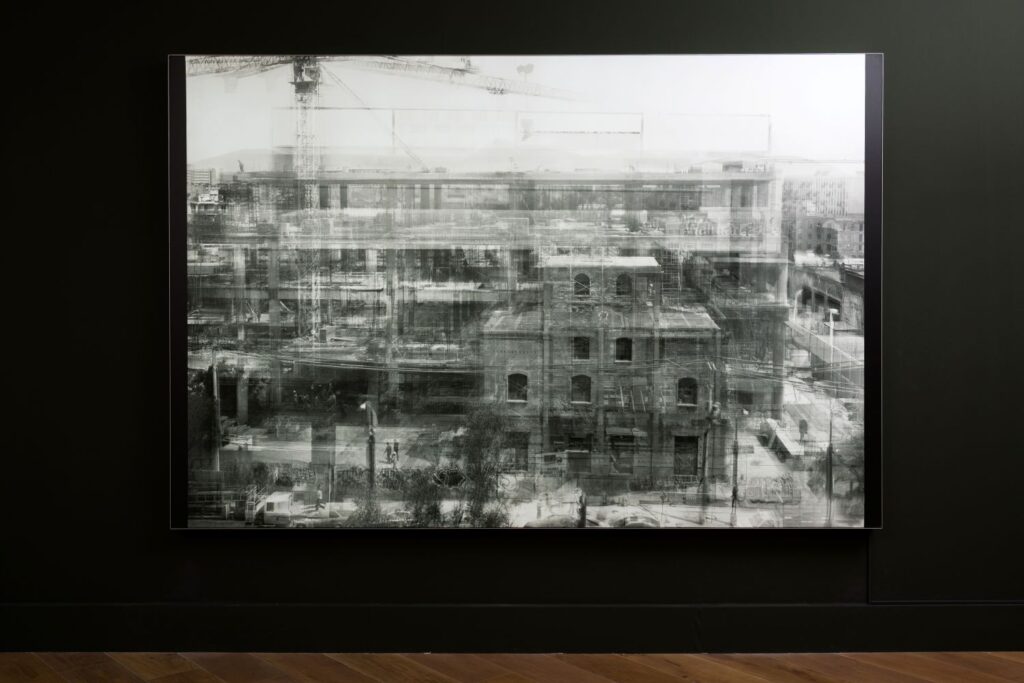
Tomás Casademunt. Spectrographs. Casa de México Foundation, 2026
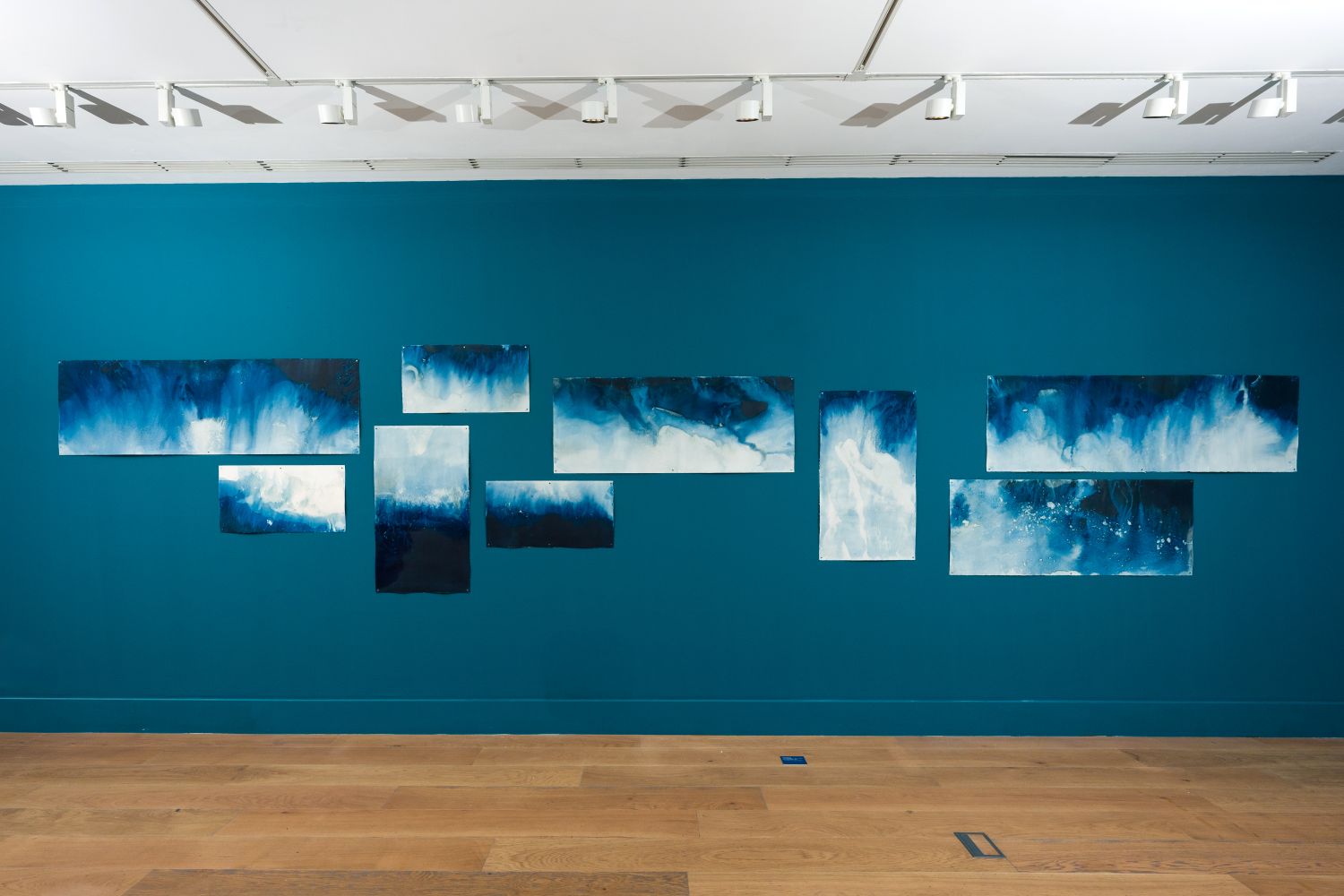
Among the most poetic images in the exhibition are those of Paola Dávila, who in Tides He has used cyanotype (a technique that uses sunlight and chemical compounds to generate monochromatic prints in a peculiar Prussian blue) to let other agents – the sea and the sun – build his pieces and let salinity leave its mark on the blues. The titles of each work correspond to the coordinates where it was taken, in Baja California.
Dávila, who will teach a cyanotype workshop at this institution, also teaches us the series Every day is Mondaywhich he carried out during the pandemic confinement: he recorded, with a computer tool, his daily movements in the space of his home. These transfers have become original spellings.
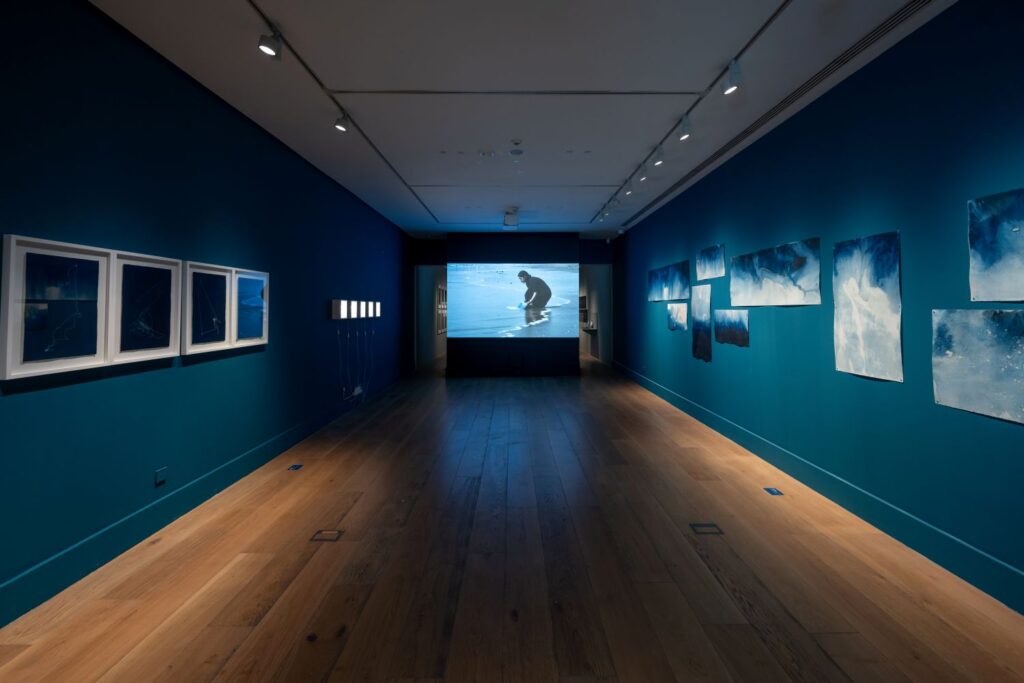
Paola Dávila. Tides. Casa de México Foundation, 2026
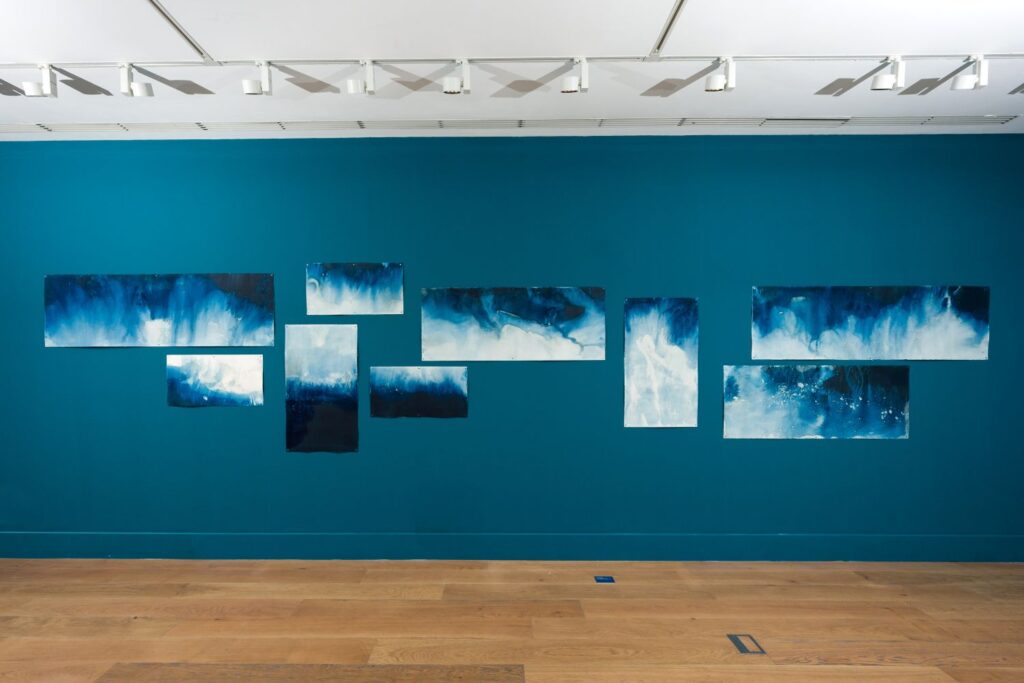
Paola Dávila. Tides. Casa de México Foundation, 2026
Adriana Calatayud, for her part, exhibits here landscapes in which it is not so much what we see that matters (they are blurred or covered by paint), but what has taken place in them outside our sight: disappearances of people derived from organ trafficking. Unlike Bernáldez’s childhood fears, this author points to other very real and contemporary ones, although the violence is never explicit: no body has remained of the crimes.
This project is named Silent cemeteries and has become an opaque archive of areas of shame. In contrast, Laura Cohen’s images, with which he shares a room, underline the capacity of life to assert itself: they are different specimens of Mexican tropical plants that seem to float, suspended in time; This is because they were captured in an aquarium, an exercise that involves a virtuoso lighting exercise.
Cohen also exhibits half a dozen images that pay tribute to his deceased father and are dedicated to the soul: the smoke here embodies what was and is not.
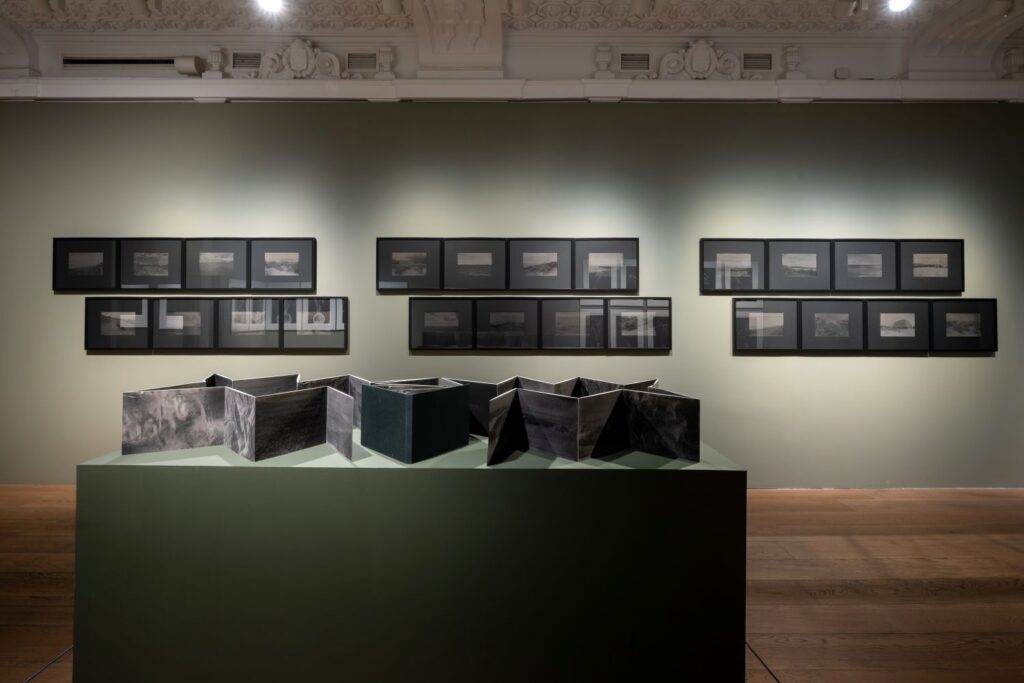
Adriana Calatayud. Silent cemeteries. Casa de México Foundation, 2026
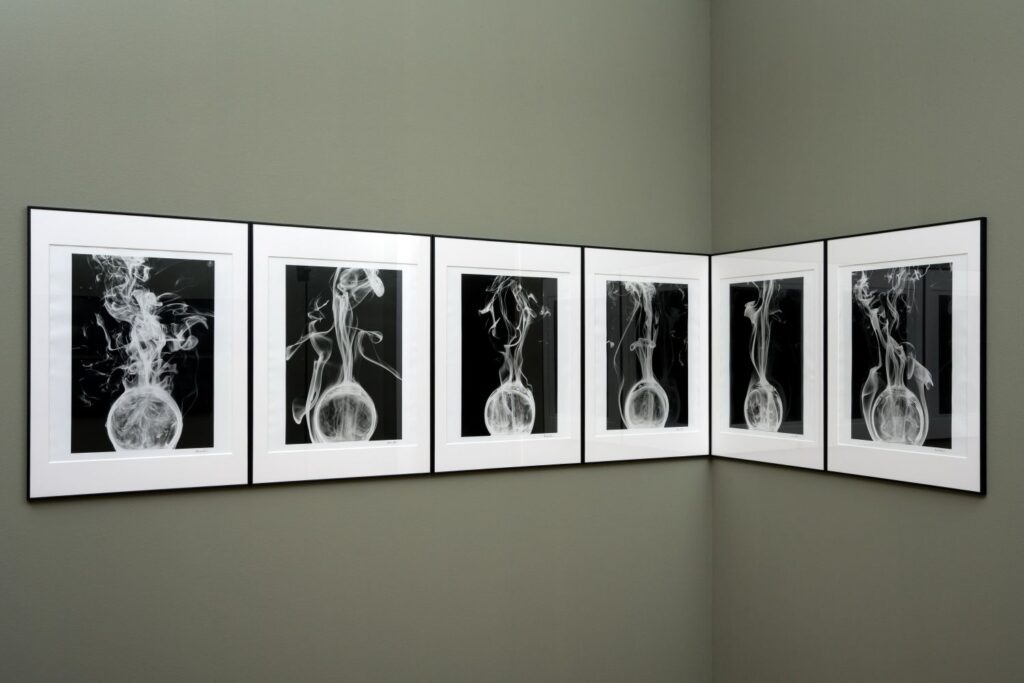
Laura Cohen. Casa de México Foundation, 2026
As we anticipated, Humberto Ríos closes the exhibition: he photographed, in the dark and closed to the public, the rooms of the National Museum of Art. MUNAL. These photographs, black on black, only allow us to glimpse their shapes if we dedicate time to them, a detail that the exhibition as a whole requires and that seems to refer to that demanded by archaeology.
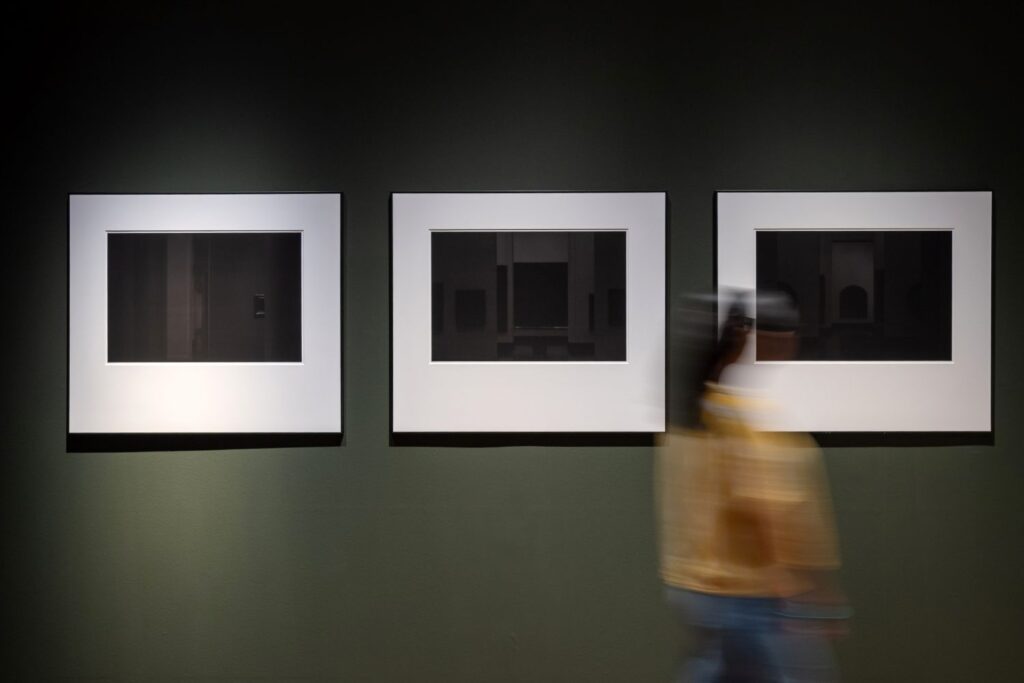
Humberto Ríos. Vestiges. Casa de México Foundation, 2026
«Spectres. Enigmas of the gaze»
CASA DE MEXICO FOUNDATION
C/ Alberto Aguilera, 20
Madrid
From June 12 to September 13, 2026