Washington, DC. On April 16, the Commission of Fine Arts (CFA) voted unanimously to continue the monumental triumphal arch project desired by Donald Trump. The enthusiasm of its members contrasted sharply with the 1,000 written contributions received at this public meeting, one hundred percent of which were authors “were against the project”according to the secretary of the commission. They are not the only opponents: Zachary Burt, of the DC Preservation League, an association which works to save and preserve the monuments of Washington, DC, wanted to emphasize “serious concerns and strong opposition” to the pharaonic project. Despite this resistance, the administration is pursuing its agenda with the CFA at its heels.
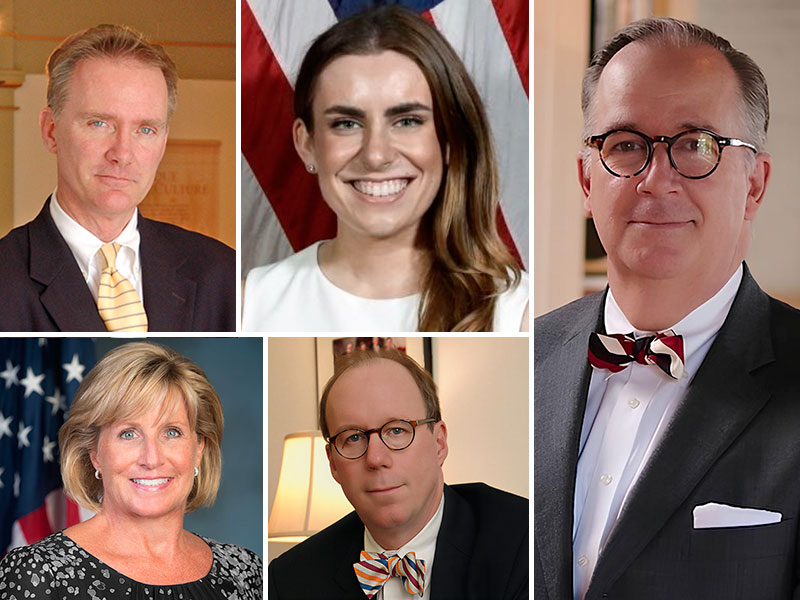
Among the seven members of the CFA appointed in January by Trump, there are staunch allies. First and foremost, Rodney Mims Cook Jr. (see ill.), a historic defender of classical architecture, founder of the National Monuments Foundation association. He is at the origin of a triumphal arch erected in Atlanta (Georgia), his hometown, and has campaigned for years for a triumphal arch to see the light of day in Washington. He is supported in his enterprise by the “bow tie gang”: James C. McCrery II (see ill.) and Roger Kimball, two ardent critics of modernism. The first, a university professor and art theorist, considers it as a technicist ideology having ravaged classical aestheticism and led to totalitarianism. He advocates a return to the teachings of Vitruvius and Palladio. The second, art critic, editor of the very conservative monthly The New Criterionis the great slayer of the American left, whose “political correctness” he despises. He accuses academics of having “distorted” the original meaning of classic works through Marxism, feminism or postcolonial discourse. Faithful to the philosopher David Stove, he asserts that “behind all this benevolent rhetoric about fraternity and equality, bloodlust is the left’s surest trademark.”
Project for the triumphal arch of Washington, wanted by Donald Trump.
© US Commission of Fine Arts
Two women sit on the commission without having any experience in the culture sector. One of them, Chamberlain Harris (see ill.), aged 26, has followed Trump since 2020, including under Joe Biden. In 2024, she was named deputy director of Oval Office operations, such as scheduling and physical access management. Today at the CFA, she very actively supports all the projects presented by the administration, whether the White House ballroom or the triumphal arch.
Another faithful member of the political circle, Pamela Hughes Patenaude made her career in the public housing sector. She was number two in the Department of Housing and Urban Development under Trump I. Known for her commitment to vulnerable populations, particularly after Hurricane Maria devastated the island of Puerto Rico, she resigned in 2018 following a conflict with Ben Carson, head of the department, whose decisions she considered contrary to the fight against racial inequalities. Today she lands on the commission where she participates in votes but remains very discreet.
Conflicts of interest
On its website, the commission asserts “serving the American people, international visitors, and those who live and work in the nation’s capital”. It appears above all to be at the service of Trump and those who work for his projects. James C. McCrery II, in addition to his presence on the commission, is the head of an architectural firm. As such, he is at the origin of the ballroom project. The agency was removed from the project but he remains a consultant. Within the framework of the CFA, he will therefore have to decide on a project of which he is one of the first designers. Mary Anne Carter, without any experience in the art sector, is a member of both the CFA and the National Endowment for the Arts (NEA). It therefore intervenes as much for the validation as for the financing of projects. Filmmaker and sculptor Matthew Taylor, 44, another member of the commission, is actively involved in the construction of the “National Garden of American Heroes”, a project dear to Trump which should bring together 250 statues of great American figures. However, the NEA awards subsidies for this project. The intricacy between the actors of the different commissions and the project leaders is a first in the United States.