London,
They say that his disposition was charming as well as impetuous: his social relationships and with other artists were controversial and it was common for his echoes to reach the public. In fact, he himself made sure that they did it without intermediaries: in 1890 he published The subtle art of creating enemies.
Born in 1834 in Lowell, Massachusetts, then a rapidly growing industrious city, Whistler had an international childhood: at the age of nine, on account of the work of his father, an engineer, he moved to Saint Petersburg and the future artist remained there for six years, until his father died after contracting cholera. The family returned to the United States, but stopping in London: Whistler lived briefly with his half-sister’s family, the Seymour Hadens, on Sloane Street; This line of collectors and engravers fostered his interest in creation and, a decade later, they would be among his first sitters.
In the fifties, the then young author completed his training and also cultivated his rebellious spirit. Expelled from the West Point military academy, he left his country and went to Paris in 1855, attracted by the bohemian life. After enrolling at the École des Beaux-Arts, he began to forge a circle of artist friends, among them Edward Poynter and the writer George du Maurier, who would later satirize him viciously through the character of Joe Silbey in his novel Trilby (1894).
After a dinner with Alphonse Legros and Henri Fantin-Latour in 1858, they were so impressed by Whistler that they dissolved another newly founded group of artists to form the Société des Trois with him. The trio was prompted by an exhibition in the studio of the painter François Bonvin in 1859, which included works that this realist author considered should not have been rejected at the Paris Salon. It was not until 1863 that they caused a sensation at that year’s Salon des Rejects, created by Napoleon III to appease contemporary artists whose styles did not please the official jury. In a short time, it became more popular than that stuffy traditional Salon.
Whistler exhibited there his Symphony in White, No. 1 (1862), which depicted his lover, the artist and model Joanna Hiffernan, who also often posed for Courbet. In a letter written to Fantin-Latour in 1867, the American, who at the time had praised the author of The origin of the worldended up ranting against him and against “that damned realism”, regretting never having been able to count on the then recently deceased Ingres as a teacher. That change of position represented a radical turn for an artist located at the heart of the Parisian avant-garde.
As his career took off, Whistler distanced himself from the Société des Trois, which dissolved ten years after its start. It was not a happy outcome: he fell out with Legros and other members of his circle, promising never to submit paintings to the Salon or to French exhibitions of any kind again, a promise he kept until 1882.
In fact, Whistler had lived mainly in London since 1859 and the British capital inspired his second series of engravings, the Thames series, published in 1871 as a set of sixteen plates. Composed of scenes of industrial life around the river, some of the compositions depicted warehouses and bridges, while others focused on workers: the artist confessed that he had never encountered such a difficult subject. One of the plates, with two anonymous boatmen smoking long clay pipes, was supposedly inspired by the pub The Angelwhich is still preserved at Bermondsey Wall East.
At the other end of the spectrum, Whistler designed grandiose projects with exquisite decorative patterns, including Harmony in Blue and Gold: The Peacock Hallfor the Kensington home of shipping magnate Frederick Leyland. The original brief was to create the ornamental scheme for the five-story lobby and staircase at 49 Prince’s Gate, however, this initial proposal was eclipsed by the splendor that Whistler achieved in the so-called Peacock Room, a dining room lavishly painted in blue and gold and dotted with peacocks.
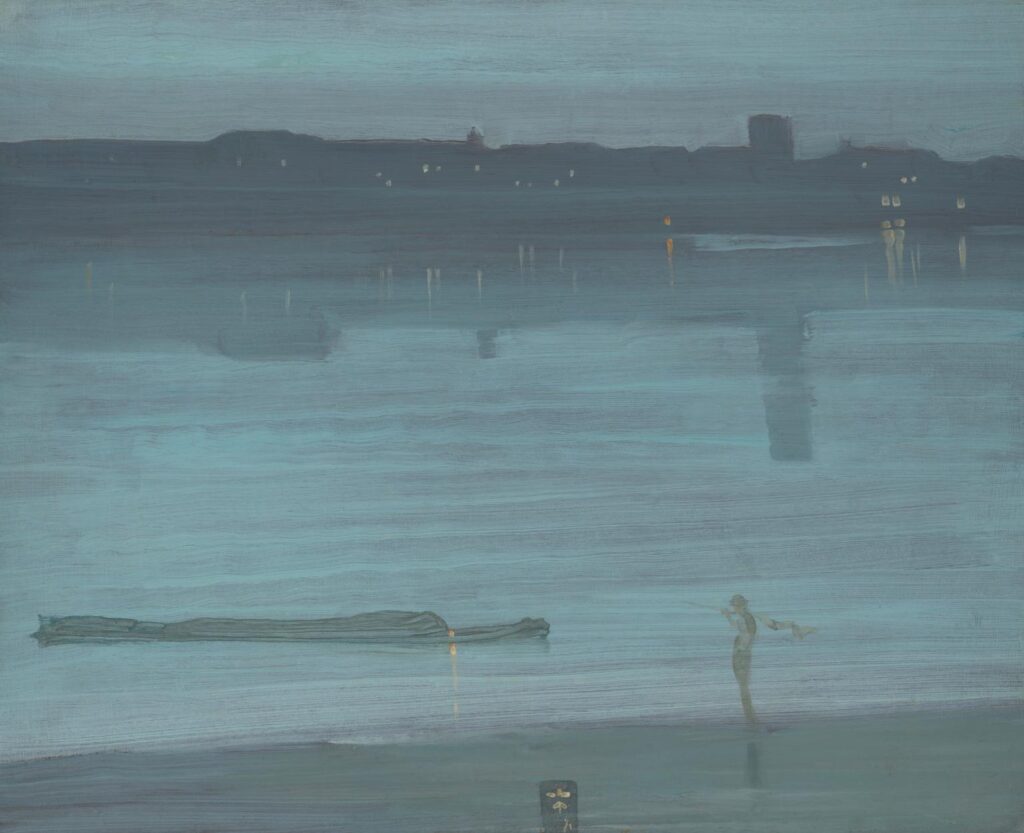
His famous Nocturnalwhich explored a mistier, more evocative vision of darkened London. Initially he called them “moonlights”, but Whistler was the first to apply the term night to painting and engraving, appropriating a concept from the musical field, where that term refers to a melodic and calm composition with a certain melancholy. Inspired by a school tonalist of painters in the United States, he was quick to point out in a letter to his friend Walter Greaves: Look, imagine if you saw any other artist painting my moonlights; How upset you would feel! You see, I invented them; They had never been painted before in the history of art.
The opening of the Grosvenor Gallery on Bond Street in 1877 provided an exhibition space for Whistler’s new experimental paintings and a home for the nascent Aesthetic Movement, which championed sensuality and the notion of art for art’s sake. The Grosvenor would later be the scene of one of the most famous legal battles that the cultural world has ever generated, after John Ruskin published a pamphlet pointing out the “eccentricities” of these painters: Whistler sued the critic for defamation and won, although his compensation was paltry and his reputation sank.
To get away from pressure and controversy, between 1879 and 1880 the painter escaped to Venice, where he created two series of engravings. He remained there for fourteen months, producing a much larger volume of work than anticipated. Even so, his most complex and refined series of graphic works would be dedicated to Amsterdam. He traveled to Holland with his wife at the time, Beatrice Godwin, also an artist and recently widow of the architect Edward Godwin.
In his later years, Whistler briefly devoted himself to teaching at his short-lived art school, the Académie Carmen, which opened its doors for only three years, from 1898 to 1901. His students included the Welsh portrait painter Gwen John and several Paris-trained American impressionist and post-impressionist artists, such as Frederic Clay Bartlett and Alice Pike Barney. Despite his short life, Whistler passed on much of his knowledge to his pupils throughout his career and many of them became renowned creators, such as Mortimer Menpes and Walter Sickert. The imprint of his legacy can also be traced in pictorialist photography.
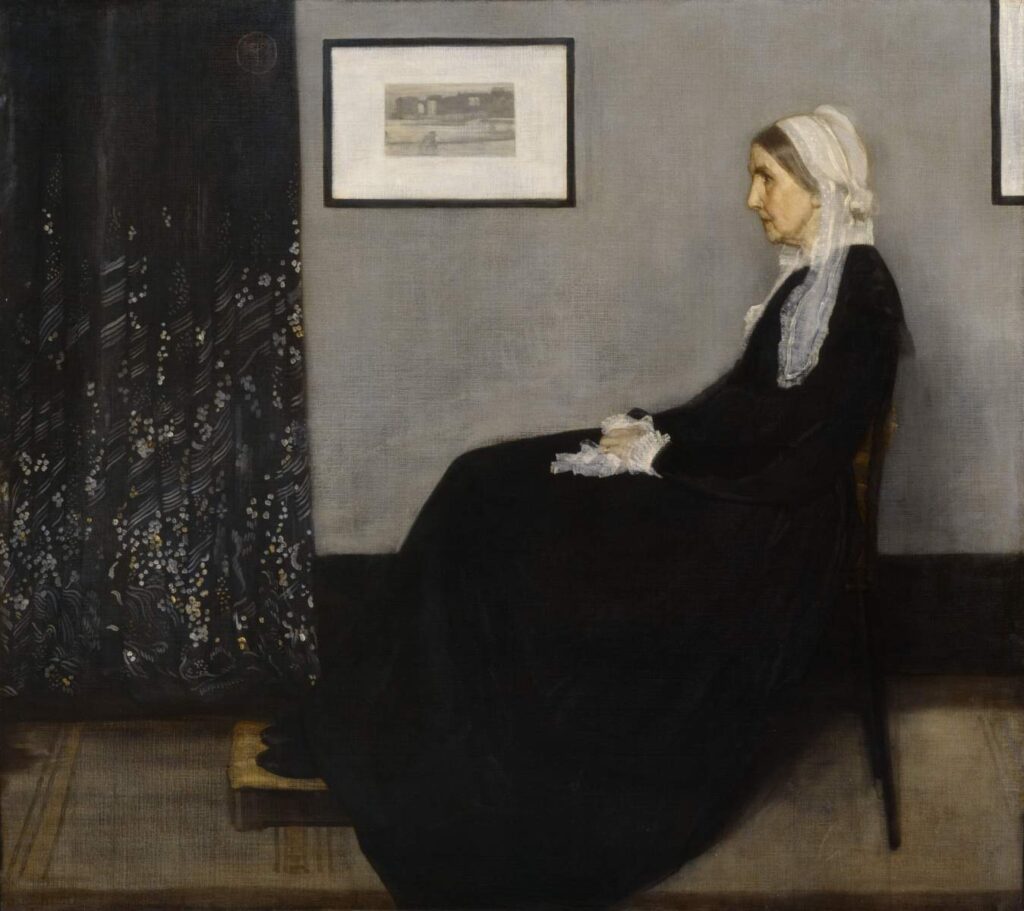
This summer, Tate Britain will offer the largest retrospective of this global author in Europe in three decades. It will feature 150 paintings, drawings, engravings and designs, from the famous and enigmatic portrait of his mother to a notable collection of those nocturnal and sketchbooks not shown until now. It will also reveal how the painter created his ethereal visions of modern life: audiences will discover an experimental and cosmopolitan artist who revolutionized Victorian society in his search for truth, beauty and innovation.
The exhibition will open with a room inspired by his workshop. Four important self-portraits will be brought together, including The artist in his studio (1865-1866), as well as two extraordinary full-length portraits of the painter Maud Franklin. We will see them alongside objects that Whistler collected: East Asian ceramics, Japanese prints and furniture designed by himself; Your easel, palette and brushes will also come our way.
His earliest sketchbooks will be publicly exhibited for the first time and we will be able to re-evaluate his engravings of urban life alongside his early oil paintings from life, portraits of friends and self-portrait. whistler smoking (1856-1860), which remained unpublished since his death.
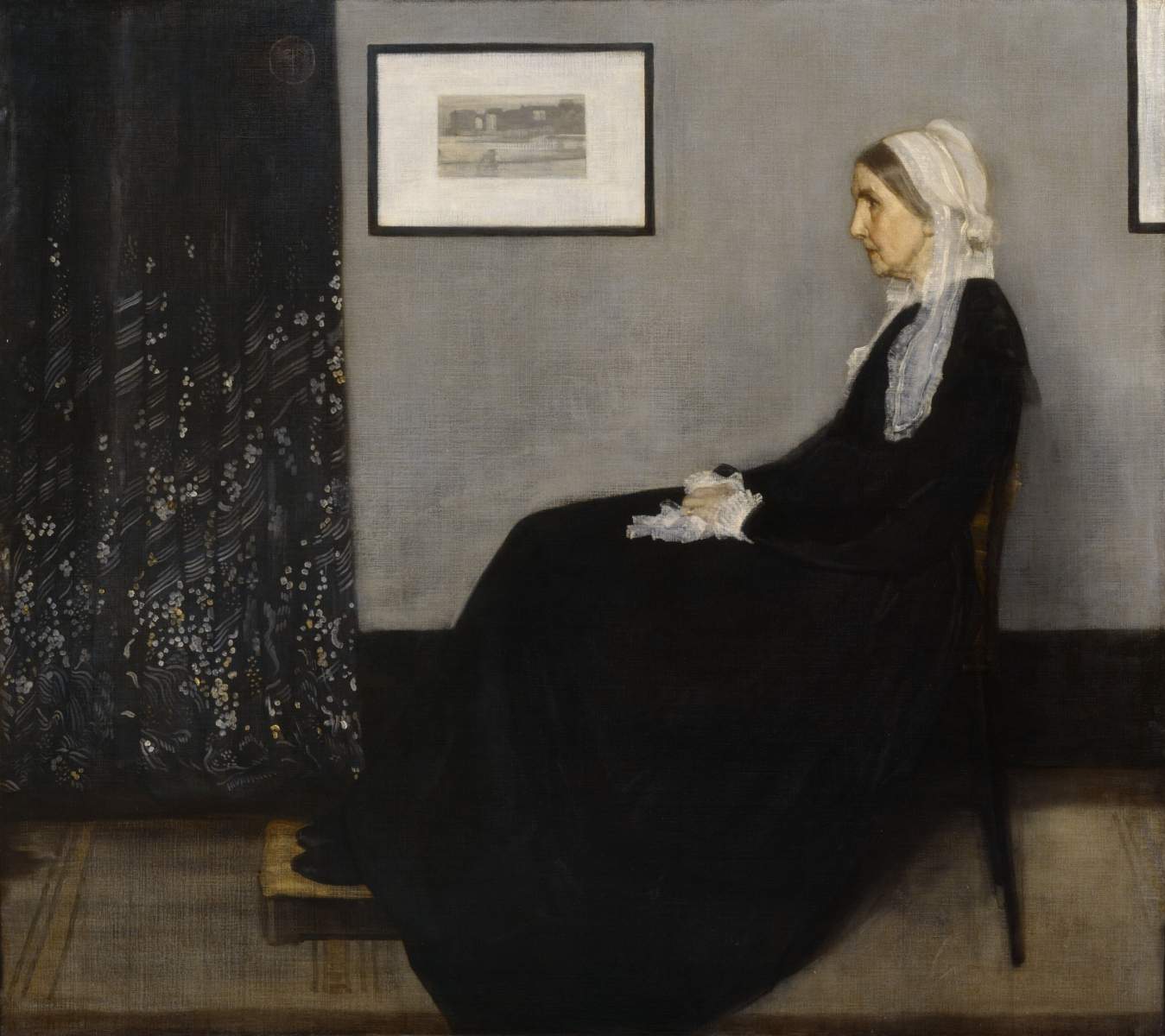
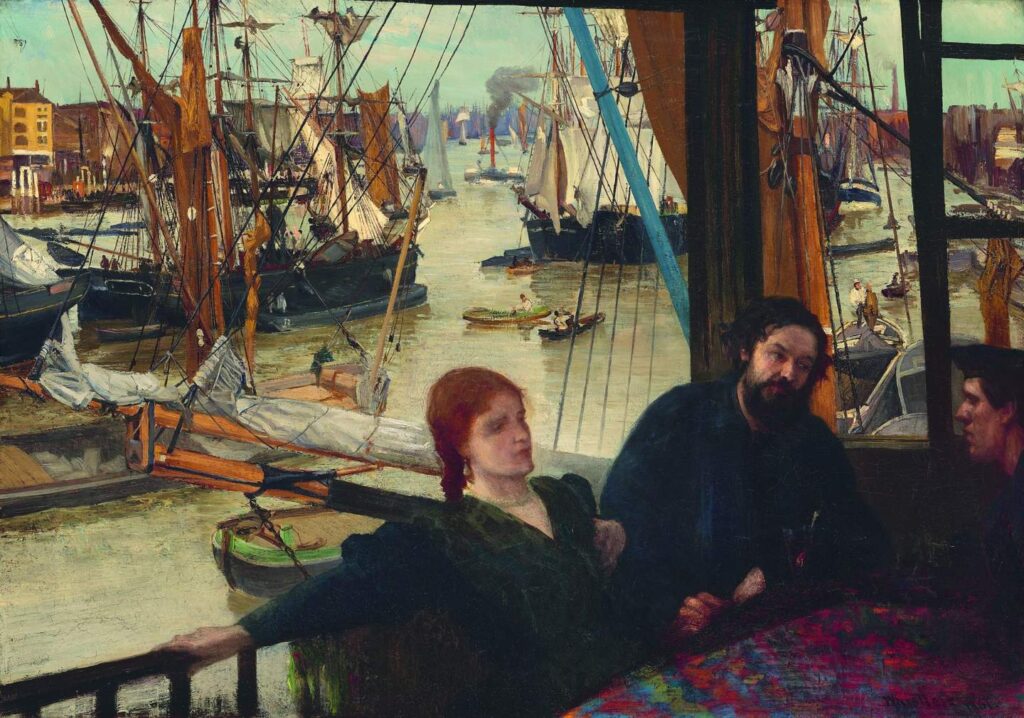
We will contemplate its first and most important landscapes, such as Brittany coast (1861) and Wapping (1860-1864), as well as domestic interiors for which he gained critical recognition. In a historic loan to the UK, we will see that iconic Black and white arrangement: Portrait of the painter’s mother (1871), part of a triumphant family triptych also made up of Gray arrangement: Portrait of the painter (1872) and Portrait of Dr. William McNeill Whistler (1871-1873), his brother.
Whistler maintained that “nature rarely gets it right” and believed that the true artist invents his own harmony of color and line; He always immersed himself in that search.
The exhibition will conclude with stunning examples of his full-length portraits, repeatedly retouched and reworked until they became almost ghostly, from the mysterious Portrait of Lady Archibald Campbell from 1883 to Gold and Brown: Self-portrait, inspired by Rembrandtdated about fifteen years later.
James McNeill Whistler
TATE BRITAIN
Millbank
SW1P 4RG
London
From May 21 to September 27, 2026