The Met Gala almost surpasses its host, the Metropolitan Museum of Art (Met) in New York, in terms of media coverage. The 2026 edition which took place on Monday evening once again made the headlines of many newspapers, showing off the celebrities who took part. Yet its story began in discretion, far from the spectacle it has become. In 1948, Eleanor Lambert, a tutelary figure in American fashion, launched the first gala for the benefit of the brand new Costume Institute, integrated into the Met. The concept was simple: a charity dinner to finance this department dedicated to fashion within the museum. Tickets cost 50 dollars (around 600 euros today) and the event mainly brought together New York high society.
The real revolution came in 1995 when Anna Wintour, editor-in-chief of Vogue magazine, took over the presidency of the gala, succeeding journalist Diane Vreeland. Under his direction, the gala became the “Super Bowl of fashion”. Celebrities are replacing traditional high society, luxury brands are establishing themselves as sponsors and dressers and prices are soaring, reaching $100,000 (92,000 euros) per person for the 2026 edition.
With more than 33,000 items spanning seven centuries of fashion, from the 15th century to the present, the Costume Institute is a living archive of the sartorial and social history of humanity. Its wing was renamed the Anna Wintour Costume Center in 2014, in tribute to the director who provided financial support for thirty years.
For its 78th edition, the “Fashion is Art” dress code invited guests to consider clothing as a living sculpture, a walking painting. The Met Gala opened the “Costume Art” exhibition, orchestrated by curator Andrew Bolton, which explores the representation of the clothed body in art history through the centuries. The museum presented 25 new mannequins. Designed from varied body types and inspired by real people, they break with the standard size 36 mannequin that has long been dominant in museum institutions.
The steps of the 2026 Met Gala.
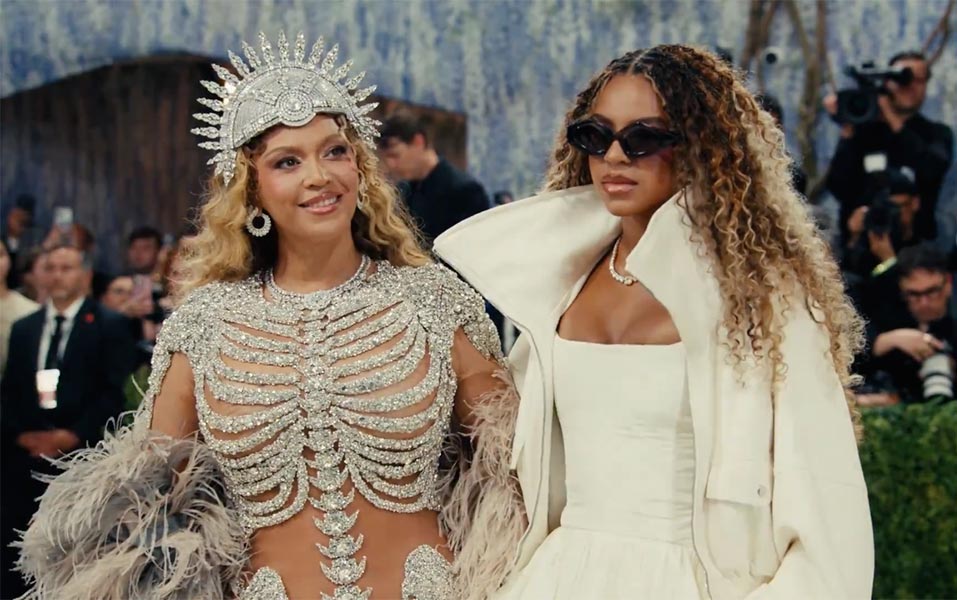
The cast shone brightly. Beyoncé, who has been absent since 2016, co-chaired the event alongside actress Nicole Kidman and tennis legend Venus Williams. Madonna captivated the Met Gala with a silhouette designed by Anthony Vaccarello for Saint Laurent, inspired by the world of surrealist artist Leonora Carrington and her painting The Temptation of Saint Anthony, Fragment II (1945). The singer wore a satin and lace slip dress, accented with a large transparent purple organza cape, escorted by seven ladies-in-waiting. For her part, model Kendall Jenner appeared in a GapStudio creation inspired by Victory of Samothrace.
But reducing the Met Gala to just a celebrity parade would be misleading. An extraordinary philanthropic machine, it is essential to the only department of the Met which must be entirely self-financing. This year, the fundraising broke an absolute record with 42 million dollars (39 million euros) for the benefit of the Costume Institute. The previous year, the event had raised 31 million dollars (29 million euros). Over the last five years, the Gala has raised more than 113 million dollars (105 million euros). These figures confirm a reality that is now well established: the Met Gala is an institution in its own right, autonomous, within the Met itself.
If this record is profitable for the Costume Institute, it was accompanied by an unprecedented controversy in the recent history of the gala. In November, the Met Gala announced that the 2026 edition would see the arrival of Amazon founder Jeff Bezos and his (new) wife Lauren Sánchez Bezos, designated principal patrons with an estimated contribution of around $10 million (€9 million).
Wild posters then flourished in the streets and subways of New York, carried by the anti-billionaire collective “Everyone Hates Elon”, denouncing an event financed by the exploitation of workers and pointing out Amazon’s supposed links with the Trump administration and immigration services (ICE). Boycott messages were projected on buildings near the museum. Result: notable absences like actress Zendaya, model Bella Hadid, and New York Mayor Zohran Mamdani, breaking with tradition for the city’s mayor to attend.