Malaga,
The Board of Trustees of the Picasso Museum Málaga has announced the extension until 2028 of the presentation at its headquarters, the Buenavista Palace, of the exhibition “Pablo Picasso: structures of invention. The unity of a work”, given the good response from the public since it began in 2024 and its value as the axis of a good part of the program of activities of this center.
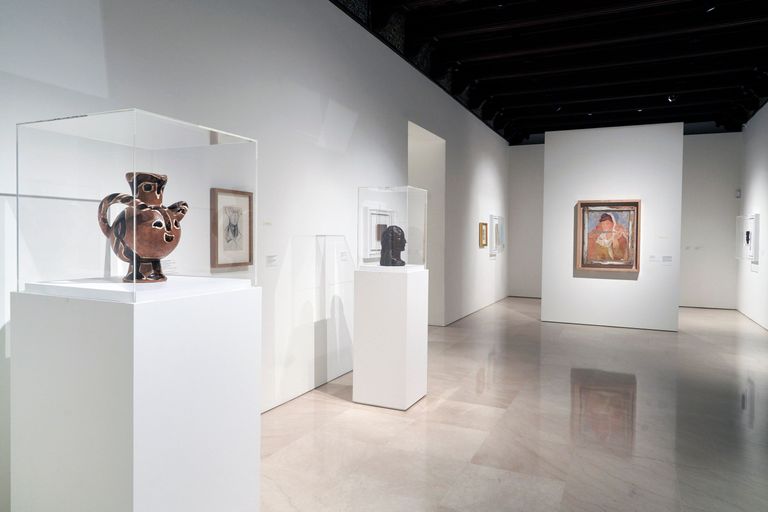
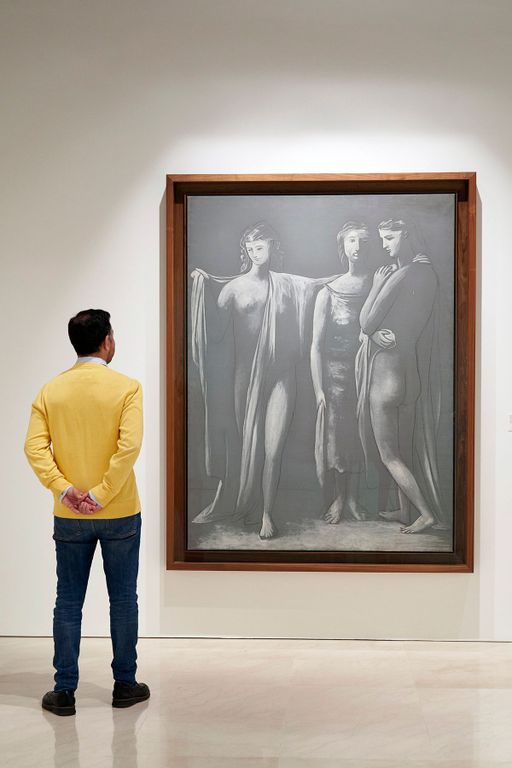
This tour of Picasso’s production, organized in collaboration with the Almine and Bernard Ruiz-Picasso Foundation, consists of a set of one hundred and forty works by the artist, a dozen of them never exhibited before in Spain and all belonging to his private collection; These are paintings, sculptures, drawings, ceramics and engravings.
The basic particularity of this presentation compared to other previous ones from the same center lies in its ordering criteria: these pieces are not shown to us chronologically, nor taking into account the successive stages of Picasso’s career, but rather highlighting the author’s concerns that survived over the decades, the features that give a unitary character to his production, reveal the relationships between works from different periods and avoid the usual labels.
The academic supervision of “Structures of Invention” has been carried out by Michael FitzGerald, professor of Art History at Trinity College in Hartford, Connecticut (USA), in collaboration with the Almine and Bernard-Ruiz-Picasso Foundation; From his perspective, Picasso’s legacy as a whole is marked by two opposing forces of inspiration – innovation and retrospection, that is, a disruptive will and a look at tradition – and these concepts explain that, apart from his immersion in styles as disparate as classicism, cubism and surrealism, we can delve into his compositions based on searches that were permanent, although he carried them out along winding paths.
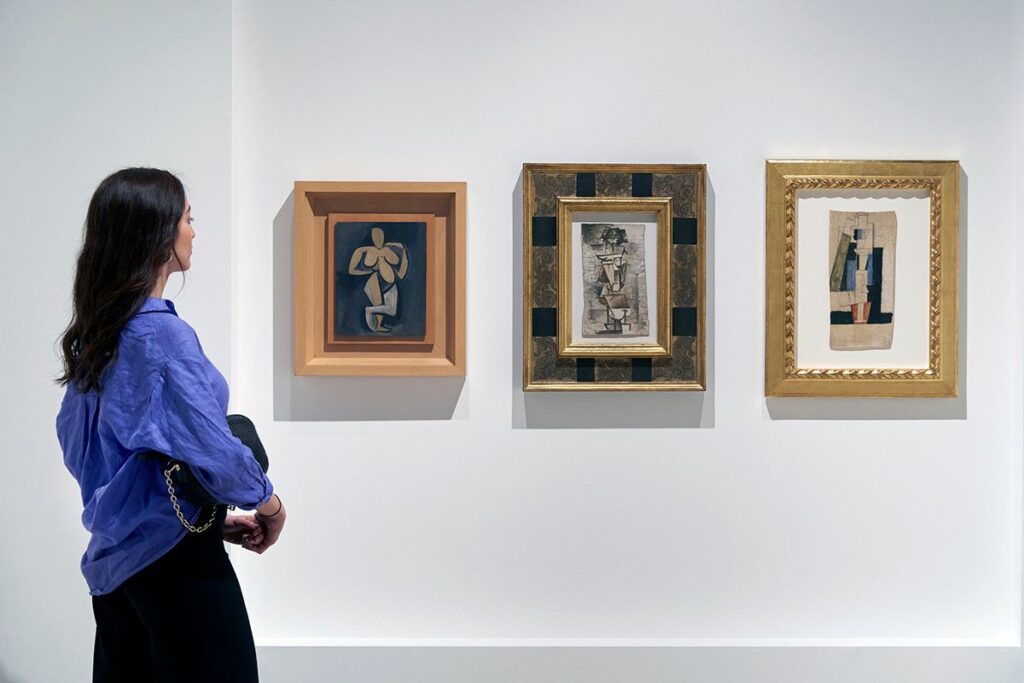
The approach of this exhibition aims to involve the viewer in the creative processes of the man from Malaga throughout the decades, without fragmenting them into their well-known phases (blue, pink, cubist, classicist and surrealist), but it also emphasizes the relevance of women in his work; We could even structure his work in the periods in which he remained with (or at least close to) Fernande Olivier, Olga Khokhlova, Marie-Thérèse Walter, Dora Maar, Françoise Gilot and Jacqueline Roque, even though here we are invited to contemplate Picasso first, the mature one and the last from a global perspective.
Therefore, creations from different stages coexist, room by room, in which it is possible to appreciate continuity, or exchanges of techniques and styles; we will distinguish leaps that illuminate unexpected connections and deep-rooted ideas: the earliest composition of the first room dates from the 1890s; the latest, from 1970. Many of these ties are thematic: he did not stop cultivating the human figure, the still life and the landscape, and issues such as bulls – or minotaurs -, family or eroticism are continually present in his pieces, from different means of expression.
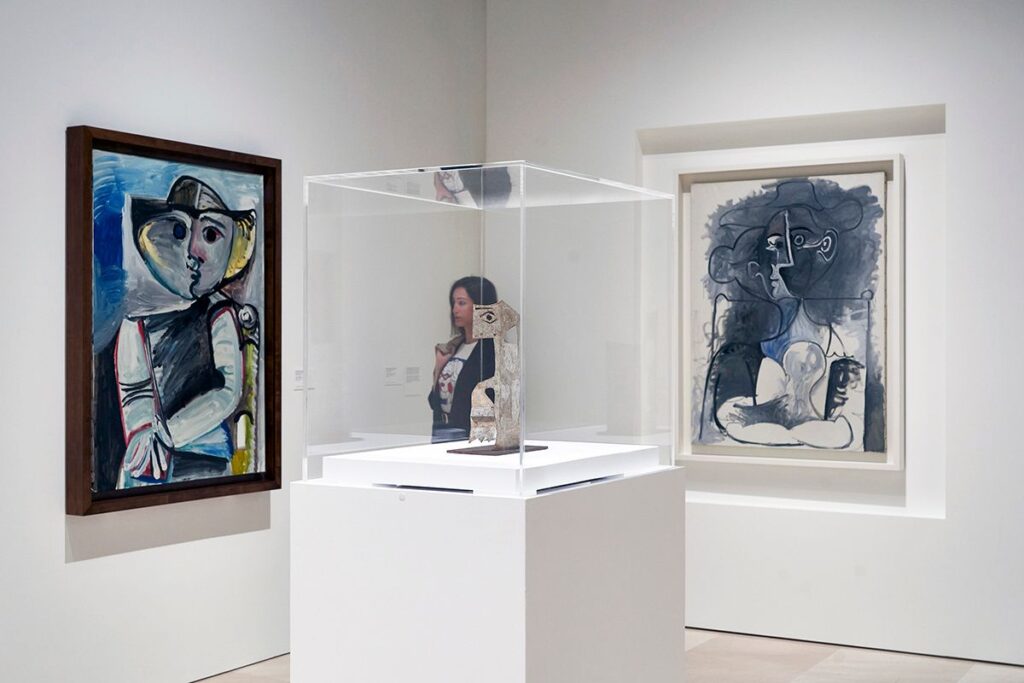
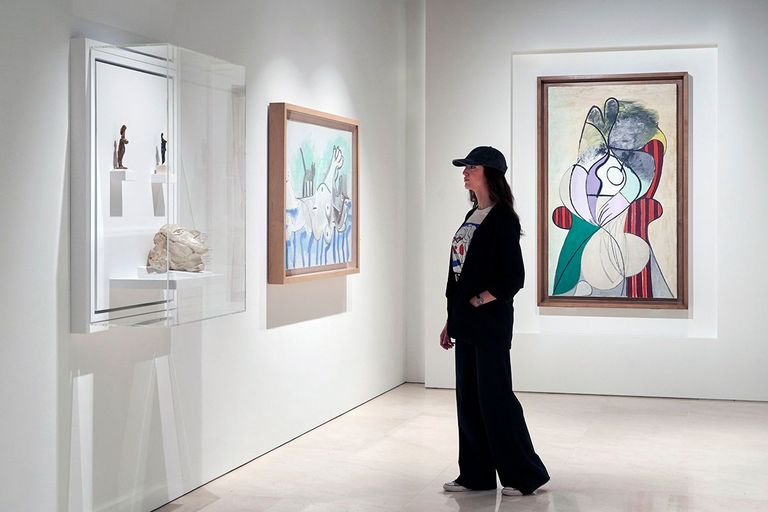
A large part of the works now gathered come from a temporary loan from the aforementioned Almine and Bernard-Ruiz-Picasso Foundation, and the ten unpublished works in Spain that we cited correspond to three oil paintings, a sculpture, a ceramic, three drawings and two of these notebooks. Of this last group, it is worth not forgetting to look at two paintings from the 1920s (Paul and woman head); in sculpture Layered woman (1933), where he explored the possibilities of plaster as a material; and a Spanish plat decorated with a bull’s head (1957), whose eyes, mouth and snout are located halfway between the human face and that of the minotaur; It is possible that, as in similar representations, this image has something of a self-portrait. The first portrait, dedicated to his first son and sketched, moves between the suggestion of childish spontaneity and a beautiful classicism framed in the return to order; As for Cabeza de mujer, it responds to the surrealist immersions in the dark cavities of the psyche. We will also be able to see three African sculptures that Picasso treasured.
Another novelty of this presentation has to do with the museography displayed: as we pass through the rooms we will find five small exhibitions in focus, curated by as many researchers, which enable our in-depth approach to relevant issues in the development of the artist’s career, such as his relationship with African sculpture (by Joshua I. Cohen), his painting on wooden panels (Meta Maria Valiusaityte), his plaster sculptures from the 1930s (Rocío Robles Tardío), his life in Paris after World War II (Blair Hartzell) or the mural he made in the fifties for the UNESCO headquarters in the same city (Giovanni Casini).