Scheduled to last two years, the renovation of the New Caledonia Museum ultimately required six years of work, in vain? Financially, the project was costed at 2 billion CFP francs (16 million euros), financed 30% by the State and 70% by New Caledonia as part of the 2017-2021 development contract. The inauguration of the new museum was scheduled for summer 2022.
But, launched on the eve of the health crisis, the project first suffered the full brunt of the shutdowns and slowdowns linked to Covid-19 in 2020-2021, before being weakened by the departure of a project manager during the operation. Added to these difficulties were the failures of service providers, forcing a review of schedules and markets. Finally, the violent riots of May 2024 in New Caledonia brought another blow to the work. These successive hazards had a direct impact on the cost. The latest figures announced show around 3.5 billion CFP (29 million euros) committed, an additional cost of around 40%.
But due to a lack of budget allocated to the scenography and operations, the establishment risks not opening its doors to the public. A technical note sent to elected officials puts the immediate needs at around 42-43 million CFP francs (€360,500) to allow museum services to move in and occupy the premises, and at an additional 80 million CFP (€671,000) to ensure partial opening to the public. Aware of the emergency, the local government announced the imminent holding of a budget meeting aimed at finding additional funding.
In the meantime, a six-month dry run – a trial period without an audience – is planned to test the installations, train staff and prepare for future exhibitions. This period of time nevertheless sets a deadline. By the end of this period, the credits must have been found, otherwise the museum will remain closed.
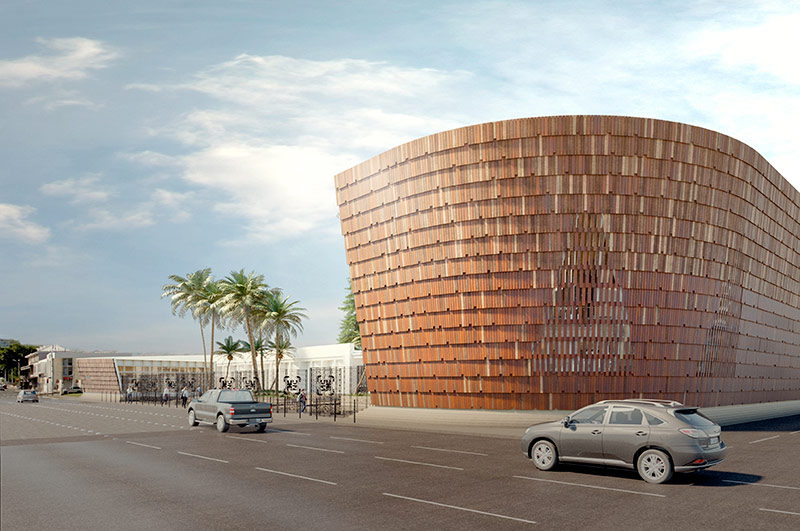
Founded in 1971 in Nouméa, the New Caledonia Museum had become dilapidated and unsuitable for the conservation of its collections. Faced with aging infrastructure and an obsolete museography dedicated to Kanak history and crafts, a complete overhaul was undertaken in 2019. The museum housed around 8,000 Kanak art and craft objects which had to be moved to external reserves to allow the work. The extension of the museum now adds 2,600 m² of space, largely doubling the initial surface area. It includes a pavilion for a large traditional Kanak hut as well as 500 m² dedicated to temporary exhibitions.