Venice,
Only five years ago, Luc Tuymans stopped at the Palazzo Grassi in Venice to present “La pelle”, a selection of significant paintings from his entire career, focused on figuration and work based on references to the past or more recent history, to daily life or the avalanche of private and public images that, especially in recent decades, reach us through the press, television or the Internet.
This Belgian author interprets these captures taken from the media, plunging them into estrangement, dissolving them in an unusual and rarefied light that emphasizes the anxiety that this visual flow is capable of generating. Tuymans refers to these photographs as authentic falsifications of reality -he vigorously defends the existence of a form of authenticity in the false- that would demonstrate that the pictorial medium today has not lost expressive and narrative capacity in relation to the political and the historical, but neither does it focus on the everyday and the absurd.
Working mainly with the aforementioned paintings, but also with photographs, frames of films, magazines and newspapers or slides, his recent exhibitions tend to send us into disinformation nebulae in which what remains hidden or imperceptible to our eyes is just as important as what we do see.
Canvases and tapestries by past masters have been his usual bases of influence, however, Tuymans moves closer and further away from his motifs and the canvas and manages to introduce an unusual coldness into them. It normally uses small formats, with subtle, austere and almost indolent tones and approaches that seem distant; We know that its processes are, however, slow and deliberate and that it studies in depth how one image generates another or even extensive series, in addition to analyzing our ways of perceiving and the points of convergence of painting and the moving image, cinema.
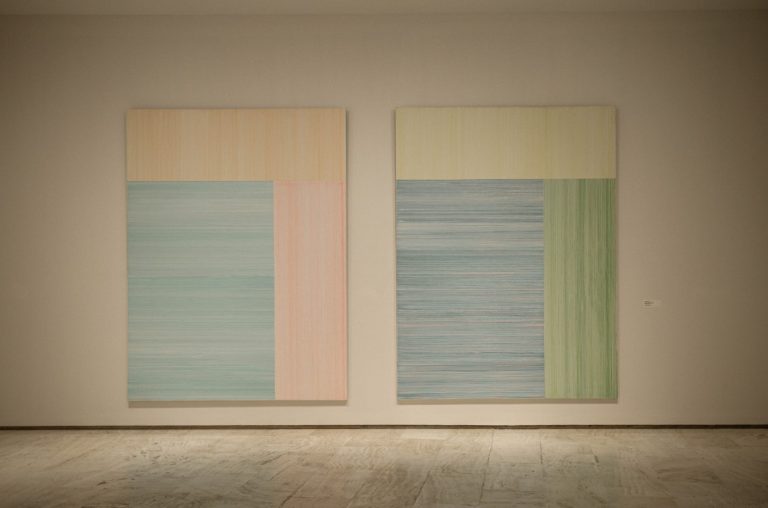
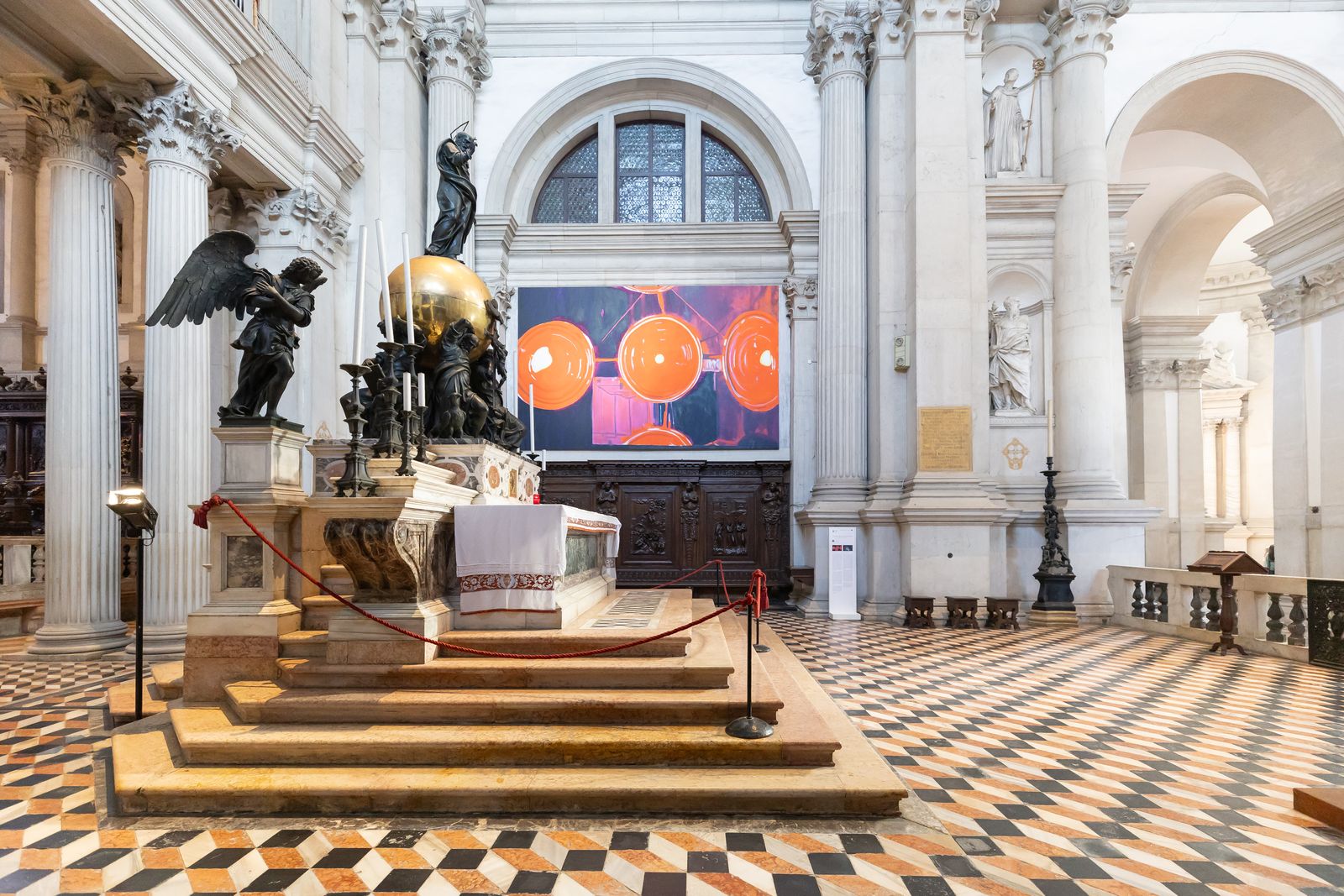
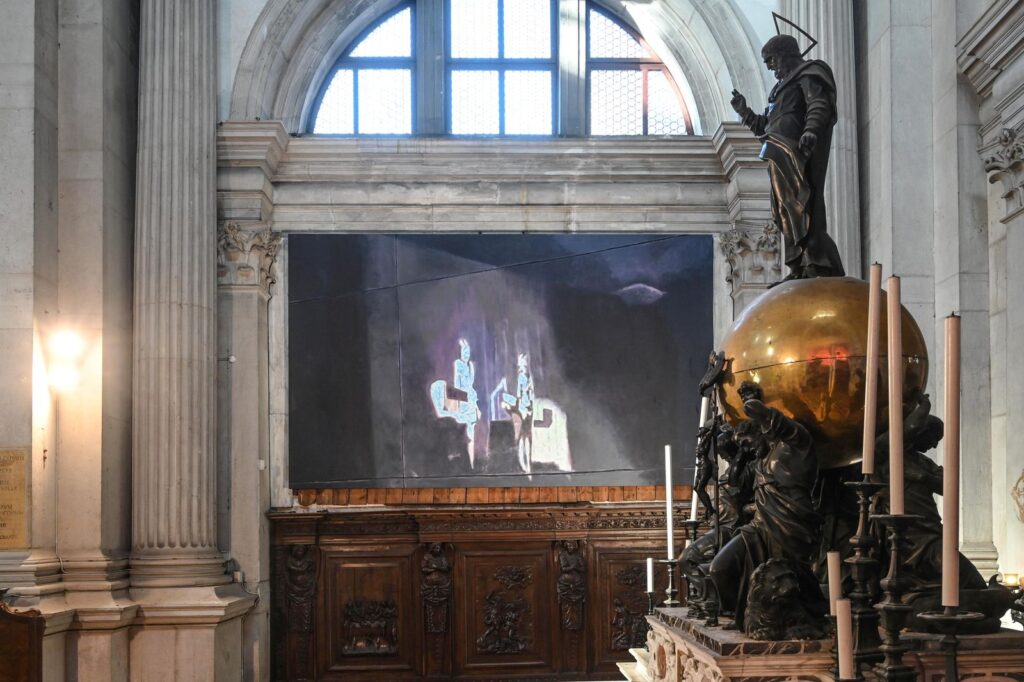
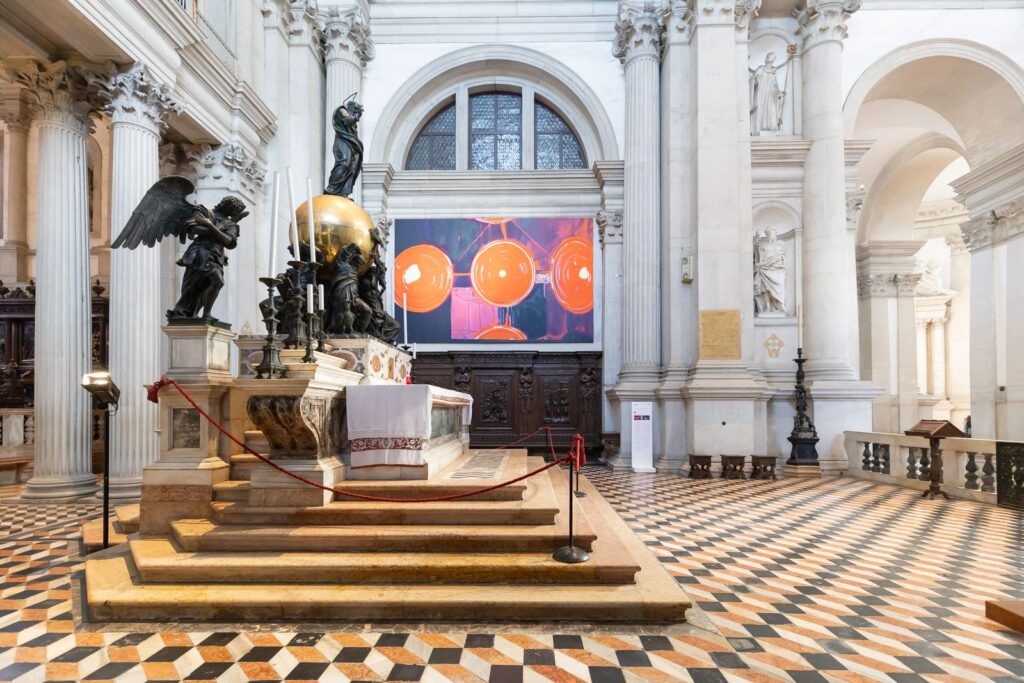
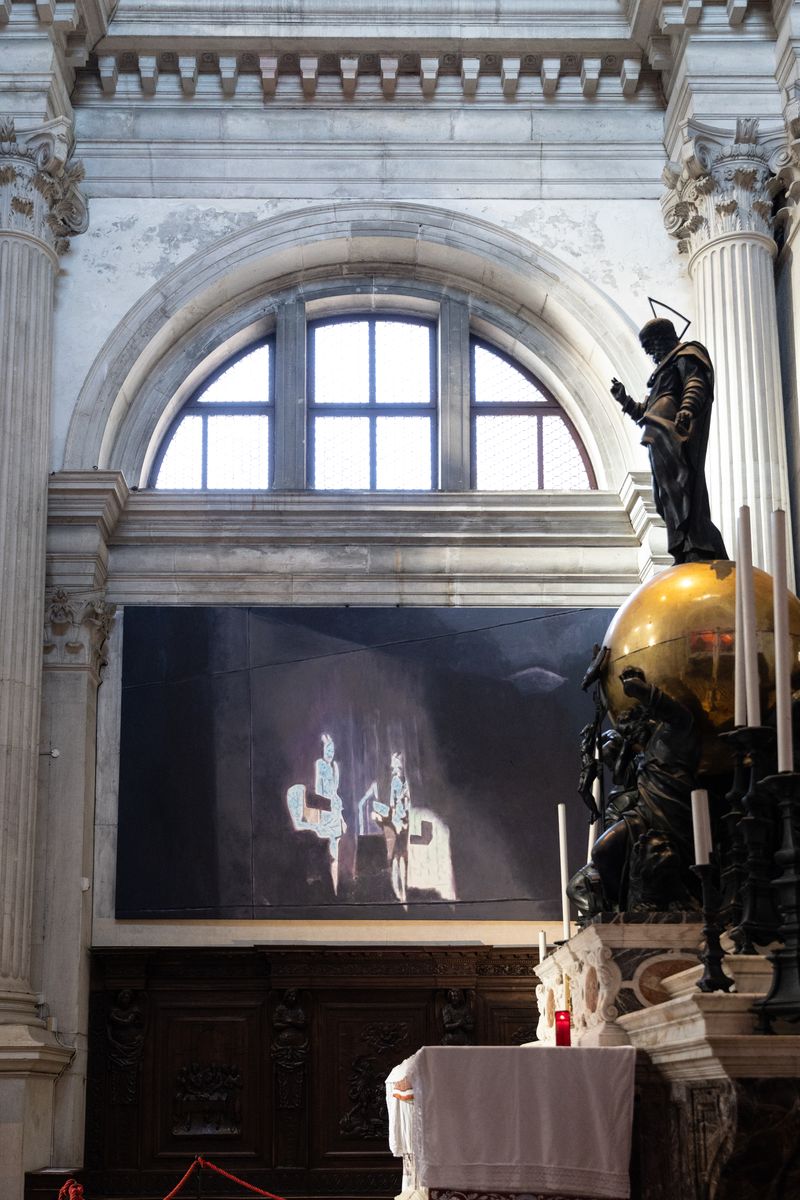
The artist now returns to Venice, no less than to take over from Tintoretto in San Giorgio Maggiore while his paintings are being restored. The Last Supper and The people of Israel in the desertwhich can normally be seen in the presbytery of the abbey. In the same location they await us, until February 2026, Heat and Musicianstwo compositions inspired by Tuymans’ everyday travel moments and that will surprise visitors with their unusual palette – on in one case, off in the other -, their disconcerting perspectives and their surreal atmospheres.
In line with the experience of the viewer, surely immersed in this place in an experience halfway between the cultural and the spiritual, these works propose a possible communion between divinity and everyday life through fragments of life that transcend their apparent banality.
The project will also feature a third creation by this author: an illuminated manuscript that will soon be exhibited on the lectern of the badalonein the center of the main choir, the place of communal prayer and praise for the monks who reside here. Once finished, it will become part of the collection of works of this genre by contemporary creators who have collaborated with San Giorgio Maggiore, funds that began to be created in 2019 under the auspices of Benedicti Claustra Onlus, a non-profit organization that manages cultural initiatives in the temple designed by Palladio.
All the pieces are born from Tuymans’ dialogue with the Benedictine community of San Giorgio, which with this type of proposals seeks to generate debates about the possibilities of renewing the Church’s relations with contemporary art. They suggest that in our time, in which visual and symbolic language continues to have a strong impact on the faithful and the population as a whole, it must be possible for this institution to establish new avenues of expression and exchange with artists, proposals that examine the present time from a spiritual dimension open to all and that go beyond the mere decoration of spaces.
In response to these intentions, Tuymans was invited to exhibit in the temple: the diffuse contours of his forms, which elude clear definitions and seem to point to the unrepresentable side of reality and history, can be conducive to reflection on the human experience of the non-palpable, on our consideration of the intangible.
From Benedicti Claustra Onlus they emphasize that the intention has not been to offer contemporary interpretations of Tintoretto’s compositions, but rather to provide Tuymans with the opportunity to interact with the sacred character of San Giorgio Maggiore; to experiment, as the magician of the prestige centuries before, with the visual perspectives, the architecture of the presbytery and the involvement of the faithful during the liturgies celebrated here.
Twice a participant in the Biennale (in 1997 and 2001), this artist has frequently addressed issues linked to traumatic historical events, such as the Holocaust (Gaskamer1986), Belgian colonialism (Mwana Kitoko2000) or terrorism (Still life2002). On his return to the Serenissima, his reflections seem to be directed towards relief from the tumult.
Luc Tuymans
BASILICA DI SAN GIORGIO MAGGIORE
Isola di San Giorgio Maggiore, 2
Venice
Until February 22, 2026