Madrid,
This 2025 José de la Mano Art Gallery celebrates two decades delving into figures of 20th century Spanish art, often linked to abstraction and geometry, in many cases fallen into relative oblivion; It celebrates that anniversary, until the end of January 2026, recovering the author with whom it all began: Virgilio from Girona.
Born in 1915 in Olot, he soon moved to Barcelona and there he was able to learn first-hand about the avant-garde, which was then gaining significance in the Catalan capital and its French echoes. The Civil War and then World War II put a brake on his creative development, but only initially, given that his life was brief and he barely survived the second: a propagandist for the Republican side and a volunteer in the Aragon Front at first, he decided to settle in France in 1937, in Paris and Montauban. The entry of the German army into the country would force him to move to Toulouse, whose artists’ colony he joined and where he died in 1947, due to tuberculosis. He was, by all accounts, thirty-two years old.
His starting point was Cubism, which he was able to learn in depth in the neighboring country, and especially its most placid and austere side, the one cultivated by Juan Gris: he represented guitars, jugs, candles and even landscapes, natural and urban, motifs immersed in a sober palette and a geometry that he never abandoned. Some of these pieces could then be seen in Paris, in a group exhibition that the Castelucho Gallery offered to Spanish authors.
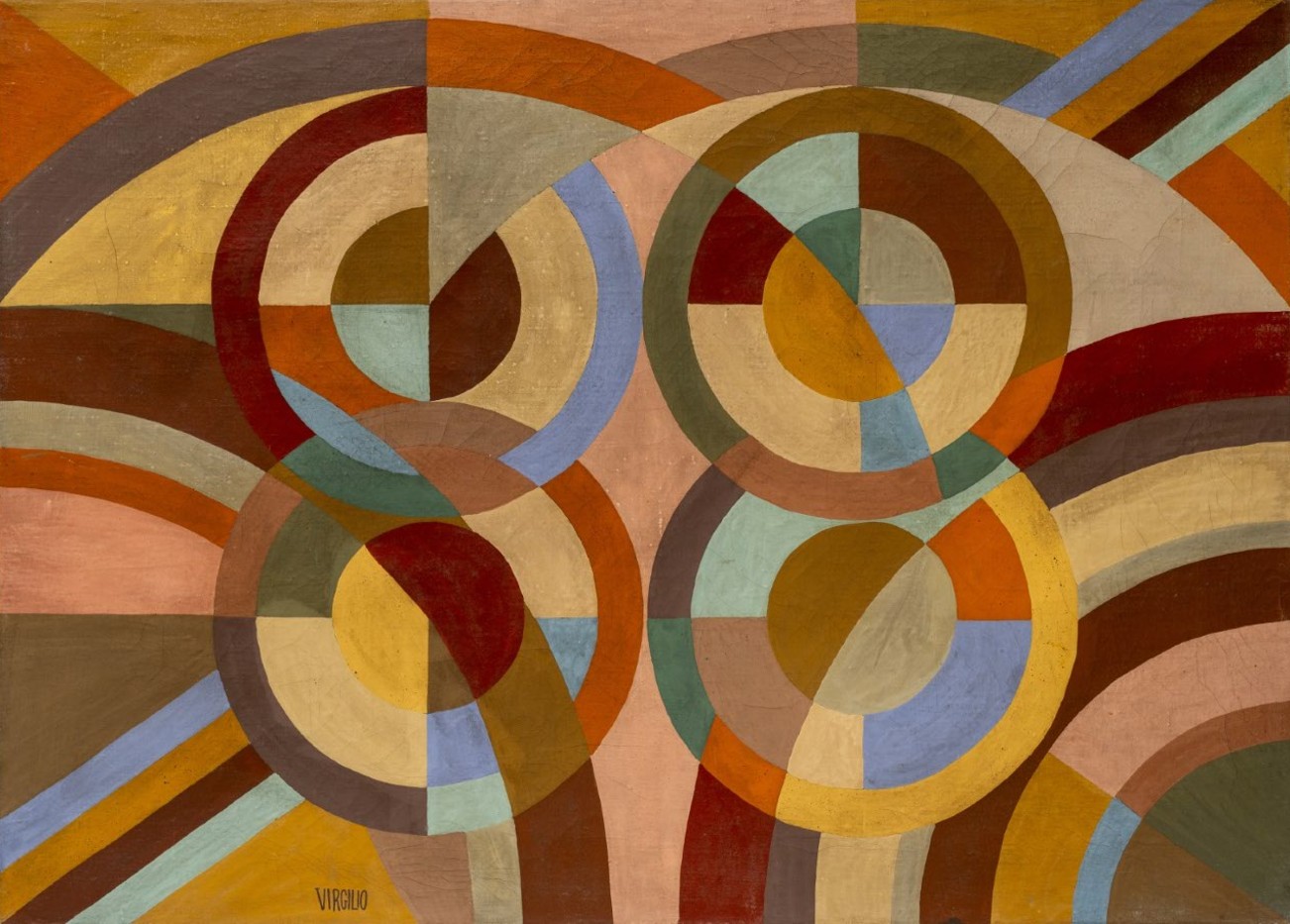
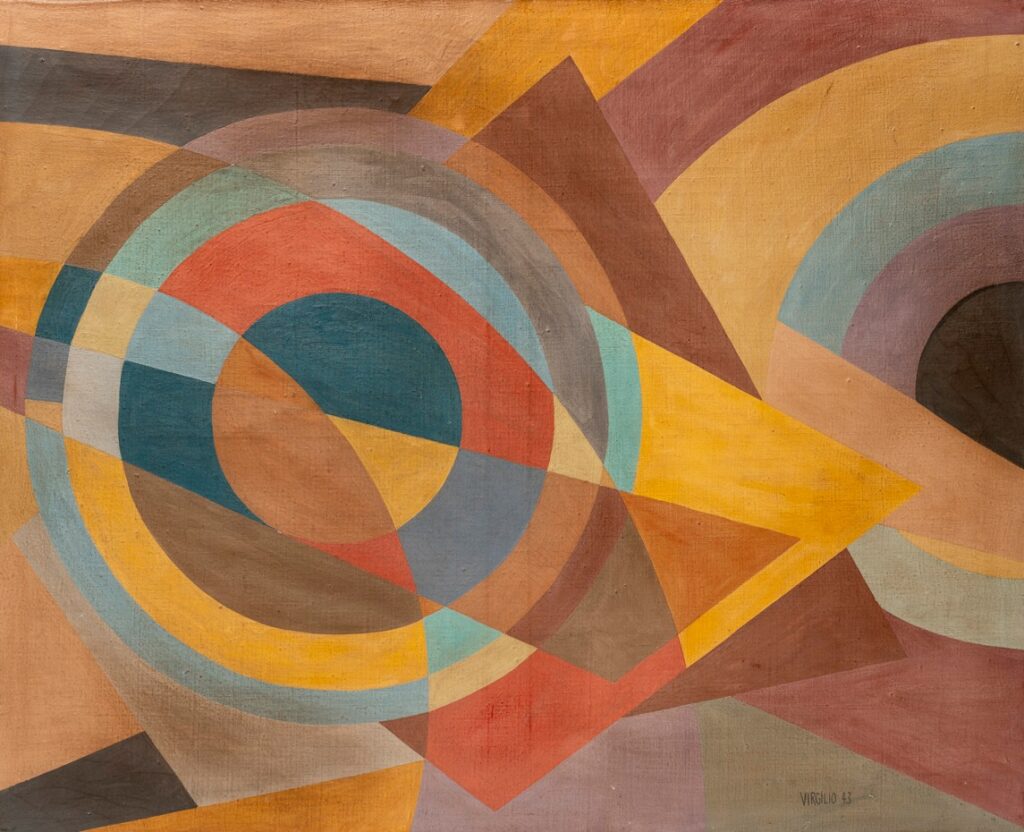
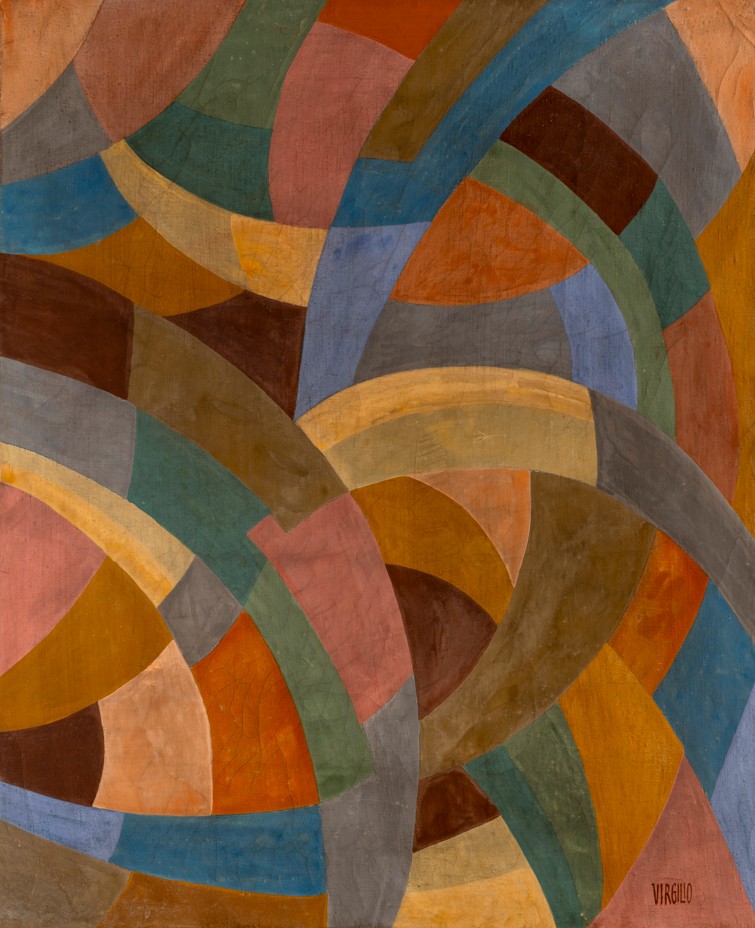
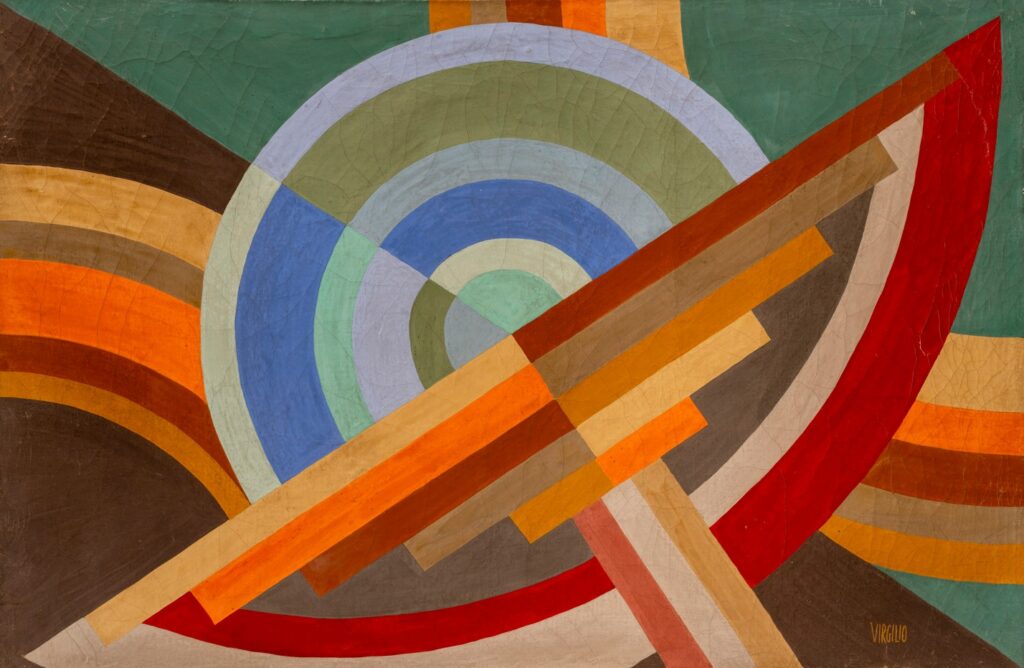
In a second period of his short career, Virgilio completely immersed himself in abstraction, necessarily geometric, synthetic and radical in his formal approaches: his planes overlap, and concentric circles, triangles, diagonals or arrows build these fabrics. His palette then became more vivid and his references also expanded: from the Orphism of the Delaunays to the Suprematism of Malevich, passing through Dutch neoplasticism or constructivism. The artist Vítor Mejuto confesses, in the text that accompanies the exhibition in José de la Mano, that in some of his late compositions it seems an outstanding student of the Bauhaus and its textile workshop.
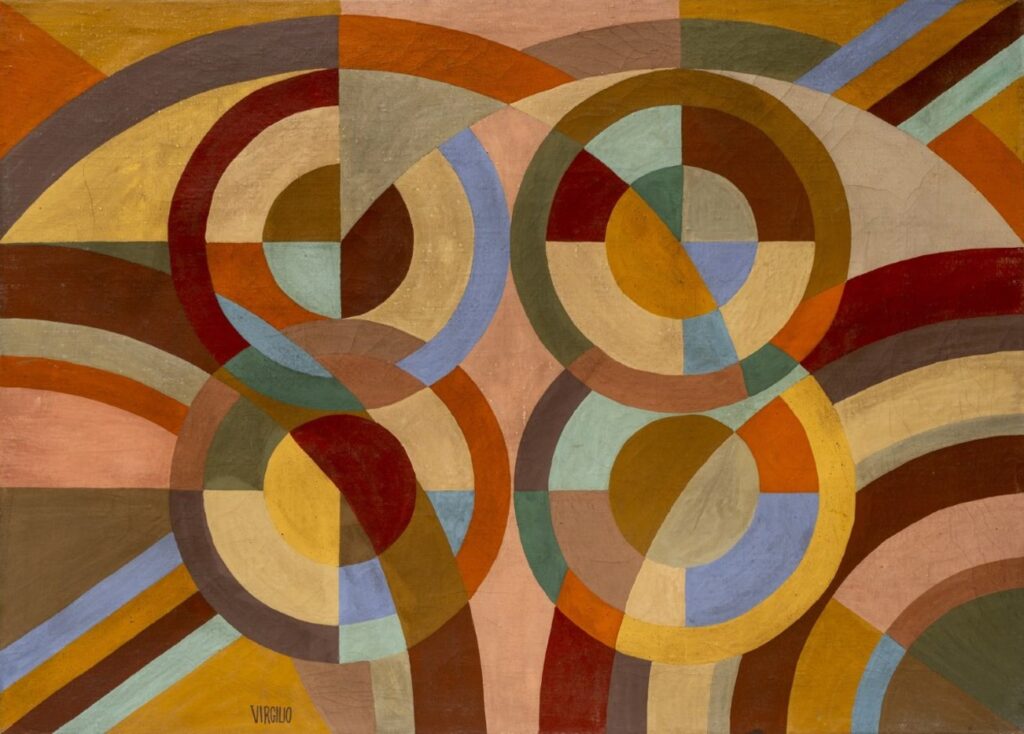
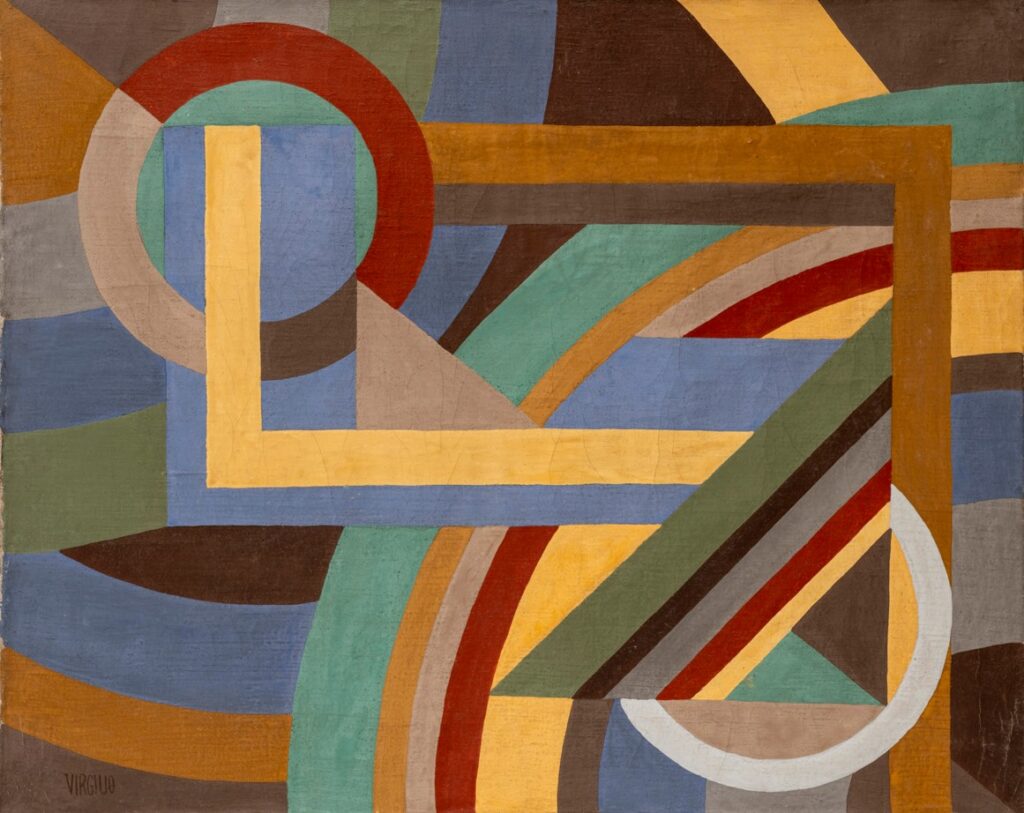
That he never strayed from geometry does not mean that Virgil did not believe in contrast: in his works now in Madrid the curve and the straight line are related and become the germ of color structures, the gravitational center of plastic balances. He is even capable of taking the circle as a touchstone to, through mutations or leaks, end up designing an orthogonal order on his canvases. He managed to make different codes coexist, in terms of chromaticism and use of line, within the same image, and that this looseness of forms did not challenge the unity of the whole.
Mejuto finds in him a possible predecessor of later developments of geometric abstraction that challenged the rigidities of the support (Frank Stella and his series procrator) – It’s early for that, but we can already see a painting freed from narrative that moves towards minimal budgets-, but also to an unfaithful geometer who, compared to his people’s usual tendency towards flat color, lets the brushstroke be seen.
Their tonal ranges are somewhat musical and perhaps not only a solid knowledge of color theory can explain them: also, and above all, intuition.
Virgil
JOSÉ DE LA MANO ART GALLERY
C/ Zorrilla 21, Lower right
Madrid
From November 27, 2025 to January 31, 2026