Federico was his father, Raimundo his brother and Mariano Fortuny his brother-in-law: in the Madrazo constellation, Ricardo had many chances of not being able to stand out and, however, due to his study in Madrid they went from Queen María Cristina to Archer Milton Huntington, Lázaro Galdiano, Durand-Ruel or William Howard Taft, the American president who came to commission him Parnassus. In addition, he was an advisor to the collector Pablo Bosch, who was a member of the Royal Board of Trustees of the Prado Museum.
Even so, time has overshadowed this artist under the mantle of his family and today he is one of the least famous authors of the saga, which is why the exhibition that Prado itself now offers him in its room 60, within the program open warehousehas a lot of vindication. This space has been dedicated, since 2009, to examining the center’s collections corresponding to the 19th century – Domínguez Bécquer, Aureliano de Beruete, Miguel Blay, Pérez Villaamil, Pradilla or Rosales, among many others, have passed through there – or to offering approaches to specific techniques, donations, genres or the relationship between photography and artists; Precisely, Ricardo de Madrazo also cultivated this medium, out of a desire for experimentation, and included it in his diaries: he was a complete creator at a time when it was not common.
In what is his first exhibition at the Prado, curated by Pedro José Martínez Plaza, we can see a selection of his sketchbooks, watercolors and autonomous drawings regarding those notebooks, a self-portrait and personal documentation that helps us delve into a journey that was not brief: it lasted almost half a century. Most of these pieces are shown to the public for the first time and constitute examples of what were his fundamental procedures – drawings and watercolors -; always on paper. These are works made following the path of the great masters or the oriental taste, so typical of his time, or urban views and intimate and familiar scenes, both representative of his interests as well as his training and his travels: he worked in the workshop of Fortuny, who was a watercolor genius and also a devoted orientalist, he worked in Spain, Italy or Morocco.
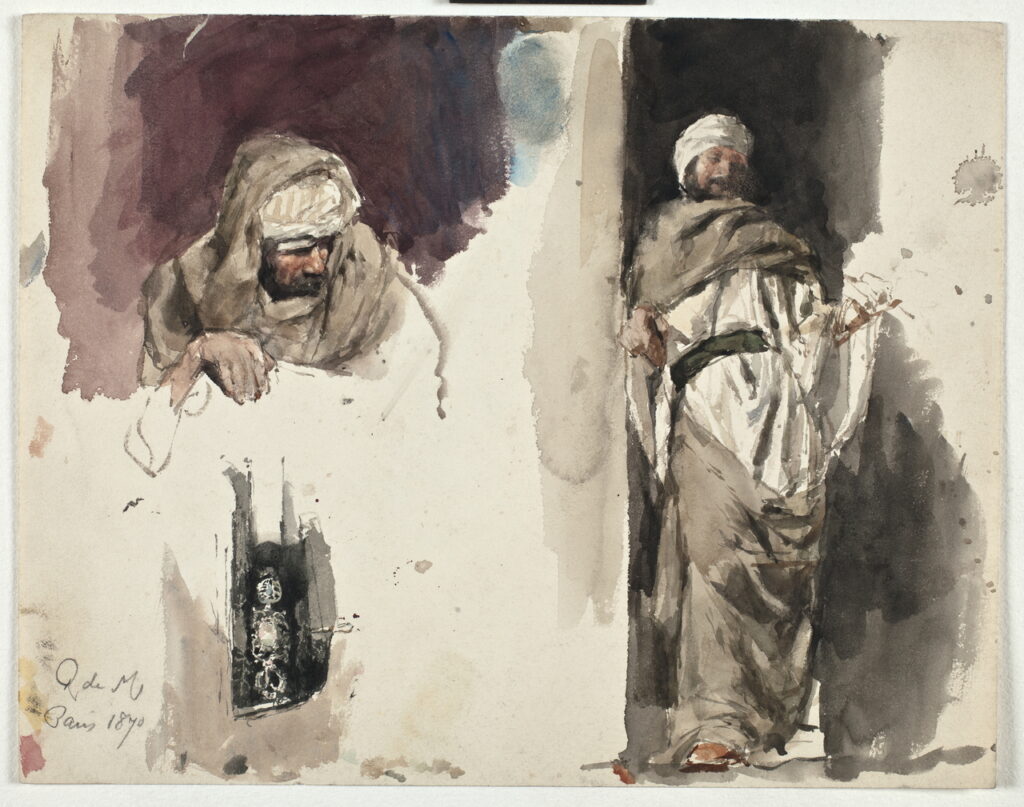
Ricardo de Madrazo y Garreta. Two studies of a figure dressed as a Moor1871. National Prado Museum
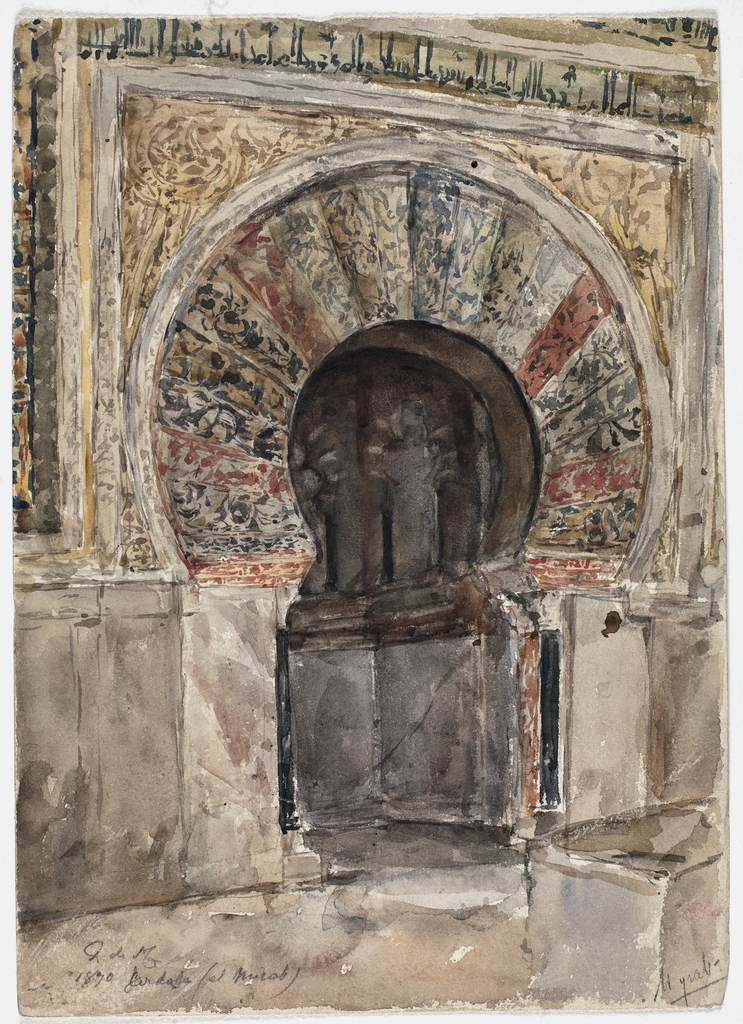
Ricardo de Madrazo. Mihrab of the Mosque of Córdoba1870. National Prado Museum
Precisely his love for watercolors and drawings made it easy for him not to abandon his work on those journeys, paying attention to Islamic architecture (Mihrab of the Mosque of Córdoba, Hall of the Abencerrajes), to the effects of light in the landscape and chromatic effects (Trees on the Cuesta del Rey Chico, Granada), to an oriental culture that would inspire illustrations in numerous publications and that stars in his notebooks from Fez or Tangier or to monuments and interiors from Toledo or Venice; In San Marcos he would represent the painter Meissonier.
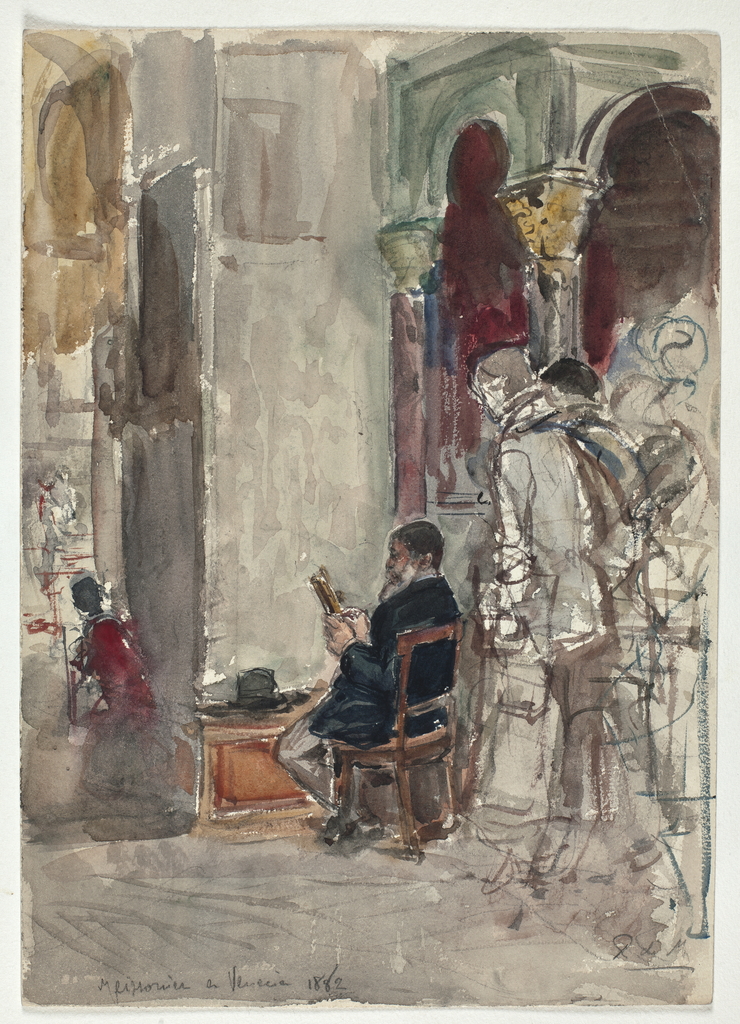
Ricardo de Madrazo. The painter Meissonier in San Marco in Venice1882. National Prado Museum
Part of the value of Ricardo de Madrazo’s notebooks also lies in the information they provide us about the stays of his aforementioned brother-in-law, Fortuny, in Granada and Portici, in the first half of the 1870s, and about their sources: models will come our way that we can relate to tapestry seller either The vicarage and works that contain part of the material collection of that workshop, such as Detail of the interior of Mariano Fortuny’s studio in Romemade prior to posthumous sales. It should not be forgotten that the author of Fantasy about Faust He was, in the second half of the 19th century, one of the most internationally celebrated Spanish artists.
As for the rest of his references, we must mention that Madrazo copied some of the greats of the Prado, such as El Greco, Velázquez and Goya, never completely seeking mimesis, but rather analyzing and reinterpreting their resources (lines, palette, light); His extraordinary vision of The jester called Don Juan of Austria Velázqueño, from his stage of maturity, and also his four partial copies of Tiepolo’s decorations for the ceiling of the Throne Room of the Royal Palace, not easy either in their general approach or in their tonal varieties.
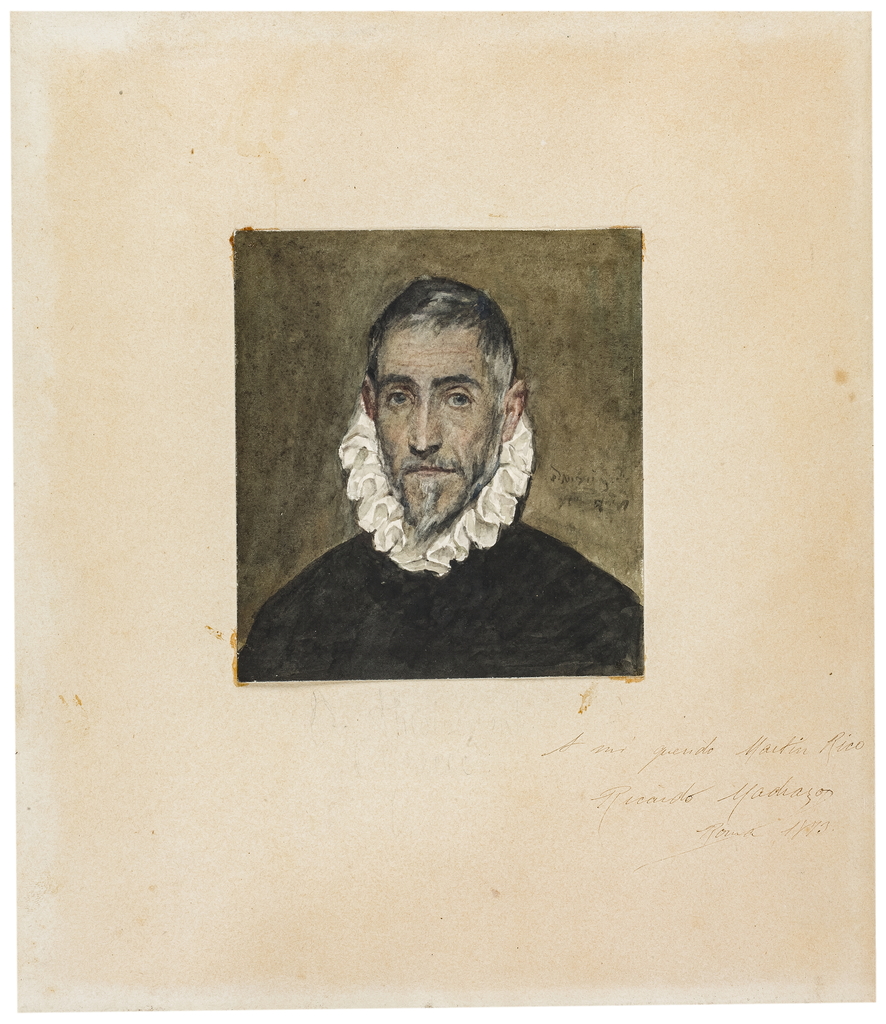
Ricardo de Madrazo. elderly knight (copy of El Greco), 1873. Museo Nacional del Prado
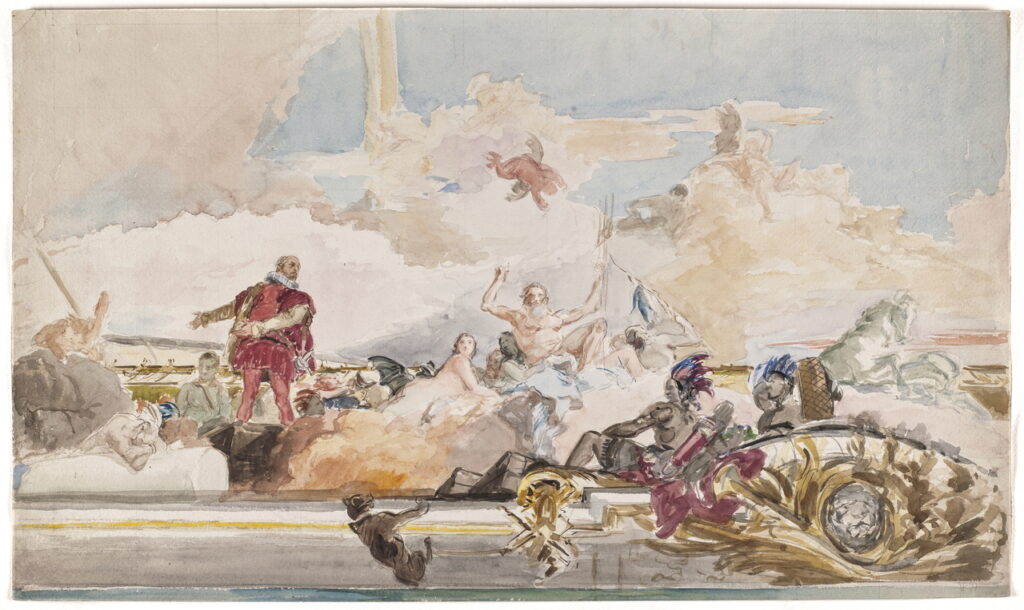
Ricardo de Madrazo. Throne Room of the Royal Palace of Madrid (four partial copies by Tiepolo), circa 1899-1905. National Prado Museum
Finally, a group of works will allow us to get closer to his family and private sphere: portraits, domestic images or images dedicated to habitual belongings, animals or memories that in no case was carried out on request, but rather as notes, exercising his ability to observe and also memorize. Furthermore, if we talk about documentation, Ricardo de Madrazo did a lot for the conservation of the family archive, facilitating its preservation until today.
Part of it was acquired by the Prado in 2012 and, in fact, the set of twenty-nine drawing notebooks by Ricardo de Madrazo is the second largest in the museum’s collections after that of Martín Rico (with forty). His oldest self-portrait is not missing, dating from 1880.
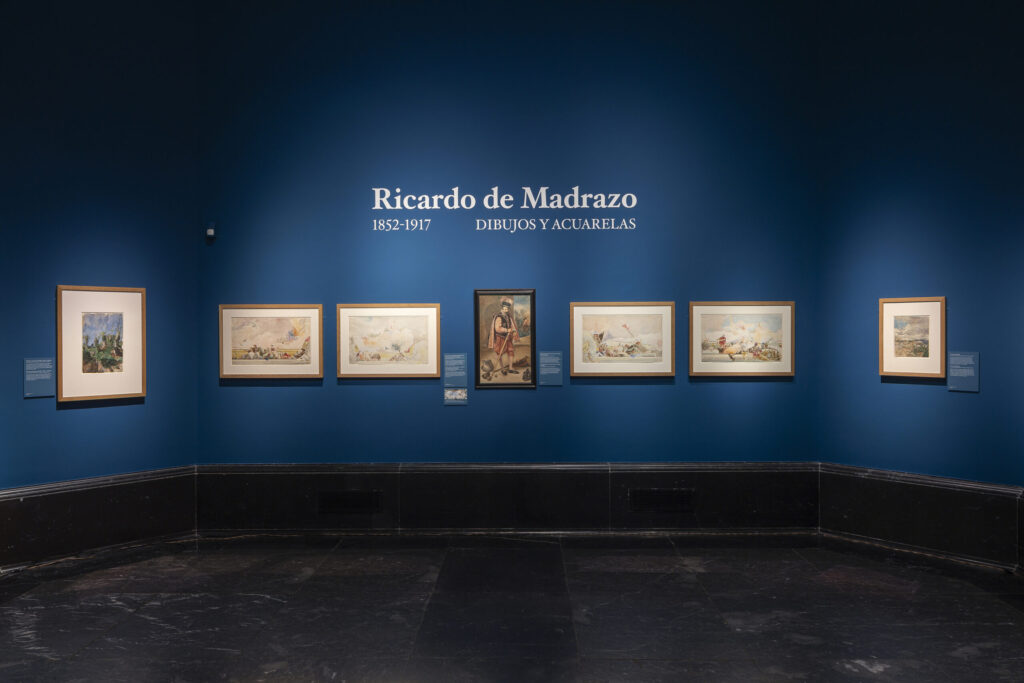
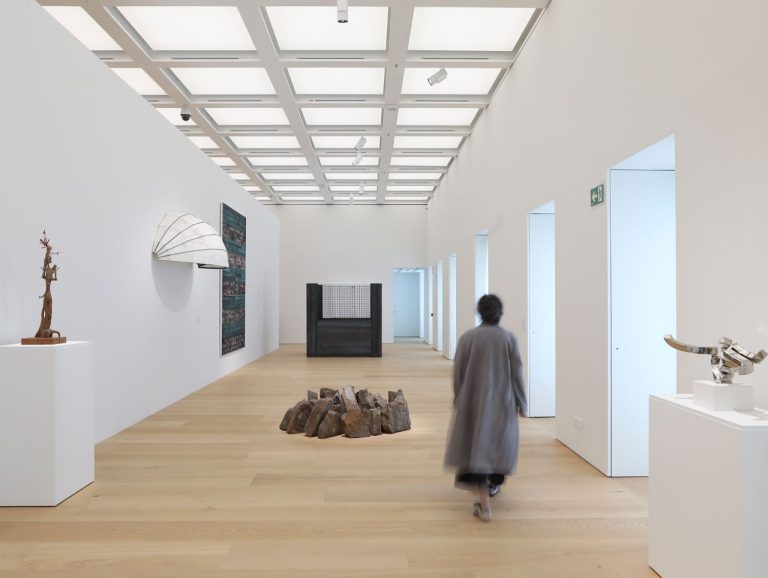
Image of the exhibition room “Ricardo de Madrazo (1852-1917): drawings and watercolors”. Photography: © Museo Nacional del Prado
“Ricardo de Madrazo (1852-1917): drawings and watercolors”
NATIONAL PRADO MUSEUM
Paseo del Prado, s/n
Madrid
From October 13, 2026 to January 17, 2027