Bilbao,
They go out to the deserts and the seas. Where loneliness is greatest, there they indulge in games with the elements. Only the camera records what they do. The wind almost immediately carries away his ephemeral creations, when they are not covered by the waters. And when they find the protection of museums, such works (which constantly require renovation and maintenance) are nothing more than the celebration of impermanence. A new mythification of nature has settled on the plastic arts.
With that surprise, critic John Anthony Thwaites received the film’s television screening in 1969. Land Artdedicated to the beginnings of this movement and recorded at the initiative of Gerry Schum. It featured works by, among others, Michael Heizer, Richard Long, Walter de Maria, Dennis Oppenheim and Robert Smithson, all of them projects designed only to be shown on screen for the duration of the broadcast, and deployed in remote locations. For those creators and on that date, the landscape was no longer an object of artistic description, but rather a plastic material.
Some of these authors are part, until next May at the Guggenheim Museum Bilbao, of the exhibition “Arts of the Land”, which has been curated by Manuel Cirauqui and which explores the diversity of paths through which the soil we walk on has become present in the plastic arts, from the mid-20th century to today and far transcending land art.
We will contemplate sculptures, installations, drawings and documentary material of performances, as well as architectural models, works of design or crafts that will reveal how, regardless of currents, earth, leaves or branches have been consolidated as artistic raw material while still evoking nature, in which, in many cases, artists have sought to insert their proposals.
There are more than forty authors gathered here, from Joseph Beuys and Giovanni Anselmo to Héctor Zamora and Meg Webster; artists of diverse origins, concerns and generations who wanted to interweave their work processes with the energies of ecosystems and, above all, with the soil itself as a living, fertile and sensitive matrix in all geographies.
In addition to creations linked to land art, arte povera or conceptual creation, we will see at the Guggenheim artifacts made with earth, wood, leaves, roots and plants that do not allow labels and that underline the universality of the view of nature as a gift, as a source of biological, mineral and organic wealth and also as a space to preserve and repair. Ultimately, some of the compositions in Bilbao also strengthen ties between culture and agriculture, recalling their common roots (even etymological).
The exhibition is not structured according to any order (neither chronological nor thematic) than that which the pieces weave together and its curatorial discourse has been created from conversations and the observance of connections. The tour begins, however, with the recognition of the artists who intuited the importance of nature in 20th century art: we will contemplate works by Jean Dubuffet, subtle collages by Joseph Beuys or paintings on tree bark by the Australian Jimmy Lipundja, an artist from the Milingimbi nation who gave rise to mythical visions linked to his people.
Entering the seventies and eighties, the aforementioned ephemeral works gained weight in the landscape, such as those by the Romanian Ana Lupas, the Catalan Fina Miralles (recent National Prize) or the Cuban Ana Mendieta, which converge at the Guggenheim with anti-monumental sculptures made with sand, substrate or straw, such as those by the American Meg Webster or the Italian Givanni Anselmo.
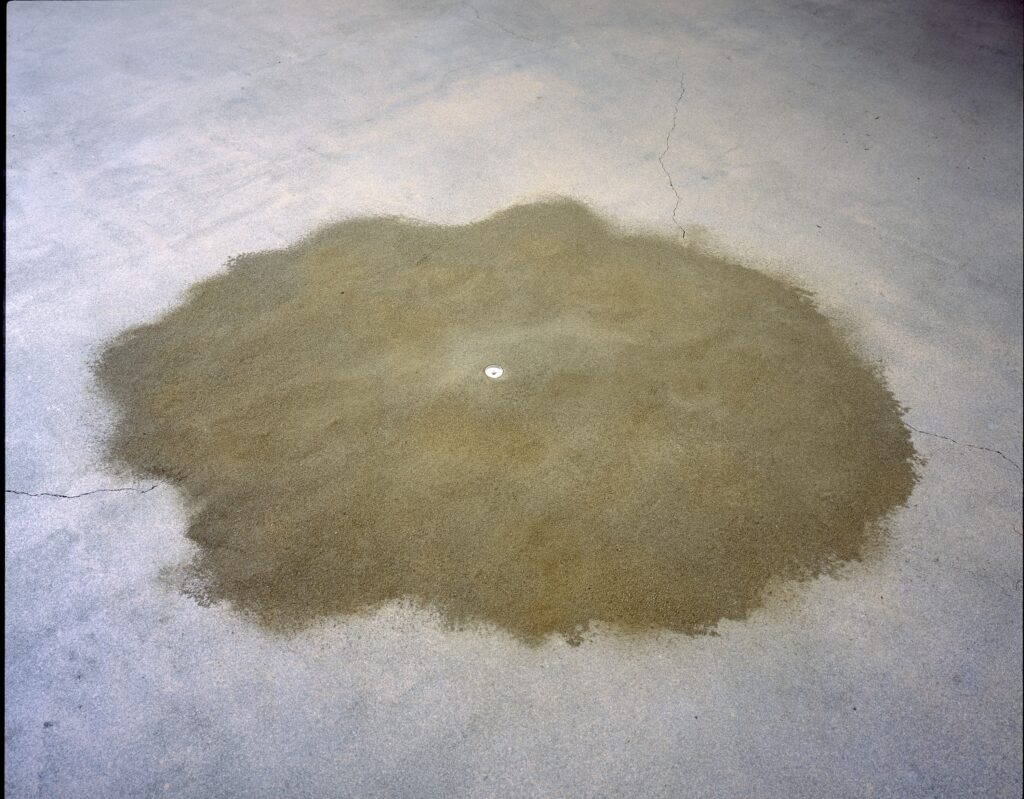
Moving forward in time, nature is invited to modify the architectural space – this is what Colombian Delcy Morelos does, in a specific work for gallery 206, converted into one of the telluric enclaves of the exhibition, subjected to adequate conditions of light, temperature and humidity.
The same thing happens in room 207, where the living sculptures of the conceptual author Hans Haacke, the “Ward boxes” of the German artist Isa Melscheimer and the installation Root Sequence (copse) by Asad Raza, a Pakistani-American creator who has gathered twenty-six trees of various local species that will be replanted in the Basque Country when this exhibition ends.
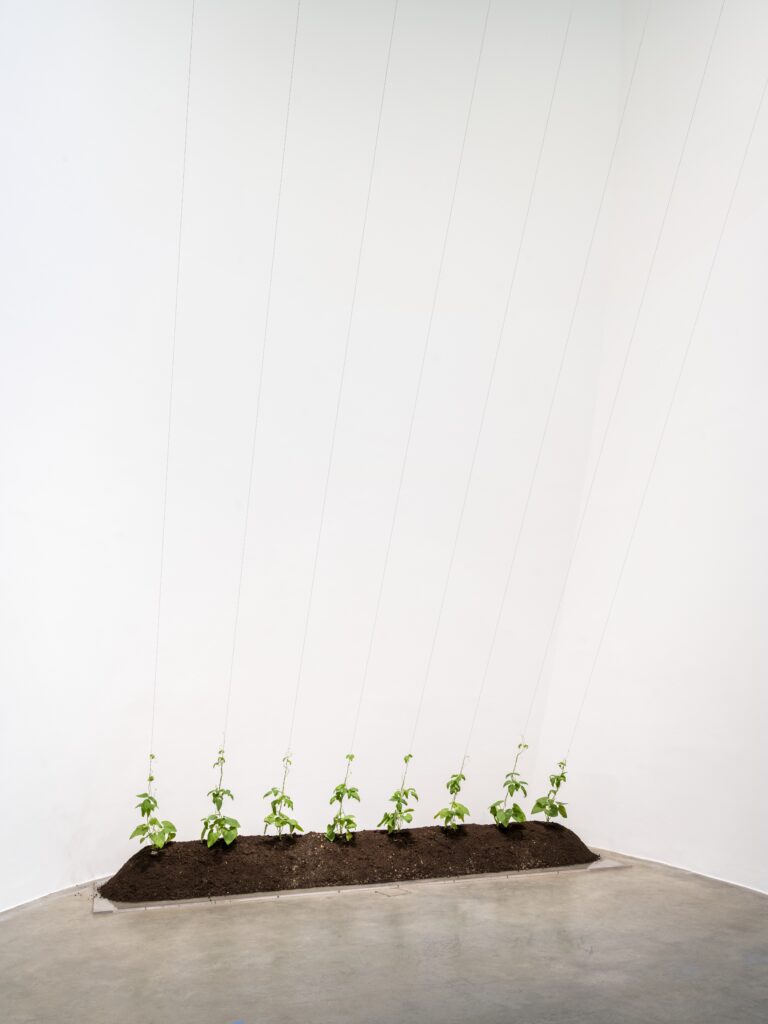
We will also see declines in working with earth in its various states and compositions: mud, sand and their mixtures with natural and industrial elements. This is the case of the hybrid devices between clay, cement or metal by the Ghanaian Frederick Okai or the Mexican Héctor Zamora; the experiments with extraterrestrial soil compositions by the Ecuadorian Oscar Santillán; or the adobe sculptures, so linked to our traditional housing, by the Argentine Gabriel Chaile, who has also designed a large charcoal mural on the walls of the center. Sometimes the materials used come from the surroundings of Bilbao: Mar de Dios has used ceramics made with Biscayan mud and David Bestué, in his modular works, silt from the Nervión estuary.
Patricia Dauder and Jorge Satorre have proposed their pieces based on the processes of decomposition or alteration of sculptural bodies in the subsoil, while other authors have resorted to textiles of animal or plant origin: the abstract landscapes of Asunción Molinos Gordo are born from the combination of wool from all breeds of sheep from the Iberian Peninsula – theirs is also an installation of swallow nests distributed throughout the exhibition -; Susana Mejía has analyzed the tones of Amazonian biodiversity; and Claudia Alarcón has worked on her works alongside women wichí of the Argentine Gran Chaco.
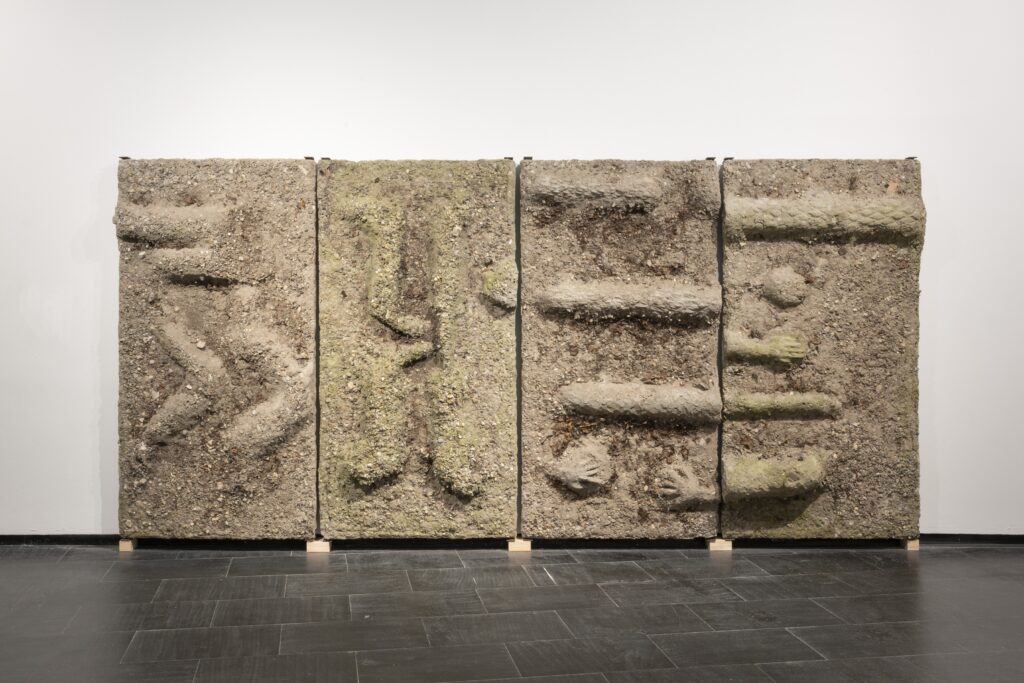
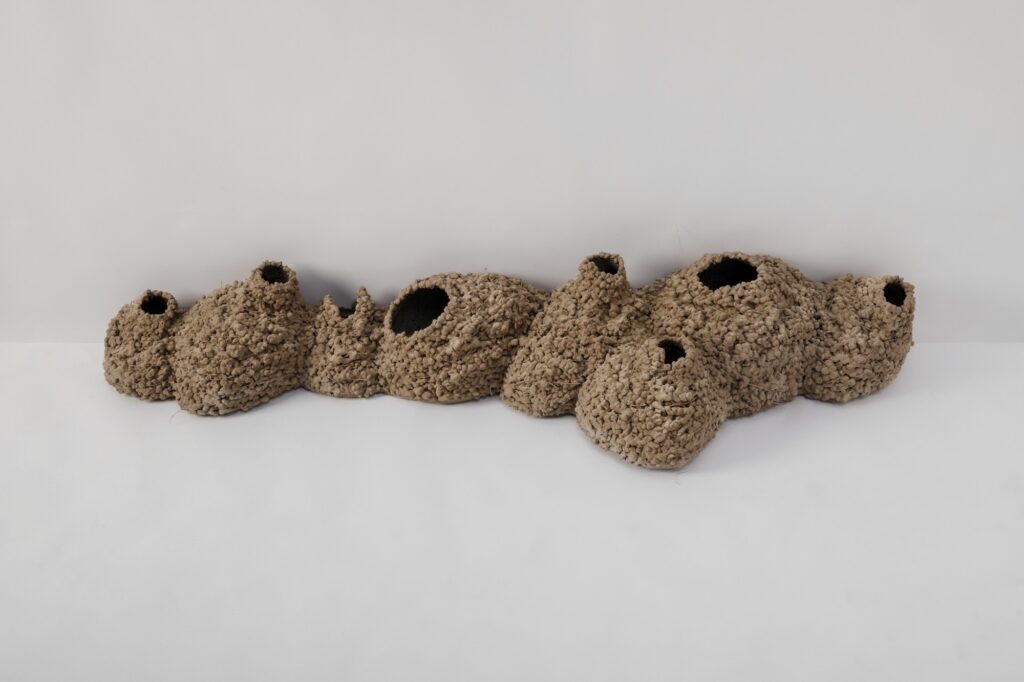
Finally, “Arts of the Earth” deals with the transformations caused by the human hand on the soil that has been the seed of many previous pieces. We will meet Mel Chin, the first artist to have carried out an intervention for phytoremediation purposes, titled Revival Fieldin the landscape of the United States; and the South African Sumayya Vally, who in Grains of Paradise recreates the migratory history of seeds between colonized territories and their European metropolises.
The study of biotope maintenance practices in the Amazon is the basis of the proposals of the Brazilian Paulo Tavares, with echoes in those of the Spanish collective Inland/Campo Adentro. And at the Guggenheim, the composting of cultural objects on the land managed by Claire Pentecost and Asier Mendizabal is confronted with the reflections on the coexistence of symbolism and functionality by Dennis Oppenheim, the experimental engineering essays by Tomás Saraceno and the constructive, sustainable and land-based experiments of the Talca School of Architecture, in Chile.
They close the route, open to debate around the possibility of a future truly respectful of the soil and its fruits, trees carved into large trunks by Giuseppe Penone and proposals by Agustín Ibarrola associated with his ecological concerns. The fragile converges with the original essential in abstract pieces by Michele Stuart, María Cueto or Richard Long, and volume with silence in the works of Solange Pessoa, Gabriel Orozco or Daniel Steegmann Mangrané.
To reduce, precisely, the impact of this exhibition on the natural environment, the Guggenheim has resorted to compostable or recycled materials in its furniture and museography; Air transport of the works and the construction of rigid boxes have been dispensed with.
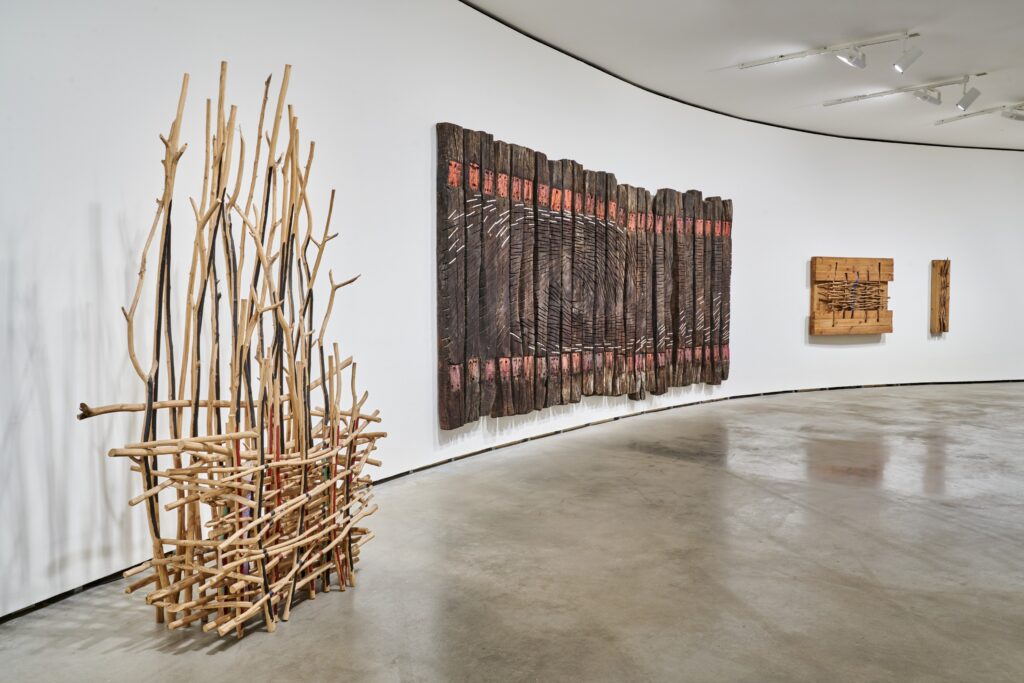
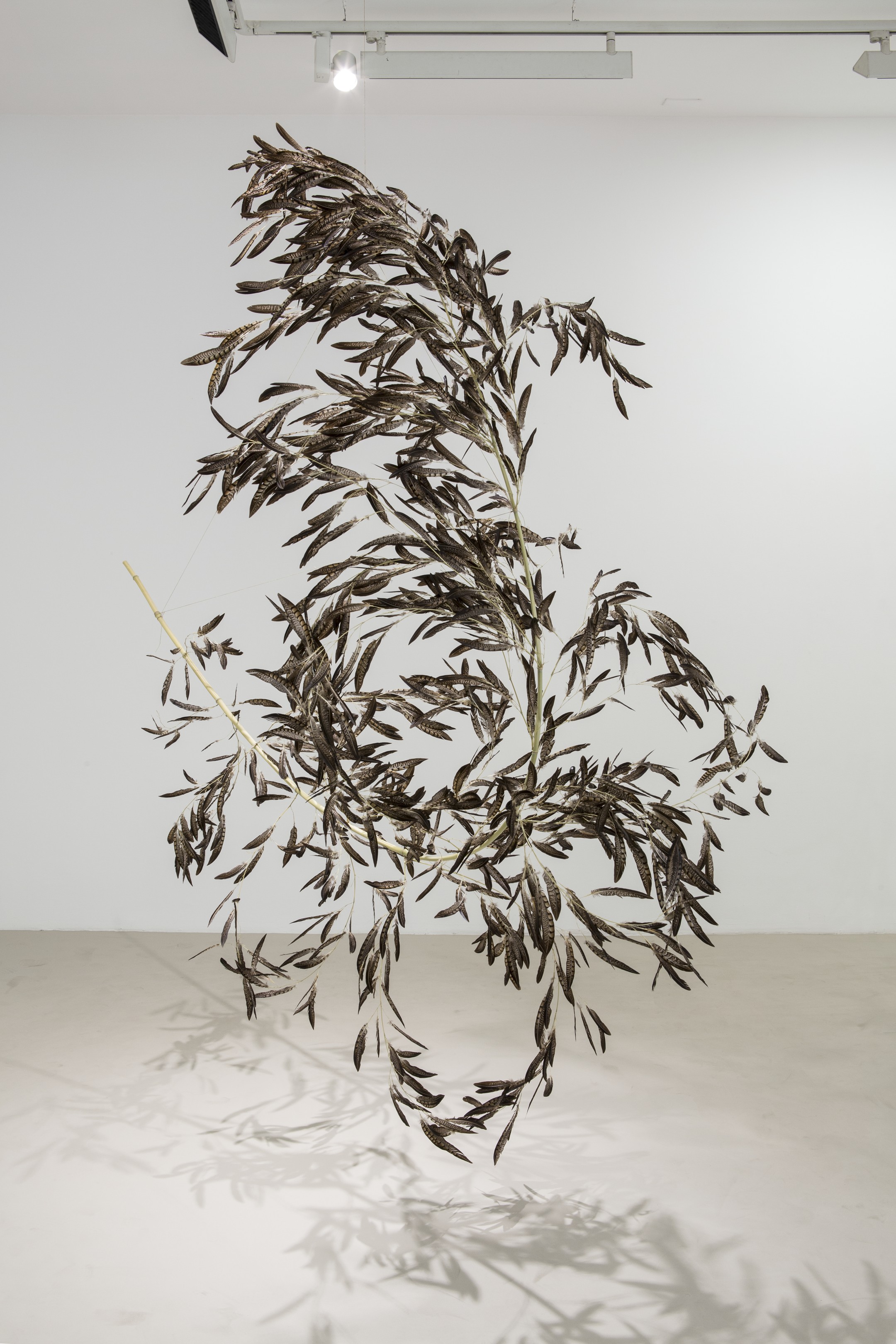
“Arts of the Earth”
GUGGENHEIM MUSEUM BILBAO
Abandoibarra Avenue, 2
Bilbao
From December 5, 2025 to May 3, 2026