Barcelona,
A lost but still possible Arcadia, where a harmonious coexistence between individuals and nature is still viable, and also between those and the city or between man and art. It is the scenario to which the members of the nabi collective, artists who placed everyday life and subjective emotions at the center of their painting, take us, from a perspective normally close to dreaminess. With the support of the Musée d’Orsay, and under the curatorship of its curator Isabelle Cahn, the Fundació Catalunya La Pedrera dedicates to them the exhibition “The Nabís: from Bonnard to Vuillard”, which delves into the thematic and aesthetic frameworks and the references of this group of authors who worked in a period of transition between impressionism and the avant-garde of the early 20th century.
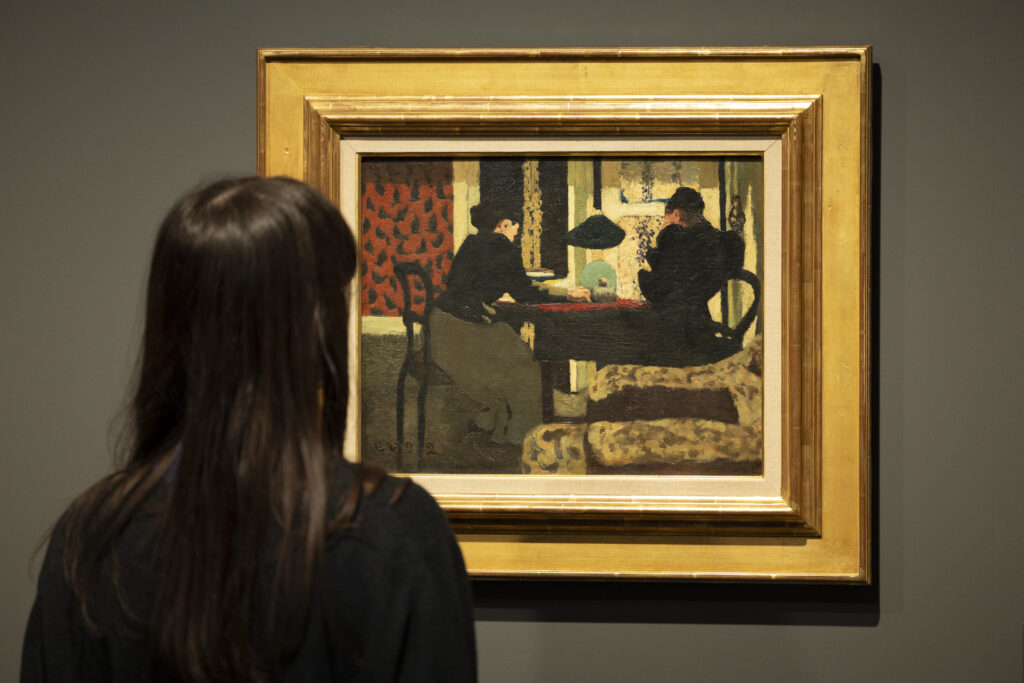
The group remained active, approximately, in the twelve years between 1888 and 1900 and initially had Paul Sérusier as its promoter, as a professor at the Académie Julian in Paris, but over time it was his students who achieved greater fame and prestige. Among these, Bonnard and Vuillard stood out, the two artists most present in this exhibition; the first, clearly focused on the exploration of the free and subjective use of light and color, and the second, focused on the psychological aspect of interior spaces.
Precisely because of those deep ties that the Nabis established between art and life, which led them to not believe in hierarchies between painting and decorative disciplines, this exhibition has a very opportune setting in the Casa Milá: Gaudí conceived it as a total work of art and the public will be able to enjoy the communion of its spaces, the canvases and the ornamental designs of the one in Reus.
There are nearly two hundred pieces gathered to examine the aspirations of these creators (the name nabis comes from the Hebrew neviimprophets), capable of displaying very particular visions of the real and the unreal without distancing themselves, in their daily lives, from the customs and technical advances of modern life.
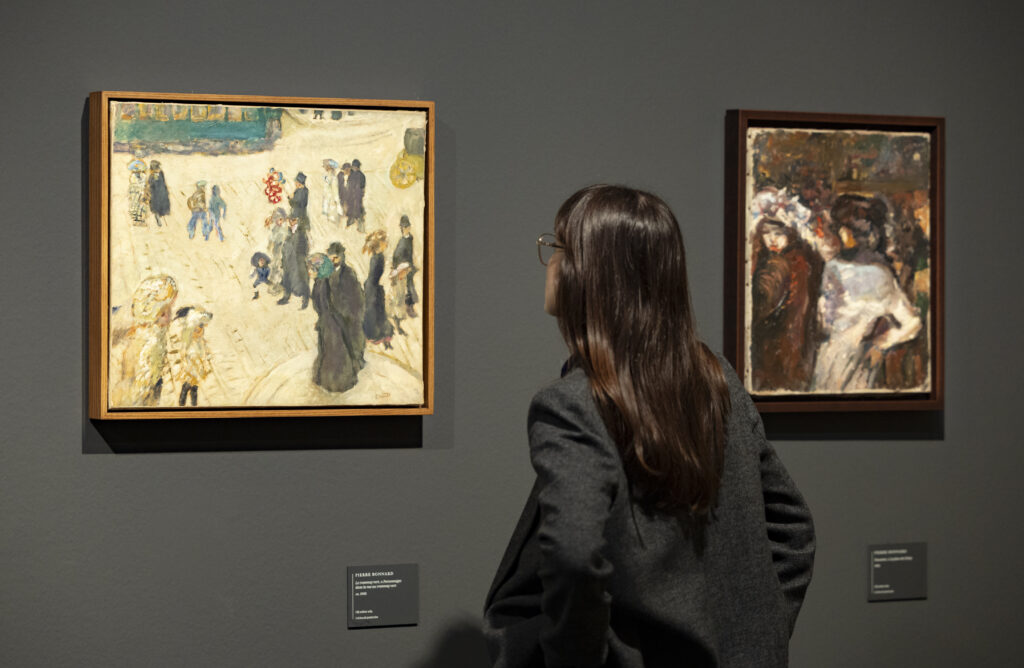
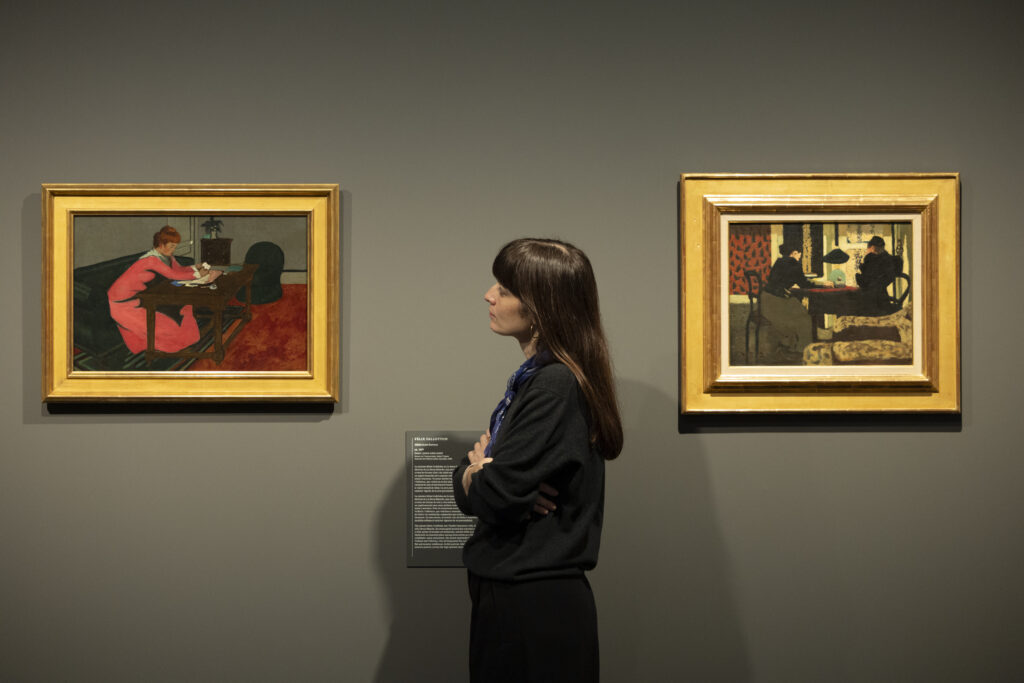
They were not very numerous, but we can still distinguish between them, at least, two tendencies: that of those who felt more attracted, from an intellectual point of view, by poetry, spirituality and esotericism – in a general sense, by symbolism -, such as Sérusier, Maurice Denis, Paul Ranson, Ker-Xavier Roussel, Jan Verkade and Charles Filiger; and that of those who did not stop loving contemporary times and warned of the possibility of finding transcendent values in it, such as the aforementioned Pierre Bonnard and Édouard Vuillard, Félix Vallotton and József Rippl-Rónai.
Artists of one current or another, the first tending towards secrecy, shared, in any case, their inclination for decorativeism and their desire to achieve a unity of art, a unity that they pursued by cultivating a high number of techniques: painting, drawing, engraving, sculpture, interior design and decoration. In them, therefore, the artist and the craftsman were reconciled (and merged).
Although we cannot, in any case, consider Gauguin as nabi or protonabi, in his searches in the last years of the 1880s the germ of these developments can be found: in his desire for synthesis, for suggestion rather than representation and for making use of an intense palette, of refined forms and fundamentally flat spaces, in line with the powerful Japanese influence in those years. In fact, Sérusier taught his disciples the compositional secrets of The talismanwhich Orsay keeps today and is almost never lent.
And their gallerist was that of many impressionists: Ambroise Vollard, who encouraged them to experiment with these different techniques in order to produce serial works that could be sold at a good price. It was a time in which, more than borders and labels, networks of views were deployed; The Nabis brought their influences to the realm of the desire to beautify the everyday world, without ceasing to be seduced by Paris.
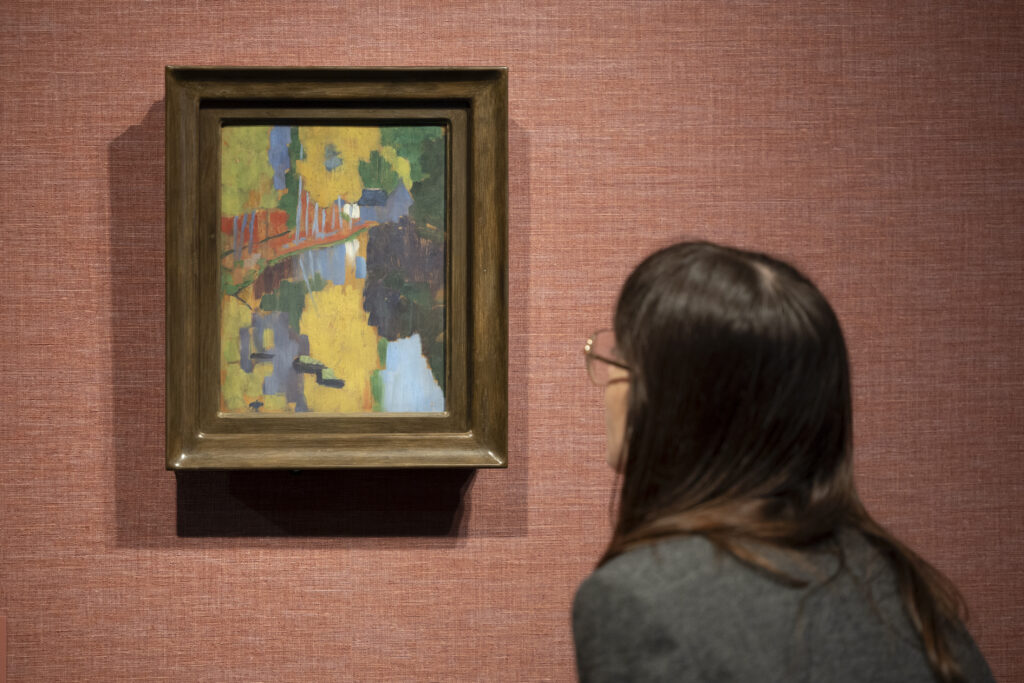
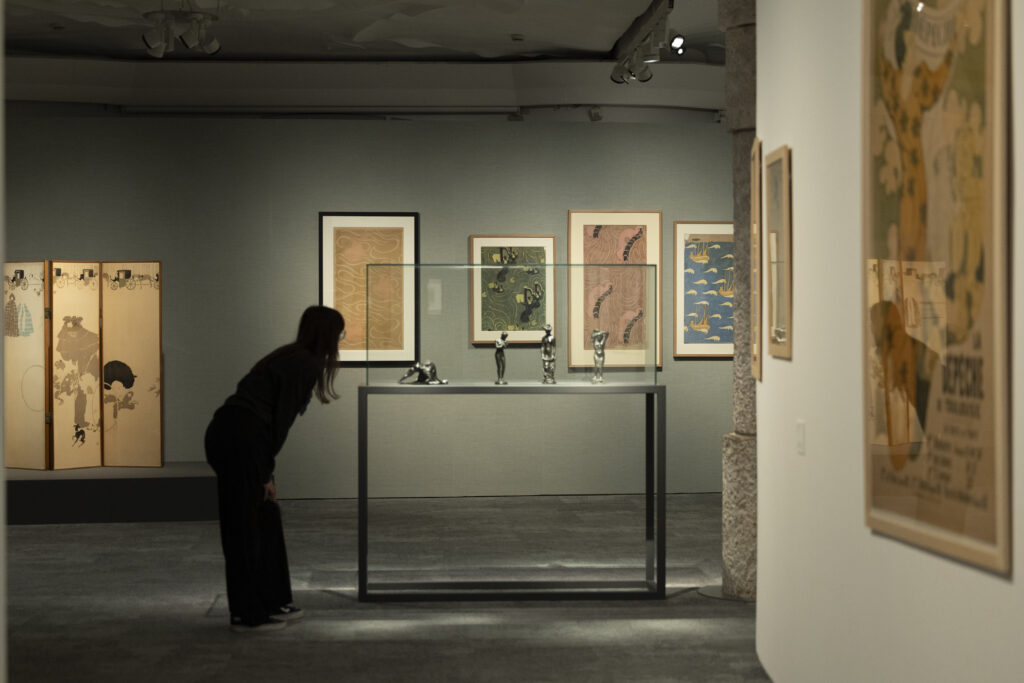
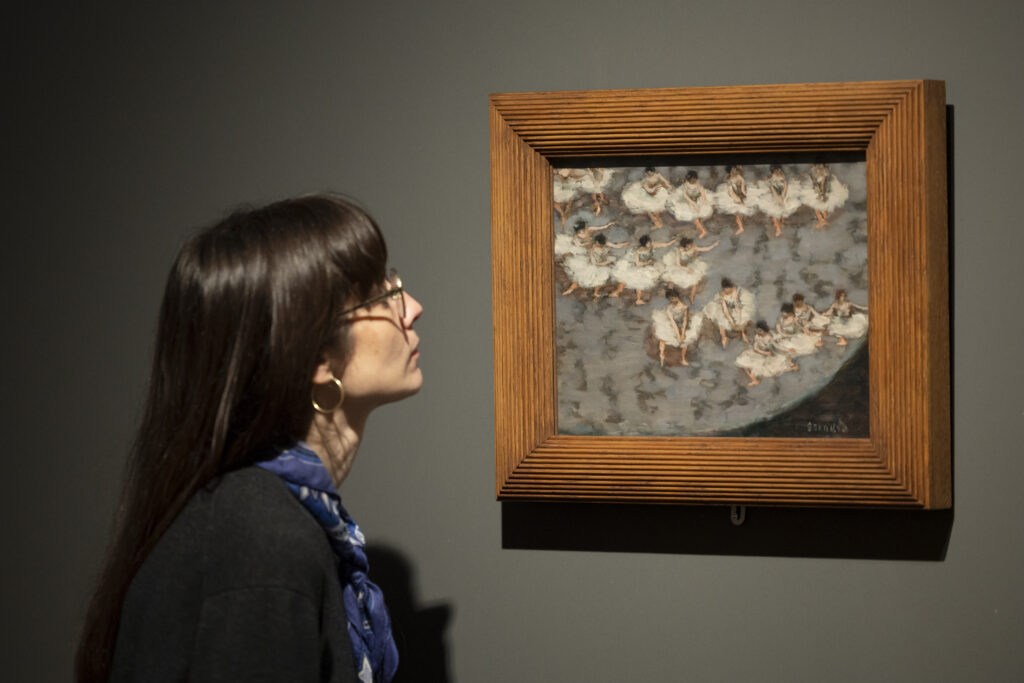
Bonnard, Ibels, Vuillard and Vallotton were interpreters of its urban life and the feverish atmosphere of its streets and nights, of its circuses, cafes and live shows. And they not only portrayed the spirit of that hectic era, but also contributed to generating it: although they have not been preserved, they created sets for the dramas of Maurice Maeterlinck and for poetry recitals dedicated to Paul Verlaine, Arthur Rimbaud or Stéphane Mallarmé; and Vuillard, Bonnard, Denis, Roussel, Sérusier and Vallotton devised sets, costumes, programs and posters for the symbolist repertoire of the Théâtre de l’Œuvre d’Aurélien Lugné-Poe, among other collaborations.
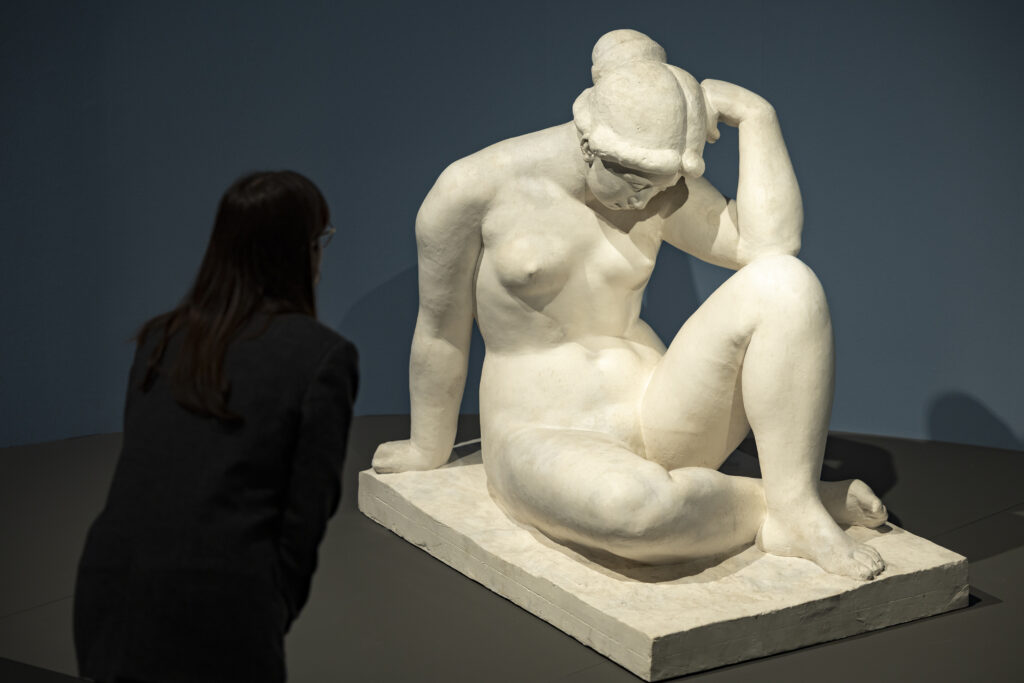
Specific chapters in the exhibition include his love for mysticism, linked to Catholicism, the sacredness of music and the idealization of women, a vocation for the mystery that his translation had in his attempts to represent the invisible; landscapes populated by nymphs or muses in which there is no friction between nature and humans; interior decorations, created to order and linked to the aesthetics of art nouveau; images of daily life and maternity wards where that intimacy is refined or sacralized; and Mediterranean figures from the essential Maillol. They condense much more than artistic principles; the sculptor stated about The Mediterranean: My intention (…) was to create a young, pure, luminous and noble figure. Isn’t that the Mediterranean spirit? Well, that’s where I gave it that name.
“The Nabís: from Bonnard to Vuillard”
CATALUNYA LA PEDRERA FOUNDATION
Passeig de Gracia, 92
Barcelona
From March 6 to June 28, 2026