Paris,
Nearly four centuries separated them, but both contemplated the human body at great length to model it so that, in the field of sculpture, it would never again be contemplated as a set of bones and muscles, in perfect but inexpressive gear. The compositions in that discipline by Michelangelo (1475-1564) and Auguste Rodin (1840-1917) embody for us the strength of the body and the depth of the soul and between them we can find both continuities and ruptures.
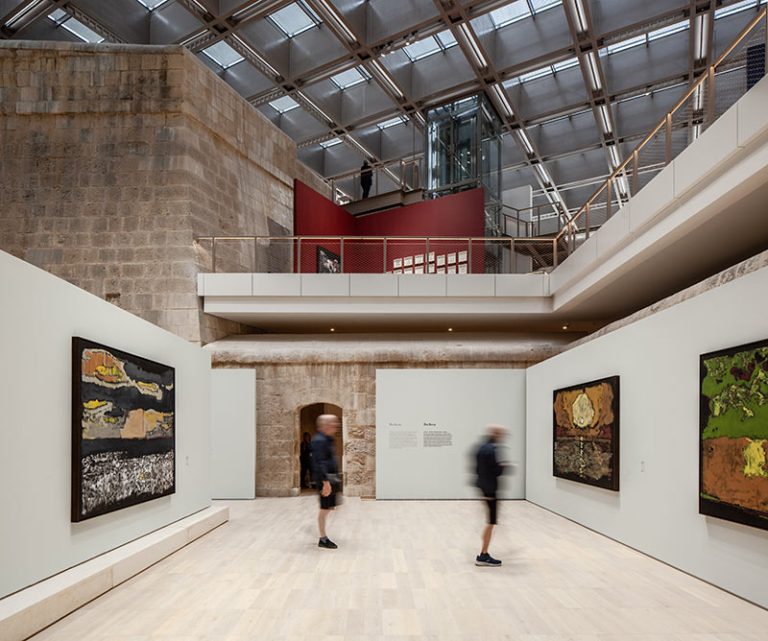
The exhibition “Miguel Ángel Rodin: Living Bodies” is in charge of studying them until next July at the Louvre, which has more than two hundred works and which emphasizes the formal and conceptual issues that refer to ambitions shared by both: the essential one, making visible the inner energy of the body. This is presented as an envelope of the soul, and therefore, as living matter affected by time and by gesture, the latter linked to expressive paths – it is outlined in the exhibition – typical of the avant-garde.
By focusing on the connections between the two, and on the ways in which the Frenchman approached the Italian, this exhibition offers a nuanced reading of the myths that have surrounded the two geniuses, while proposing us to rethink sculpture not as an element that “creates forms”, but as a laboratory for artistic innovation, with the body as a playing field. Masterpieces by both intertwine with Michelangelo-inspired Mannerist works (by Vincenzo Danti, Vincenzo de Rossi and Pierino da Vinci) and with powerful contemporary creations by Joseph Beuys, Bruce Nauman, Giuseppe Penone and Jana Sterbak, demonstrating the influence over time of the legacy of these two totems.
In Paris we can see marbles, bronzes, plaster moulds, terracotta sculptures and a good number of engravings from the collections of the Louvre itself, the Musée Rodin and international centres. They are organized around five sections; In all of them the works of both are interspersed and their sources of inspiration, their relationship with the creative materials and their favorite themes are reviewed, united by a central thread in the montage: the body and the way in which it expresses life.
The exhibition starts with five essential pieces: The dying slave and The rebellious slave by Michelangelo and The bronze age, Adam and Jean d’Aire by Rodin, who “escaped” from his monument to the bourgeois of Calais and who receive the public, precisely, as if they were bodies inhabited by a powerful vital force.
It begins by presenting the two sculptors from the perspective of myth; The construction of their respective artistic lineages is analyzed through a selection of works created from the masters and, in the case of Rodin, specifically from Michelangelo himself. The importance of the models of the creator of the Pieta For the French sculptor it is also contextualized with his fundamental trip to Florence in 1876 and with his discovery of the Chapel of the Princes in San Lorenzo, a complete work of “that magician” who seemed to be leaving him “some of his secrets”, as he then wrote to his companion Rose Beuret. The period replicas made by Vincenzo Danti based on the allegorical representations of the hours of day in the tombs of Giuliano and Lorenzo de’ Medici allow the viewer to evoke those essential Florentine figures.
In any case, nature and antiquity constitute the main sources of inspiration for the two artists, who worked to overcome them, as the second section aims to prove. We will contemplate sketches and drawings arising from meticulous observation of the human body and a deep knowledge of anatomy, acquired in part by Michelangelo through the practice of dissection, and by Rodin through long hours of work with live models. His finished works transcended the strict naturalistic reproduction of the body and involved the recomposition of human anatomy: Michelangelo’s ideal figures came to replace nature for the next generation, and Rodin craved precision and truthfulness above all. For Vasari, precisely this overcoming of the ancient and the natural was the ultimate meaning of Michelangelo’s arrival on Earth.
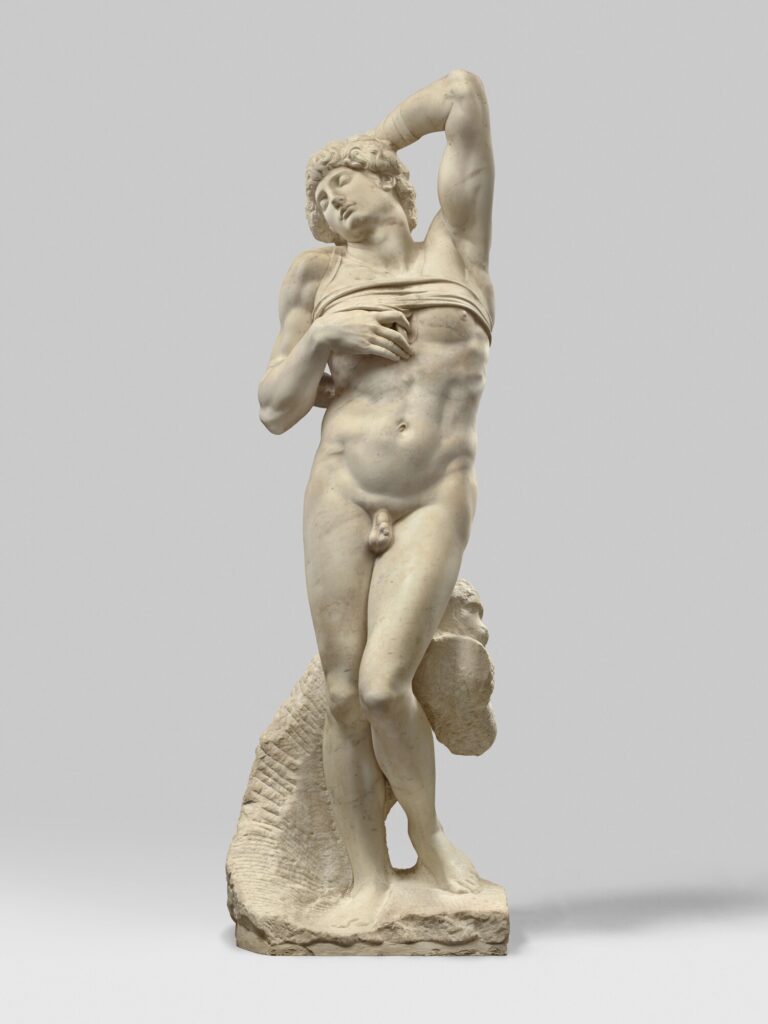
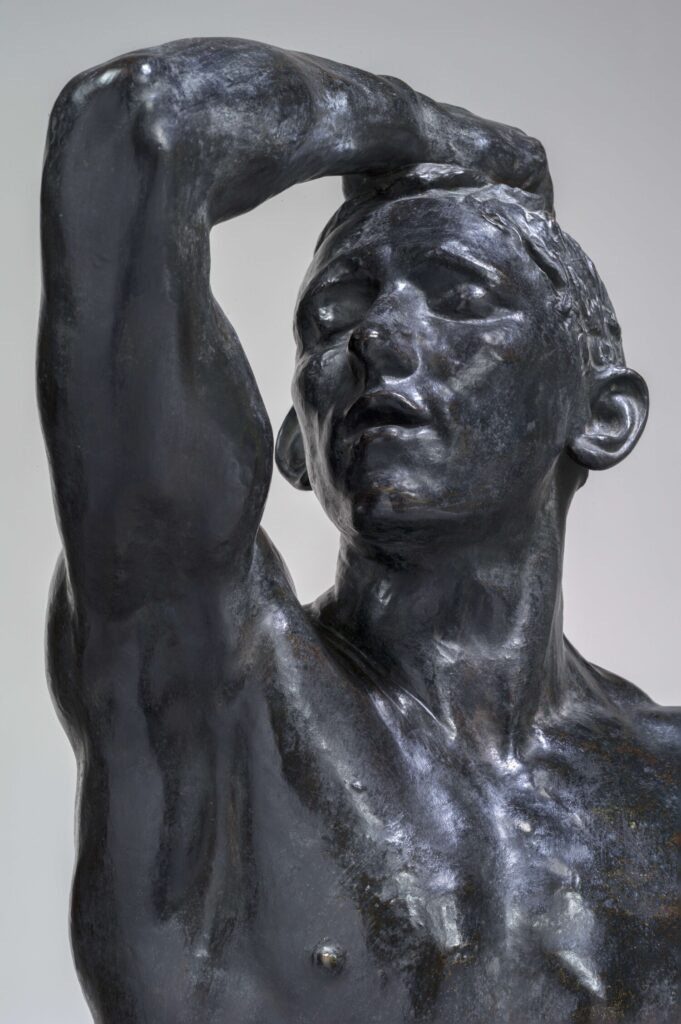
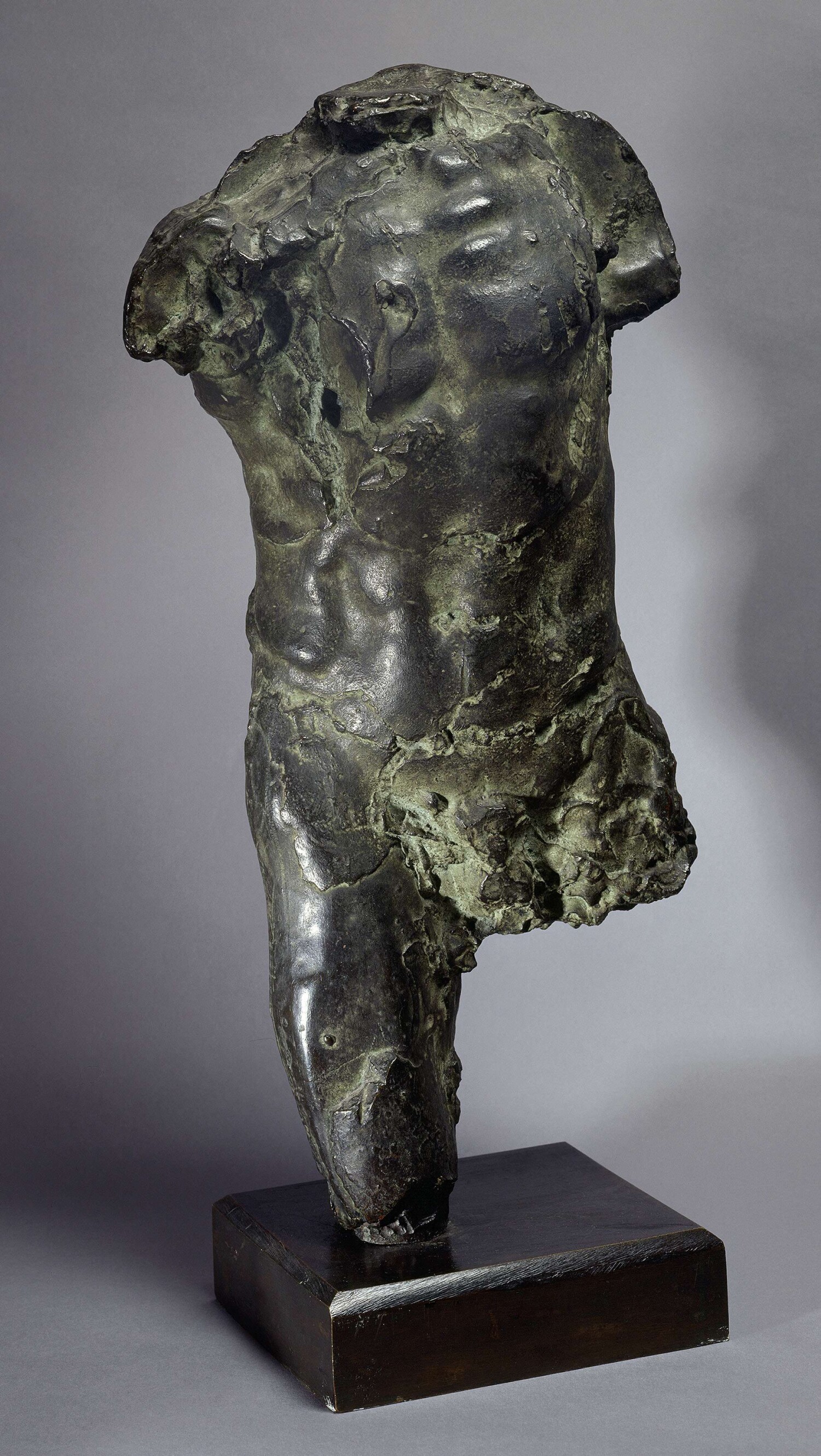
The emergence of the torso as an artistic form is fundamental in a third section: while Michelangelo is said to have refused to restore the Belvedere Torso, recognizing the aesthetic plenitude of its fragmentary form, Rodin was the first artist to conceive of torsos as autonomous works, thus establishing one of the main themes of modern sculpture.
And at the center of the exhibition is the non finito, an emblematic aesthetic of Michelangelo’s work that Rodin reappropriated: they sought not to hide the traces of the creative act, demonstrating that the visible sculpture is simply a stage in an already existing virtual form, revealing, through the use of the transitory, that vital flow that runs through the bodies.
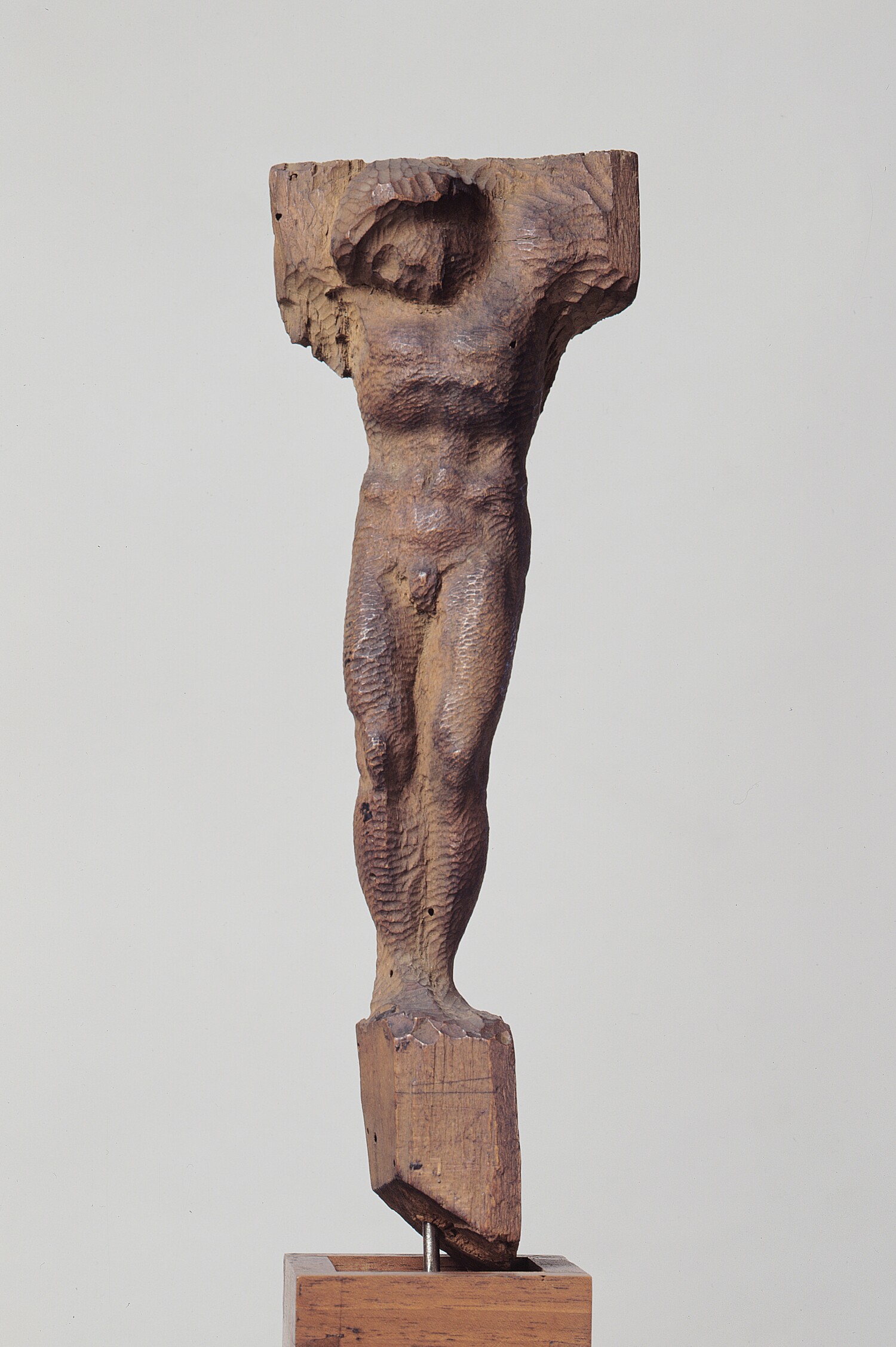
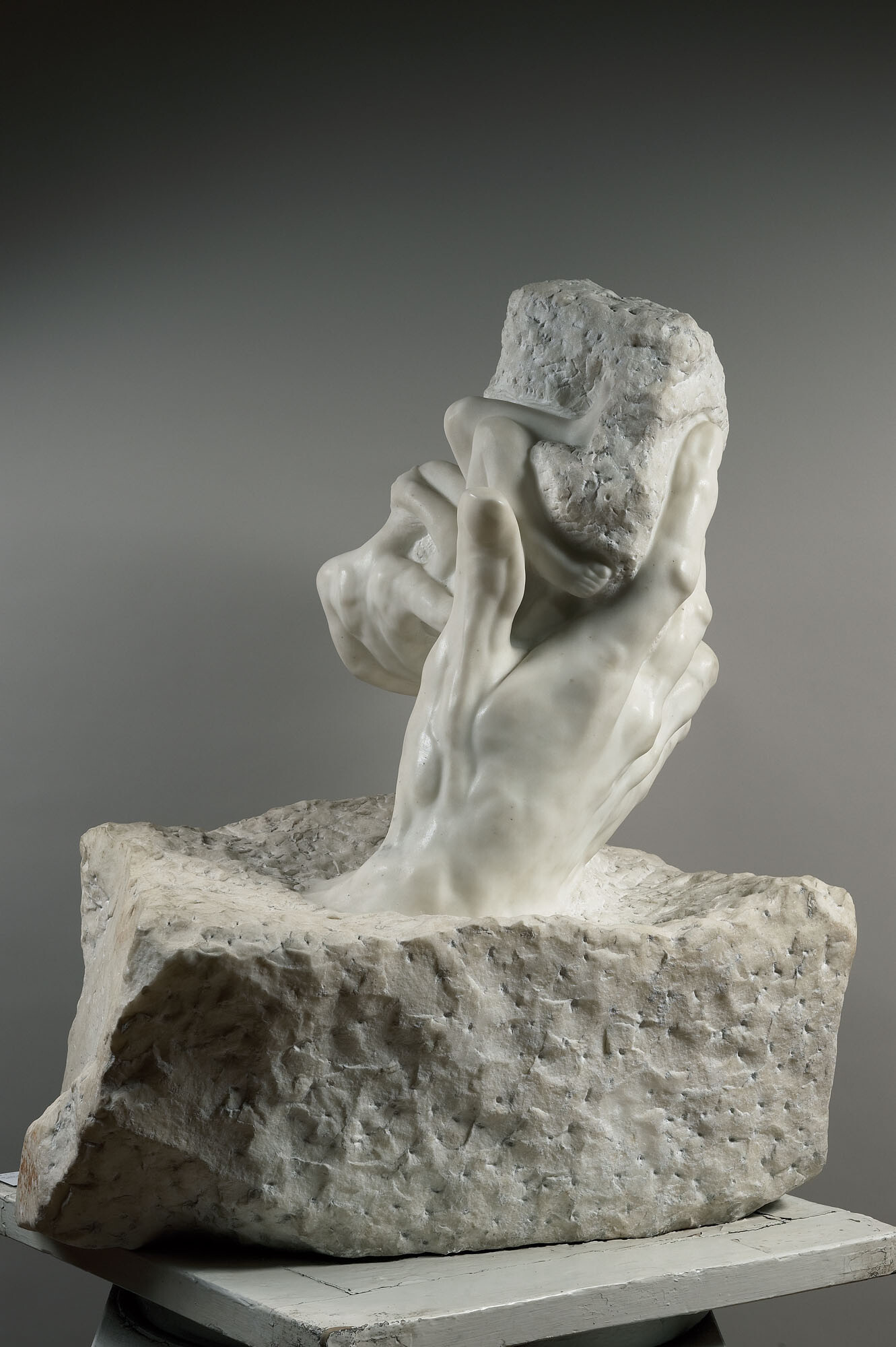
a small crucified christ of wood, exceptionally lent by the Casa Buonarroti, is shown near The Slaves of the Louvre, demonstrating the expressive force of Michelangelo’s unfinished style. And that almost demiurgic relationship with matter is synthesized in Rodin’s The Hand of God, who represented that divine organ in marble by modeling the bodies of Adam and Eve in clay. For his part, the seven meter tree by Giuseppe Penone illustrates the contemporary survival of this unfinished technique.
Likewise, a selection of red chalk and ink drawings by Michelangelo and Rodin attest to the vitality of the bodies suggested by the vividness of the contours, which evoke the superficial effects produced by the unfinished technique. By capturing the light, they create a soft and luminous halo around the marble, a kind of sfumate that anchors the work in its surrounding atmosphere.
By choosing the body as the central theme of their works, both Michelangelo and Rodin perceived it, as we see time and again, as an animated appendage of an intense inner life. His figures are dwellings of thought and dream, sometimes bordering on death; The psyche leaves obvious physical traces and the physical form becomes a representation of the soul in Michelangelo’s Saint Bartholomew or Auguste Rodin’s Balzac, works of which we will find echoes in Furby Joseph Beuys, and Vanitas: Meat dress for an anorexic albinoby Jana Sterbak. The anatomies and faces, the poses of the figures and the group compositions express human feelings and passions, which once again permeate the Final Judgment by Michelangelo and The Gates of Hell by Rodin, presented respectively through a period copy and a model, as well as the large bronze relief of the Serpent by Vincenzo Danti.
The numerous serpentine figures drawn by Michelangelo, the marble river god by Pierino da Vinci and The inner voice by Rodin. The power of the human figure is clear: the terrifying Michelangelo, embodied here by a cast of Moses from the collection of the École des Beaux-Arts, is contrasted with the magnetic presence of the French Balzac.
They radiate power despite their static poses, but both sculptors also frequently employed the arrangement of bodies in space. Vital energy is thus translated into a skillful conjunction of balance and imbalance, which leads the works to the very edge of instability. That tension resonates in Bruce Nauman and his Walking a Linewhich ends the exhibition.
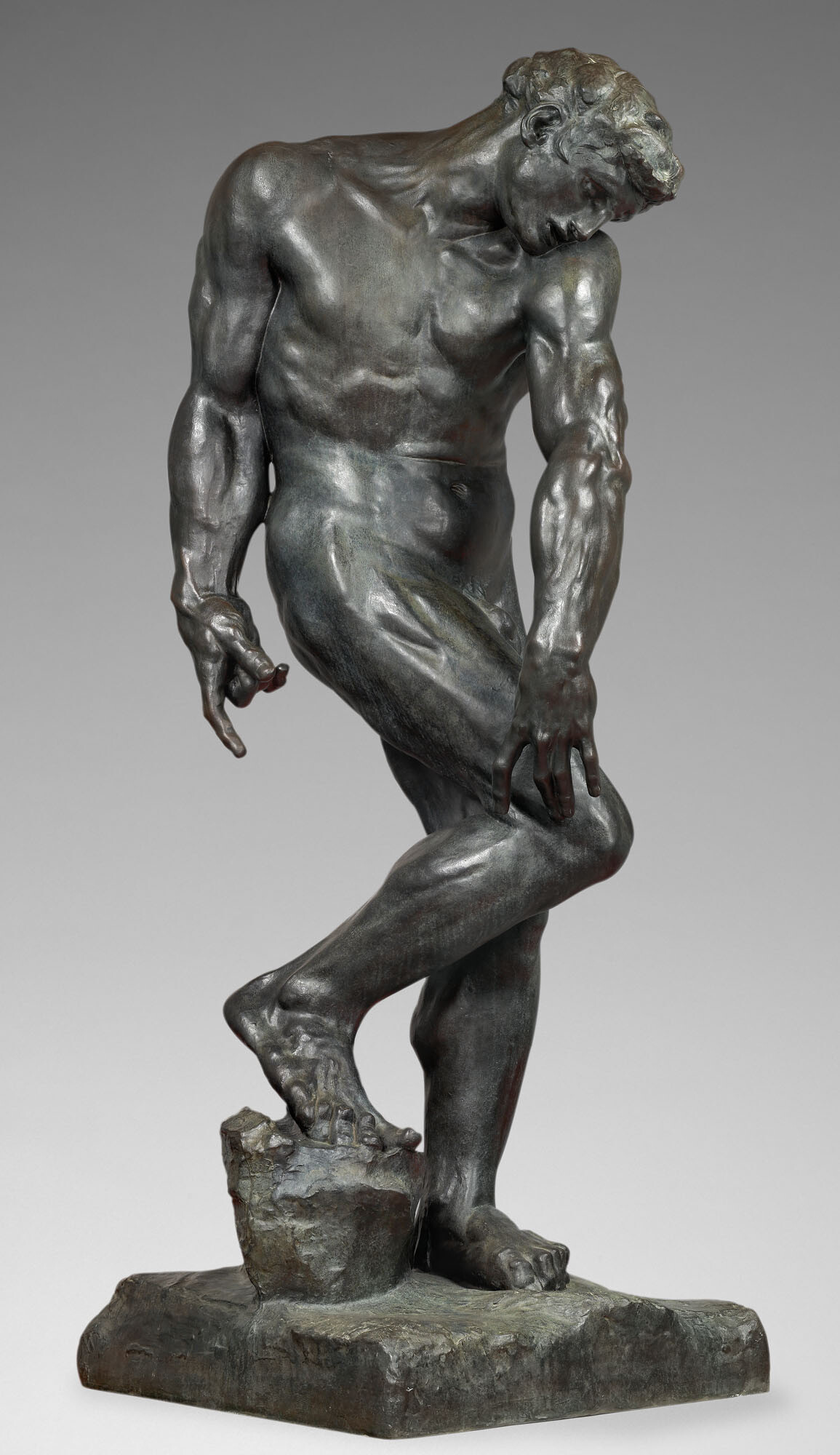
“Michelangelo and Rodin. Bodies with life”
LOUVRE MUSEUM
Palais Royal
Paris
From April 15 to July 20, 2026