Malaga,
Uncertainty, desire for pleasure, disbelief in known cruelty, fear of witnessing something similar; assumption of the weight of the past and infinite doubts regarding the future. During the interwar period, European society, and of course also its artists, lived immersed in a number of paradoxes, between the search for emancipation, and the transformation of known structures, and the consolidation of authoritarianisms that altered everyone’s lives.
The avant-garde creators did not assume without criticism scientific and technical progress, the cult of the machine and the linear advance of humanity, but they did assume the revision of inherited beliefs in a context that, artistically, was permeated by surrealism and attention to the very individual subconscious.
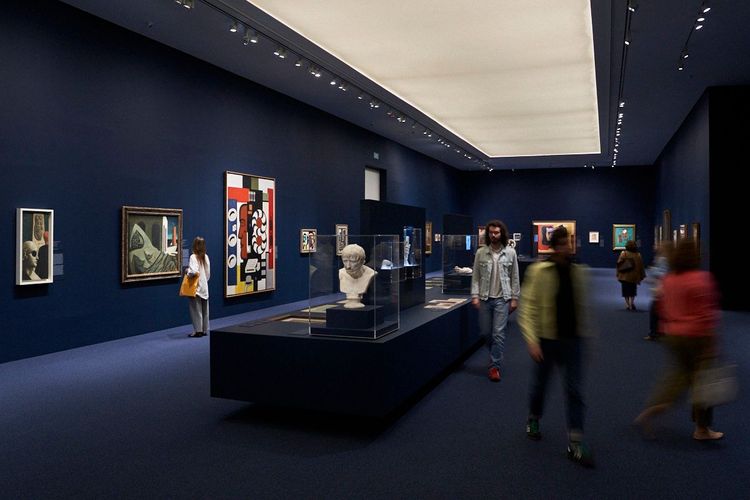
The exhibition “Picasso Memory and Desire” is immersed in this stage, which is being hosted by the Picasso Museum in Malaga until April and curated by Eugenio Carmona, a fundamental expert on the figure of the man from Malaga. Review how, in those years, both he and his contemporaries moved, precisely, between the evocation of the known and the projection towards the future, coming to affirm that the present is never absolutely present, but rather a moment in a time that never stops flowing.
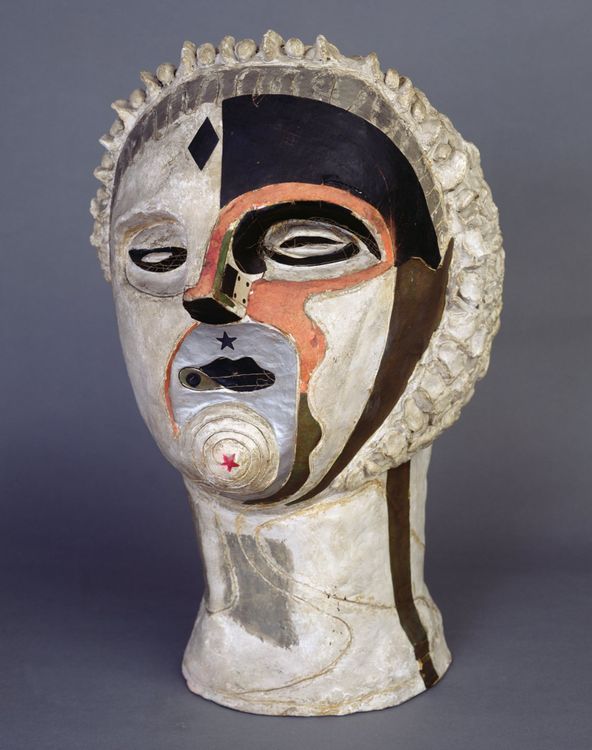
Picasso’s creations in the twenties cannot be interpreted solely from the desire to return to order (and to beauty canonically understood), or to give rise to a contemporary classicism, notions that he himself questioned, but as manifestations, perhaps, of a sum of times brought together. And the exhibition proposes as a symbol of this particular form of present straddling several worlds a piece that, last summer, turned just one century old: Study with plaster headwhich could be interpreted as a spider web in which multiple signs place us in a time without a finished identity.
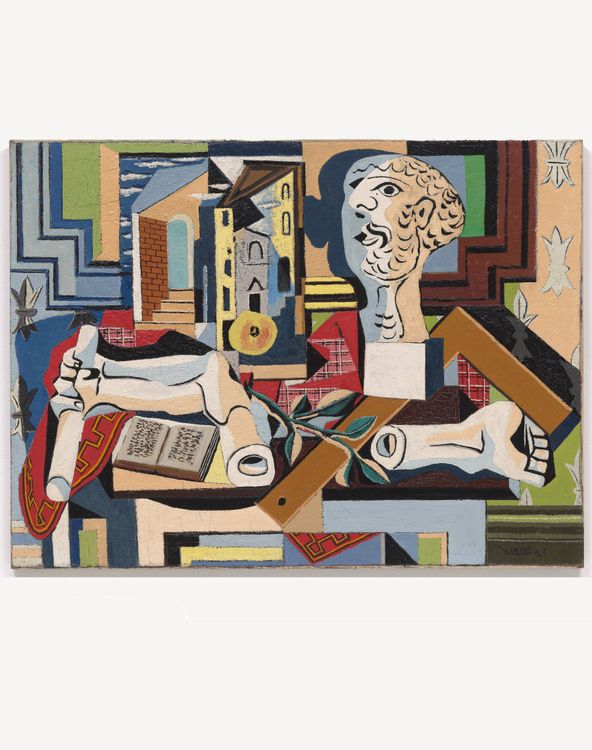
We can relate this study to Picasso’s early training with his father, a drawing teacher: that is, within the framework of a regulated and planned system that we can associate with the place of memory. Obviously, this past is not simply brought to the present, but rather resignified from a look crossed by the years and, therefore, the image returns to us contrasting profiles, an enigmatic shadow and a peculiar look.
These are features that Picasso had worked on before and on which he would return later, over the decades, because that bust is very much a symbol and the split faces and the shadowed profile would become tools for play and investigation. Both would be resources for the expression of erotic drives and also, although both are linked, for the affirmation of the desire to live (to resist).
They were not unique formal features of Picasso: De Chirico had used them before and would continue to do so in those twenties, in static figures that do not seem to look outside themselves; Also the Picasso bust and its associated works express a life, evidently, more interior than exterior. O Léger: the most lover of machines and tools of the three, he worked with plaster busts and shadow profiles at the same time.
This bust was reproduced in numerous publications and interested more artists; This way of looking towards the future without denying the past was part of a general atmosphere that everyone breathed from. Dalí offered new readings to Picasso’s icons by linking his busts with the Christian iconography of beheading, but also with his desire to self-portrait. And García Lorca used that composition, the shadow and the doubling to allude to the conflicts of an individual nature that love generates.
For Cocteau, very close to Picasso, these motifs helped him delve into the myth of Orpheus, who embodied the links between death, love and creation, while Man Ray gave different twists to the effigy of Venus to underline the power of eroticism in the cultural field.
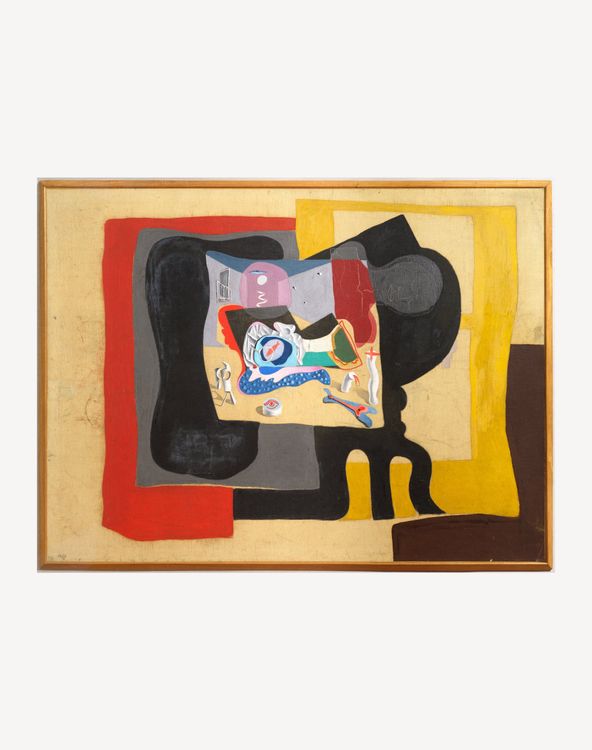
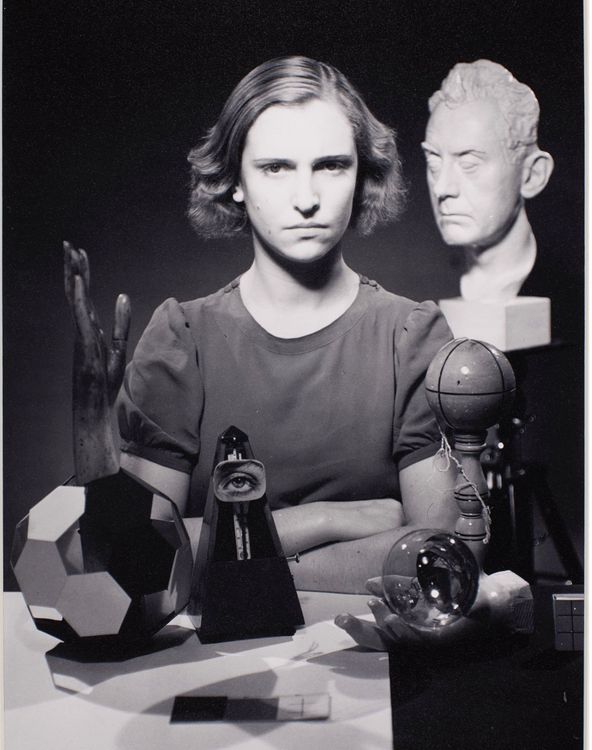
In the silent Felice Casorati and the cubist Jean Metzinger, the bust becomes domestic; in Magritte, emblem of female traumas; Already in photography, Walker Evans and André Kertész worked with their own shadows and Brassaï, Dora Maar and Kertész himself also found involuntary sculptures to resignify in commercial mannequins.
Disquisitions on the genre with a bust as the center also had a place, led by Eileen Agar and Claude Cahun; Juan Gris, like his friend Picasso, added ancient busts to his still lifes, in which he came to pay homage to the arts, and in this sense, in the Spanish context, the trail is long: José Moreno Villa, Gregorio Prieto, Joaquín Peinado, Benjamín Palencia, Enrique Climent…
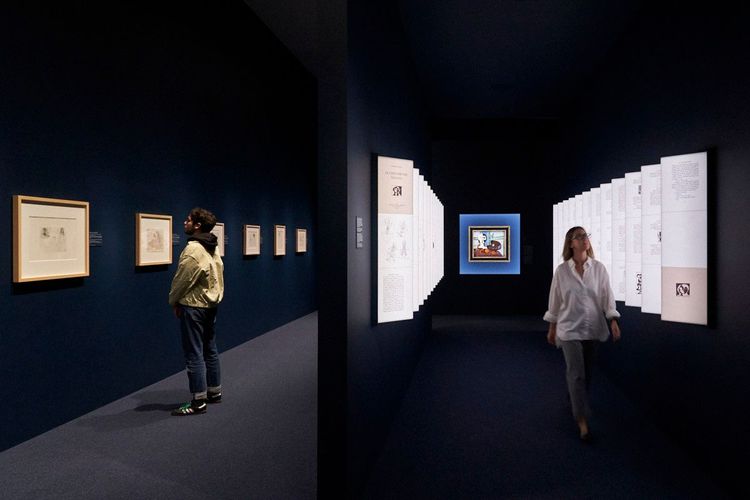
They make up a constellation, and speaking of constellations… A year earlier, in 1924 and in Juan-les-Pins, Picasso made the drawings that he baptized with that name, composed of guitars and mandolins drawn from points connected by lines. Some of them illustrated, along with some etchings on the subject of the artist and his model, an edition of The unknown masterpiece by Balzac, and in the Picasso Museum they make up an installation that has the voice-over of the baritone Carlos Álvarez reciting the text.
For the curator, that painted bust of Picasso, which came from the MoMA in New York, has, or had until now, some unknown masterpiece: It has rarely been exhibited, it is not a star piece, but it refers to a phase of Picasso’s crossroads between classicism, cubism and surrealism. A cutting-edge time.
“Picasso Memory and Desire”
PICASSO MUSEUM MALAGA
C/ San Agustín, 8
Malaga
From November 14, 2025 to April 12, 2026