Madridf,
The Casa Luis Barragán in Mexico City will soon turn eighty years old, despite a radical modernity that the passage of decades does not challenge. Built in 1948, populated by the architect for exactly forty years, it is located in a popular neighborhood with which, in its exteriors, it does not clash, and in its interiors it combines traces of Mexican vernacular architecture and modern international architecture, dividing its floor into very diverse spaces in which extraordinary plays of lights and reflections are displayed. Also colored.
The duo of artists Lake Varea, formed by the Mexicans Francisca Rivero-Lake and Carla Varea, who have been working together for twenty years and who have focused their careers on photography (although they are also authors of videos, textiles, performances, videos or installations), decided, just when they began their career, to do so from an approach to these spaces inhabited by Barragán when he was not yet the cult architect that he is today.
It is an intimate approach: because of its duration – they have worked there since 2006 and until last year – and because the artists delved into Barragán’s personality and spaces at the same time as they did so in their own relationship, hence the proposal that is now presented at the Casa de México Foundation, in Madrid, is titled “Adorado Barragán”.
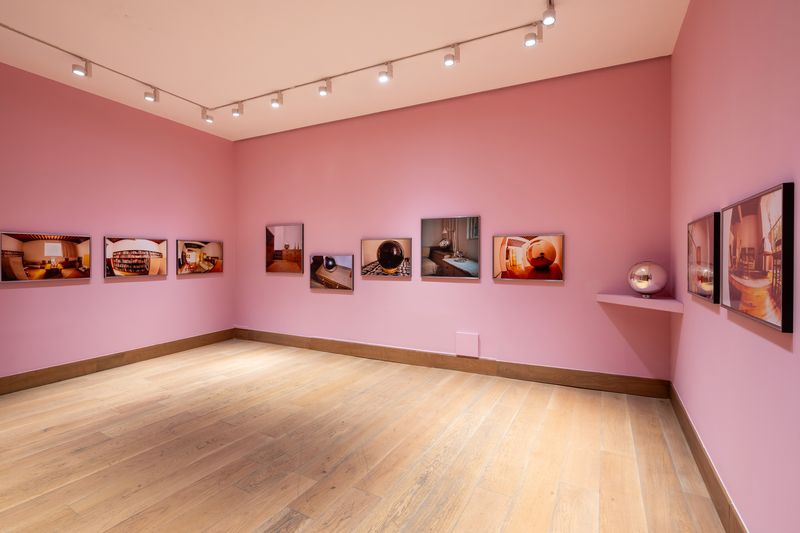
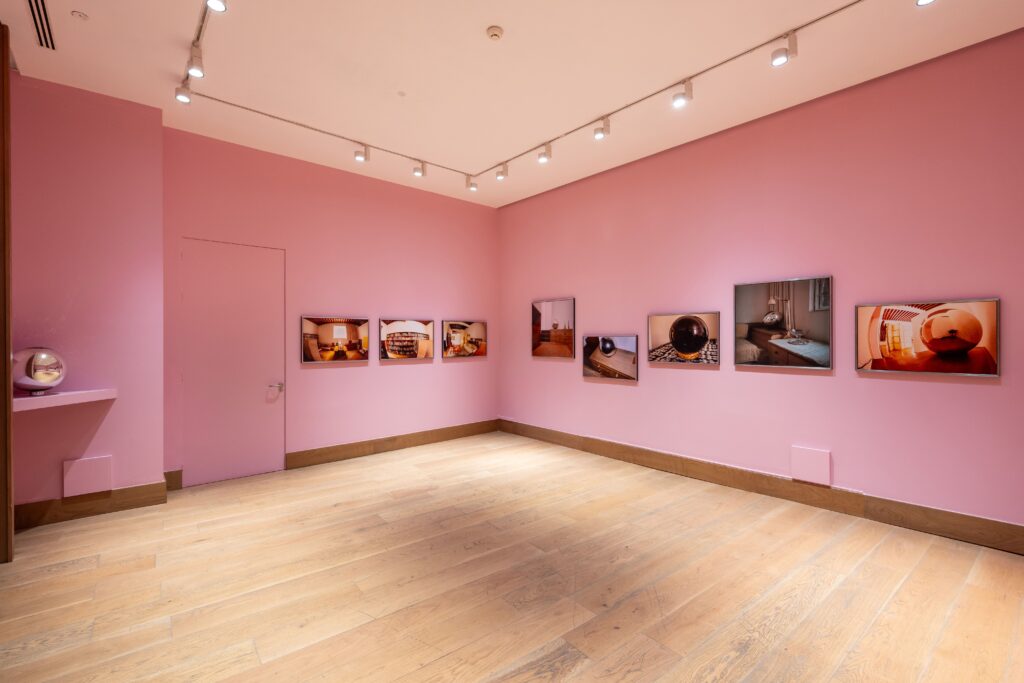
In what is their first institutional exhibition in Spain, curated by Elena Navarro, we will see a selection of those images in which the Lake Varea sought to look at this place, well known by Mexicans and today widely visited by tourists, as it had not done until then: giving primacy to the experience over mere contemplation and also paying tribute to Chucho Reyes. This painter and antique dealer, who introduced icons and common materials from Mexican popular culture into his work, invited Barragán to introduce spheres into his home that multiplied the possibilities of the gaze: round mirrors, reflective objects that are very popular in the homes of that country, expand our perception of space and have also been introduced in the duo’s photographs.
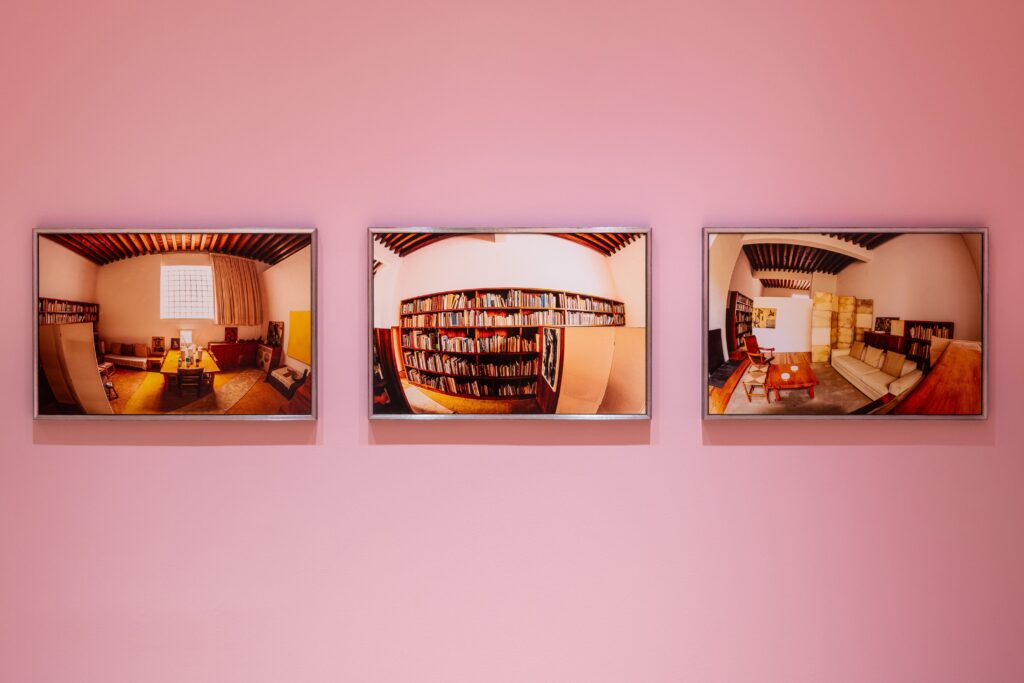
The Lake Varea have resorted, in the works that we can see in Casa de México, to the fish-eye technique, the wide angle; Thus, these images introduce us to places that would be very loved by Barragán – from an approach, his own, that tells us about his coexistence with what remains of him where he lived, thanks in part to the testimonies of his wife, Ana María, and those close to him – but they also have a lot of poetic entertainment.
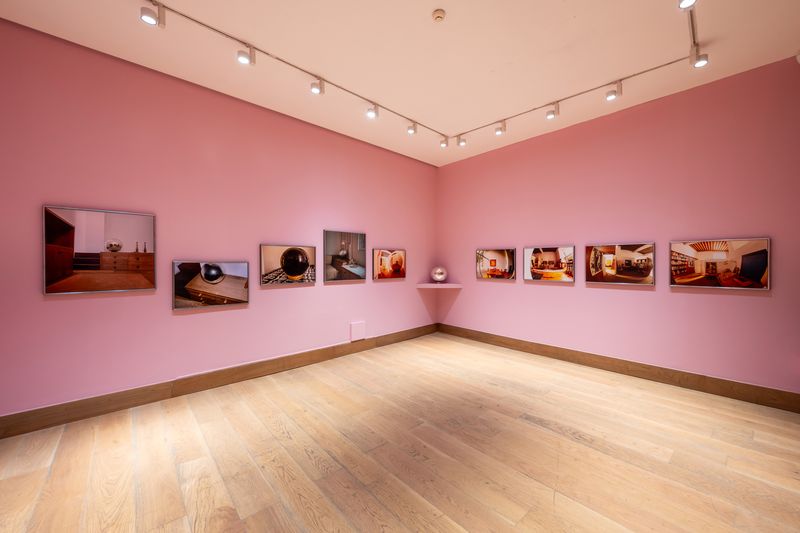
Conceived as an immersive photographic installation – in which the walls have adopted the warm pink tone that many think of when remembering Barragán’s house, and some mirror spheres take us back to it – this exhibition invites the viewer to enter, as they did, into the refined walls and the play of textures typical of the interiors of this construction; in the objects that accompanied the architect’s daily life (his books; his posters, never original, of Picasso, Albers or Leonor Fini; his Pritzker prize, the second awarded, a little-known sculpture by Henry Moore; and also the living lights that pass through the windows, in some cases these authors even used that of the moon).
For this project, for which a book has recently been published, they used up to fifteen cameras, analog and digital, and of course the possibilities of these recurring spheres (obsidian, glass…, always made by hand and, therefore, irregular) to show us each room beyond where the eye can see.
In this house that was his refuge, and in which he perfected that particular style that merged characteristics of haciendas and monasteries, all the furniture was made or bought by him, so it is not difficult to approach the place as a living entity, even changing for each visitor and at each moment; In short, as an architecture with which to establish a certain emotional relationship and in which to have fun, just as the Lake Varea did.
Architecture is a fundamental thematic axis in the production of this duo, which until last January participated, at the MoMA in New York, in the collective “New Photography 2025”, and at Yale University or the Vitra Design Museum they already exhibited their series Paparazza Moderna, a set of poetic portraits – spontaneous and exterior – of individual houses designed in the United States by prestigious modern architects, such as Walter Gropius, Marcel Breuer, Richard Neutra, Rudolph M. Schindler, Ludwig Mies van der Rohe and Philip Johnson. Also then they treated each one of them as a living character, but no longer seen from the closeness, but from the voyeurismunannounced.
Lake Varea. “Adored Barragán”
CASA DE MÉXICO FOUNDATION IN SPAIN
C/ Alberto Aguilera, 20
Madrid
From February 26 to May 10, 2026