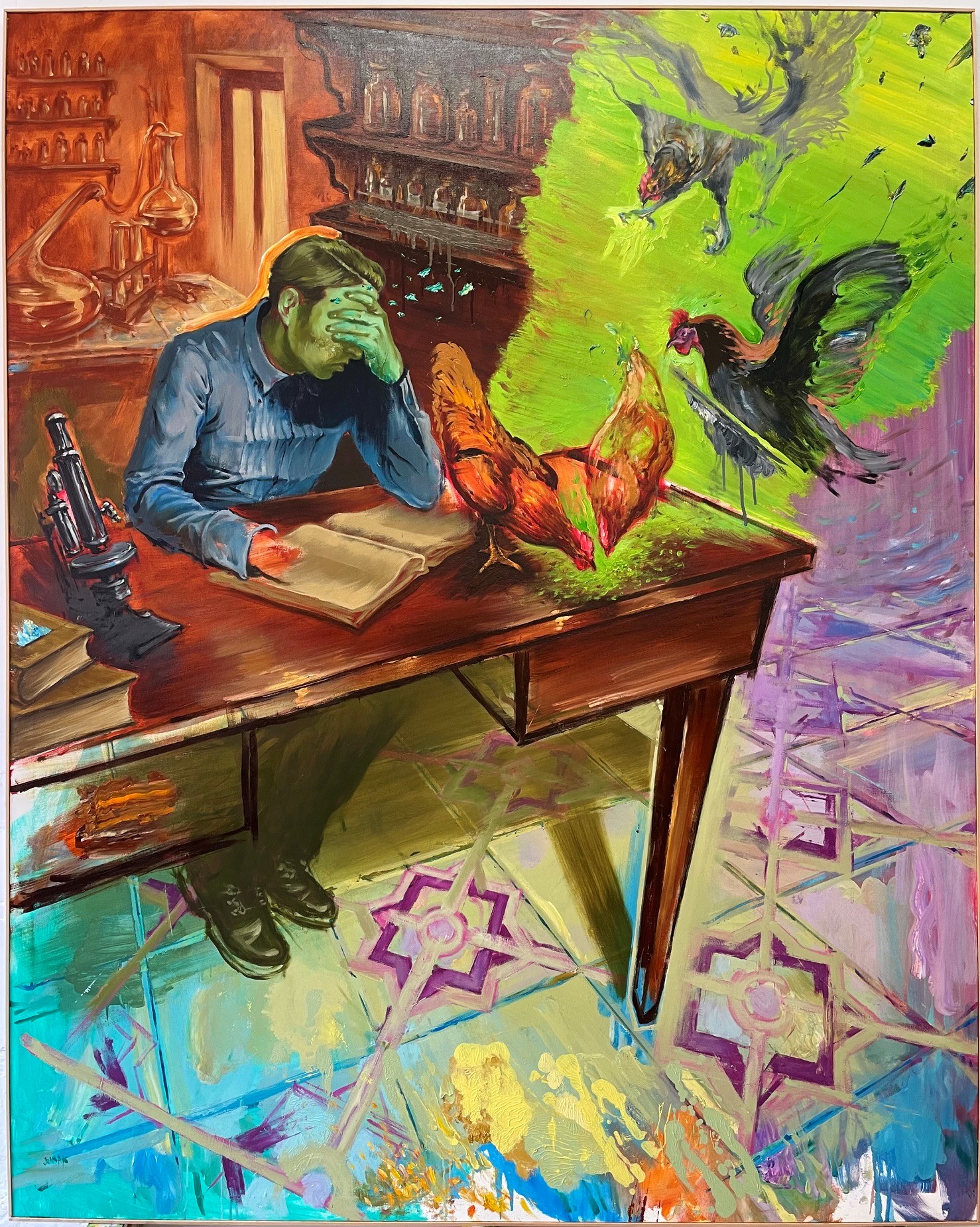
Juana González states that, when it comes to working, not only does she not care about discomfort or discomfort, but she likes it. And it is true that, in front of all or almost all of the pieces, we can position ourselves as in front of battles: his painting is figurative, but never mimetic, and in it the use of color, impasto and even large formats comes to speak to us of multiple strangenesses in everyday life, of dreams of reason that have offered new monsters and of sensations of frustration that can remain close. Hands and feet sometimes detach themselves from the rest of the body as if they were moving ahead of it, wanting to reach further; Other limbs, like those of one of the members of her dance partner, however, remain anchored to the ground, further back than her gaze reaches.
The first major institutional exhibition of this artist from Puertollano, late if we take into account her two decades of solid work, can already be seen on the third floor of CentroCentro, partially coinciding in time with another individual exhibition dedicated to her by her gallery in Madrid, Arma Gallery. It has been curated by Fernando Castro Flórez and brings together pieces made in the last decade, in a montage that relates one to another without paying attention to chronologies: the public will thus be able to verify that, if his views and his ways of doing have changed or evolved, González maintains a very similar energy when creating and his themes and forms continue to beat. As the commissioner stressed, it was a matter of presenting a retrospective and not a necrospectiveand this review also allows us to delve into the current directions of painting that does not delve into abstraction, but does not pursue faithful representation either, and that through the palette and dreaming introduces third ways.
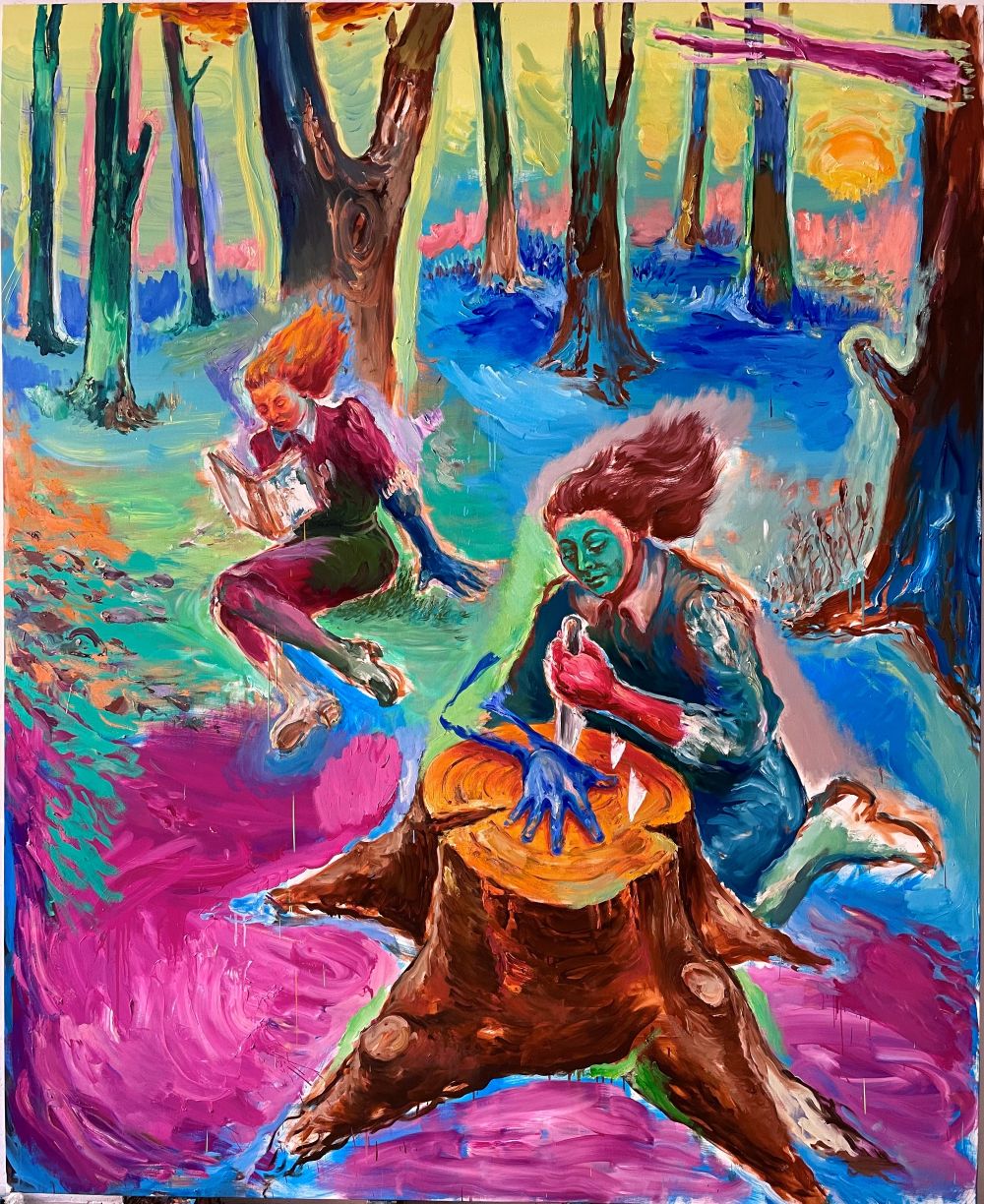
Juana González. Trees, reading and games2025
Juana González. Failure2017
There are just over thirty pieces collected, some representative of his career and others unpublished, and all of them have in common their narrative and formal power, with an always present human figure and also an evident female protagonism. As a novelty, some of them are integrated or linked with sculptural or installation compositions that never overshadow them, but do complete them, and which in turn delve into the theatrical dimension of their canvases. The references of these are diverse – from the Velazquez baroque to the neo-expressionism of Neo Rauch, passing through the most expressive works of Goya or the inclination towards the sinister in the cinema of Buñuel and Lynch -, but it is evident that how much this author’s production is impressive, also on paper, is very individual and has to do with the capture of worlds that revolve around mysteries and traumas only mentioned here, open to the reading of the spectators.
Juana’s painting is untamed, as the title of this exhibition says, because it refuses to fit into labels and short analyzes and, better yet, displays all its possibilities to those who approach it from intuition and establishes relationships that are more emotional than conscious with each work: individuals await us in communion or almost in struggle with nature, in an attitude of play or defiance, bowed down by their baggage or enduring it, immersed in exercises of mystery, demonstrating power or loneliness and, sometimes, approaching witchcraft.
Complex and agitated, these representations seem to drink above all from the unconscious, because no other source communicates with that force with uncertainty. Hands (even feet) express much more than faces.
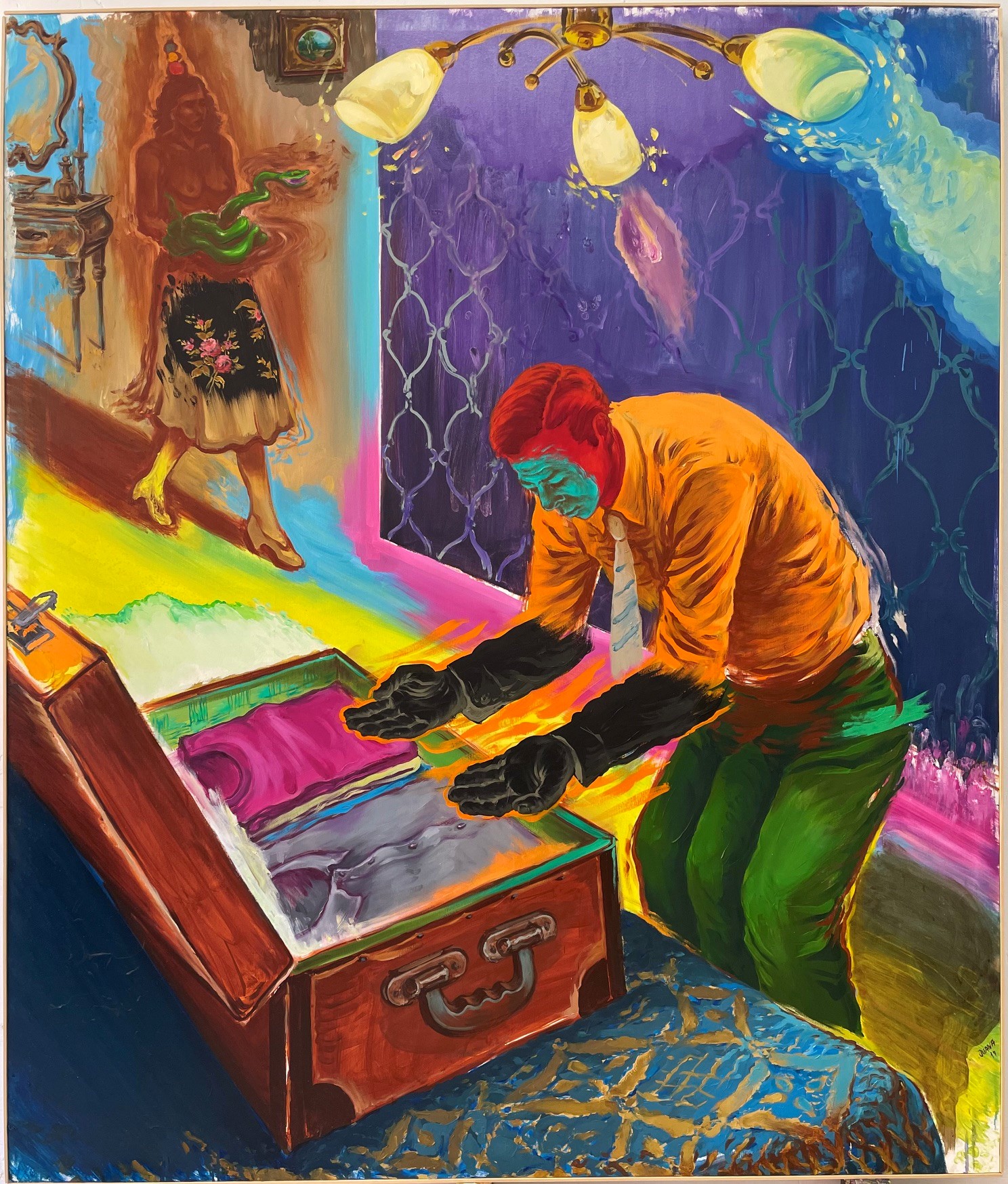
Juana González. Suitcase2018
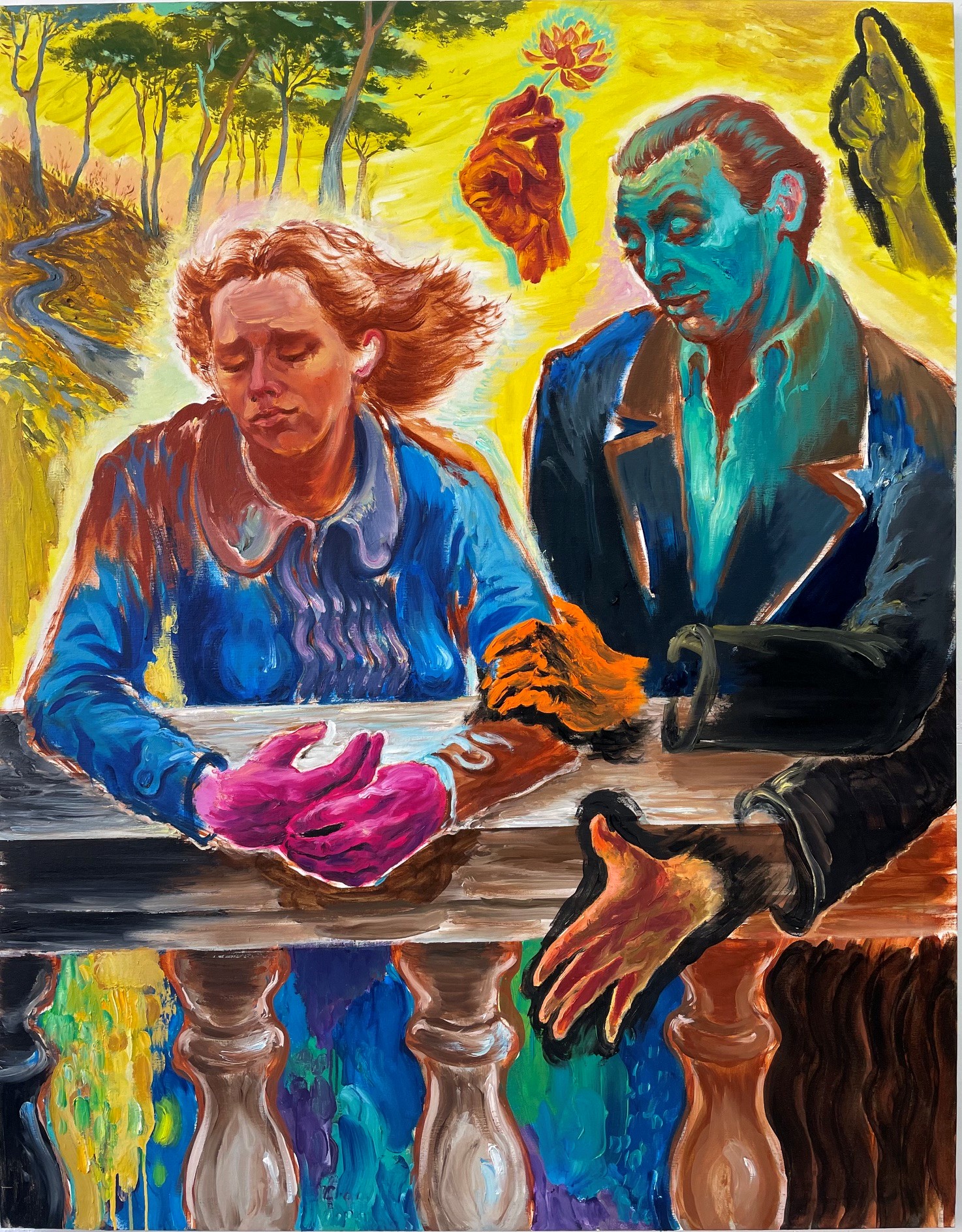
Juana González. Monologue2023
Two floors below, in the same Antonio Palacios building, another anthology pays tribute to the hands that, beyond designing many of the most widespread Spanish logos, investigated the possibilities of color as a great organizer of spaces and our very perception: those of Cruz Novillo. An exhibition, curated by Pepe Cruz-Novillo Jr. and Elena Fernández Manrique – he himself also collaborated in the preparation until his death – reviews his half-century of career through paintings, sculptures, audiovisuals, models and preparatory drawings, along with documentation and archival material.
This proposal highlights, therefore, that Cruz Novillo’s work far transcended that of design: it encompassed multiple formats and scales, reached arithmetic and sound, and was organized in lines or cycles that encompassed very different drifts. If, in the sixties, this author from Cuenca analyzed the combinatorics of shapes and color, in his first individual exhibition, in 1972 and in the Skira room, he demonstrated that the processes were the bases of his practice, and the results were a less essential fruit.
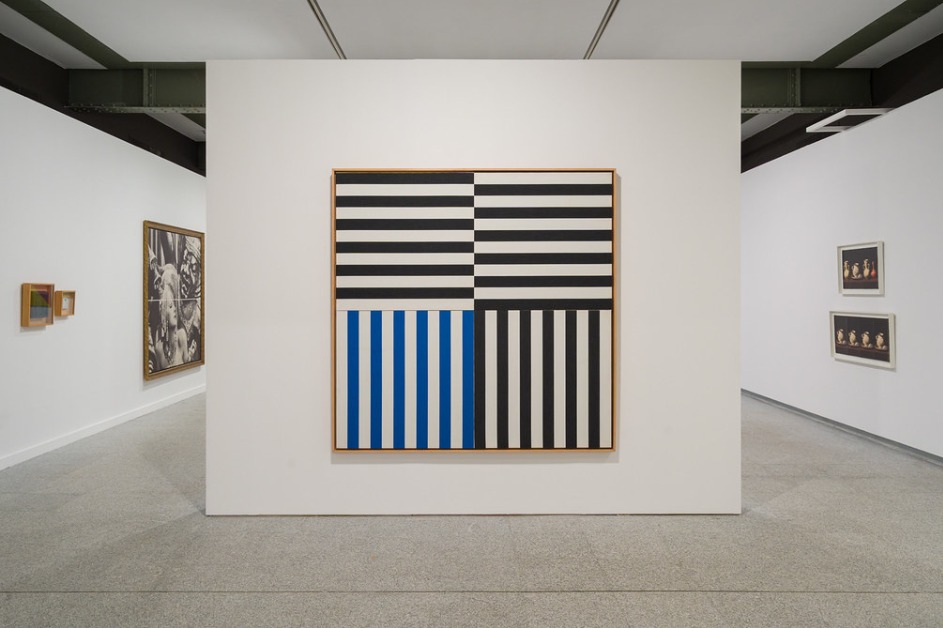
Cruz Novillo. CenterCenter, 2026
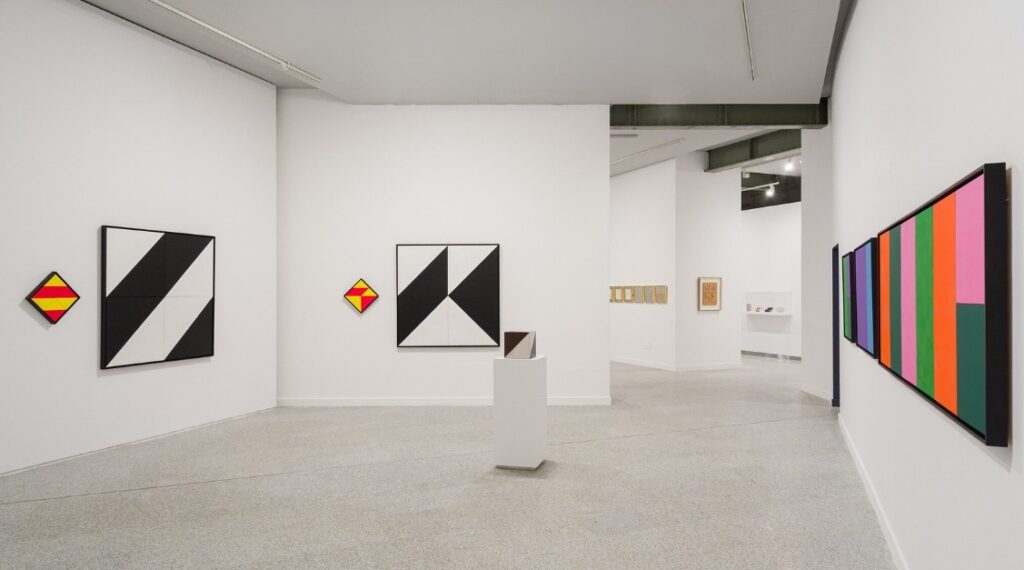
Cruz Novillo. CenterCenter, 2026
After that exhibition, important in his career, he undertook different investigations, these focused on the perception, consumption and manipulation of images, prior to their appropriation, since those he used came from cinema, the media and art history. He applied his combinatorial system to frames (Mata-Hari1995), press snapshots (Diaphragm Three 3214 Budapest1997) and paintings by Velázquez or Cézanne, the latter in his series tribute (Descent from the cross1999; Still life for Cézanne2002), with the purpose of dissecting, more than the themes and subjects represented, the visual (and consumer) market of which they had been part.
It would already be in the mid-nineties when Cruz Novillo added time and sound to his production, articulating the concept of diaphragm and associating notes with tonalities. In this way, it intended to generate new ties between music – and, therefore, its inseparable time – and color, a work that had as its first manifestation the Opus 14 twelve-tone diaphragma piece that he structured using a digital algorithm in 2010 so that it could be developed over almost 34,000 centuries, a number that is not casual, but linked to a combinatorial scale of, indeed, cosmic proportions.
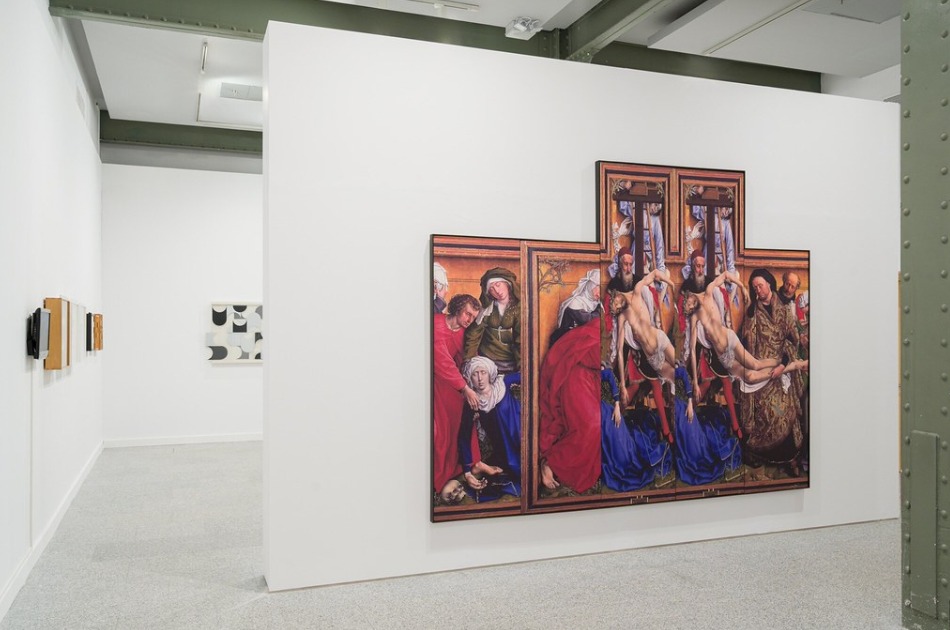
Cruz Novillo. CenterCenter, 2026
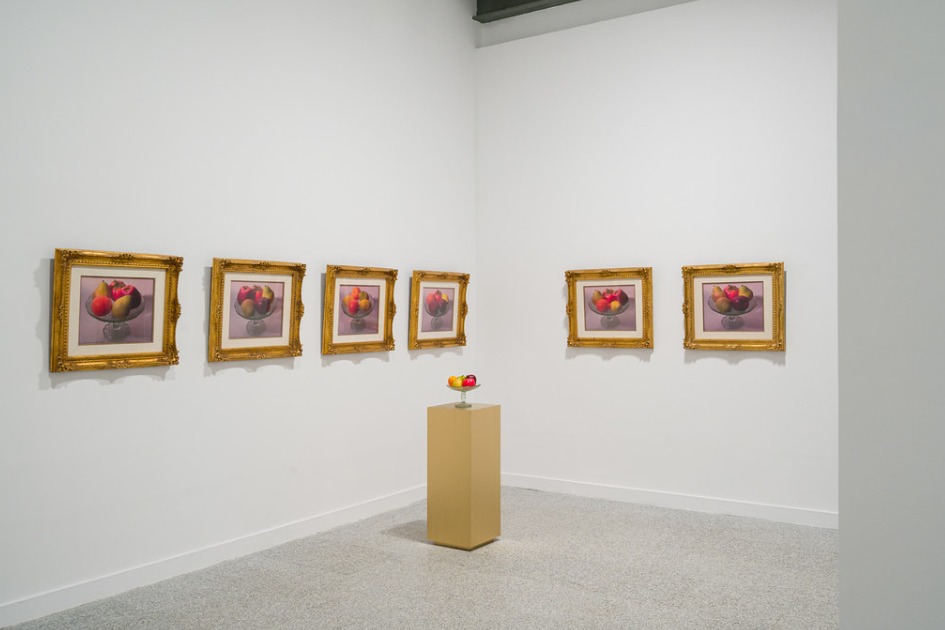
Cruz Novillo. CenterCenter, 2026
«Juana González. Untamed painting
From October 28, 2026 to April 18, 2027
Cruz Novillo
From October 8, 2026 to January 24, 2027
CENTERCENTER
Plaza de Cibeles, 1
Madrid