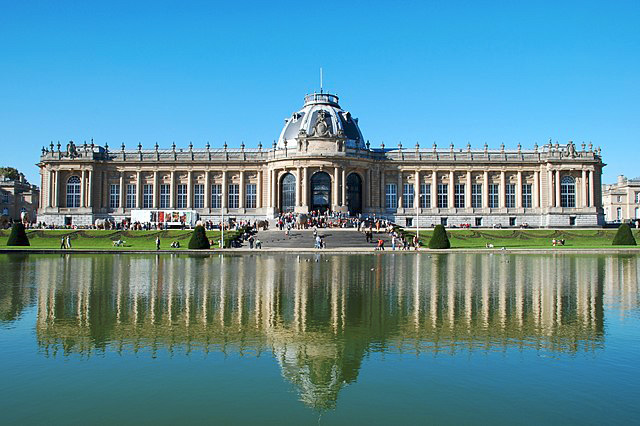
Tervuren, near Brussels. The AfricaMuseum in Tervuren finds itself at the center of a dispute combining colonial memory, national sovereignty and strategic issues linked to critical metals. Revealed by the British daily Financial Timesthe case concerns several million documents relating to the geological history of the Democratic Republic of Congo (DRC), coveted by the American company KoBold Metals as part of an agreement concluded with Kinshasa.
These documents, inherited from the colonial period, include approximately 500 linear meters of geological records mainly concerning the DRC, but also Rwanda and Burundi. They constitute a gigantic amount of information on a subsoil that is among the richest in the world in copper, cobalt and lithium. The DRC is among the world’s leading producers of copper and holds at least half of the known reserves of cobalt, essential for the manufacture of batteries and mobile phones. Western powers are seeking to secure their supplies in order to reduce their dependence on China.
Federal archives
Founded in 2018 and supported notably by Bill Gates and Jeff Bezos, KoBold Metals develops artificial intelligence tools capable of analyzing immense volumes of geoscientific data in order to identify new deposits. In July 2025, the company signed an agreement with the Congolese government providing for the digitization of geological archives kept in Tervuren, in exchange for a commitment to make this data accessible to the public.
But Belgium refuses to grant exclusive access to a foreign private company. The Belgian authorities point out that these archives are in the federal public domain and that no contractual relationship binds KoBold to the Belgian State. The AfricaMuseum also claims to have already initiated a digitization program financed by the European Union, with progressive transmission of copies to the Congolese authorities.
Beyond the legal dispute, the affair rekindles tensions linked to Belgium’s colonial past. The “Congo Museum” was designed at the end of the 19th century as a showcase for the colonial enterprise of Leopold II, who administered the Congo as a personal possession from 1885. The first exhibitions glorified the “civilizing mission” and showcased the natural wealth of the territory, at the cost of brutal exploitation of the Congolese population.
Since its renovation in 2013 then its reopening in 2018, the institution has carried out critical work on this heritage. Today, it says it wants to guarantee open and supervised access to the archives, within a scientific and institutional framework, rather than entrusting the entire corpus to an industrial player. The Congolese Ministry of Mines says that discussions with Brussels are continuing, with the aim of speeding up the process.