Strasbourg (Bas-Rhin). The immersion is immediate. In the atrium, animal sounds resonate in the distance, while it is enough to look up to discover an impressive skeleton of hanging whales and a multitude of naturalized specimens. By decompartmentalizing this hall on three floors, the architectural agency Freaks, prime contractor of the site, immediately gives body to the new inflection of the zoological museum: a more airy place, modernized in its envelope as in its speech.
When the museum closes in 2019, it is to start large -scale work. Its neo-Renaissance style building requires being completely given to standards, and its visit to, which is redesigned. Two years later (a delay due to the COVID-19), the structural work begins once all the collections moved to the study and conservation pole of the city museums. Energy renovation, compliance of safety and accessibility conditions, consolidation of certain surfaces …
Above all, the distribution of the interior spaces is revised in depth: while preserving the historic parts of the building (facades, stairs, parquet floors, etc.), several partitions are deleted and certain elements are moved, which saves in the exposure surface. The visit route is almost doubled. Now, no less than 1,800 specimens are deployed over 2,000 square meters, some already known, others straight out of the reserves (which contain 1.2 million including 900,000 insects), all dusted and restored for the occasion.
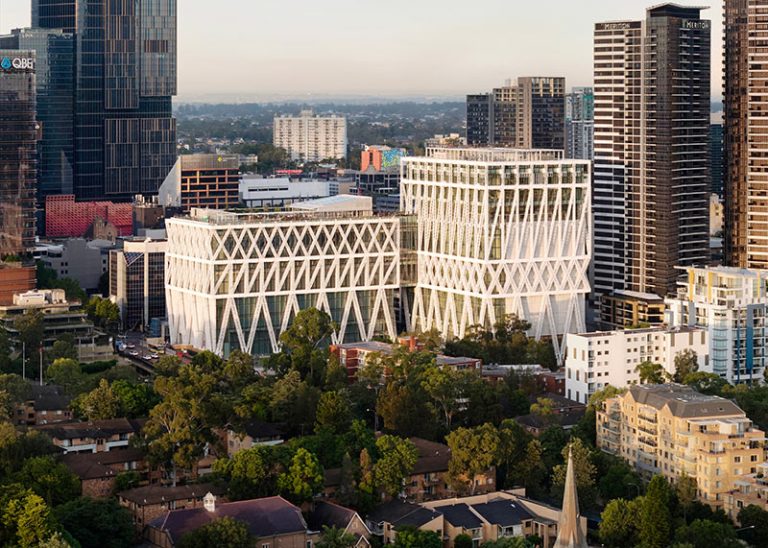
Facade of the Strasbourg Zoological Museum.
© M. Bertola / Strasbourg Museums
“Before, it was a XIX classification museume century. There were dioramas, more anthropological parts, spaces that were no longer open to the public … ”, details Samuel Cordier, the director of the museum. So make way for a “concept” museology which favors the narrative frame. The challenge then consists in providing the museum with a real journey while retaining the atmosphere of the place. An objective fulfilled from the first rooms, with a very successful evocation of the natural history cabinet of doctor Jean Hermann (1738-1800), core of the collections of the zoological museum. Naturalized animals, jar specimens, fossils, plants, minerals rub shoulders in a beautiful arrangement imagined by Ducks Sceno. Further on, the impressive gallery of birds brings together several hundred species, the starting point for a route on the classification of the living. Schemes, cards, explanatory videos and games for young audiences punctuate the visit. In the same educational concern, seven “totems” rooms focus on a flagship piece of collections, like a rare coelacanth specimen in its aquarium. Among the essentials, is also an incredible collection of blaschka, unique in France, consisting of fifty-eight wire glass models reproducing seaweed and invertebrates, here gathered for the first time.
A great novelty, the three large semi-permanent exhibition spaces (in addition to a temporary exhibition hall) fitted out the heart of the course and will be renewed in four to six years. Until then, one document the diversity of the Rhine ecosystem, another the biotope of the sagami bay in Japan, while a last information on the study of insects in the laboratory. “These spaces will allow the museum to evolve over time, to remain in connection with environmental and societal issues. It is essential to accompany the advances in research, to prevent the museum from being obsolete in twenty years ”, Pointe Sébastien Soubiran, Director of the Garden of Sciences at the University of Strasbourg. It is to this scientific end that the spaces devoted to workshops and meetings with researchers, who can also enjoy an osteothèque (which houses a collection of bones) and a room to consult the specimens, were also arranged.
The renovation of the museum itself is part of the “Operation Campus” project set up by the State and which aims to create a museum pole on the university campus. For the zoological museum, a total budget of 18.5 million euros was mobilized, half funded by the State and up to 20 % by the city. A new planetarium had already been delivered in 2023. The Mineralogy Museum, the Museum of Paleontology and the Sismology Museum are being renovated.