In 2026, seven sites, from Greece to Hungary via Romania, will be added to the list of European places threatened according to the Europa Nostra association. Founded in 1963, Europa Nostra asserts itself as the “voice of European civil society” dedicated to heritage, operating as a catalyst between citizen movements and decision-making bodies. The association is recognized and financed by European institutions.
Since 2002, Europa Nostra has also organized the European Heritage Prize / Europa Nostra Prize on behalf of the European Commission. It brings together more than 250 member organizations (NGOs, foundations) and 150 associated organizations (local authorities, public bodies), thus speaking on behalf of more than five million committed European citizens.
Launched in 2013, the “7 most threatened sites” program identifies monuments and sites in danger in Europe to mobilize public and private partners. Since its creation, 77 sites from 35 countries have been selected. Threats range from structural deterioration to planned destruction. The actors involved (States, local administrations, heritage NGOs, private owners, local communities) exercise responsibilities that are sometimes conflicting. Efforts exist (feasibility studies, one-off projects, civic events, transfer of property to public institutions), but most proposals lack funding or a clear timetable.
Katapola and ancient Minoa (Greece): the port against archeology
Katapola, on the island of Amorgos, is threatened by a port project. This area (partial Natura 2000 protection) is a continuity of human occupation dating back thousands of years. The marina extension project (new docks for liners, embankments, roads crossing the site) risks irreversibly altering the remains and local life. The national authorities (Ministry of Culture, maritime development) are facing local mobilization and appeals to the Greek Council of State. In 2025, some permits were partially suspended.
Fábri, Feked (Hungary): from a network of 17,000 mills to 300 survivors
Built in 1788, the Fábri water mill is one of around 300 mills remaining in Hungary, vestiges of a network which numbered around 17,000. The building, (operation was stopped in 1951), is today threatened with partial or total collapse. Seasonal flooding, corrosion of mechanisms, collapsed roofs and cracks weaken the structure. A technical diagnosis was carried out in 2025, followed by emergency stabilization. No public funding has yet been released. In addition, the lack of engineers in traditional milling compromises the project.
Blower Hall, Esch-sur-Alzette (Luxembourg): an industrial giant at a standstill
In Esch-sur-Alzette, the Blower Hall (Hall des Soufflantes), built in 1910, stands out for its dimensions: 160 meters long and 28 meters high. Classified since 2000, it is part of the Unesco Biosphere “Minett” site. Closed in 2019 for safety reasons (pollution and instability of structures), the building suffers from several years of neglect (water infiltration, rust, facade degradation). A feasibility study was carried out in 2022 by the University of Luxembourg. At the end of 2025, a parliamentary promise announced the launch of the first works. At this stage, no major work has started although the emergency is classified as high.
Fort Chambray, Gozo (Malta): 85% demolition authorized
In Gozo, the British barracks at Fort Chambray, built in the early 19th century, are the first Maltese example of quarters for soldiers’ families. In December 2024, the Planning Authority issued a permit allowing the demolition of up to 85% of the development to create a five-star hotel complex and 105 apartments. The project plans to move the historic facade backwards to provide a view of the sea. This forceful move by private developers has triggered a strong reaction from civil society. A legal appeal is underway to cancel the permit; work is suspended pending the decision.
Fort Chambray in Malta.
Gunpowder factory, Vale de Milhaços, Seixal (Portugal): a recognized heritage without a consolidated budget
In Vale de Milhaços, near Seixal, a 13.4 hectare complex, active until 2002, retains its buildings, its steam engines dated from 1900 to 1911 and its aerial teleporters connecting the twelve production workshops. Protected as a “Monument of Public Interest” since 2012, the site has also revealed an ecological dimension, with 682 species recorded since 2020. However, the lack of regular maintenance combined with past incidents weaken structures and machines. Vandalism, fires and invasive vegetation accelerate degradation. Historical research and a rehabilitation project were carried out in early 2026, providing for peripheral drainage, restoration of the framework and conservation of the steam engines.
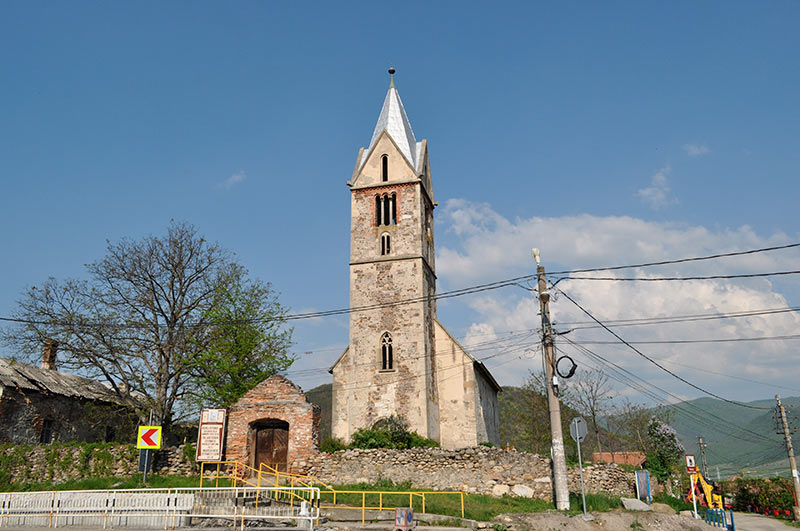
Reformed church of Sântămăria Orlea (Romania): medieval frescoes in danger
An uninterrupted place of worship for more than 700 years, it preserves frescoes dated 1311, 1400 and 1450, rare in Central Europe. Classified as a “historical monument”, it is located within the UNESCO Global Geopark of the Hațeg region. The building shows serious signs of structural disrepair. Small local repairs (renovation of the roof by the State in 2023) and a technical study (2025) were carried out. A master plan proposes a program of urgent works. At the same time, citizen fundraising seeks to cover part of the budget.
Weifert’s Brewery, Pančevo (Serbia): three centuries of abandoned industrial history
In Pančevo, the Weifert’s brewery, the oldest in the Balkans and a landmark of the industrialization of Banat, is protected by Serbian law. Abandoned since 2008, the whole thing is devastated and collapsing. The Serbian Institute for Heritage Protection (Pančevo) is legally responsible for conservation, but requires public support, which is currently insufficient. Plans for reconversion into a cultural park have been suggested (2021), but the lack of a clear political vision is blocking action. The inclusion of this site on the Europa Nostra 2026 list should help to mobilize funding.