Twenty years after receiving the Gure Artea Award, the most important in the Basque Country among those dedicated to the promotion of the plastic arts, Abigail Lazkoz arrives at Azkuna Zentroa with a proposal halfway between an anthology and the unveiling of the unpublished. It is called “Lamb, half a cat, almost a dog”, it was curated by Yara Sonseca and co-produced with the Domus Artium center in Salamanca, and it will expand precisely a project that this author already deployed there last year and which was titled “I have a singular animal.”
If, then, Lazkoz started from a story -literally Kafkaesque-, crosses itstarring a creature halfway between lamb and cat, to explore the aesthetic possibilities of hybridization as a method, has now decided to advance on that path, narrative and visual, reflecting on the notion of otherness, not so much wanting to exalt the fluid combination of features, but rather the acceptance of the complex nature of all beings and the surprise that it can cause. This is still a variant of the constant concerns of this artist from Bilbao for the friction and tensions between the individual and the collective, for the traces of the past, of power in everyday life and for what makes up our identity.
Throughout his career, and also here, Lazkoz operates from opposite or ambivalent concepts, not only in terms of content, but also in terms of form: he deals with the small and the large, the two and the three dimensions, the full and the empty, and in the presentation of his creations he avoids statism to favor expansion and dynamism; These exhibition mechanisms, and not only the multiform pieces, arouse in the viewer an estrangement from everyday life that she wishes to apply, equally, to practices and processes. It works anchored to its context, but open to reconfiguration.
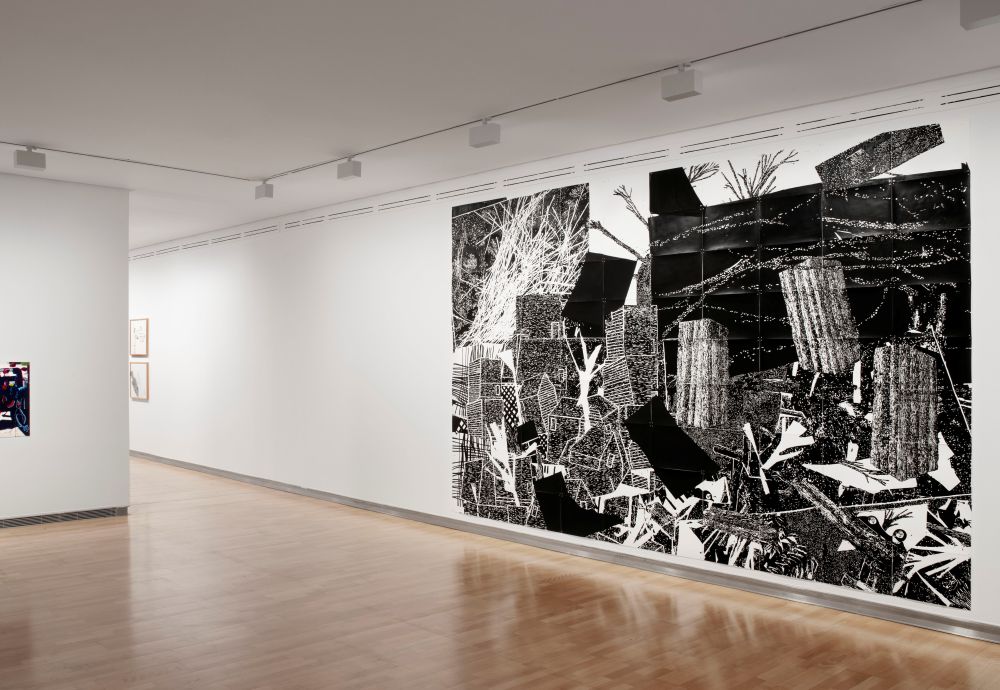
Abigail Lazkoz. I have a unique animal. Domus Artium, Salamanca
The final drifts of this Basque creator around that Kafka story transcend the binary nature of that being between lamb and cat, following in the footsteps of the Czech writer himself: at the moment in which the reader adjusts to the strangeness of the union between two such different animals, that duality explodes when we are made participants, without overloading the ink, that this hybrid entity also wants to be a dog. Ahead of Adorno, although after Hegel, the author of The Castle It closed the possibility of a fusion of what was divided to raise the option that non-unitary identities were vocation and not just essence or destiny.
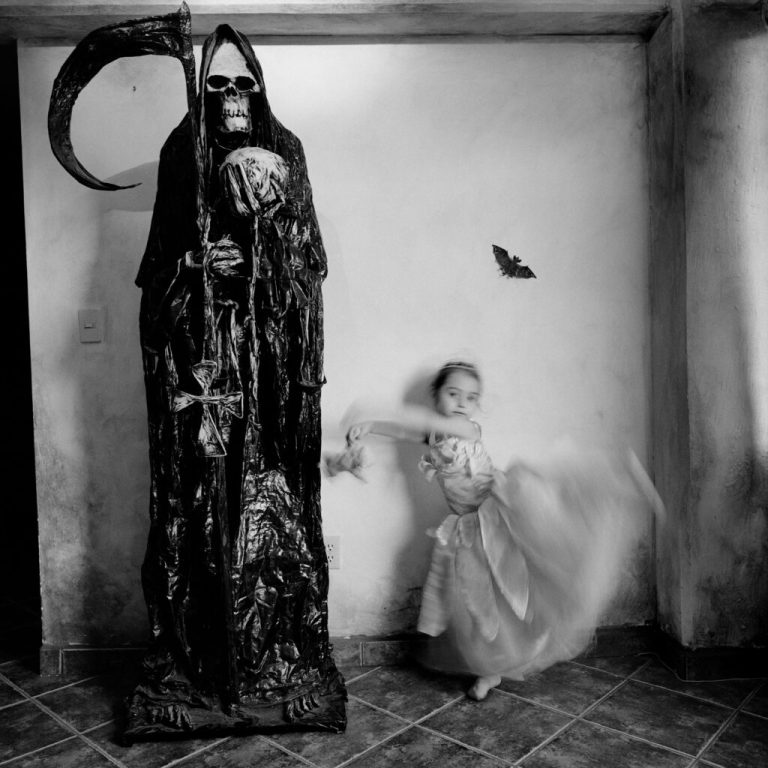
In Bilbao, his usual and extensive black and white mural installations await us, in which we will appreciate references to comics, popular culture and recent political history, but in any case, both two and three-dimensional works, together constitute a metaphor for his ways of creating: open to the new meanings, the transformations and the changes that time and the same work can generate. Also to all the potential paths that a story opens: The cross is a hybrid. Half sweet half fierce. It is a boundary transgressed, but it is domestic and familiar. It’s a monster. It is an inheritance from the father. After having inherited it it is transformed. It’s spectacular. The cross inspires literature, tenderness, surprise, but, at the same time, it embodies a strange, aberrant dimension of existence and, above all, it is a responsibility. The crossing is tragic.
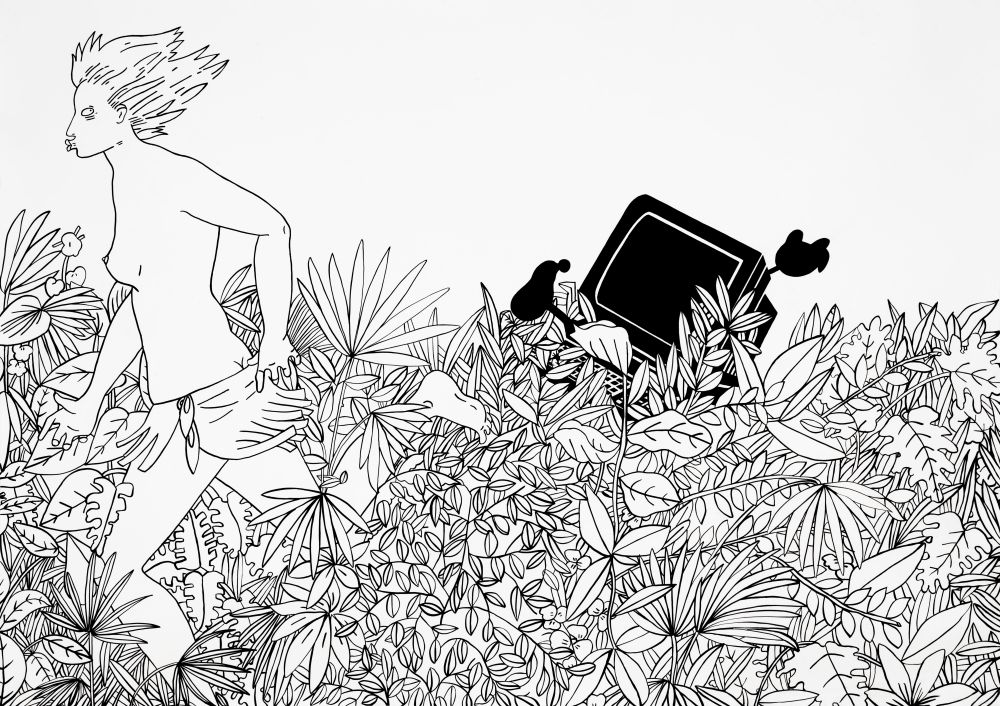
Abigail Lazcoz. Curfew2001
Another of its starting points is black and white, the primary opposition linked to signs and writing. They allude to voids and fullness, to day and night – that is, to the passage of time – and encourage dialogue between spot and line. Furthermore, the black on the white of the paper pieces detached from the wall, but leaning on it, articulates a non-obvious but pre-existing movement: the one that the artist prints on the work by removing it from its statism. And speaking of writing, we have to refer to plots: its black networks and white grids are recurring, sometimes with a constructive or demarcating meaning, just like the color yellow.
Among the new pieces by Lazkoz in Azkuna Zentroa we can mention the sculptures from the series Rokorekubiwhich compile references as diverse as the Persephones of Cyrene or the Japanese yokai, goddesses and ghosts who speak of death and life. They precede in the journey pieces from different stages of the artist linked to instincts, war and the animal understood as a human animal. The mural piece stands out Dresden (2009), composed of a hundred sheets that are tiles whose representations allude both to the bombing of that monumental city in World War II and to Vonnegut’s novel Slaughterhouse Five (1969); This American writer is one of his greatest influences, especially for his black humor.
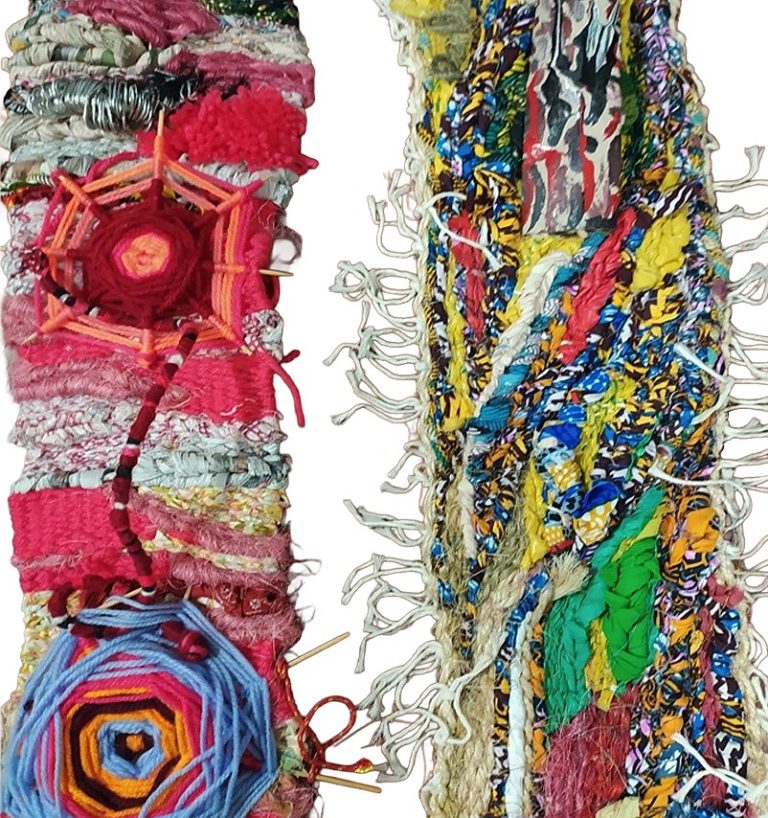
Halfway between sculpture and collage we can place a series of modules that embody the idea of crossesapparently neutral panels that hold objects, found or created, relevant to the artist that reflect her desire for situated creation, the plurality of her sources and the firm and diverse paths that have emerged from her beginnings. And, a quarter of a century after its first and only exhibition in BilbaoArte, we will see in this exhibition Curfew/Lumpa mural diptych that has been reformulated here as a specific creation.
Finally, we will contemplate a selection of works made in the last two years that reinvent his previous treatment of color and depth; These are images that we should not study as scenes, but as paradoxes on the surface in which the intrigue is carried out by an uninvited tick on a tablecloth-drawing, a support for rich potential chaos.
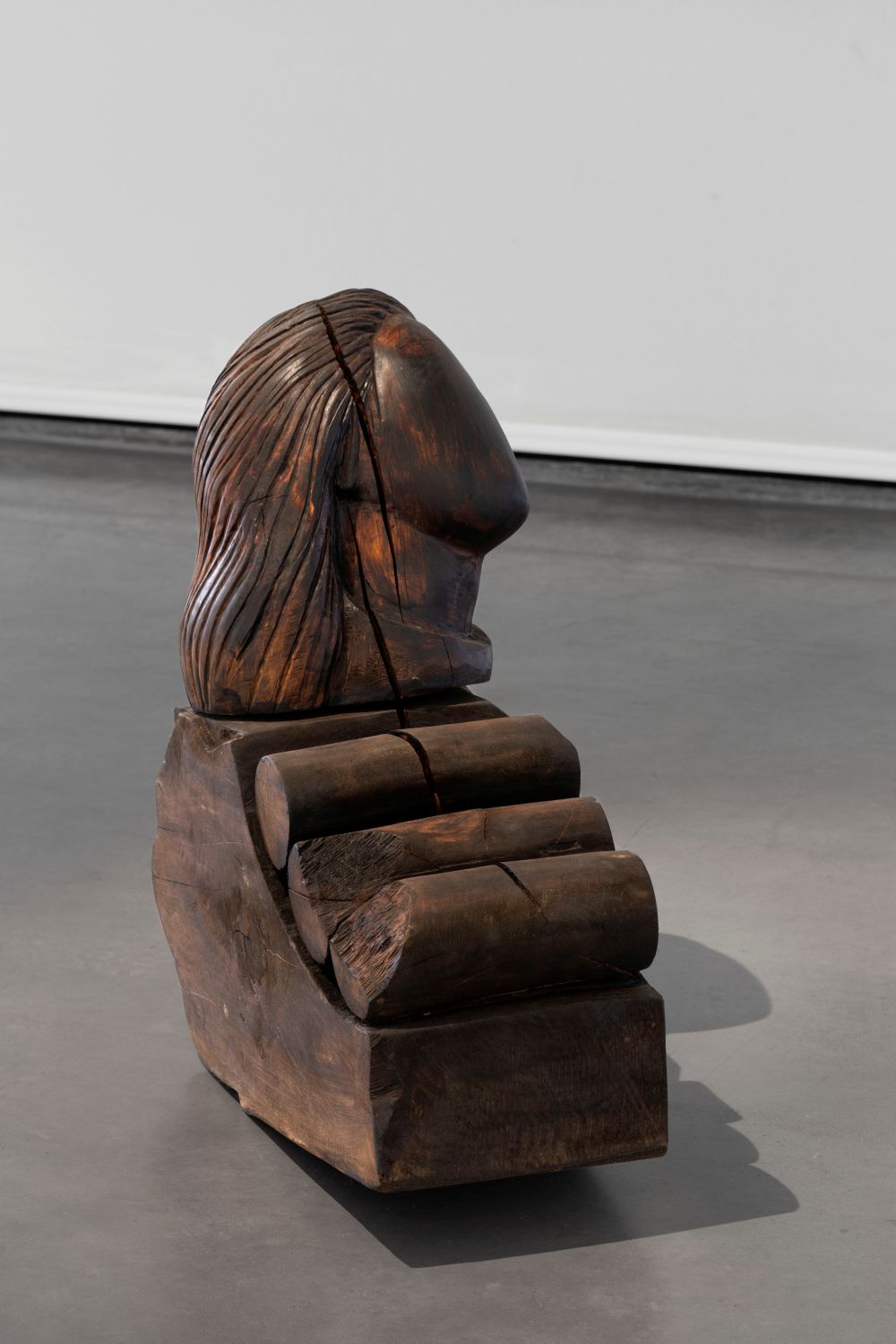
Abigail Lazkoz. Siren2021
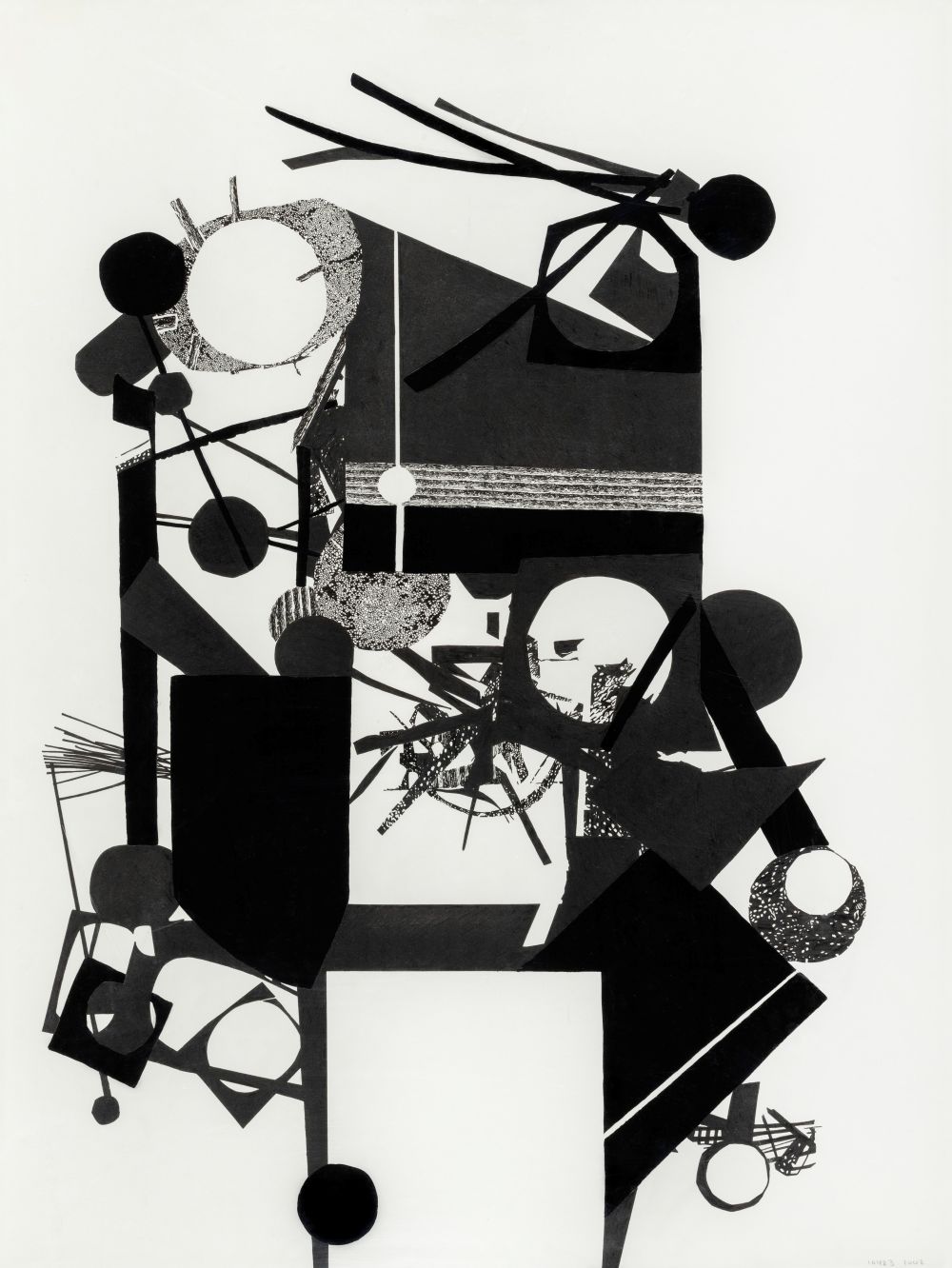
Abigail Lazkoz. Doraemon2011
Abigail Lazkoz. «Lamb, half cat, almost dog»
AZKUNA ZENTROA
Arriquíbar Plaza, 4
Bilbao
From October 21, 2026 to January 17, 2027