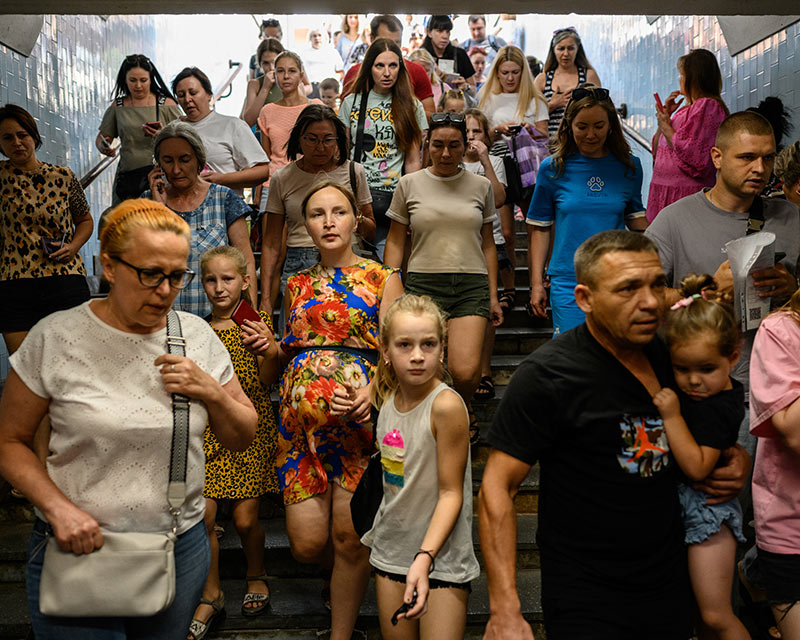
The photographer and journalist Guillaume Herbaut (born in 1970) has been going to Ukraine regularly since 2001. He saw the war coming and taking hold. Fruit of his project carried out as part of the Marc-Ladreit-de-Lacharrière Photography Prize – Academy of Fine Arts, awarded in 2024, the exhibition “Ukraine, the evil that remains”, at the Pavillon Comtesse de Caen in Paris, testifies to his reflections on his practice and his positioning today in the field of conflict.
What problems does the war in Ukraine pose today for the documentary photographer that you are?
There are several. How to first ensure that readers and the public are still concerned and affected by this war which has been going on for several years, when there are bombings every day and now it is background noise for people in France.
The second problem is to say that, as a photographer, we are now the second or third witness to the war since the first witnesses are the civilians and the victims, who, with the camera of their cell phone, photograph and film the bombings or the abuses. So we arrive later. How to tell it? Finally, the arrival of drones has made access to the front extremely complicated and dangerous. Hence my interest in the off-camera representation of war in order to tell the scars, the pain and the physical and psychological syndromes through the eyes of soldiers and traumatized, crippled civilians.
Lvic Oblast. Carpathian region, June 2025. A child bathes during the Gen camp colony which organizes therapeutic holidays for Ukrainian children traumatized by the war.
© Guillaume Herbaut
What does the presence, sometimes, alongside your images, of amateur videos related to what the people photographed have experienced and/or are experiencing?
In my photographs there is little distance and contextualization. I therefore wanted to return through these documents to the brutality of the war, but also to make these people present through their own images taken at a given moment, before I photographed them. We must always be wary of photography because it can freeze time, people in a given moment while we are evolving and we do not want to be frozen in the status of victim. Other videos show what Ukrainians can endure on a daily basis. Placed at the beginning of the exhibition, two screens, relating to the two applications that all Ukrainians or journalists use, allow me to bring the exhibition and its visitors back to present times. The first, Air Alarm, warns us with a siren of an air attack in real time in Ukraine, and the other of the evolution of the front line.
What is reportage photography to you?
It’s telling, bearing witness to the world, positioning oneself in relation to events, upheavals and developments in the world, it’s true writing. On the one hand we bring information, testimonies, we try to listen, and on the other we can slip in things of an intimate nature which tell something else. It is also a struggle, a fight in a world in turmoil, against disinformation and caricatured, reductive thoughts. It’s also a battle with yourself to wake up in the morning and go take photos.
What makes an image strong?
When I was a young photographer, the power of the image was the moment captured. Today I think that an image must infuse, get into people’s heads and gradually provoke something very personal. I often say that a good photo is a photo that will create silence because we are in a world of noise and chaos and we need silence to think. Photography should help you think.
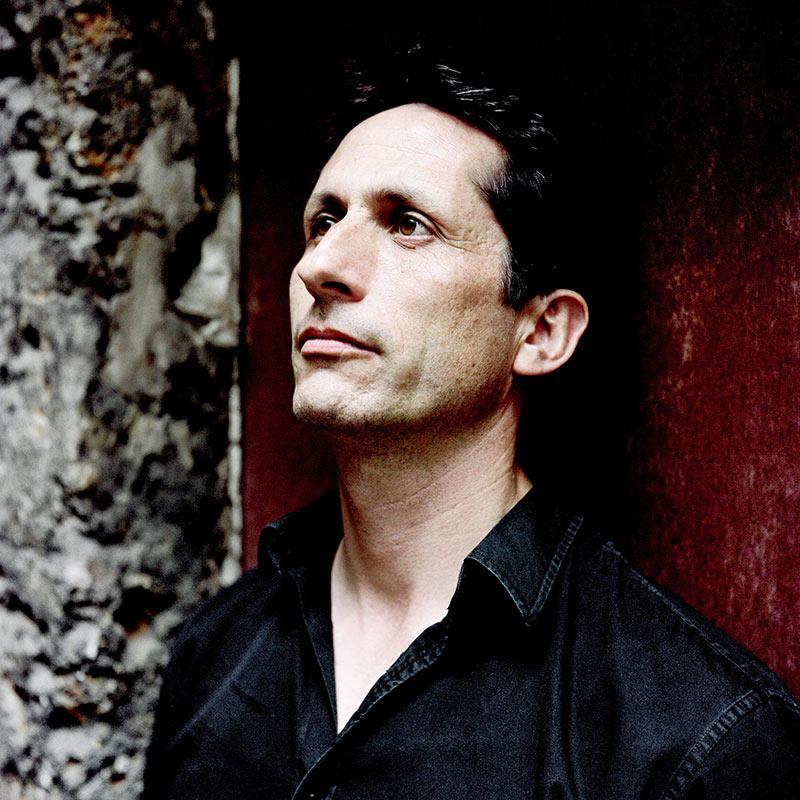
Guillaume Herbaut.
© Richard Dumas