Madrid,
She had quite important success in her life, also internationally – her work is part of the MoMA collections – and the Palacio de Cristal dedicated an exhibition to her in 1982, planned as a retrospective, well remembered, but in her last years and those after her death in 2011 Aurèlia Muñoz was partially relegated, especially for the new generations. In the dissemination of her production, the José de la Mano gallery has recently played a very relevant role, which, in the words of the artist’s daughter, Silvia Ventosa, has put it back on the map and has worked so that works from private collections could be exhibited to the public, also ensuring that some of them reached institutional funds.
The efforts have borne fruit: in 2024 the Grau-Garriga Center presented a selection of his works, proposing alternative readings of them in relation to the ecological crisis or the post-digital resurgence of crafts, and the Reina Sofía Museum now hosts, before its visit to the MACBA in Barcelona, the anthology “Entes”, curated by Manuel Cirauqui and Rosa Lleó, with the collaboration of Ventosa.
It coincides in date with the centenary of her birth and has involved several challenges: the artist understood that both her creative processes and the works themselves were ways to generate knowledge, and that they could also be constituted by her assemblies, which demand museographic solutions different from the pieces of the current genres. They imply a creative dimension and have made it possible to study their creations until the last moment.
Muñoz considered herself a sculptor, but in the light of this exhibition we can appreciate her as a total artist who did not establish boundaries or hierarchies between disciplines, although she studied all techniques with respect. His vocation for using known or ancestral materials and methods and creating contemporary art with them led to it being questioned at the time, as was his choral work with other artists and creatives. Also with collaborators, especially female collaborators, such as Josefina Salazar, regular and essential in the handling of their materials, which range between the lightest and the heaviest, the opaque and the transparent.
They are very disparate and rich, and are partly collected in the exhibition catalogue, the readings from which his work can be analyzed (technical, philosophical, engineering, environmental), but in any case the fundamental understanding of his three-dimensional creations as living pieces that transform when assembled and, in turn, modify the space around them, gains in power over all these approaches; in Ventosa’s expression, They come out of the box like a cod (flat) and you have to wake them up. Once resurrected, they become entities, characters, macrototems or kite-birds; Deep down, all of them are abstractions of the world.
The exhibition, whose articulation combines chronological order and the formal and aesthetic affinity between the pieces, begins with photographs that document his processes and his models -Muñoz collaborated with important photographers, including Català-Roca-, to immediately show his first embroidery and prints.
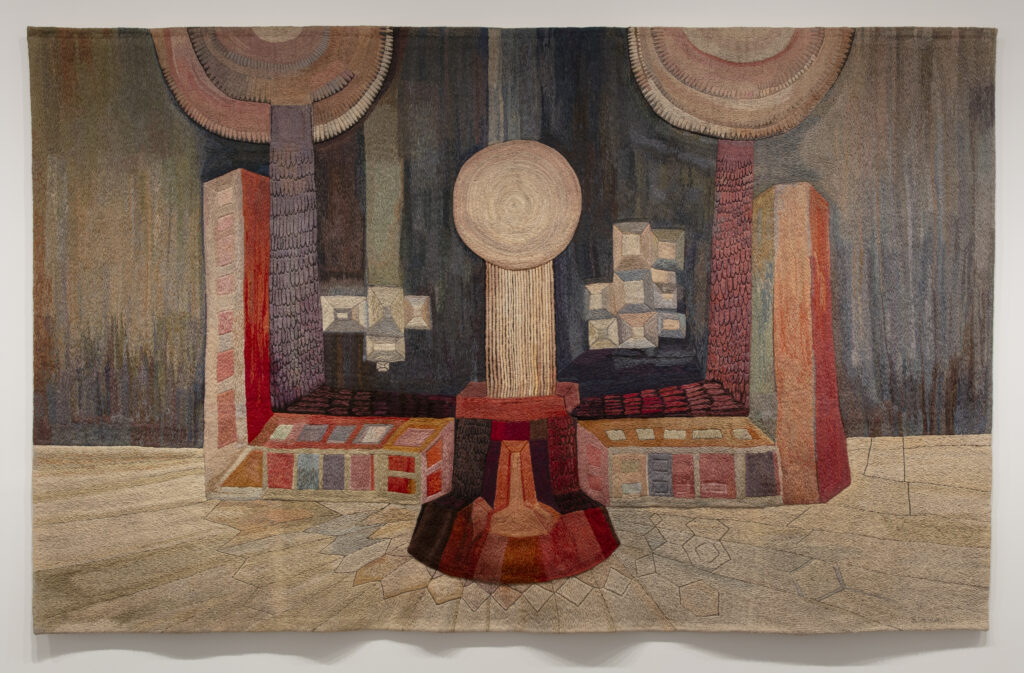
Initially self-taught, the woman from Barcelona decided to dedicate herself to art late, beyond her thirties, but she did so with all the consequences. He began studying embroidery, popular and historical, and the compositional articulation of pieces by Miró, Magritte or Klee, and brought these references together in drawings, collages, paintings, assemblages and powerful printed fabrics, especially in wall tapestries that, unlike traditional ones, have a sculptural dimension and are sometimes made with very different materials than wool: from linen to horsehair. His stitches are brushstrokes, but the beings that we appreciate in these works, like those that we will later see in his series of Entitieshave neither genus nor species defined: an obvious example is their homage to Hieronymus Bosch. Similar motifs appear in her drawings, a medium that she always cultivated and for which she knew she was very gifted.
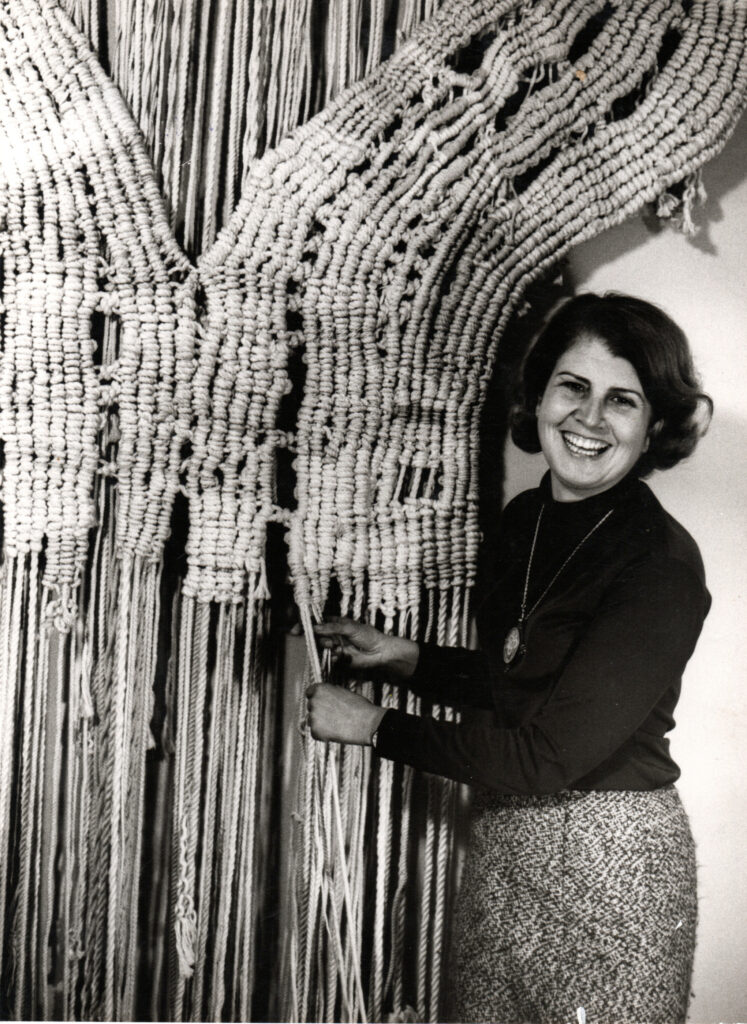
Macramé would arrive at the end of the sixties, and allowed him to explore volumes and modify environments through knots. With his knotted sculptures He abandoned the wall in favor of suspension, and he did so without leaving aside the monumentality, whether in sisal, jute or cotton. Among them are their Entitiesthose collective and ambiguous beings that give the exhibition its title – Muñoz valued the animate and inanimate worlds on an equal footing – or their Rippleswhich evoke the waves of the sea. The Reina Sofía gives us the opportunity to see how all these pieces are the result of meticulous preparation: drawings, patterns, models, sometimes designed together with architects or engineers.
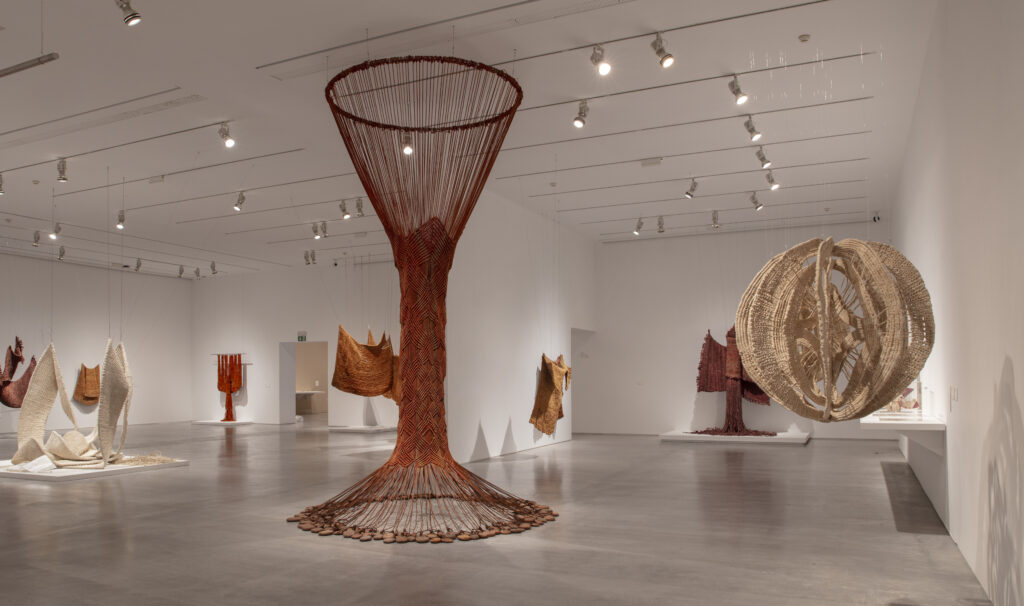
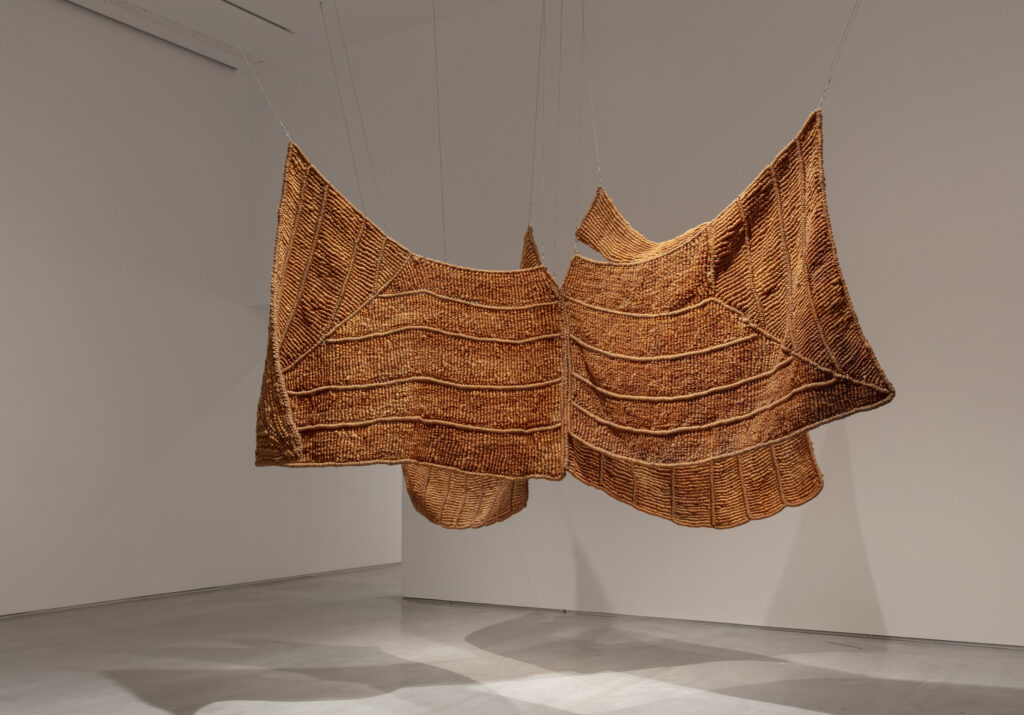
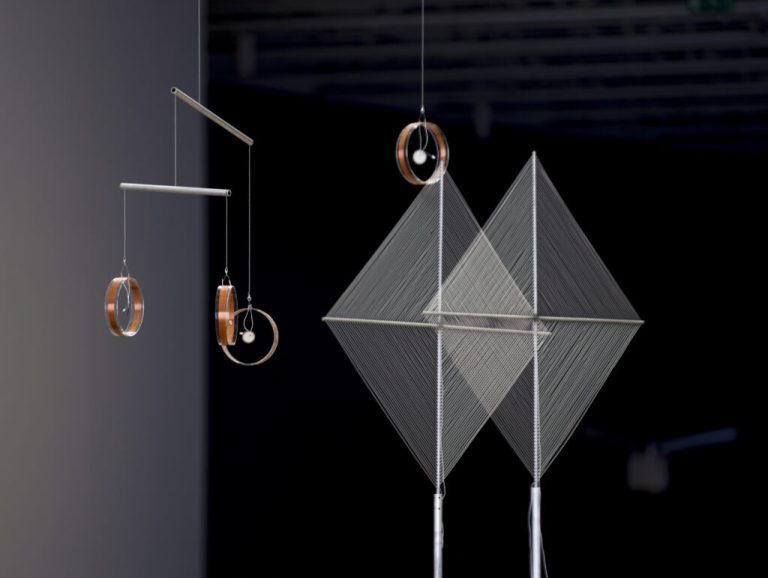
For the first time in an exhibition its extraordinary Palm and their archival materials will also be unpublished for the public, including the delicate models of the Kite-birdswhich have been reconstructed at MACBA after thorough research into original documentation. Muñoz attached great importance to the embodiment of his processes.
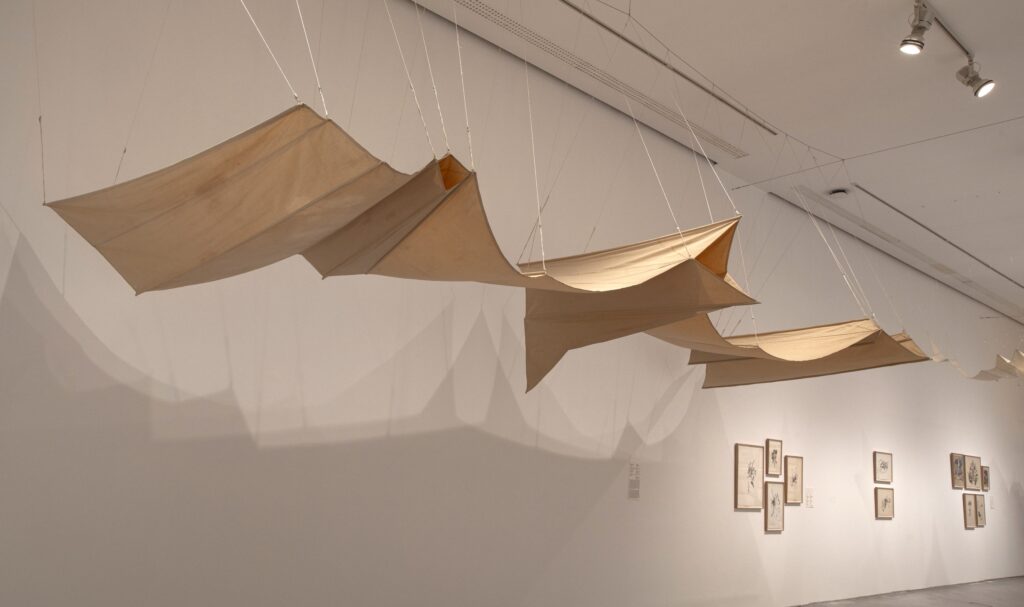
This series, displayed in a room in which they are protagonists, was conceived with canvas used in the manufacture of boats and for outdoor display, although today conservation reasons prevail for this not to be the case. In any case, replacing their materials would not mean transforming their ideas: these pieces can be replicated by adopting other veils and means of fastening: linen or silk threads, lead weights, aluminum whales. The Catalan tried her options of flexing space while evoking the common hobby of making bow ties in childhood or the experiments of Da Vinci, whom she pays homage to in a drawing.
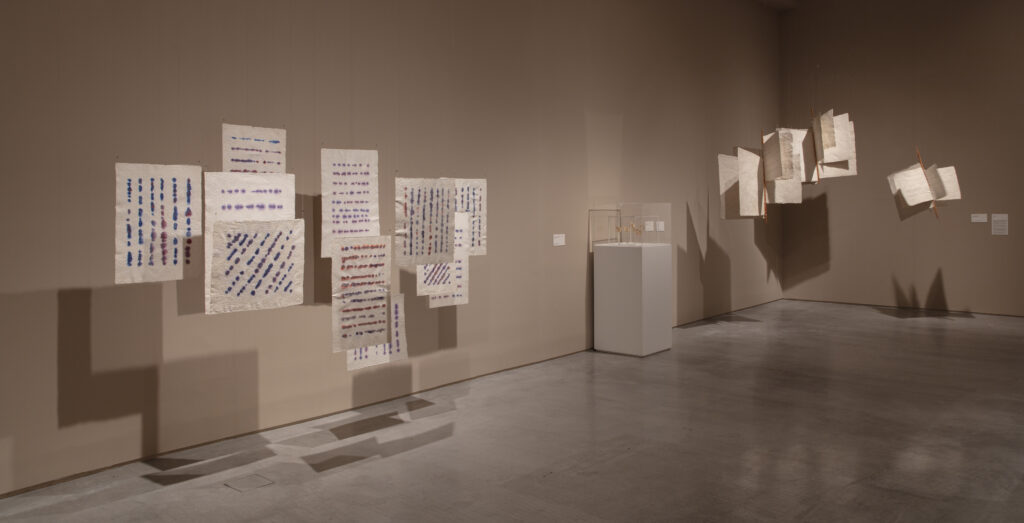
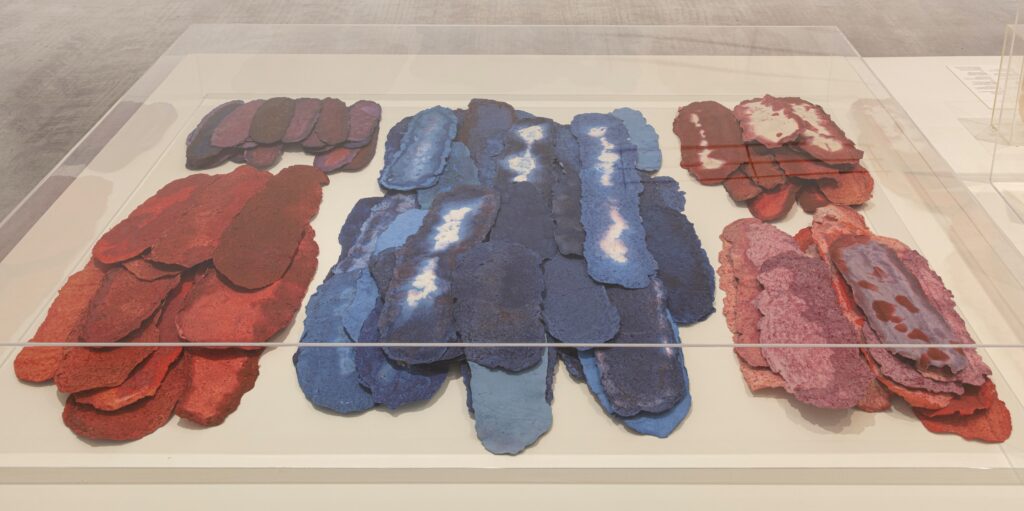
On his path towards lightness would come his creations with handmade paper, using linen and cotton fibers disintegrated in water. Many times he adopted the form of books, which interested him as objects in themselves and as a means of transmitting knowledge. By making them aerial, they had something of a bird; other times he traced writing signs on them with abstract results or provided them with traces of the pre-Columbian quipu registration system.
And one of the most attractive chapters of the exhibition is dedicated to the sea – Aurèlia was a great diver, as well as, let us remember, a vital lover of nature. In the eighties and nineties, he devised marine entities with that hand-made paper: he imagined that the work could be approached as water techniquegiving space to baths, dyes and laundry. Compared to the rest of his legacy, the formats of these compositions, sometimes algae or anemones, are reduced – they may even seem like fragments – and their tones could not be more seductive.
Once again, they are living pieces, as diverse from the rest in terms of textures and scales as the members of any ecosystem.
“Aurèlia Muñoz. Entes”
NATIONAL MUSEUM REINA SOFÍA ART CENTER. MNCARS
c/ Santa Isabel, 52
Madrid
From April 29 to September 7, 2026