Antwerp and Aalst (Belgium). Pauline Curnier Jardin (born in 1980, in Marseille) likes to define herself as an anthropologist in the making. Through her hybrid artistic practice, she immerses herself in European vernacular and festive culture, which is expressed in carnival, circus or processions and religious rituals. Behind his interest in these collective expressions, there is the desire to highlight the influence of patriarchal institutions, such as the Church and the State, on sexuality, gender and daily life. With humor and a sense of the visual, she embroiders on the shifts in norms in society. Starting from real elements or historical traumas, it offers another story anchored in the joy and emulation of the collective.
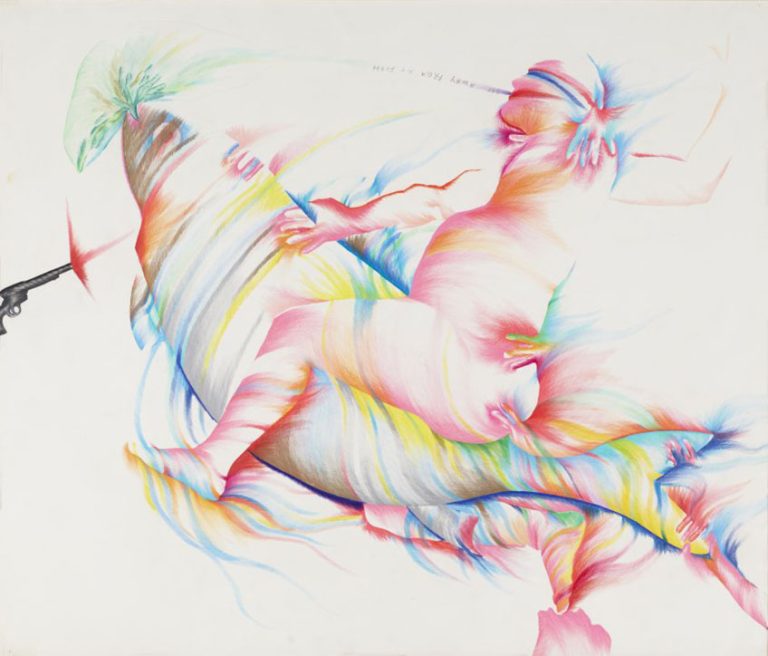
Exuberant and whimsical, her practice is shared between visual arts, performing arts and cinema, and is strongly influenced by the countries where she lived and worked, from France to Italy, via Germany and the Netherlands. The major retrospective dedicated to him by the M HKA in Antwerp brings together twenty years of films, installations, sculptures and drawings. At Pauline Curnier Jardin, the intimate is never far from the collective and the local from the universal. In an imposing nativity, she evokes the double life of Lella, a Neapolitan pizzaiola. In the kitchen in her restaurant in the evening, she volunteers during the day in a secret crypt where worship is devoted to the deceased. With his decor and his realistic ceramic characters, the artist makes a connection between the pizza oven and the “baby boxes” where women can place the children they cannot or do not want to take care of, the stomach of the city and the stomach of women. In Rome, she worked with Feel Good Cooperative, a collective of Colombian transsexual prostitutes with whom she co-directed several films including the diaphanous Fireflies which depicts sex workers looking like fireflies on the side of the road. Throughout her works, she evokes her personal pantheon, the artists Ulrike Ottinger (born June 6, 1942) or Carol Rama (born April 17, 1918), the anonymous Trümmerfrauen, women who, after the War, cleared the ruins of Berlin, or even Geneviève, her mother, to whom she pays homage in a touching and scintillating installation.
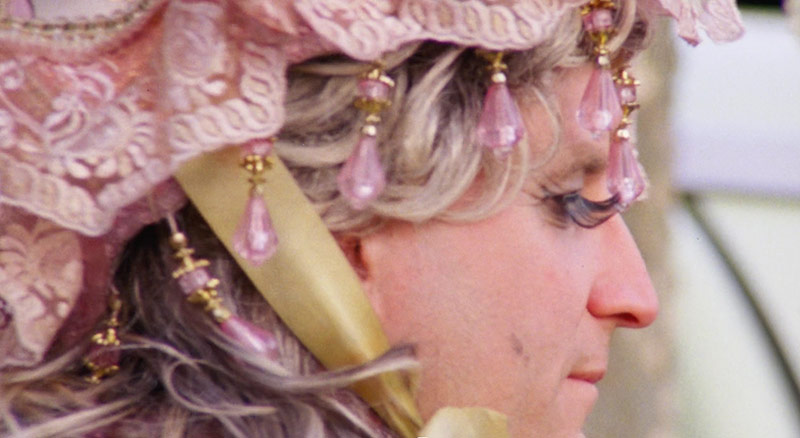
Pauline Curnier Jardin news in Belgium continues in Aalst where two films and installations are shown. In Than impure bloodit offers a feminist counterpoint to Jean Genet’s homoerotic prison film where the young male inmates are replaced by women with bodies withered by age but vibrant with desire. In Jeanet Adult Movie (see ill.), she films the Aalst carnival, and more particularly the Voil Jeanet, this brotherhood of men disguised as women where the grotesque is never far from sexist stereotypes and misogyny.
Pauline Curnier Garden, Jeanet Film Adult2025, video capture.
© Pauline Curnier Garden
© Adagp Paris 2025