
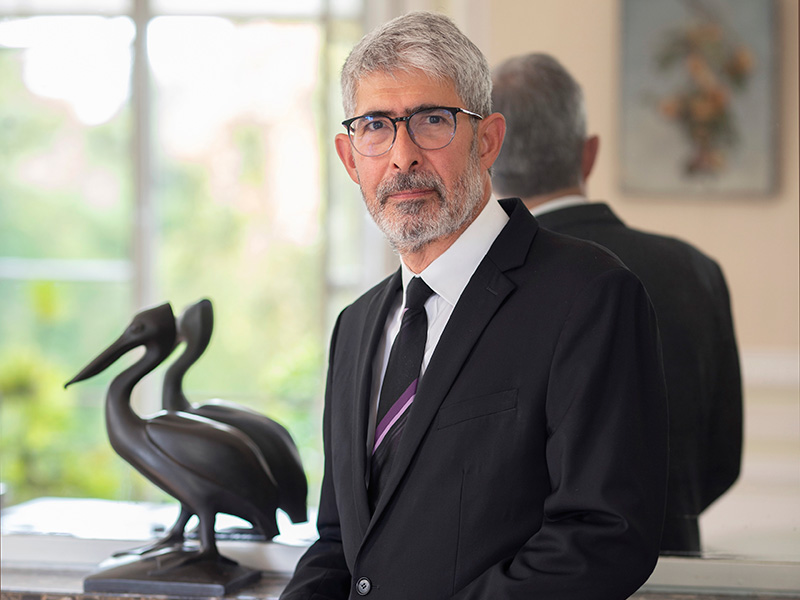
You declared on the airwaves (France Inter) in March that the National Museum of Natural History needed 1 billion euros to renovate. What exactly does this amount cover?
1.1 billion euros, to be more precise. An initial diagnosis, carried out in conjunction with the deputy rector ESRI (Higher Education, Research and Innovation), resulted in an estimate of slightly more than 500 million euros of emergency work, to renovate dilapidated or even very degraded buildings. Then the State Real Estate Department asked us to carry out additional work, this time focusing on the complete upgrade of the establishment. So an upgrade to standards in terms of energy saving, sustainability… This is a second part whose estimated amount is a little less precise, but which gives an order of magnitude of what needs to be achieved.
What are the most urgent operations to carry out?
The work aimed at making certain buildings usable again by our staff and reopening those which no longer welcome the public… To properly size the problem, the Museum includes around 120 buildings, which represents approximately 180,000 square meters of buildings! And 74% of this heritage must be the subject of renovation actions. Aside from the Musée de l’Homme and the Paris Zoological Park, upgraded ten years ago, almost everything else is in poor condition: the grandiose geology and mineralogy gallery of the Jardin des Plantes, for example, or the superb reptile pavilion of the menagerie which have been closed for years and which we do not have the means to renovate. And alongside it, the collections are suffering. Our buildings no longer offer satisfactory conservation conditions in terms of stability, temperature and humidity, and we lack space to develop our collections and better exploit them scientifically.
Gallery of Paleontology and Comparative Anatomy.
© MNHN / Bernard Faye
Work is already underway, including the paleontology and comparative anatomy gallery…
Yes, we closed it in January to renovate fire safety and accessibility. It is frighteningly hot there in the middle of summer and sometimes we could no longer welcome the public, for fear that visitors would feel unwell. Beyond these 10 million euros of extreme emergency work, the gallery therefore requires a more complete renovation. If we want to restore its luster and comfort, as well as an inspiring museography, it would be a project of around a hundred million euros. In the coming weeks, we will renovate the Magny hotel for nearly 8 million euros. On the Buffon campus, we are rebuilding a building dedicated to research and teaching, again for several million.
What are your current financing capacities?
The Museum finances, year after year, around twenty million euros of work per year. For the moment, the State grants us around 10 million euros in subsidies for investment each year. No less than 5 million goes into the reimbursement of the capital portion of the PPP (public-private partnership) of the Paris Zoological Park, so only 5 million remains to maintain this magnificent heritage. Everything else is taken from the establishment’s working capital, which had been comfortably replenished over the previous decade but which we are about to hit rock bottom. The challenge for the years to come is therefore to be able to continue to renovate our heritage at a sustained pace. What I proposed to the State is to increase the level of investment to at least 30 million euros per year.
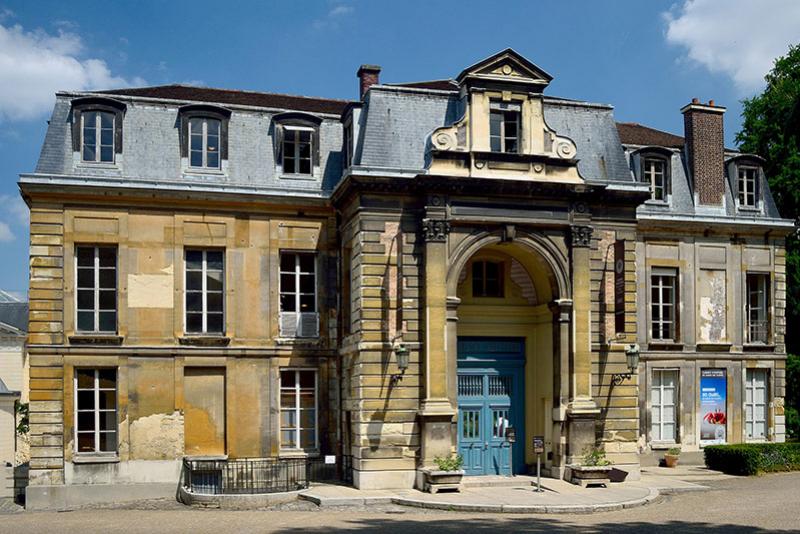
The Hôtel de Magny in the Jardin des Plantes.
Have you obtained concrete commitments from funders?
For certain operations, we receive funding from local authorities. As far as patronage is concerned, it is essentially geared towards research. Very few patrons are interested in financing building or heritage renovation. And I think things could speed up with more support from the state. We are well aware that 500 million or 1 billion euros represents a significant sum. To carry out work of this magnitude, it takes one or even two decades. But we are reaching a tipping point. If nothing happens, the projects launched will have to be interrupted and future operations will have to be rescheduled.
How do you think we got to such a perilous situation?
On the one hand, we must render to Caesar what is Caesar’s. Very good renovation operations have been carried out, those of the Grande Galerie de l’évolution (reopened in 1994), the Paris Zoological Park (in 2014), the Museum of Man (in 2015)… But the current situation results from the accumulation of underinvestment over several decades. It is a situation somewhat similar to what the university environment has experienced which, like us, is placed under the supervision of the Ministry of Higher Education, Research and Space. Twenty years ago, the university heritage was very degraded before the State launched programs such as the “campus plan” and provided other exceptional funding. And throughout this period, the Museum was not really included in its “scope”.


