Namur (Belgium). About everyone has a hut somewhere. At the bottom of a wood, a garden or at the bottom of the head. The theme is universal enough to speak to a large audience and inspire many contemporary artists. Its shape is not predefined, it is linked to materials and imagination available. Modest and fragile, it is strong, too, because it offers a refuge out of the outside world. There is not a way of representing, fantasizing the hut. The exhibition offered by the Delta, the cultural space of the Walloon capital, explores the reflections of different prisms that the cabin theme brings back through paintings, photographs, videos, sculptures and installations of around twenty artists.
The childhood memories that transform the hut into an inaccessible miniature castle are involved in memory as a slightly grainy film, seems to tell us Jacqueline Mesmaeker who, in one of her last works, has associated a short filmed burlesque sequence with waterfalls of words freely associated with the cabin.
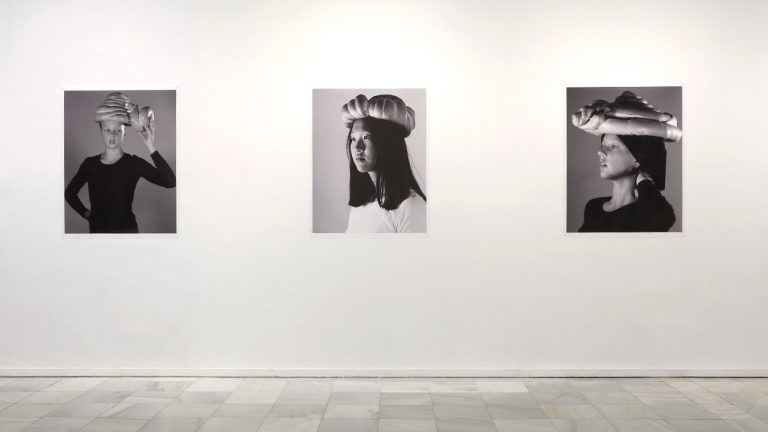
Ryan Gander takes the opposite of the fragile and ephemeral character of the construction with I is … (ix)2014, a marble sculpture of the hut assembled by her three -year -old daughter from elements of furniture from the house. With her series “Frantic”, Joanna Piotrowska has produced adult portraits to whom she asked to relive childhood experience by building in their living room a temporary shelter from furniture elements available on site to, in the end, bring out the anxiety and discomfort.
Nathalie du Pasquier’s hut, seen from the “Cabane” exhibition at the Namur Delta.
© Xavier Dardenne
Thoreau, Wittgenstein or Heidegger, many philosophers for whom an isolated hut has become a “thinking machine”. Artists in turn seized these historic shelters to draw up visual metaphors. James Benning approached the thickness of time with two contemplative sequence plans of a replica of the hut of the American philosopher, while Sophie Nys takes an ironic look at the most trivial siege to question the adhesion of the German philosopher to national-socialist ideology.
The cabin as a mental refuge can contain a landscape, advances Christian Fogarolli in the enigmatic installation tHe value of absence, 2019, made for the Dr. Ghislain Museum in Ghent who devotes himself to the history of mental health care.
In the world where we live, the hut is also a makeshift shelter that attracts the eyes of artists. Whether assemblies as a makeshift materials of migrants of “La Jungle de Calais” (Jean Revillard), “Les Sacs de Sliding” of Afghan emigrants in Parisian parks (Mathieu Pernot) or the poetics of the activists of the ZAD of Notre-Dame-des-Landes (Philippe Graton).
In a salutary mediation effort, each work is accompanied by a small take -out presentation sheet. It is also necessary to point out the modest catalog but richly provided in texts and images which exceed the works exhibited to explore the infinite corners of the cabin.