The Spanish Congress rehabilitated Cipriano Salvador (1894-1975), the republican intellectual whom Francoism had wrongly accused of stealing a painting he had saved. The proposal received 32 votes for, 3 against and 1 abstention. Only Vox (far right) voted against, denouncing what it described as a “revengeful background”. The Popular Party supported the text, after having obtained from the left-wing Sumar coalition the removal of the word “expolio” (looting).
Born in Pedro Muñoz, in the province of Ciudad Real, Cipriano Salvador settled in Villanueva de los Infantes, where he taught, wrote, painted and devoted himself to the heritage of the La Mancha region. A convinced republican and specialist in Cervantes, in the 1920s he drew up an inventory of the region’s artistic riches, with the idea of protecting them and making them known. When the civil war broke out in 1936, the Republic entrusted him with the mission of protecting the most precious works of the Campo de Montiel.
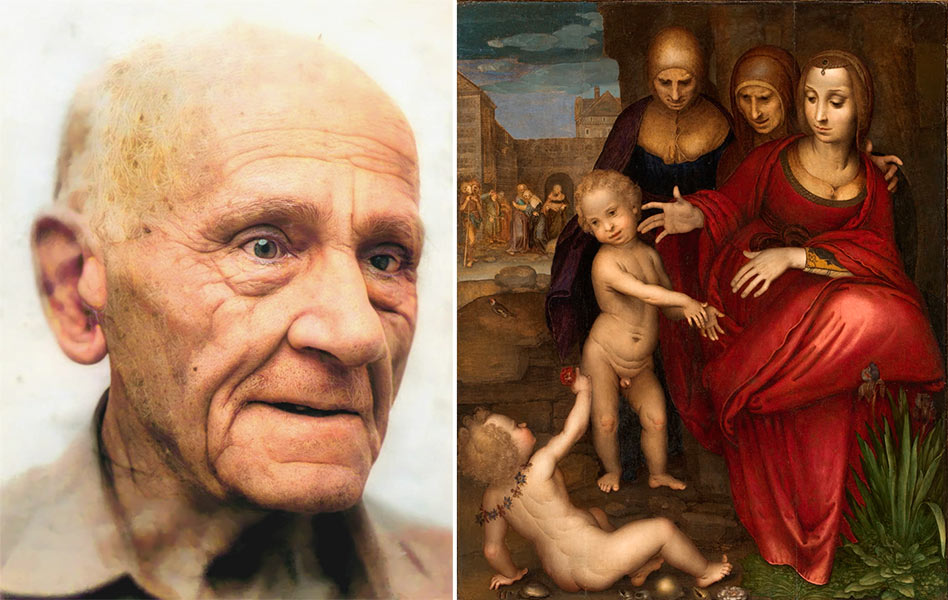
One of them was The Santa Generationalso known as Santa Ana, the Virgin, Saint Elizabeth, Saint John and the Child Jesuspainted between 1525 and 1532 by Fernando Yáñez de la Almedina. The painter was one of the great names of the early Spanish Renaissance and the leading Spanish disciple of Leonardo da Vinci. The painting is the only preserved fragment of the original altarpiece intended for the Santa María de Almedina church.
Fearing that the work would be destroyed in the first months of the conflict, Cipriano Salvador took it down from the church and hid it in his home. In January 1938, he reported its existence to the Republican authorities, who took charge of it through the General Fund for Reparations for War Damage. The painting was therefore located, inventoried and placed under Republican control. He hadn’t disappeared.
After Franco’s victory, a priest from Villanueva de los Infantes, not the owner of the work, claimed possession of it, taking advantage of confusion over the measures recorded in the Republican minutes. In 1941, the priest sold it to the Prado for 15,000 pesetas (roughly the same amount in today’s euros). The museum director validated the operation and entered an incorrect provenance, linking the work to Villanueva de los Infantes instead of Almedina.
At the same time, Cipriano Salvador was arrested by the Falangists in Villanueva de los Infantes and accused of having destroyed or made disappear the work that he had sheltered. In 1941 he was sentenced to death. His sentence was later commuted to 30 years in prison and hard labor. He spent seven years behind bars before being pardoned in 1946. However, he remained banned from practicing his profession and banned from La Mancha. He died in 1975 in Toro (Castile and Leon), without having obtained compensation.
The story resurfaced in 2020, when professor José Alberto López Camarillas took up the file based on the republican archives, artistic inventories and Prado registers. His research made it possible to establish that the work kept at the Prado was indeed that of Almedina and that Cipriano Salvador had not stolen it but saved it. This demonstration relaunched the demand for reparation brought by the family, by Almedina and by left-wing elected officials.
Today, Almedina hosts an open-air museum dedicated to Fernando Yáñez, with 26 reproductions of his paintings on the facades of municipal buildings. The village is asked to affix a commemorative plaque and a faithful replica of the painting, made using the same techniques and materials as the original, while the Prado will have to correct its presentation of the work.