Paris. The collection of the Wilson Center for Photography, by Michael G. and Jane Wilson, housed in London, is among the most important in the world. Since June 19, it has been the subject of a memorable thematic exhibition at the Bal. Memorable by the selection of photographs carried out by its co-directors Diane Dufour and Julie Héraut in the collection of the producer of “James Bond”, as by the angle chosen which poses a double question. The first concerns the right distance between the photographer and his subject, so that inside the frame the story is concentrated in a single shot, but also the right distance, in this space, between the people photographed. The second question concerns the reception of the work by its viewer.
Carte blanche was given by Michael G. Wilson to the founder of the Bal to compose the exhibition of her choice from her collection; the selection bears witness to the links forged between them over twenty years. Before creating Le Bal, Diane Dufour was the Europe director of the Magnum Photos agency from 2000 to 2007. “Michael had already been involved for several years in the search for vintage prints from this or that agency photographer. In this context, we had the opportunity to exchange, she explains.
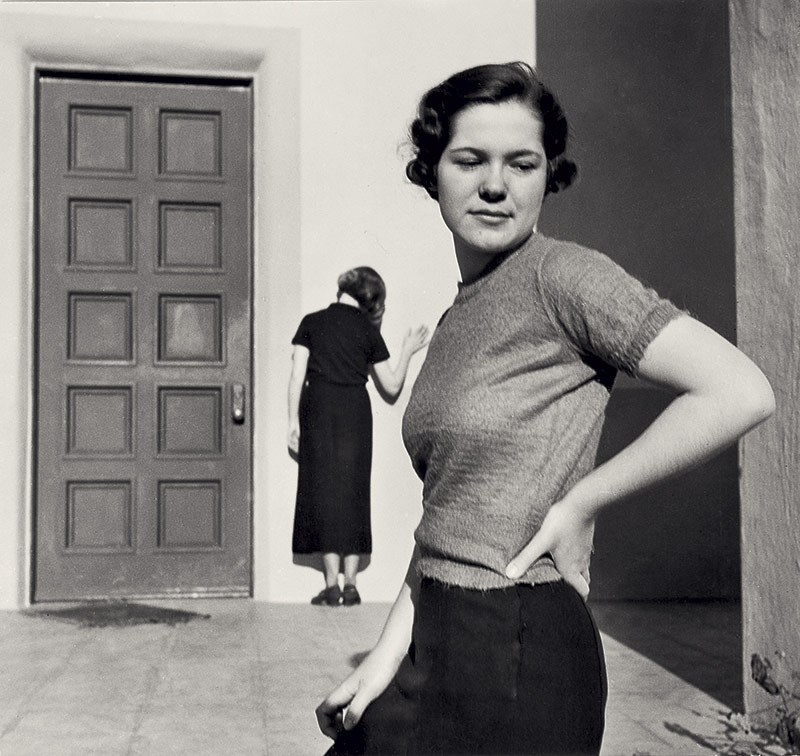
Created in 1978 and preserved since 1998 by the Wilson Center for Photography, the collection is renowned for its collection of photographs and albums from the 19th century, its collection of photographs from the 20th century to the present day, as well as for the exceptional quality of its period prints. The 120 photographs selected from the 1,200 in the collection cover the period 1920-2008 and bring together names that have passed into posterity and others less known in France, like John Gutmann (1905-1998), whose photo shrug (1935) makes the poster.
Dorothea Lange (1895-1965), Untitled [Main et chapeau de travailleur]1938.
© The Dorothea Lange Collection / Wilson Center for Photography
Black and white dominates
The exhibition presents a number of remarkable photographs, little known or little seen, from major names, such as this scene captured by André Kertész of a young man walking in the street, his gaze turned towards the back of a woman sitting on a window sill, a print from the portfolio Hungarian souvenir (1914-1924). Or, by Dorothea Lange, this vision, astonishingly beautiful, of the emaciated hand of a farmer holding his hat (1938, (see ill.]). The fragment of a body (hands, legs, back, etc.), taken from life or not, describes gradations of distance between the photographer and his subject. Black and white forms the bulk of the selection with a few exceptions, such as the large format in color by Gregory Crewdson representing a couple in a car parked on the roof of a parking lot or Sarah Jones’ portrait of two teenage girls sitting on a bench.
There is not a photograph that does not catch the eye and provoke reflection through the finesse of its framing and the depth of what it expresses about a situation. Frozen hands by August Sander warming themselves at a stove, the gnarled hands of a puppeteer seen by Tina Modotti or even a portrait by Issei Suda of fingers in dark hair: the theme of the hand is declined on the two levels of the building in a diversity of registers.
The hanging itself translates this theme of the right distance and creates dialogues rich in correspondences. Grouped together in the tour booklet, the comments of photographers (from Weegee, Danny Lyon and Graham Smith to Susan Meiselas, Sarah Jones and Gregory Crewdson), contextualize their images. And, coupled with the detailed labels, texts by Bertrand Schefer on the photographs of his choice, an order placed with the writer, testifies to the viewer’s freedom of interpretation. The stimulating reading of these stories undeniably contributes to making this exhibition a great moment.